
In the competitive landscape of modern business finance, operational efficiency is the primary engine behind sustainable profitability. For organizations looking to optimize their bottom line, two methodologies have dominated the discourse for decades: Lean Manufacturing and Six Sigma. While both frameworks aim to improve business processes and increase value, they approach these goals from different philosophical and tactical angles. Understanding the nuance between them is not merely an academic exercise; it is a strategic necessity for business leaders, financial controllers, and operational managers who must decide where to allocate capital and human resources to achieve the highest return on investment (ROI).
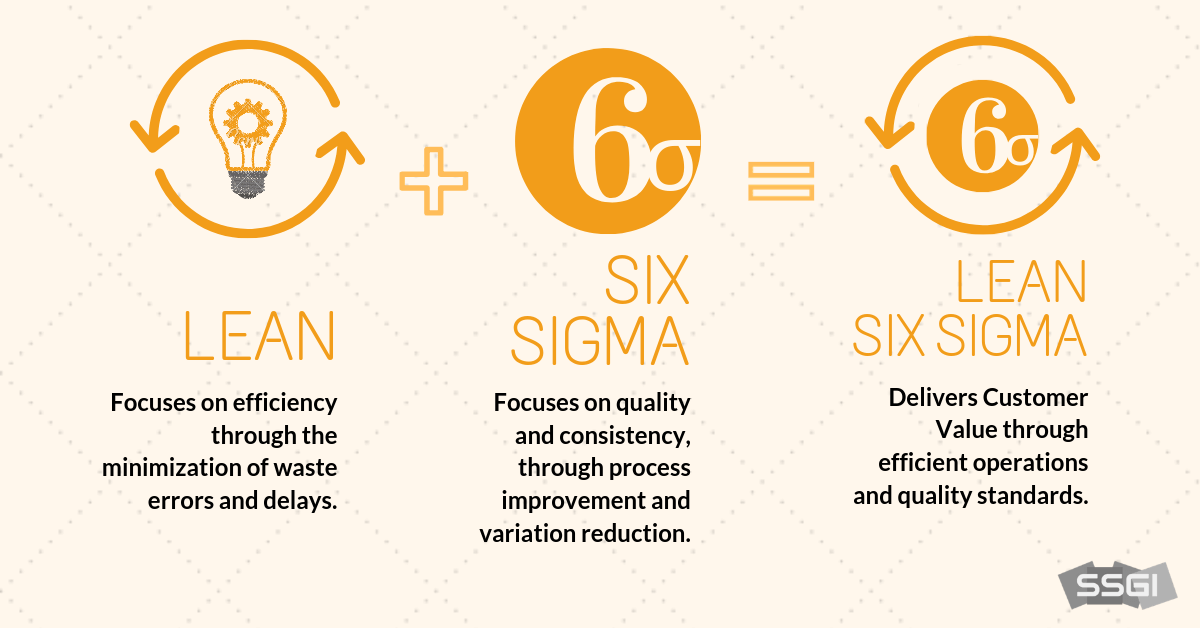
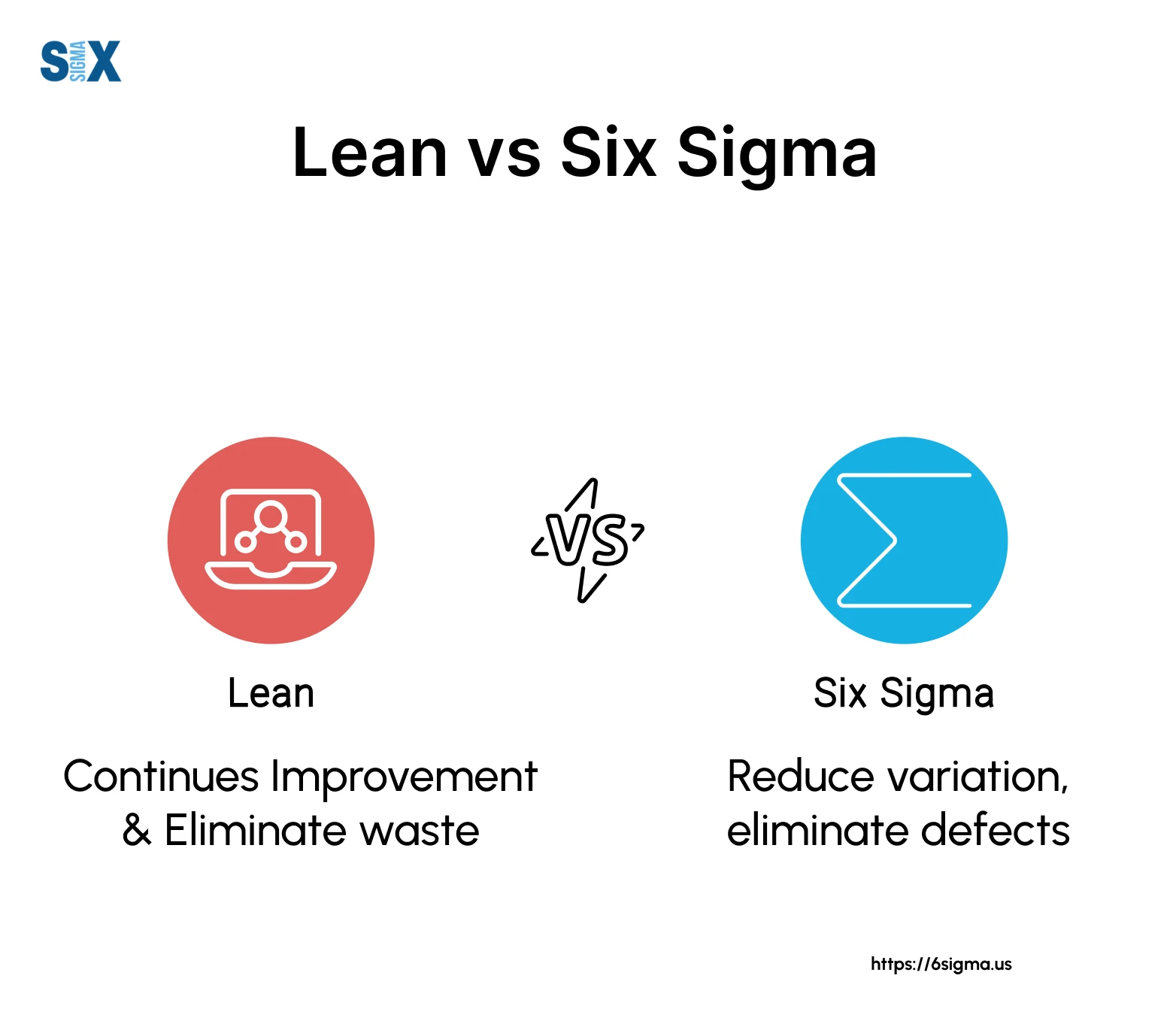
Lean Manufacturing is centered on the elimination of waste and the optimization of flow. Six Sigma, conversely, is a disciplined, data-driven approach focused on reducing process variation and eliminating defects. While Lean looks at what we shouldn’t be doing, Six Sigma looks at how to do what we are doing more accurately. This article explores the fundamental differences, their unique financial impacts, and how they can be integrated to create a powerhouse of organizational excellence.
Defining the Methodologies: Efficiency vs. Precision
To understand the core differences, one must look at the historical and conceptual origins of each system. Both were born out of a need for industrial survival, but they targeted different symptoms of inefficiency.
Lean Manufacturing: The Pursuit of Value
Lean Manufacturing, often traced back to the Toyota Production System (TPS), is built on the premise that any resource spent on an activity that does not add value for the customer is wasteful. In a financial context, Lean is the ultimate tool for reducing operational expenditure (OPEX). By streamlining workflows and ensuring that products or services move through the system without interruption, businesses can reduce lead times and free up working capital that would otherwise be tied up in inventory or stagnant processes.
The “Lean” philosophy is deeply rooted in the concept of Muda (waste). It views the business as a series of interconnected flows. If a process is “Lean,” it means it is agile, responsive, and stripped of all non-essential elements.
Six Sigma: The Science of Quality
Six Sigma was popularized by Motorola and General Electric in the 1980s and 90s. Unlike Lean, which relies heavily on intuitive flow and visual management, Six Sigma is a rigorous statistical methodology. The term “Six Sigma” refers to a process in which 99.99966% of all opportunities to produce some feature of a part are statistically expected to be free of defects (3.4 defects per million opportunities).
From a business finance perspective, Six Sigma is a strategy for protecting revenue and brand equity. By ensuring that every output meets a rigid standard of quality, companies avoid the massive costs associated with rework, warranty claims, and customer churn. It is a “top-down” approach that requires specialized training and a commitment to data-driven decision-making.
Operational Focus: Eliminating Waste vs. Reducing Variation
The most significant distinction between Lean and Six Sigma lies in their primary objective. While both want a better process, they define the “enemy” differently.
The Lean Focus: The Eight Wastes
Lean identifies eight specific types of waste that drain a company’s financial health. These are often remembered by the acronym DOWNTIME:
- Defects: Information or products that are inaccurate or incomplete.
- Overproduction: Making more than is required by the customer, leading to excess inventory costs.
- Waiting: Idle time for employees or machines.
- Non-utilized Talent: Failing to leverage the skills and creativity of the workforce.
- Transportation: Unnecessary movement of materials or information.
- Inventory: Excess stock that consumes storage space and ties up cash.
- Motion: Unnecessary physical movement by people.
- Extra-processing: Doing more work than the customer requires or values.
By targeting these areas, Lean creates a “pull” system where production is dictated by actual demand, significantly improving cash flow and reducing the need for expensive warehouse footprints.
The Six Sigma Focus: Variation and DMAIC
Six Sigma identifies “variation” as the root cause of all business failures. If a process is inconsistent, it is unpredictable; if it is unpredictable, it is financially risky. To combat this, Six Sigma utilizes a structured five-phase process known as DMAIC:
- Define: Identify the problem, the customer requirements, and the project goals.
- Measure: Collect data to determine the current performance of the process.
- Analyze: Use statistical tools to identify the root cause of defects and variation.
- Improve: Design and implement solutions to eliminate the root causes.
- Control: Monitor the improved process to ensure the gains are sustained.
While Lean can often be implemented with “common sense” and visual cues (like floor markings or Kanban cards), Six Sigma requires deep analytical dives into data sets to uncover hidden inefficiencies that the human eye might miss.
Financial Implications: Cost Reduction and Profit Maximization
For a Chief Financial Officer, the choice between Lean and Six Sigma often comes down to the specific financial pain points of the organization.
How Lean Saves Money
Lean’s financial impact is often immediate and highly visible. By reducing inventory levels, a company can dramatically improve its “Quick Ratio” and overall liquidity. Less inventory means less capital tied up in raw materials and finished goods, which reduces the need for short-term financing and lowers insurance and storage costs. Furthermore, Lean’s focus on lead-time reduction means that the “order-to-cash” cycle is shortened, allowing the business to reinvest its earnings faster.
How Six Sigma Boosts the Bottom Line
Six Sigma’s financial benefits are often realized through the “Cost of Quality” (COQ). High variation leads to “hidden factory” costs—the labor and materials spent fixing things that weren’t done right the first time. By achieving a higher Sigma level, a company reduces its internal failure costs (rework, scrap) and external failure costs (returns, lawsuits, lost reputation). In industries with high margins and high complexity, such as pharmaceuticals or aerospace, the financial precision of Six Sigma is often more valuable than the speed gains of Lean.
Tactical Implementation: Kaizen vs. DMAIC
The way these methodologies are deployed on the ground also differs significantly in terms of culture and resource allocation.
Kaizen: The Lean Sprint
Lean often utilizes “Kaizen Events”—short, intense bursts of improvement involving the people who actually do the work. These events focus on quick wins. For example, a three-day Kaizen event might reorganize a workshop floor to reduce the “Motion” waste of workers walking back and forth for tools. The barrier to entry for Lean is lower; it encourages a culture where every employee is a “problem solver,” reducing the need for high-priced external consultants over time.
The Belt System: The Six Sigma Hierarchy
Six Sigma is famous for its martial arts-style “Belt” hierarchy. Projects are usually led by Black Belts (full-time project leaders) or Green Belts (part-time leaders), who report to Master Black Belts or Champions. This structured hierarchy ensures that projects are aligned with the corporate financial strategy, but it also means that Six Sigma can be slower to implement and requires a significant upfront investment in training and certification. It is a more formal, disciplined, and rigid structure than the fluid nature of Lean.
Choosing the Right Framework for Your Business Growth
Deciding between Lean and Six Sigma—or opting for a combined “Lean Six Sigma” approach—depends on the nature of your business challenges and your current financial objectives.
When to Prioritize Lean
Lean is the preferred choice for organizations that are struggling with capacity, long lead times, or excessive overhead. If your business is growing rapidly but your margins are shrinking because you are “throwing people at the problem,” Lean is the answer. It is also highly effective in service industries, where “waiting” and “extra-processing” are the primary drivers of customer dissatisfaction and operational costs.
When to Prioritize Six Sigma
Six Sigma is the better choice for organizations that have relatively stable processes but are plagued by quality issues or high defect rates. If your financial reports show a high volume of credit memos, returns, or warranty claims, the statistical rigor of Six Sigma will help you identify exactly where the process is failing. It is also essential for industries where safety and precision are non-negotiable.

The Power of Lean Six Sigma (LSS)
In the modern business environment, most high-performing organizations no longer treat these as mutually exclusive. Lean Six Sigma (LSS) integrates the two, using Lean to improve the speed and flow of the process, and Six Sigma to ensure that what is flowing is of the highest possible quality.
By combining the two, a business can achieve a synergistic effect: Lean identifies the most valuable areas to focus on by mapping the value stream, and Six Sigma provides the analytical tools to solve the most complex problems within that stream. For the investor or business owner, this dual approach offers the most robust path to increasing enterprise value. It addresses both the “Top Line” (by improving quality and customer satisfaction) and the “Bottom Line” (by ruthlessly eliminating waste and reducing costs).
In conclusion, while Lean Manufacturing and Six Sigma share a common destination—a more profitable and efficient organization—they take different roads to get there. Lean is the art of the possible, focusing on human potential and the elimination of the unnecessary. Six Sigma is the science of the certain, focusing on data, precision, and the elimination of errors. For the modern business focused on long-term financial health, the question is rarely which one to choose, but rather how to master the balance of both.
aViewFromTheCave is a participant in the Amazon Services LLC Associates Program, an affiliate advertising program designed to provide a means for sites to earn advertising fees by advertising and linking to Amazon.com. Amazon, the Amazon logo, AmazonSupply, and the AmazonSupply logo are trademarks of Amazon.com, Inc. or its affiliates. As an Amazon Associate we earn affiliate commissions from qualifying purchases.