
New Jersey occupies a unique position in the American economic landscape. Nestled between the financial powerhouse of New York City and the historical industrial hub of Philadelphia, the Garden State has cultivated an economy that is as diverse as it is robust. For professionals, investors, and residents, understanding the average salary in New Jersey is not just a matter of curiosity—it is a vital component of financial planning and career strategy. As one of the wealthiest states in the union, New Jersey offers high earning potential, but it also presents a complex financial environment characterized by high taxes and a steep cost of living.
To truly understand what it means to earn a living in New Jersey, one must look beyond a single aggregate number. Income in the state is influenced by a multitude of factors, including proximity to major metropolitan centers, the concentration of high-growth industries like pharmaceuticals and finance, and the educational attainment of its workforce.
Understanding the New Jersey Income Landscape
When analyzing the average salary in New Jersey, the data reveals a state that consistently outpaces national averages. According to recent data from the U.S. Bureau of Labor Statistics and the U.S. Census Bureau, the average annual salary for workers in New Jersey typically hovers between $70,000 and $80,000, while the median household income often approaches or exceeds $97,000. These figures place New Jersey comfortably within the top five highest-earning states in the country.
The Statewide Average vs. National Averages
The national average salary in the United States often sits significantly lower than New Jersey’s benchmarks. This disparity is driven by New Jersey’s high concentration of high-skill jobs. While the national economy relies on a broad mix of agricultural, manufacturing, and service-based roles, New Jersey’s economic engine is fueled by specialized sectors. This leads to a higher “floor” for wages across most industries. For a financial planner or an individual looking to relocate, this means that while the sticker price of living in NJ is high, the earning floor provides a necessary cushion that many other states lack.
How Education Levels Influence NJ Earnings
New Jersey boasts one of the most educated workforces in the nation. The correlation between educational attainment and salary is particularly pronounced here. Professionals with a bachelor’s degree or higher in New Jersey often see a significant premium on their earnings compared to those in states with lower costs of living. This is largely due to the presence of research institutions, world-class healthcare systems, and corporate headquarters that require specialized knowledge. In the realm of personal finance, this highlights the “return on investment” (ROI) of higher education within the state’s borders; the cost of a degree is often offset by the substantially higher lifetime earnings available in the local market.
Top Paying Industries and Career Paths in the Garden State
While the average salary provides a general baseline, the industry in which one works is the most significant determinant of financial success in New Jersey. The state is a global leader in several high-margin sectors, which elevates the state’s overall income statistics.
The Financial Services Sector
Given its proximity to Wall Street, northern New Jersey serves as a secondary hub for the global financial services industry. Many of the world’s largest banks, investment firms, and insurance companies maintain massive corporate campuses in Jersey City, Hoboken, and Weehawken. Salaries in this sector frequently reach well into the six-figure range, even for mid-level management. For those focused on personal finance and wealth building, the financial services sector remains the most direct route to high-tier earnings in the state, offering not just competitive base salaries but also substantial performance-based bonuses.
Healthcare and Pharmaceutical Excellence
Often referred to as “the medicine cabinet of the world,” New Jersey is home to a staggering number of pharmaceutical and biotechnology companies. From Johnson & Johnson to Merck, these giants provide high-paying roles for scientists, engineers, and regulatory experts. The average salary in New Jersey’s pharmaceutical sector is significantly higher than the state average, often exceeding $120,000 for specialized roles. Furthermore, the state’s healthcare systems are among the most advanced in the country, ensuring that medical professionals—from specialized surgeons to nurse practitioners—earn top-tier wages.
Logistics and Emerging Tech Hubs
New Jersey’s geography makes it a linchpin of the global supply chain. The Port Newark-Elizabeth Marine Terminal is one of the busiest in the world, driving high demand and competitive wages in logistics, supply chain management, and international trade. Simultaneously, the state is making aggressive strides in the technology sector. With state-backed incentives for startups and a growing “Tech Jersey” movement, software developers and data scientists are seeing their average salaries climb as they rival the compensation packages found in more traditional tech hubs like Austin or Silicon Valley.
Geographic Variations: Where You Live Matters
In New Jersey, your zip code is often a reliable predictor of your earning potential. The state is far from monolithic, and the “average salary” can fluctuate by tens of thousands of dollars depending on the county.
The North Jersey and NYC Commuter Belt
Counties such as Bergen, Essex, and Hudson benefit immensely from their proximity to Manhattan. Many residents in these areas are “super-commuters” who earn New York City-level salaries while living in New Jersey. This dynamic pushes the average salary in North Jersey significantly higher than in other parts of the state. However, this high income is balanced against some of the highest property taxes and real estate prices in the United States, making sophisticated tax planning essential for residents in these areas.
Central Jersey and the Tech Corridor
Central Jersey, particularly the areas around Princeton and New Brunswick, represents a unique blend of academia and corporate research. The presence of Princeton University and Rutgers University creates a “brain belt” where average salaries are bolstered by high-level research roles and consultancy firms. This region offers a slightly different lifestyle than the northern commuter belt, often providing more space for the money, yet maintaining an income level that far exceeds the national median.
South Jersey and the Greater Philadelphia Influence
The southern portion of the state, including Camden, Gloucester, and Burlington counties, is closely tied to the Philadelphia economy. While the average salaries here tend to be lower than in the northern “Gold Coast,” the cost of living is also more manageable. For professionals looking for a better balance between income and expenses, South Jersey can often provide a higher “real” income—the amount of money left over after essential expenses—than the more expensive northern counties.
Balancing the Books: Salary vs. Cost of Living
A high average salary is only one part of the financial equation. In New Jersey, the “top-line” number on a paystub is often drastically different from the “bottom-line” reality after accounting for the state’s unique economic pressures.
Taxes and Net Income Considerations
New Jersey is known for having a progressive income tax structure and the highest property taxes in the country. For high earners, the state income tax can take a significant bite out of gross earnings. When calculating the value of a salary offer in NJ, it is crucial to use a net income calculator that accounts for state-specific deductions and the lack of a local income tax (unlike NYC). For many, the high salaries are a necessity to keep up with the tax burden, making effective tax-advantaged investing—such as 401(k) contributions and Health Savings Accounts (HSAs)—mandatory for long-term wealth preservation.
Housing Costs in High-Earning Counties
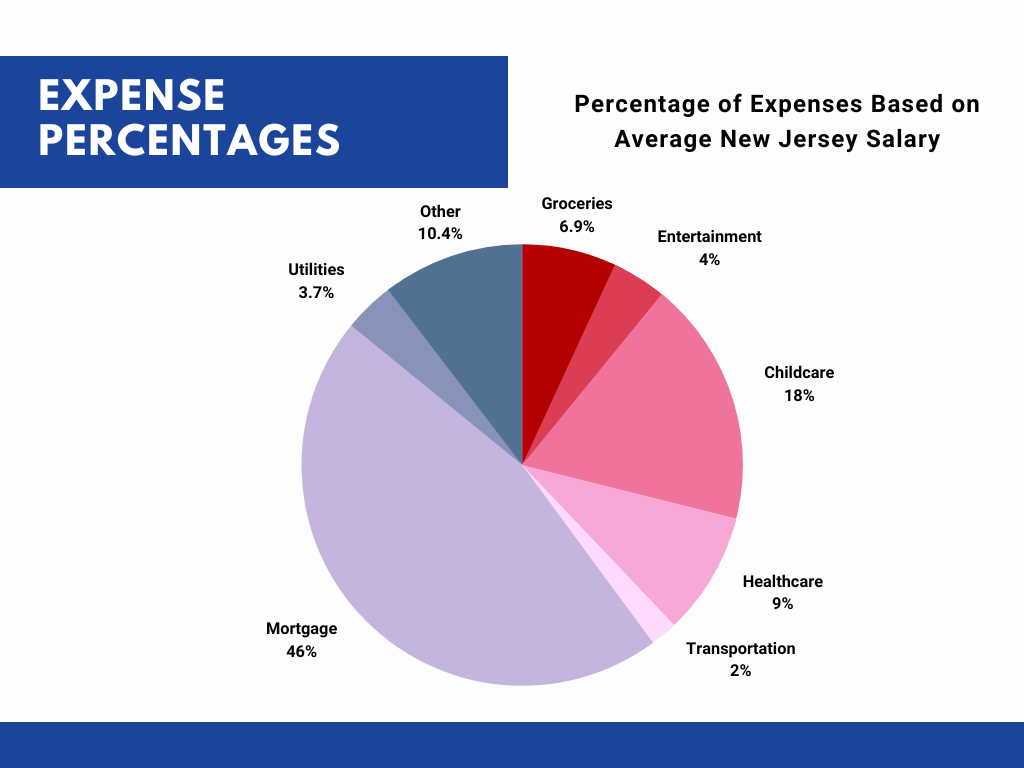
Housing is the largest expense for the average New Jerseyan. In the most desirable school districts and commuter towns, home prices are significantly above the national average. This creates a high barrier to entry for homeownership, which is a traditional pillar of personal finance. Consequently, a salary of $100,000 in New Jersey may provide a standard of living comparable to a $65,000 salary in a lower-cost state like Ohio or South Carolina. Understanding this “purchasing power parity” is essential for anyone evaluating the true value of a New Jersey salary.
Strategies for Maximizing Your Earning Potential in NJ
Given the competitive nature of the New Jersey market, staying at or above the average salary requires a proactive approach to career and financial management.
Upskilling and Professional Certifications
In a state dominated by high-tech and high-finance industries, skills atrophy quickly. Professionals who want to remain in the upper quintile of earners must invest in continuous education. Whether it is obtaining a PMP (Project Management Professional) certification for the pharmaceutical industry or mastering data analytics for the financial sector, upskilling is the most reliable way to command a salary that outpaces inflation and the rising cost of living.

The Power of Networking in the Tri-State Area
In New Jersey, “who you know” often dictates the “what you earn.” The state’s economy is built on interconnected networks of corporate leaders, entrepreneurs, and trade professionals. Leveraging the proximity to both New York and Philadelphia through professional organizations and industry-specific networking events can open doors to “hidden” job markets where salaries are not publicly listed and are often higher than the reported averages. For those looking to increase their income, building a robust professional brand within these local networks is a high-leverage activity that pays dividends over a career.
Ultimately, the average salary in New Jersey reflects a state that is high-risk and high-reward. For those who can navigate its complex tax landscape and high cost of entry, the Garden State offers some of the best financial opportunities in the world. By aligning one’s career with the state’s dominant industries and remaining mindful of geographic cost variations, it is possible to not only meet the average salary but to far exceed it, building substantial long-term wealth in one of America’s most vibrant economies.
aViewFromTheCave is a participant in the Amazon Services LLC Associates Program, an affiliate advertising program designed to provide a means for sites to earn advertising fees by advertising and linking to Amazon.com. Amazon, the Amazon logo, AmazonSupply, and the AmazonSupply logo are trademarks of Amazon.com, Inc. or its affiliates. As an Amazon Associate we earn affiliate commissions from qualifying purchases.