
In the rapidly evolving landscape of material science and hardware engineering, the term “polarizability” has transitioned from a fundamental concept in chemical textbooks to a critical metric in the development of next-generation technologies. At its core, polarizability refers to the ease with which the electron cloud of an atom or molecule can be distorted by an external electric field. While this may sound like a niche concern for theoretical chemists, it is, in fact, the physical principle enabling everything from the high-resolution displays on our smartphones to the high-performance dielectrics found in advanced semiconductors.
Understanding polarizability is essential for tech professionals involved in nanotechnology, optoelectronics, and computational modeling. As we push the limits of Moore’s Law and delve deeper into the realm of quantum computing, the ability to manipulate molecular distortion becomes a primary lever for innovation.
Understanding the Scientific Foundation for Material Engineering
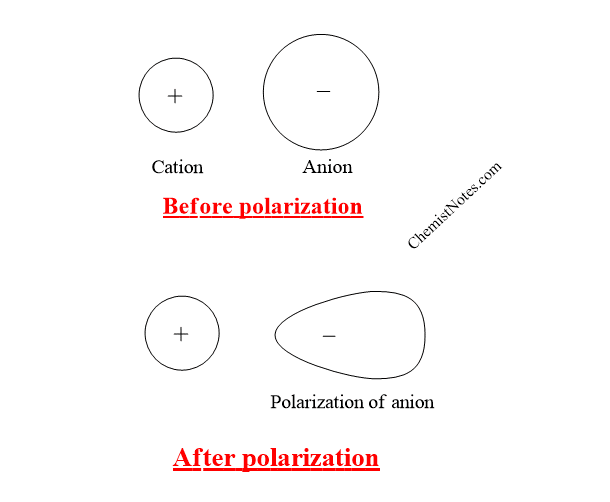
To appreciate the role of polarizability in modern technology, one must first understand the mechanics of the electron cloud. Atoms consist of a dense, positively charged nucleus surrounded by a diffuse, negatively charged cloud of electrons. In a state of equilibrium, this cloud is symmetrical. However, when a material is subjected to an external electric field—such as the voltage applied across a transistor—the electron cloud shifts.
The degree of this shift is what we define as polarizability. If the electrons are held tightly by the nucleus, the atom is considered “hard” and has low polarizability. If the electrons are loosely held, the atom is “soft” and highly polarizable. This distinction is the cornerstone of material selection in hardware design.
The Role of Induced Dipoles
When an electric field causes this electron displacement, it creates an “induced dipole.” This temporary separation of charges allows a material to store energy or alter its interaction with light. In the tech sector, controlling these induced dipoles is the key to creating more efficient capacitors and more responsive sensors. High polarizability generally leads to stronger London dispersion forces, which dictate how molecules stick together and how they respond to high-frequency signals in telecommunications.
Trends in “Soft” Chemistry for High-Tech Applications
Engineers are increasingly looking toward highly polarizable elements, such as sulfur, selenium, and tellurium, to replace traditional silicon-based components in specific applications. These “soft” atoms allow for greater flexibility in electronic properties, facilitating the development of flexible electronics and high-speed switching devices that require rapid response to external stimuli.
Driving Innovation in Semiconductor and Hardware Design
The semiconductor industry is perhaps the most significant beneficiary of our growing mastery of polarizability. As integrated circuits shrink to the 3nm and 2nm nodes, the electrical characteristics of the materials used become more volatile. Polarizability directly influences the dielectric constant (k-value) of a material, which is a measure of its ability to store electrical energy.
High-k vs. Low-k Dielectrics
In modern chip manufacturing, there is a constant battle between high-k and low-k materials. High-k dielectrics are used in the gate stack of a transistor to prevent leakage while maintaining high capacitance. These materials are chosen specifically for their high polarizability, which allows them to react strongly to the gate’s electric field. Conversely, low-k dielectrics are used as insulators between the metal layers of a chip to reduce parasitic capacitance and signal crosstalk. Here, the goal is to minimize polarizability to ensure that signals move through the circuit without interference.
Miniaturization and the Quantum Challenge
As we reach the atomic scale, the polarizability of a single molecule can determine whether a circuit functions or fails. At these dimensions, “quantum tunneling” becomes a threat. By understanding the polarizability of the barrier materials, engineers can design insulators that effectively contain electrons despite their wave-like tendencies. This molecular-level engineering is what allows for the continued miniaturization of SSDs and processors.
The Optical Revolution: Polarizability in Fiber Optics and Displays

Beyond the internal circuitry of a computer, polarizability is the silent force driving our visual and communicative technologies. The way a material interacts with light—which is essentially an oscillating electromagnetic field—is a direct function of its polarizability.
Liquid Crystal Displays (LCD) and Beyond
Every time you look at an LCD screen, you are witnessing the manipulation of polarizability in real-time. Liquid crystals are highly anisotropic molecules, meaning their polarizability is different depending on their orientation. By applying a specific voltage, tech designers can rotate these molecules, changing how they polarize light and allowing for the precise control of color and brightness.
In the world of OLEDs and MicroLEDs, the focus shifts to the polarizability of organic polymers. Engineers optimize these materials to ensure that when an electric current is applied, the resulting electron-hole recombination (which produces light) is as efficient as possible. This optimization leads to longer battery life in gadgets and more vibrant screen technology.
Nonlinear Optics in High-Speed Internet
Fiber optic networks rely on the ability of glass fibers to carry light over thousands of miles with minimal loss. However, as data demands increase, “nonlinear” optical effects become important. Nonlinear optics is essentially the study of how light changes the properties of the material through which it travels. This is fundamentally tied to the “nonlinear polarizability” of the fiber material. By engineering fibers with specific polarizability profiles, tech companies can increase data throughput, allowing for the 5G and 6G speeds that define modern digital infrastructure.
The Role of Artificial Intelligence in Predictive Molecular Dynamics
The traditional method of discovering materials with the right polarizability involved years of trial and error in a laboratory. However, the rise of AI and high-performance computing (HPC) has revolutionized this process. Today, software tools use density functional theory (DFT) and machine learning algorithms to predict the polarizability of hypothetical molecules before they are ever synthesized.
AI-Driven Material Discovery
Tech giants and pharmaceutical companies are leveraging AI models to scan databases of millions of compounds to find those with specific polarizability signatures. For example, in the development of new battery technologies, AI can identify electrolytes with the ideal polarizability to facilitate faster ion transport. This speeds up the R&D cycle for EVs and mobile device power units.
Neural Networks and Force Fields
New machine learning frameworks are being trained on “polarizable force fields.” These are complex mathematical models that allow simulations to account for the way atoms change their charge distribution in response to their environment. This level of granularity is essential for simulating how a new drug might bind to a protein or how a new sensor material will react to a specific pollutant in the air. By integrating polarizability into these AI models, the tech industry is achieving a level of predictive accuracy that was previously impossible.
Future Horizons: From Quantum Sensors to Nanobotics
As we look toward the next decade of technological progress, polarizability remains at the center of the most ambitious projects in hardware and software.
Quantum Sensing and Metrology
Quantum sensors, which use the states of individual atoms to measure physical quantities with extreme precision, are highly sensitive to polarizability. For instance, atomic clocks and gravitational wave detectors rely on the “polarizability shift” caused by laser light to calibrate their measurements. As this technology matures, we can expect to see quantum-grade sensors in consumer gadgets, providing unprecedented GPS accuracy and biometric monitoring.
Nanobotics and Molecular Machines
In the field of nanobotics, researchers are designing “molecular motors” that can be switched on and off using electric fields. The design of these motors depends entirely on the polarizability of the molecular components. By creating molecules that undergo a drastic shape change when their electron cloud is distorted, engineers can create microscopic machines capable of performing surgery inside the human body or repairing microscopic circuits.

Sustainable Tech and Green Chemistry
Finally, the push for “Green Tech” is heavily reliant on polarizability research. Finding replacements for toxic heavy metals in electronics requires a deep understanding of how non-toxic organic compounds can mimic the polarizability of lead or cadmium. This chemical mimicry is the key to creating biodegradable electronics and more sustainable manufacturing processes in the tech sector.
In conclusion, polarizability is far more than a chemical definition; it is a fundamental design parameter for the digital age. From the insulators in our CPUs to the AI that designs our future materials, the ability to predict and manipulate the movement of electron clouds is a primary driver of technological evolution. As we continue to blur the lines between chemistry and computing, polarizability will remain the bridge that allows us to turn molecular theory into high-tech reality.
aViewFromTheCave is a participant in the Amazon Services LLC Associates Program, an affiliate advertising program designed to provide a means for sites to earn advertising fees by advertising and linking to Amazon.com. Amazon, the Amazon logo, AmazonSupply, and the AmazonSupply logo are trademarks of Amazon.com, Inc. or its affiliates. As an Amazon Associate we earn affiliate commissions from qualifying purchases.