
In the evolving landscape of alternative real estate and passive income, the Park Model RV (PMRV) has emerged as a uniquely profitable asset class. Often misunderstood as a simple recreational vehicle or a small mobile home, the park model occupies a distinct legal and financial niche. For the modern investor looking to diversify beyond traditional residential or commercial properties, understanding what a park model RV is—and more importantly, how it functions as a wealth-generating tool—is essential. These structures represent a bridge between the mobility of the automotive world and the stability of the housing market, offering a lower barrier to entry with potentially higher cash-on-cash returns than conventional single-family rentals.

Defining the Park Model RV: Financial Classification and Asset Value
At its core, a park model RV is a unique hybrid. Under the regulatory framework of the United States, specifically the ANSI A119.5 standard, a park model is a towable unit designed for temporary living, built on a single chassis, and mounted on wheels. Critically, its gross trailer area cannot exceed 400 square feet in the U.S. (or 540 square feet in Canada). While they may look like miniature cottages or luxury tiny homes, their classification as a recreational vehicle rather than a permanent dwelling unit is the foundation of their financial appeal.
The ANSI A119.5 Standard and Tax Distinctions
The financial utility of a park model begins with its legal classification. Because they are built to the ANSI A119.5 safety standard rather than local building codes (HUD or IRC), they are categorized as personal property rather than real property. For the investor, this distinction is a double-edged sword that leans heavily toward tax efficiency.
In many jurisdictions, because the unit is technically a vehicle, it is not subject to traditional real estate property taxes. Instead, owners pay annual registration fees or personal property taxes, which are often significantly lower than the ad valorem taxes levied on permanent structures. This reduction in annual overhead directly inflates the net operating income (NOI) of the asset. Furthermore, from a depreciation standpoint, park models can often be depreciated over a much shorter schedule (typically 5 to 7 years) compared to the 27.5-year schedule for residential real estate. This allows investors to front-load tax deductions, shielding other income and accelerating the recovery of their initial capital.
Initial Capital Outlay vs. Traditional Housing
From a business finance perspective, the barrier to entry for a park model RV is remarkably low. As of the current market, a high-end, luxury-grade park model can be acquired for $80,000 to $150,000. In contrast, a traditional entry-level investment property in a desirable vacation market often starts at $350,000 or more.
This lower price point allows for greater portfolio diversification. An investor with $300,000 in liquid capital could potentially acquire three premium park models across different geographic locations, mitigating regional economic risks, whereas the same capital might only cover a down payment and closing costs for a single brick-and-mortar asset. The “plug-and-play” nature of these units—where they are delivered fully finished and often furnished—further reduces the “soft costs” and time-to-market associated with traditional renovations.
The Economics of Park Model Rentals: Generating Passive Income
The primary driver behind the surge in park model investment is the booming short-term rental (STR) market. As travelers move away from generic hotel experiences toward “experiential stays,” park models positioned in high-demand areas—such as near national parks, coastal regions, or luxury RV resorts—are commanding premium nightly rates.
Short-Term Rental Yields and ADR (Average Daily Rate)
The revenue potential of a park model RV often rivals that of a mid-sized traditional home, despite the smaller footprint. In “glamping” destinations, a well-designed park model can fetch an Average Daily Rate (ADR) ranging from $150 to $350 depending on the season and amenities. Because the acquisition cost is lower, the cap rate (capitalization rate) is frequently higher than that of traditional real estate.
For example, a $120,000 park model generating $35,000 in gross annual revenue yields a significantly better return on investment (ROI) than a $400,000 house generating $50,000. When accounting for the reduced maintenance of a smaller, newer structure and the lack of traditional property taxes, the cash-on-cash return becomes an attractive proposition for those seeking high-velocity income.
Leveraging the “Glamping” and Tiny Home Trend
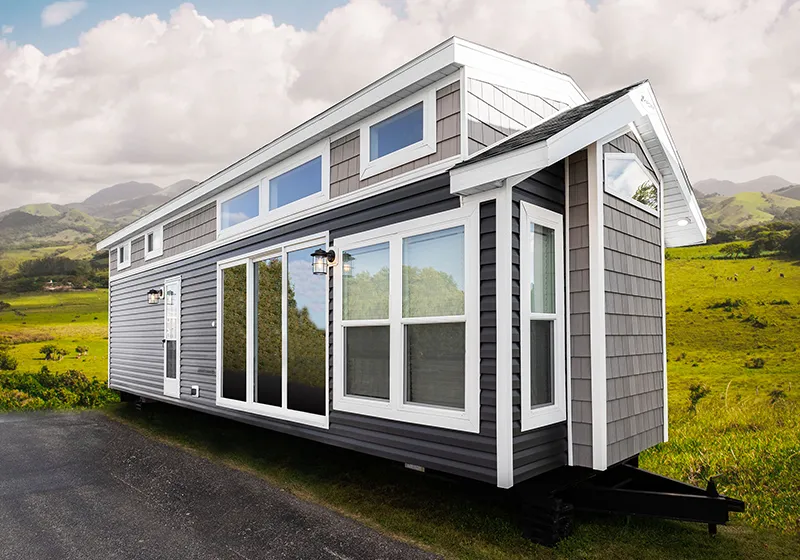
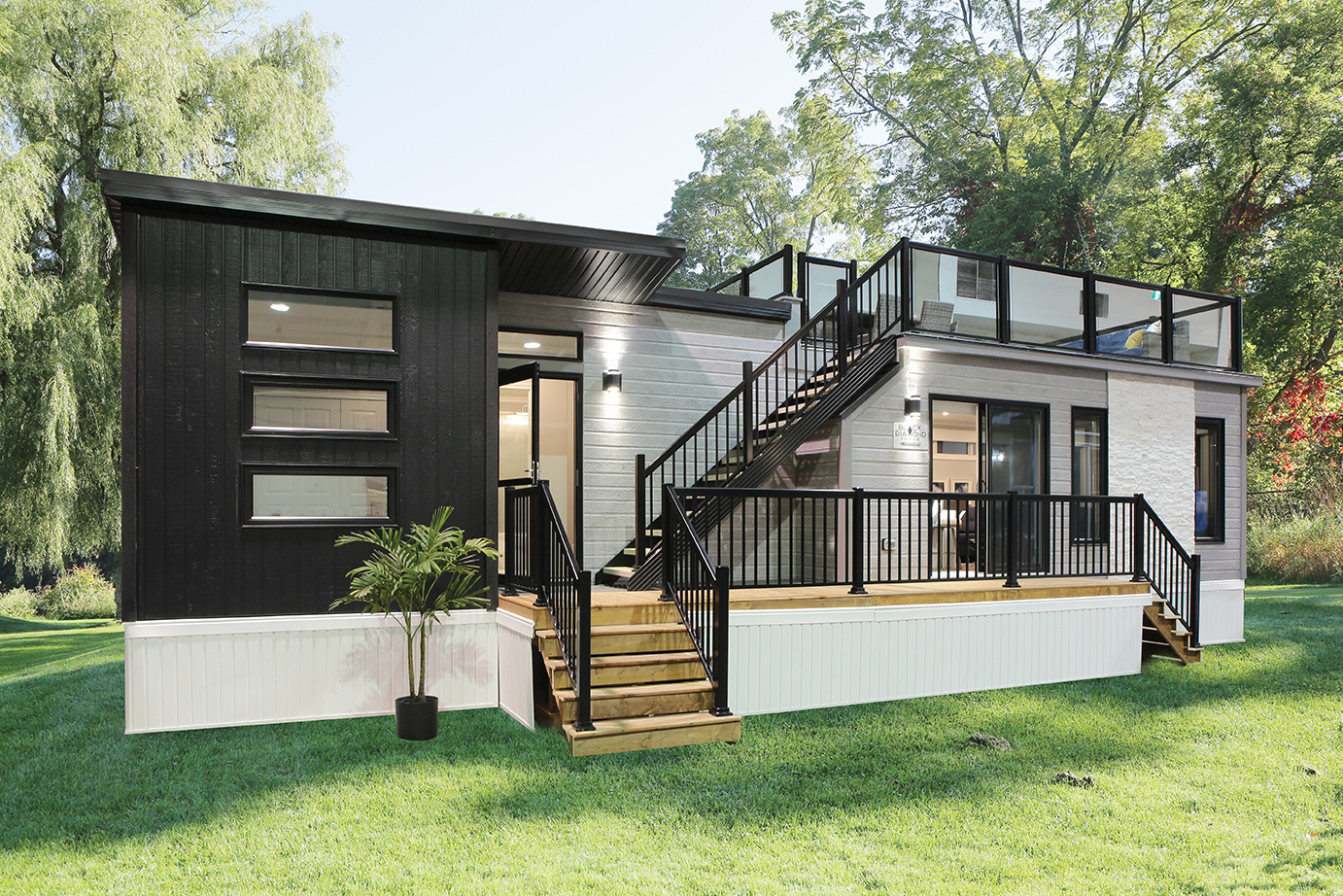
The “Tiny Home” movement has moved from a niche lifestyle choice to a mainstream consumer preference. Investors are capitalizing on this by branding park models as “luxury tiny homes” rather than RVs. This psychological shift in the marketplace allows for higher pricing tiers. By adding high-margin upgrades—such as wrap-around decks, outdoor kitchens, or hot tubs—investors can increase the perceived value and the nightly rate without adding significant square footage. This strategy focuses on maximizing the “revenue per square foot,” a metric where park models consistently outperform traditional residential units.
Strategic Financing and Ownership Costs
Financing a park model RV requires a different strategic approach than obtaining a conventional mortgage. Because these units are titled as vehicles, they do not qualify for FHA, VA, or traditional 30-year fixed-rate mortgages. Instead, investors must navigate the world of specialty lending and chattel mortgages.
Financing Options: Personal Loans vs. Chattel Mortgages
Most park model purchases are financed through chattel loans—loans secured by personal property rather than real estate. These loans typically carry slightly higher interest rates than traditional mortgages (often 2-4% higher) and offer shorter terms, usually ranging from 10 to 20 years. However, the approval process is generally faster and requires less stringent property appraisals than a traditional home.
For seasoned investors, leveraging a Home Equity Line of Credit (HELOC) from an existing real estate portfolio to purchase park models in cash can be a powerful move. This allows the investor to bypass the higher interest rates of chattel loans while benefiting from the immediate cash flow generated by the new asset.
Maintenance, Insurance, and Long-Term Depreciation
While the initial ROI is high, a prudent financial analysis must include the reality of depreciation. Unlike land-attached real estate, which tends to appreciate over time, the structure of an RV technically depreciates. However, the market for “stationary” park models has shown surprising resilience. In high-demand resorts, the value of the unit is often tied to its location and income-generating history.
Maintenance costs are generally lower due to the compact size and modern construction materials (such as vinyl siding and metal roofs). Insurance is also specialized; “park model insurance” typically covers the structure, personal property within, and liability, often at a lower premium than a standard homeowners policy.
Regulatory Hurdles and Market Scalability
The most significant risk to the park model business model is not consumer demand, but regulatory constraints. To protect the investment, a rigorous understanding of zoning and placement is mandatory.
Zoning Laws and Placement Strategies
A park model RV cannot be placed on just any vacant lot. Most residential zones prohibit the permanent occupation of an RV. Therefore, the most successful investment strategies involve two main paths:
- Placement in Established RV Resorts: This offers a “turnkey” management solution where the resort provides the infrastructure (water, sewer, electric) and often handles the bookings in exchange for a percentage of the revenue or a monthly lot lease.
- Developing Private Land under Recreational Zoning: In counties with flexible zoning, investors can develop land specifically for short-term recreational use, creating their own “micro-resort.”
From a financial standpoint, the resort model is more passive, while the private development model offers higher upside and control over the land, which is the only part of the asset that will appreciate in the traditional sense.
Building a Portfolio of Mobile Assets
Scalability is one of the park model’s greatest strengths. Because these units are factory-built, the quality is consistent and the lead times are predictable. An investor can scale from one unit to ten units with far more speed than a developer building traditional site-built homes. This “modular” approach to portfolio building allows investors to test markets with a single unit and quickly expand if the data supports it.
The park model RV represents a sophisticated intersection of the hospitality and real estate industries. By treating these units as high-yield business assets rather than simple vehicles, investors can tap into the massive demand for unique travel experiences while benefiting from favorable tax treatments and lower entry costs. In the modern quest for diversified income streams, the park model RV stands out as a powerful tool for those who understand the nuances of its financial and legal structure.
aViewFromTheCave is a participant in the Amazon Services LLC Associates Program, an affiliate advertising program designed to provide a means for sites to earn advertising fees by advertising and linking to Amazon.com. Amazon, the Amazon logo, AmazonSupply, and the AmazonSupply logo are trademarks of Amazon.com, Inc. or its affiliates. As an Amazon Associate we earn affiliate commissions from qualifying purchases.