
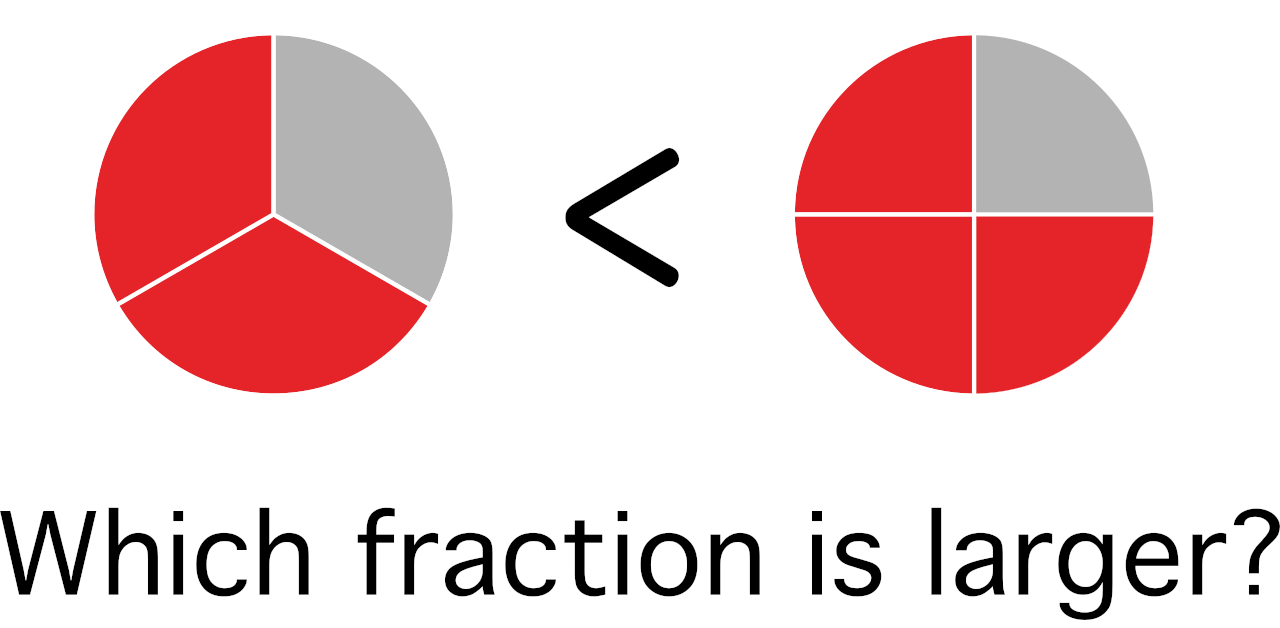
In the world of mathematics, “less than 1/4” is a simple inequality, representing any value from zero up to 0.25. However, when translated into the language of money, finance, and investment, this fractional threshold takes on a far more complex and significant meaning. Whether you are analyzing corporate governance, evaluating interest rate shifts in basis points, or structuring a personal budget, the “one-quarter” mark acts as a critical psychological and structural pivot point.
In finance, falling below the 25% threshold often changes the legal rights of a shareholder, the risk profile of a portfolio, or the affordability of a lifestyle. Understanding what exists in the space “less than 1/4” is essential for investors and professionals who need to navigate the nuances of equity, debt, and asset allocation.
Minority Stakes: The Dynamics of Owning Less Than 25% of a Business
In corporate finance and venture capital, the 25% mark is rarely just a number; it is a boundary of control. When an investor holds less than one-fourth of a company’s outstanding shares, they are firmly positioned as a minority shareholder. This status carries specific implications for how they interact with the board of directors and the company’s operational trajectory.
The Threshold of Significant Influence
Accounting standards, such as those found in the Generally Accepted Accounting Principles (GAAP) or International Financial Reporting Standards (IFRS), often use the 20% to 25% range to determine “significant influence.” If an investor owns less than 1/4 of a company—specifically dipping below 20%—they generally cannot use the equity method of accounting. Instead, the investment is often recorded at cost or fair value.
For a business owner, bringing in a partner who owns less than 1/4 of the equity means retaining a supermajority that can pass most corporate resolutions without interference. However, from the investor’s perspective, owning a 10% or 15% stake requires a different strategy. Without the power to unilaterally block “special resolutions” (which often require a 75% majority), these investors must rely on shareholder agreements and protective covenants to ensure their interests are represented.
Venture Capital and the “Skin in the Game” Minimum
In the world of startups, seed-stage investors often aim for a stake that is exactly 20% to 25%, but as subsequent funding rounds occur, those stakes are diluted. A founder who finds their ownership slipping to less than 1/4 of their own company faces a psychological and professional crossroads. While they may still lead the company as CEO, they no longer possess the voting power to control the board. This dilution highlights the trade-off between “owning a large piece of a small pie” versus “owning a small piece (less than 1/4) of a very large pie.”
The Quarter-Point Strategy: Interest Rates and Macroeconomic Shifts
In the realm of central banking and fixed-income markets, the most common unit of change is the “quarter point,” or 25 basis points (bps). When the Federal Reserve or other central banks discuss adjustments to the federal funds rate, they almost always move in increments of 0.25%. Consequently, a move that is “less than 1/4” is often perceived as a “pause” or a sign of extreme caution.
Decoding 25 Basis Points
A basis point is one-hundredth of a percentage point. Therefore, 25 basis points equal 0.25%. While 0.25% might seem negligible to a retail consumer, in the trillion-dollar bond markets, a move of a quarter point is seismic. It dictates the cost of borrowing for governments, the interest rates on multi-million dollar corporate loans, and the yield on savings accounts.
When economic indicators suggest a move of “less than 1/4″—for instance, a rumored 10 or 12.5 basis point adjustment—it usually signals market indecision. Most institutional frameworks are built around the quarter-point standard. When the “less than 1/4” movement is applied to mortgage rates, it can be the difference between a buyer qualifying for a home or being priced out of the market. Over a 30-year fixed mortgage, a 0.25% difference in interest can result in tens of thousands of dollars in cumulative interest payments.
The Impact on High-Yield Savings and Dividends
For the individual saver, the “less than 1/4” metric is often seen in the context of yield spreads. If a high-yield savings account offers a rate that is 0.20% higher than a competitor, it falls into that “less than 1/4” category. While it seems small, for a business managing a cash reserve of $1,000,000, that 0.20% represents an additional $2,000 in annual passive income for zero additional risk. This emphasizes the “power of the spread” in professional treasury management.
Managing the 1/4 Ratio: Financial Discipline and Asset Allocation

In personal finance and wealth management, “less than 1/4” is frequently used as a benchmark for safety and sustainability. Financial advisors often point to specific ratios where staying under the 25% mark is the key to long-term solvency.
The 25% Rule in Housing and Lifestyle
One of the oldest adages in personal finance is that your housing costs—whether rent or mortgage—should be no more than 25% to 30% of your gross income. Those who manage to keep their housing expenses to “less than 1/4” of their take-home pay often find themselves with a significant “margin of safety.”
This margin allows for aggressive investing in other areas, such as retirement accounts or brokerage portfolios. When a household’s fixed costs exceed the 1/4 threshold, they become “house poor,” meaning they have high illiquid equity but low monthly cash flow. In volatile economic times, the discipline to keep fixed costs at less than 25% is the primary hedge against foreclosure or debt cycles.
Portfolio Diversification and Position Sizing
For the sophisticated investor, “less than 1/4” is a rule of thumb for risk management. A common strategy in aggressive growth portfolios is to ensure that no single sector or asset class makes up more than 25% of the total value.
If an investor has a high conviction in technology stocks, for example, they might cap that exposure at 24.9%. By staying “less than 1/4” in any single niche, the investor protects themselves from “black swan” events that could devastate a specific industry. If a regulatory shift or technological disruption hits the tech sector, the remaining 75%+ of the portfolio remains insulated, providing the stability necessary to recover.
Tax Efficiency and the Search for Fractional Gains
In the pursuit of wealth, the difference between a successful investor and an elite one often lies in the fractions. This is most evident in tax planning and expense ratios, where figures significantly less than 1/4 of a percent determine long-term outcomes.
The Battle of Expense Ratios
When choosing between Exchange-Traded Funds (ETFs) or mutual funds, investors must look at the expense ratio. A fund with an expense ratio of 0.75% is significantly more expensive than one with 0.05%. The “less than 1/4” rule here applies to the search for ultra-low-cost index funds. Many of the most successful retail portfolios are built on funds that charge less than 0.25%.
While a 0.20% difference in fees (less than 1/4%) sounds minor, when compounded over a 40-year career, it can result in a difference of hundreds of thousands of dollars in the final retirement balance. In this context, “less than 1/4” is not just a small number—it is the difference between retiring five years early or working into one’s seventies.
Capital Gains and the Marginal Rate
Tax brackets are also defined by these fractional thresholds. The difference between a 15% long-term capital gains rate and a 20% rate is a matter of five percentage points—well within the “less than 1/4” (25%) range of the tax itself. Strategic investors often engage in “tax-loss harvesting” or “income shifting” specifically to keep their effective tax rate below certain quarter-mark thresholds.
By managing income so that the total tax burden remains less than 1/4 of gross revenue, a business or individual maximizes their “internal rate of return.” This retained capital can then be reinvested, creating a feedback loop of wealth accumulation that is powered by the careful management of these small percentages.

Conclusion: The Macro Impact of Micro Fractions
“What is less than 1/4?” In the world of money, it is the margin of control in a boardroom. It is the standard movement of the world’s most powerful banks. It is the safety net in a family budget and the efficiency of a low-cost investment fund.
While 1/4 (25%) represents a significant chunk of any whole, the space below it is where the most strategic financial decisions are made. Whether you are a founder trying to maintain a 26% stake to keep “blocking rights” or a saver looking for an extra 0.15% on a CD, the mastery of these fractions is what separates passive participants from those who truly understand the mechanics of wealth. In finance, the smallest numbers often carry the heaviest weight.
aViewFromTheCave is a participant in the Amazon Services LLC Associates Program, an affiliate advertising program designed to provide a means for sites to earn advertising fees by advertising and linking to Amazon.com. Amazon, the Amazon logo, AmazonSupply, and the AmazonSupply logo are trademarks of Amazon.com, Inc. or its affiliates. As an Amazon Associate we earn affiliate commissions from qualifying purchases.