
The narrative arc of Moira Strand in The Handmaid’s Tale is frequently analyzed through the lenses of social justice, gender dynamics, and human rights. However, beneath the visceral dystopian horror lies a profound case study in economic erasure and the arduous process of financial reclamation. To understand what happened to Moira is to understand the terrifying speed at which personal financial agency can be dismantled and the strategic resilience required to rebuild a life from a state of total asset seizure.
In the world of Gilead, the transition from a free-market democracy to a totalitarian regime was facilitated not just by military force, but by the instantaneous freezing of female-held assets. Moira’s journey—from a fiercely independent professional to a captive of the state, and finally to a settled refugee in Canada—serves as a primary blueprint for understanding financial survivalism, the importance of portable human capital, and the macroeconomics of displacement.
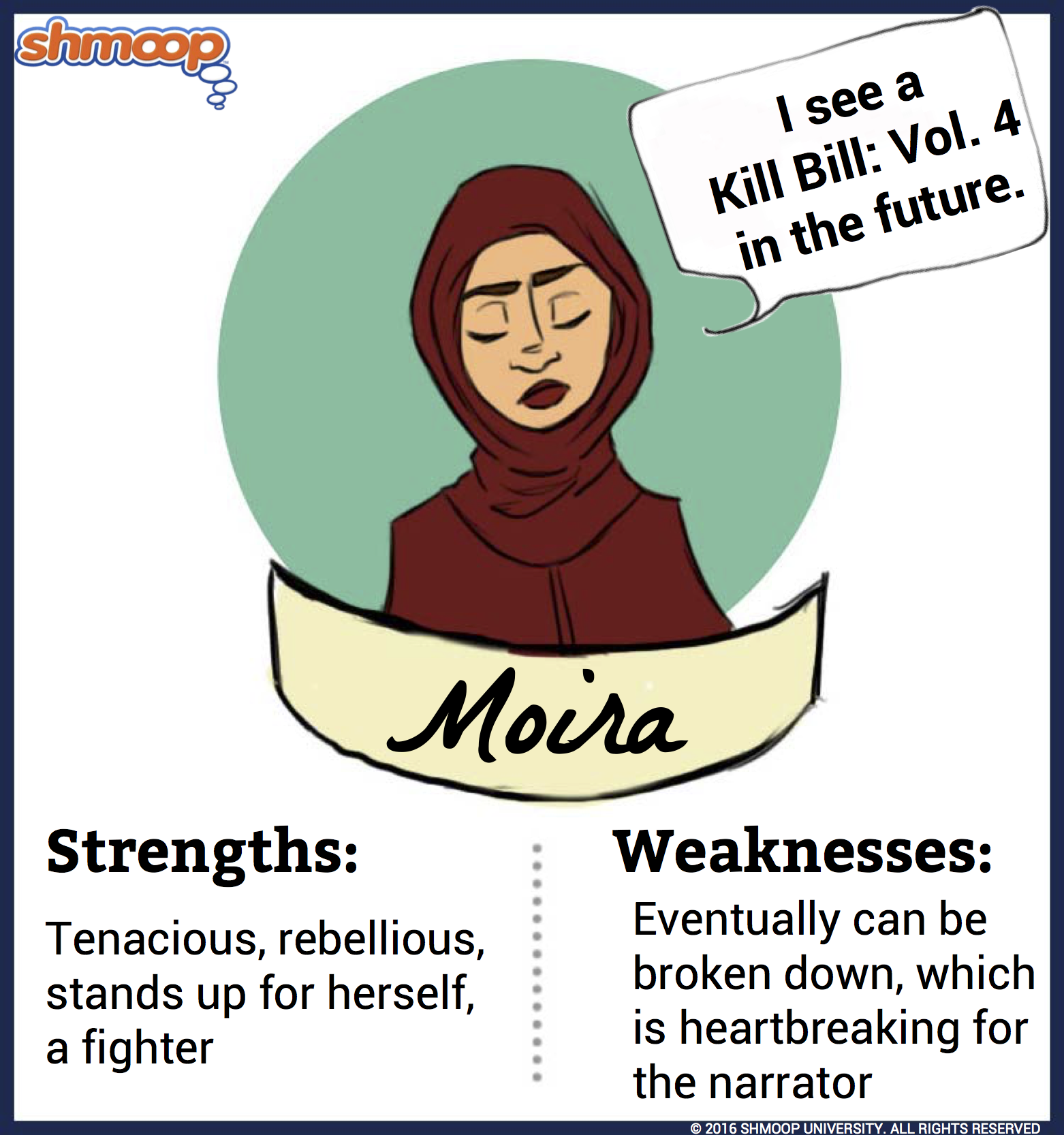
The Institutional Freeze: The Vulnerability of Centralized Banking
The catalyst for Moira’s initial downfall was the systemic termination of female economic power. In the series, this is depicted as a swift, digital execution. One morning, women’s bank accounts were frozen, and their professional lives were terminated by decree. For a character like Moira, who embodied the “self-made” archetype, this was a total annihilation of her financial “moat.”
The Danger of Centralized Digital Assets
Moira’s story highlights a critical vulnerability in modern personal finance: the reliance on centralized banking systems that are subject to state jurisdiction. When the “Laws of Gilead” were enacted, there was no transition period. Because her wealth was stored in traditional, traceable, and centralized accounts, it was effectively deleted.
For the modern investor or financial strategist, Moira’s loss serves as a cautionary tale regarding asset diversification. Her experience underscores the necessity of maintaining assets that exist outside of a single point of failure. This includes exploring decentralized finance (DeFi), non-custodial assets, and physical hedges like precious metals or hard currency, which do not require state permission to access or transfer.
Human Capital as the Only Portable Asset
After her accounts were seized, Moira’s “net worth” shifted from her bank balance to her human capital. In the professional world, human capital refers to the skills, knowledge, and experience possessed by an individual, viewed in terms of their value or cost to an organization or country.
Throughout her captivity, Moira’s survival was predicated on her ability to navigate complex social hierarchies and her technical aptitude. Even when stripped of legal tender, her “internal portfolio”—her resilience, her ability to gather intelligence, and her mechanical skills—remained intact. This reinforces a core principle of personal finance: while markets can crash and accounts can be frozen, the investment in one’s own education and skill set remains the only truly portable and unseizable asset.
The Economics of the Underground: Survival as a High-Stakes Side Hustle
What happened to Moira during her time at “Jezebel’s”—the secret brothel for Gilead’s elite—reveals the mechanics of a shadow economy. When official markets are restricted, underground markets inevitably emerge. Moira’s tenure at Jezebel’s was, in a grim sense, a masterclass in navigating a high-risk, high-reward barter system.
Barter Systems and Black Market Liquidity
In the restricted environment of Gilead, traditional currency is replaced by tokens or “Compancash,” but at Jezebel’s, the economy functioned on trade and favors. Moira had to learn the “exchange rate” of cigarettes, alcohol, and information. This section of her journey illustrates how value is perceived in a crisis economy.
In a collapsed financial system, liquidity is found in “vice” goods and essential supplies. Moira’s ability to procure items and trade for small luxuries or information was a form of micro-entrepreneurship born of necessity. This highlights a professional insight: in any economic environment, there is an opportunity for those who can identify what is scarce and facilitate its movement.
The Financial Logistics of the “Mayday” Venture
Moira’s escape from Jezebel’s and her eventual journey across the border was not merely an act of bravery; it was a logistical feat funded by an underground network. The “Mayday” resistance operates much like a non-profit venture capital firm, investing limited resources into high-risk “startups” (escape attempts).

The “cost” of Moira’s freedom included the specialized labor of “Marthas,” the procurement of transport vehicles, and the bribery of border guards. For the observer of business finance, this highlights the “overhead” of clandestine operations. Every successful escape represented a significant “ROI” (return on investment) for the resistance in the form of a living witness who could provide intelligence to the international community.
Rebuilding from Zero: Financial Integration in a Post-Crisis World
The most overlooked aspect of what happened to Moira is her life after the escape. Arriving in Canada, she transitioned from a state-owned asset to an economic refugee. This stage of her life provides a detailed look at the “Financial Afterlife”—the process of rebuilding credit, identity, and wealth from a baseline of zero.
Navigating Refugee Economies and Social Safety Nets
Upon her arrival in “Little Gilead” (the refugee community in Toronto), Moira entered a new economic reality. Canada’s response to the Gilead crisis involved significant government expenditure on refugee resettlement. Moira had to navigate the bureaucratic hurdles of obtaining a social insurance number, securing government-subsidized housing, and accessing the labor market.
This phase of her life is a lesson in “Economic Resilience.” Rebuilding a financial life after a total loss requires more than just a job; it requires an understanding of a new system’s regulatory framework. Moira’s work at the refugee center was not just a job; it was a strategic move to gain “social credit” and professional standing in a new economy. She leveraged her lived experience to create a niche for herself, effectively “rebranding” her trauma into professional expertise in crisis management and advocacy.
The Psychology of Financial Recovery
Financial trauma, such as that experienced by Moira, often leads to a shift in spending and saving habits. In the latter seasons of the show, we see Moira’s relationship with “abundance.” She is cautious, community-focused, and skeptical of institutional stability.
From a personal finance perspective, this is a common trait among those who have survived economic collapses (such as the Great Depression or hyperinflation events). There is a permanent shift toward high liquidity and a preference for tangible assets. Moira’s journey teaches us that financial “recovery” is as much about psychological recalibration as it is about increasing one’s net worth.
The Macroeconomic Impact of Totalitarian Asset Seizure
Moira’s story is a microcosm of the larger economic failure of the Gilead experiment. By examining what happened to her, we can deduce the broader financial consequences of a society that excludes half its population from the economy.
The “Brain Drain” and Productivity Collapse
When Gilead removed women like Moira from the workforce—doctors, lawyers, editors, and engineers—it committed an act of economic self-sabotage. The “Brain Drain” (the emigration or loss of highly trained or intelligent people) was absolute. Moira’s escape to Canada represented a net gain for the Canadian GDP and a net loss for the Gileadean economy.
By analyzing Moira’s trajectory, we see that the most prosperous nations are those that maximize the participation of their human capital. Gilead’s reliance on slave labor and agricultural output was a regression to a pre-industrial economic model, which is unsustainable in a globalized world. Moira, in her new life in Canada, represents the “recovered value” of a person who is allowed to participate in a free-market system.

The Power of Advocacy Branding
Finally, Moira’s evolution into an activist in Canada is a lesson in “Personal Branding” for a cause. She realized that her story was a valuable asset that could be used to influence international policy and drive “donations” to the resistance.
In the modern world, storytelling is a form of currency. Moira’s ability to articulate what happened to her allowed her to command attention, influence political leaders, and secure funding for the “Mayday” efforts. This demonstrates how an individual can leverage their personal narrative to create systemic change, effectively turning a history of loss into a future of strategic influence.
In summary, what happened to Moira in The Handmaid’s Tale is a harrowing narrative of an individual who was stripped of every financial protection and forced to survive on nothing but her wits and her will. Her eventual success in Canada is a testament to the power of human capital, the necessity of financial diversification, and the relentless pursuit of economic autonomy. For any professional or investor, her story is a reminder that the most important investment you can make is in your ability to survive and thrive when the systems around you fail.
aViewFromTheCave is a participant in the Amazon Services LLC Associates Program, an affiliate advertising program designed to provide a means for sites to earn advertising fees by advertising and linking to Amazon.com. Amazon, the Amazon logo, AmazonSupply, and the AmazonSupply logo are trademarks of Amazon.com, Inc. or its affiliates. As an Amazon Associate we earn affiliate commissions from qualifying purchases.