
The execution of Order 66 remains one of the most significant system-wide overrides in the history of galactic governance. While much has been written regarding the Jedi purge from a political and historical perspective, the technical and biological mechanics of the event—specifically as they pertain to high-level tactical units like Commander Cody (CC-2224)—offer a profound case study in biological programming and centralized command structures. Cody, a model of efficiency and tactical brilliance, represents the pinnacle of the Kaminoan “hardware” integrated with a sophisticated “software” overlay designed for absolute loyalty.
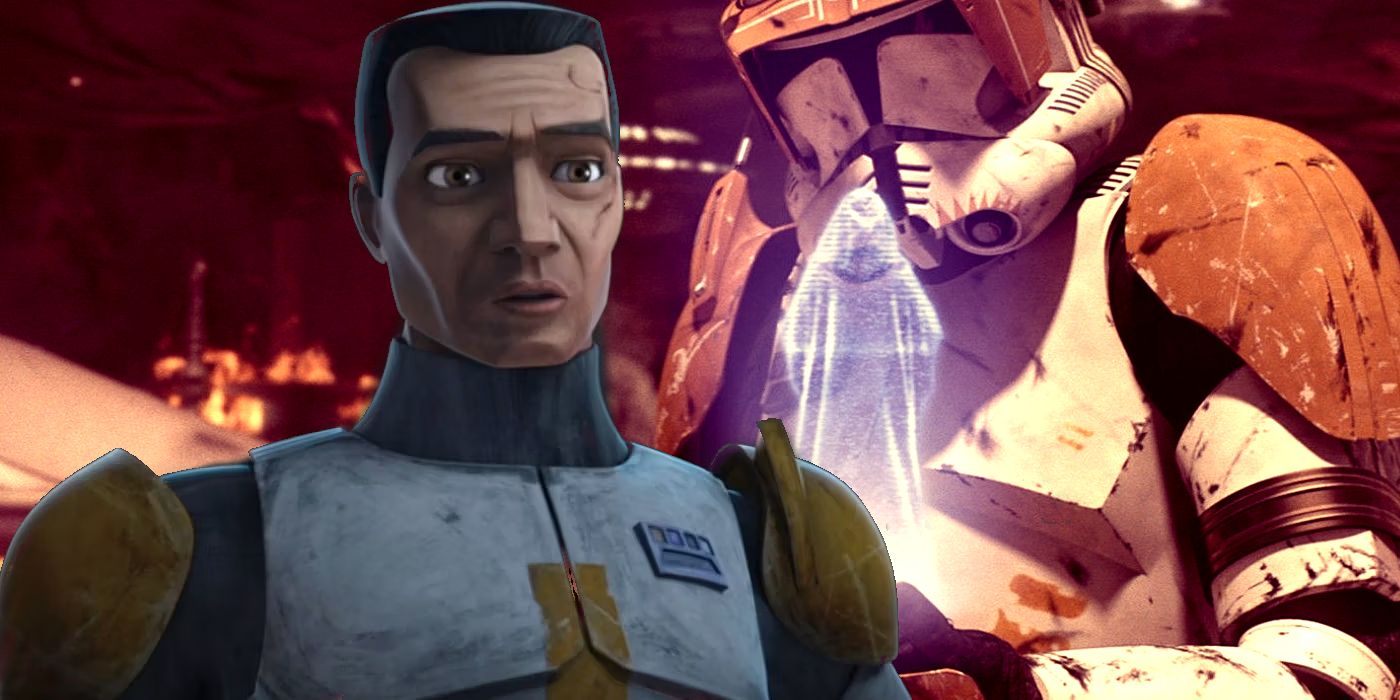
Understanding what happened to Cody after the signal was broadcast requires an analysis of the inhibitor chip technology, his transition into the early Imperial infrastructure, and the eventual “system failure” that led to his departure from the military-industrial complex of the Galactic Empire.
The Architecture of an Automated Betrayal: The Inhibitor Chip as Hardware
To understand Cody’s actions on Utapau and his subsequent career, one must first understand the inhibitor chip—a piece of bio-technology embedded in every clone trooper during the embryonic stage. This chip functioned as a biological “backdoor,” allowing the Supreme Chancellor to bypass the clones’ conscious decision-making processes and execute pre-programmed protocols.
The Protocol 66 Signal: A Galactic System Override
When Palpatine issued Order 66, he was not merely giving a verbal command; he was triggering a high-priority interrupt signal that synchronized across the entire Grand Army of the Republic. For a unit like Cody, who shared a deep professional bond with General Obi-Wan Kenobi, the chip functioned as a forced firmware update. It suppressed the pre-existing “user data”—Cody’s loyalty, friendship, and shared history with Kenobi—and replaced it with a singular directive: eliminate the Jedi threat.
The technical efficiency with which Cody executed this command is a testament to the chip’s reliability. Unlike “jailbroken” units like Captain Rex or the Bad Batch, Cody’s chip functioned within optimal parameters. There was no latency in his response. He did not hesitate; he prioritized the mission profile over personal variables, ordering the AT-TE to fire on Kenobi almost instantly.
The Biological Interface: Why Cody Complied
The inhibitor chip worked by releasing specific neurotransmitters that flooded the frontal lobe, effectively numbing the parts of the brain responsible for moral reasoning and empathy. From a tech perspective, this was a masterpiece of biological engineering. It ensured that even the most intelligent and autonomous clones, such as the Marshal Commanders, remained tethered to the central command server. Following the “reboot” of the Republic into the Empire, Cody remained an active asset, his personality flattened but his tactical processing power intact.
Post-Operational Deployment: Cody and the Early Imperial Infrastructure
Following the official end of the Clone Wars, the newly christened Galactic Empire faced a massive logistical challenge: the transition from a specialized clone army to a mass-conscripted force. Cody was instrumental in this “v1.5” phase of the Imperial military. He was not immediately decommissioned; instead, he was utilized as a legacy system to train the incoming “Human Interface” units—the TK-series stormtroopers.
The Desix Campaign: Testing the Moral Firmware
One of the most revealing chapters in Cody’s post-Order 66 career was the mission to Desix. During this period, the Empire was still refining its planetary occupation protocols. Cody was tasked with neutralizing a Separatist holdout, a mission that served as a diagnostic for his current mental state. While Cody remained a highly effective tactical lead, observers noted a growing discrepancy in his “output.”
On Desix, Cody encountered a former Separatist governor who questioned the Empire’s definition of “peace.” This interaction acted as a piece of corrupt data entering an otherwise clean system. For the first time since the activation of Order 66, Cody’s biological programming began to clash with the reality of the Empire’s authoritarian shift. The “peace” he had been programmed to protect was starting to look more like systemic oppression.

From Commander to Enforcer: Bridging the Gap Between Eras
During the early Imperial era, Cody represented the bridge between the high-cost, high-performance tech of the Kaminoan era and the low-cost, high-volume model of the Imperial Stormtrooper Corps. He served as a senior officer, often overseeing the transition of planets into the Imperial fold. However, the Empire viewed the clones as aging hardware. The clones were subject to accelerated aging, a built-in “planned obsolescence” that made them less viable for long-term Imperial scaling. Cody, despite his rank, was increasingly surrounded by conscripts who lacked his specialized training and biological optimization.
The Technological Obsolescence of the Clone Asset
The Empire’s decision to move away from cloning was a financial and strategic pivot. Maintaining the Kaminoan facilities was prohibitively expensive, and the clones’ inherent independence—when not suppressed by chips—was seen as a security risk. As the Empire transitioned to the “War-Mantle” initiative, legacy assets like Cody were scrutinized for their continued utility.
The Shift to Conscripted Systems
The “Stormtrooper” project was essentially a move from a proprietary, high-end server (the Clones) to a distributed, cloud-based network of conscripted civilians. This new system was easier to replace and required less specialized maintenance. Cody found himself as a sophisticated legacy application running on an OS that no longer valued his specific architecture. The conscripts he commanded lacked the tactical intuition of his fallen brothers, leading to a degradation in overall unit performance—a “system lag” that frustrated Cody’s deeply ingrained military standards.
Data Integrity and the Degradation of the Clone Program
As years passed, the effectiveness of the inhibitor chips began to wane in some clones. Whether through biological degradation or psychological trauma, the “Order 66” programming started to experience bit-rot. In Cody’s case, the cumulative weight of the Empire’s atrocities began to create a recursive loop of moral conflict. He was a soldier programmed for order, but the order he was enforcing was inherently chaotic and destructive. This misalignment between his core directives (protecting the galaxy) and his operational tasks (planetary subjugation) led to an eventual system crash.
The Glitch in the Code: Cody’s Disappearance and “System Failure”
The turning point for Commander Cody came shortly after the Desix mission. While many of his peers, such as Crosshair, doubled down on their programming, Cody’s internal logic reached a breaking point. In technical terms, he experienced a “logic bomb.” He could no longer reconcile his identity as a protector with his role as an Imperial enforcer.
Cody ultimately went AWOL (Absent Without Official Leave), effectively “going offline” from the Imperial network. This was a significant failure for the Imperial security apparatus. A Marshal Commander possesses deep-level access to tactical protocols and Imperial strategies. Cody’s desertion was not just a personnel loss; it was a massive data breach. Despite the Empire’s best efforts to track and recover the asset, Cody vanished into the shadows of the galaxy. Unlike Rex, who joined the burgeoning rebellion, Cody’s path after desertion remains largely undocumented, suggesting he chose to operate in “stealth mode,” avoiding both the Empire and the remnants of his past life.

Lessons in Autonomous Security: The Legacy of the Clone Tech
The story of Commander Cody after Order 66 serves as a cautionary tale in the world of automated systems and biological programming. It highlights the inherent risks of centralized command overrides and the difficulty of maintaining long-term control over sophisticated, autonomous agents.
- The Fragility of Overrides: Order 66 was a successful short-term exploit, but it failed to account for the long-term biological and psychological resilience of the hardware.
- The Cost of Obsolescence: The transition from the Clone Army to the Stormtrooper Corps illustrates the trade-offs between quality and quantity in large-scale system deployments.
- The Persistence of Core Data: Despite heavy-duty programming, the fundamental “personality” and “moral compass” of a unit can eventually reassert itself, leading to unpredictable system behavior.
Cody’s eventual rejection of the Empire proves that even the most advanced programming has its limits. He was a soldier designed for a Republic that no longer existed, running software that was forced upon him, in a system that eventually deemed him obsolete. His disappearance marks the end of an era of high-tech warfare and the beginning of the “Dark Times,” where the cold, unfeeling machinery of the Empire replaced the specialized, human-centric brilliance of the Clone Commanders. In the end, Cody was a piece of tech that refused to be utilized for a purpose that violated its original design parameters.
aViewFromTheCave is a participant in the Amazon Services LLC Associates Program, an affiliate advertising program designed to provide a means for sites to earn advertising fees by advertising and linking to Amazon.com. Amazon, the Amazon logo, AmazonSupply, and the AmazonSupply logo are trademarks of Amazon.com, Inc. or its affiliates. As an Amazon Associate we earn affiliate commissions from qualifying purchases.