
In the early days of the internet, a “What Hairstyle Should I Get Quiz” was often little more than a static set of questions tethered to a handful of pre-rendered images. Today, the landscape has undergone a radical digital transformation. The convergence of Artificial Intelligence (AI), Computer Vision (CV), and Augmented Reality (AR) has turned a simple personality test into a sophisticated diagnostic tool. These applications represent a growing niche in the “Beauty Tech” sector, where software engineering meets aesthetic theory to provide hyper-personalized recommendations.
For developers, tech enthusiasts, and digital strategists, understanding the architecture of these quizzes offers a fascinating glimpse into how consumer-facing AI is evolving. We are no longer just looking at a series of checkboxes; we are looking at real-time biometric analysis and predictive modeling designed to answer one of the most common personal questions in the world.
The Evolution of Personalization: How AI is Redefining the Style Quiz
The fundamental shift in beauty technology lies in the move from subjective input to objective data analysis. Traditional quizzes relied on users self-reporting their face shape—a task that is notoriously difficult for the average person to do accurately. Modern iterations utilize advanced computer vision to eliminate this margin of error.
Computer Vision and Facial Mapping
At the heart of any high-end “What Hairstyle Should I Get” application is a computer vision model, typically built on frameworks like TensorFlow or PyTorch. When a user uploads a photo or enables their camera, the software initiates a process called facial landmark detection.
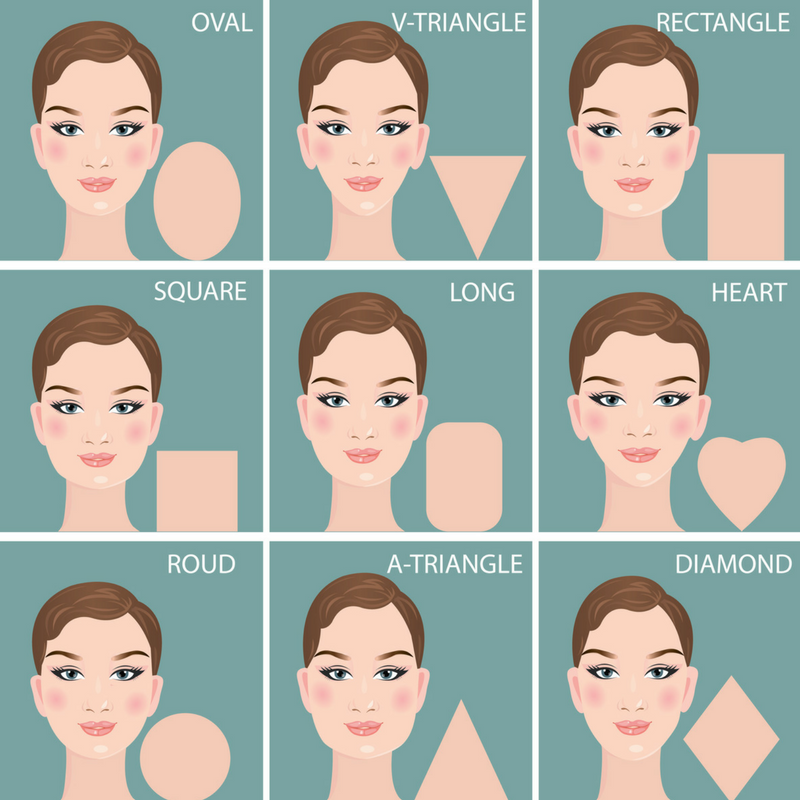
The algorithm identifies dozens, sometimes hundreds, of specific points on the face—the edges of the jawline, the width of the forehead, the distance between the eyes, and the position of the cheekbones. By calculating the geometric ratios between these coordinates, the system can mathematically determine if a face is oval, square, heart-shaped, or diamond-shaped. This is far more precise than a user guessing their shape in a mirror. The software can then cross-reference these biometric markers against a database of hairstyling principles (such as adding volume to the crown for round faces to create an illusion of length) to filter out unsuitable options.
Algorithmic Recommendation Engines
Once the facial architecture is mapped, the recommendation engine takes over. This is where machine learning (ML) models, trained on thousands of professional styling datasets, come into play. These engines don’t just look at face shape; they process multi-modal inputs.
A sophisticated quiz will ask about hair texture (fine, medium, coarse), density, and growth patterns. The algorithm weighs these variables using a weighted scoring system. For instance, while a particular “bob” cut might suit a user’s oval face shape, the engine might deprioritize it if the user indicates they have extremely curly hair with high frizz potential, knowing that the maintenance would be impractical. This level of logical processing mimics the consultative role of a master stylist, delivering a result that is technically viable rather than just aesthetically pleasing.
Augmented Reality (AR) and the Virtual Try-On Revolution
The most significant technological leap in the “What Hairstyle Should I Get” ecosystem is the integration of Virtual Try-On (VTO). This moves the quiz from a text-based result to an immersive visual experience. AR allows users to see a 3D digital twin of a hairstyle superimposed on their own live video feed.
Real-Time Rendering and Latency Challenges
Developing a seamless AR hair experience is one of the most difficult tasks in mobile development. Unlike a virtual pair of glasses, which are rigid 3D objects, hair is fluid and multi-layered. To make a virtual hairstyle look realistic, the software must utilize real-time rendering techniques that account for the user’s movement.
Engineers must solve for “latency”—the delay between the user moving their head and the digital hair following suit. If the latency is too high, the immersion is broken. This requires high-performance shaders and optimized graphics pipelines (often using WebGL for web-based quizzes or Metal/Vulkan for native apps). The software must also handle “occlusion,” ensuring that if the user puts their hand in front of their face, the virtual hair doesn’t awkwardly clip through the hand.
The Intersection of 3D Modeling and Texture Physics
For a virtual hairstyle to look “right,” it must interact with light and shadow in a way that mimics reality. This involves PBR (Physically Based Rendering). Developers create 3D assets that include maps for metallicness, roughness, and transparency.
In a high-quality quiz, the user might be able to toggle between different hair colors. This isn’t just a simple color overlay; it’s a modification of the digital hair’s “albedo” and “gloss” layers. Tech providers like Perfect Corp or L’Oréal’s ModiFace have spent years refining these algorithms to ensure that a “honey blonde” looks different under cool office lighting versus warm home lighting. This level of granular detail is what separates a gimmick from a professional-grade tool.
Data-Driven Beauty: Using Machine Learning to Predict Trends
Beyond individual consultations, the backend of these quizzes serves as a powerful engine for trend analysis and predictive modeling. When thousands of users interact with a hairstyle quiz, they generate a massive repository of anonymized data regarding consumer preferences, hair concerns, and geographic trends.
Leveraging Big Data for Personalized Styling
By analyzing the delta between what users think they want and what the AI recommends, companies can identify gaps in the market. For example, if data shows a 40% increase in users with “coarse, Type 4 hair” seeking “low-maintenance short cuts” in a specific region, developers can update the recommendation engine to prioritize those styles or even feed that data back to product developers.
Machine learning also allows for “collaborative filtering.” Similar to how Netflix suggests movies, a hairstyle quiz can analyze patterns: “Users with your facial structure and hair density who liked the ‘shag cut’ also found the ‘curtain bangs’ highly satisfactory.” This creates a dynamic, evolving recommendation system that improves the more it is used.
Privacy and Ethical Data Management in Beauty Tech
With the collection of facial biometric data comes a significant responsibility regarding digital security. The most reputable hairstyle quizzes now operate on a “privacy-first” framework. This often involves “Edge AI”—performing the facial analysis locally on the user’s device rather than uploading raw images to a cloud server.
For tech companies, compliance with GDPR and CCPA is paramount. When building these tools, developers must implement robust encryption and clear data-retention policies. The “tech” of the quiz isn’t just the AI; it’s the security infrastructure that ensures a user’s biometric “map” isn’t vulnerable to breaches.
Building the Ultimate UX: Designing High-Conversion Style Quizzes
From a software design perspective, the success of a “What Hairstyle Should I Get Quiz” depends heavily on User Experience (UX). If the interface is clunky or the questions are too numerous, the user will drop off before reaching the results.
Interactive Interface Design
Modern UI/UX for beauty tech focuses on “frictionless” interaction. This includes using “swipe” mechanics (popularized by dating apps) to gauge aesthetic preferences quickly. Developers often use frameworks like React or Vue.js to create single-page applications (SPAs) that feel fast and responsive.
Progressive disclosure is another key tactic—only showing the user one piece of information or one question at a time to avoid cognitive overload. The transition from the “quiz” phase to the “AR try-on” phase must be instantaneous. This requires pre-loading the AR engine in the background while the user is answering the final text-based questions.
The Backend: APIs and Scalability
For a quiz to scale to millions of users, the backend must be robust. Many developers use a microservices architecture, where the facial analysis, the recommendation logic, and the image storage are handled by separate, scalable containers (often managed via Kubernetes or AWS Lambda).
Integration via APIs is also crucial. A hairstyle quiz might pull data from a salon’s booking software or an e-commerce platform’s inventory. If the quiz recommends a specific look, the next logical step in the user journey is “Book an Appointment” or “Buy this Styling Gel.” Seamlessly connecting these digital dots is a masterclass in full-stack engineering and strategic API integration.

The Future of Beauty Tech: Beyond the Standard Quiz
We are currently entering the era of Generative AI (GenAI) in the styling world. While current quizzes use pre-made 3D assets, the next generation will use Diffusion Models (similar to Midjourney or DALL-E) to generate hyper-realistic images of the user with an infinite variety of hairstyles that don’t even exist yet.
In this future, a “What Hairstyle Should I Get Quiz” won’t just suggest a style; it will act as a creative partner. It will generate five variations of a “modern pixie” tailored specifically to your unique features, allowing you to tweak the length or texture with voice commands. This move from “retrieval-based” systems (picking from a list) to “generative” systems (creating from scratch) marks the next frontier in the intersection of technology and personal style.
As AI continues to mature, the distinction between a “fun online quiz” and a “professional digital consultation” will disappear. For the tech-savvy consumer, the screen is becoming a powerful tool for self-expression, powered by some of the most advanced algorithms in modern software development.
aViewFromTheCave is a participant in the Amazon Services LLC Associates Program, an affiliate advertising program designed to provide a means for sites to earn advertising fees by advertising and linking to Amazon.com. Amazon, the Amazon logo, AmazonSupply, and the AmazonSupply logo are trademarks of Amazon.com, Inc. or its affiliates. As an Amazon Associate we earn affiliate commissions from qualifying purchases.