
In the study of organizational evolution and institutional authority, few transitions are as dramatic or as strategically significant as the shift from the Wizards’ Council to the Ministry of Magic. For brand strategists and corporate historians, this 1707 transition represents a masterclass in how an entity must reinvent its fundamental identity to survive a paradigm shift in its operating environment. To understand the Ministry of Magic as it exists in the modern consciousness, one must first deconstruct the brand of its predecessor: the Wizards’ Council.

The Wizards’ Council was the primary governing body for the British magical community for over five centuries, beginning in the early 13th century. However, as the global landscape shifted toward the end of the 17th century, the Council found itself suffering from a legacy brand identity that was no longer fit for purpose. The eventual dissolution of the Council and the rise of the Ministry of Magic was not merely a change in name; it was a total strategic overhaul of how authority was packaged, communicated, and enforced.
The Wizards’ Council: Understanding the Legacy Brand Architecture
Before the sleek, centralized authority of the Ministry of Magic, the Wizards’ Council operated as a fragmented and often reactive governing body. Its brand was built on the concept of a “High Court” or an aristocratic assembly rather than a bureaucratic executive office. Led by a Chief Warlock, the Council was characterized by its lack of a cohesive administrative structure—a fatal flaw for any organization attempting to manage a complex population.
The Limitations of Decentralized Governance
The Wizards’ Council was essentially a brand defined by its exclusivity. It functioned as a collection of influential individuals rather than an integrated system of departments. In modern brand strategy terms, this is known as a “Branded House” that lacks a unified operational manual. Decisions were made via assembly, which resulted in a brand perception of being sluggish, elitist, and inconsistent. Because the Council lacked a central executive figure with broad mandates, its ability to project a singular “voice of authority” was severely compromised.
Aesthetic and Cultural Identity
The identity of the Council was rooted in the medieval tradition. While this provided a sense of historical gravitas, it failed to provide the sense of security and modern efficiency that the populace eventually demanded. The “Chief Warlock” title carried connotations of judicial power, but it lacked the executive branding of a “Minister.” This distinction is vital in corporate identity: a title defines the scope of a leader’s promise to their stakeholders. A warlock judges; a minister serves and administers.
The Catalyst for Rebranding: Market Disruption and the Statute of Secrecy
Every major institutional rebrand is driven by a catalyst—a shift in the market or the regulatory environment that makes the status quo untenable. For the wizarding world, this disruption was the 1689 signing and 1692 official enforcement of the International Statute of Secrecy. This global regulatory mandate required a complete overhaul of how magical society interacted with the non-magical world.
The Failure of the Council Brand
The Wizards’ Council was fundamentally unequipped to handle the rigorous demands of the Statute of Secrecy. The new “market reality” required a government that could operate with high-level precision, intelligence, and a massive administrative footprint. The Council, with its loose assembly of elders, could not provide the 24/7 monitoring and enforcement required to keep magic hidden on a national scale.
From a strategic perspective, the Council was a “Legacy Brand” attempting to compete in a “Disrupted Market.” The stakeholders—the magical citizens of Britain—began to lose trust in the Council’s ability to protect their lifestyle. When a brand’s promise (in this case, security and sovereignty) can no longer be fulfilled by its current structure, a total pivot is the only viable path forward.
Ulick Gamp and the Vision for a New Identity
In 1707, the transition was formalized with the appointment of Ulick Gamp as the first Minister for Magic. Gamp’s role was that of a visionary CEO brought in to lead a struggling firm through a merger or a total restructuring. He recognized that the name “Wizards’ Council” was tied to a period of instability. To signal a new era, a new brand name was required: The Ministry of Magic. This naming convention borrowed from the burgeoning structures of modern civil service, instantly communicating a sense of order, professionalization, and departmental depth.
The Architecture of the Ministry: Building Institutional Authority
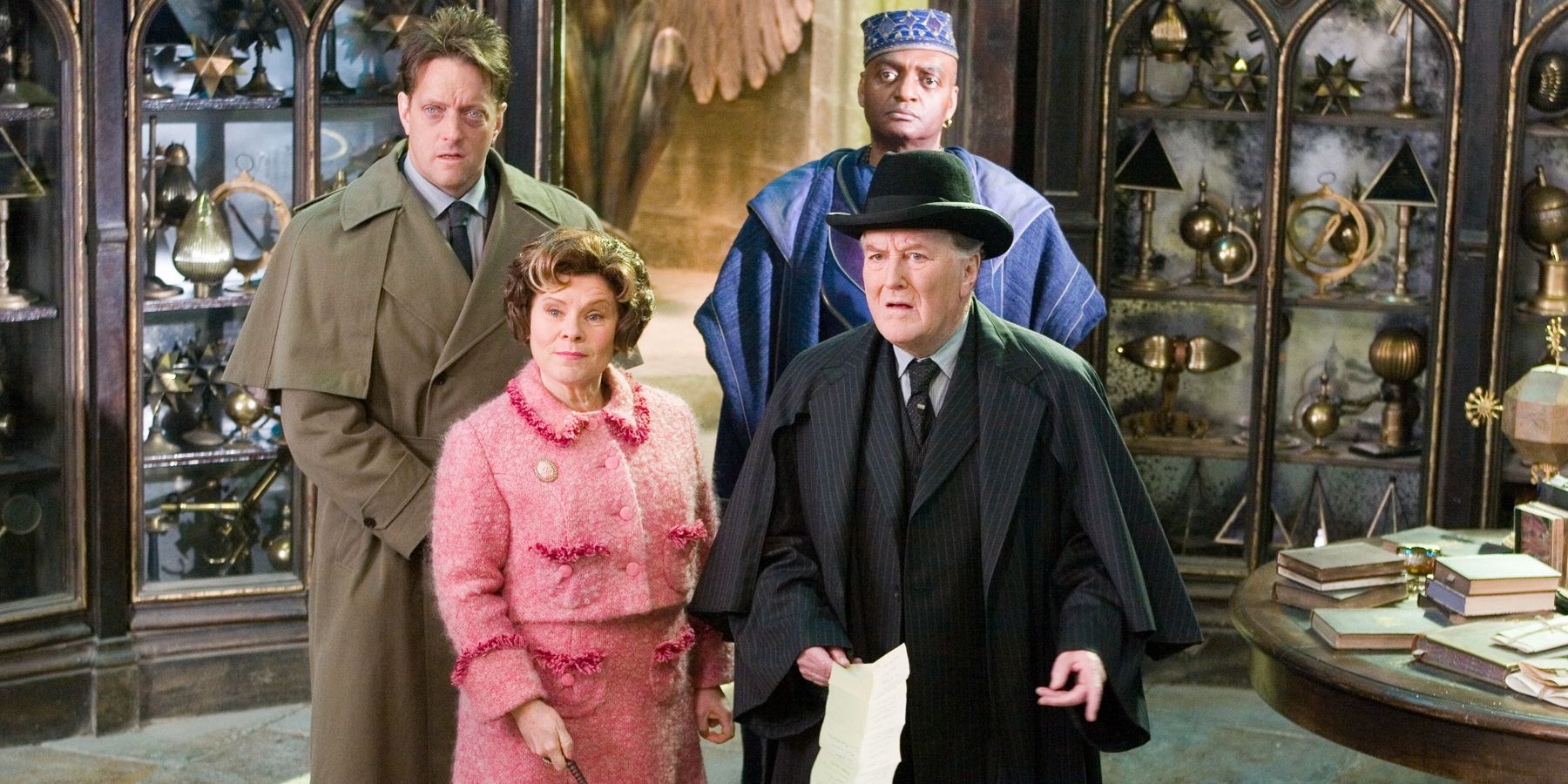
The shift from Council to Ministry involved more than a change in stationery. It was a structural reorganization designed to create a “total brand experience” for the citizen. This is where the Ministry of Magic truly excelled in establishing a corporate identity that would endure for centuries.
Departmentalization as a Brand Strategy
The Ministry introduced a clear, hierarchical structure categorized into distinct departments, such as the Department of Magical Law Enforcement and the Department of International Magical Cooperation. By breaking down the government’s functions into recognizable “sub-brands,” the Ministry made itself more accessible and more formidable.
In brand architecture, this is a “Multi-Brand Strategy” under a strong “Master Brand.” Each department had its own specific mandate and visual identity, yet all were unified under the golden Ministry seal. This allowed the government to manage multiple complex issues simultaneously while maintaining a single, powerful brand image in the eyes of the public.
The Atrium: Visual Identity and Public Relations
The Ministry of Magic invested heavily in its physical “corporate headquarters.” The Atrium, with its grand architecture, the Fountain of Magical Brethren, and the busy flow of memos, served as a physical manifestation of the brand. It was designed to overwhelm and inspire. Unlike the shadowy, assembly-based meetings of the Council, the Ministry was a sprawling, subterranean machine.
This visual identity was crucial for internal culture as well. Employees of the Ministry felt part of a prestigious, world-class organization. The Ministry’s branding didn’t just target the public; it targeted its own workforce, ensuring that the “corporate values” of secrecy and order were upheld at every level of the hierarchy.
Lessons for Modern Brands: Managing Large-Scale Transitions
The evolution from the Wizards’ Council to the Ministry of Magic provides several critical insights for modern organizations facing the need for a fundamental rebrand. Whether a company is pivoting in response to technological disruption or an institutional shift, the mechanics of the 1707 transition remain relevant.
1. Identify When the Legacy Brand is a Liability
The Council was not “broken” in a traditional sense, but it was obsolete. Modern brands often cling to heritage at the expense of relevance. If your brand’s structure prevents you from meeting the primary demands of your current market, the heritage is no longer an asset—it’s a weight. The Ministry’s success was predicated on its willingness to completely discard the “Council” nomenclature and start fresh.
2. Naming Conventions Matter
The word “Ministry” changed the psychological contract between the government and the governed. It moved the perception from “a group of people who rule us” to “an institution that manages our society.” When rebranding, the psychological weight of words must be the primary consideration. A name should not just describe what an organization is, but what it does for its audience.
3. Centralize the Message, Decentralize the Service
The Ministry’s departmental structure allowed it to be omnipresent without being unfocused. For a large brand to remain effective, it must appear to be a single entity to the consumer (the Master Brand) while operating as a series of specialized units. This ensures that no single failure destroys the entire brand’s reputation, as the issue can be contained within a specific “sub-brand” or department.
4. Visual Authority as a Tool of Trust
The Ministry used grandeur and scale to project stability. In times of uncertainty—such as the years following the Statute of Secrecy—stakeholders gravitate toward brands that look and feel permanent. The aesthetic of the Ministry was a deliberate choice to project power during a time when the wizarding world felt vulnerable.

Conclusion: The Endurance of the Ministry Brand
The government body that directly preceded the Ministry of Magic—the Wizards’ Council—failed because it could not adapt its brand identity to a changing world. It was a victim of its own lack of structure and its inability to project a modern image of authority. The transition in 1707 was one of the most successful institutional rebrands in history, creating a system that would remain the gold standard for magical governance for over three hundred years.
For modern brand strategists, the lesson is clear: when the world changes, the brand must change with it. A name, a logo, or a structure that served for five hundred years can become a liability overnight if it no longer speaks to the needs and fears of the audience. The Ministry of Magic succeeded where the Council failed because it understood that power is not just about the ability to govern—it is about the brand of governance.
aViewFromTheCave is a participant in the Amazon Services LLC Associates Program, an affiliate advertising program designed to provide a means for sites to earn advertising fees by advertising and linking to Amazon.com. Amazon, the Amazon logo, AmazonSupply, and the AmazonSupply logo are trademarks of Amazon.com, Inc. or its affiliates. As an Amazon Associate we earn affiliate commissions from qualifying purchases.