
In the world of fast-moving consumer goods (FMCG), few questions have sparked as much debate or as many marketing campaigns as the sequence of hair care. While the question “what goes on first: shampoo or conditioner?” appears on the surface to be a simple matter of personal hygiene, it is, in fact, a complex intersection of brand strategy, product positioning, and consumer psychology. For decades, the beauty industry has dictated a specific ritual—shampoo first, conditioner second—but as markets become saturated and brand differentiation becomes more difficult to achieve, the “rules” are being rewritten.

Understanding the sequence of product application is not just about hair health; it is about how brands build authority, create habits, and disrupt established markets to capture consumer attention. This analysis explores how the order of operations in the shower has become a powerful tool for brand storytelling and corporate identity.
The Legacy Loop: How Traditional Branding Set the Standard
To understand why we default to shampooing first, we must look at the history of modern brand strategy. In the mid-20th century, the giants of the personal care industry—companies like Procter & Gamble and Unilever—had a specific goal: to create a repeatable, scalable consumer habit. By establishing a rigid two-step process, they were able to sell two distinct products instead of one.
The Creation of the “Problem-Solution” Narrative
Traditional branding relies on the “Problem-Solution” framework. Shampoo was branded as the “cleanser” (the solution to dirt and oil), but it created a new problem: stripped, dry hair. This allowed brands to position conditioner as the essential second step—the “restorer.” By cementing this sequence in the global consciousness, brands ensured a 1:1 purchase ratio for both product categories. This legacy branding was so successful that for over fifty years, the order was never questioned by the mainstream market.
Packaging as a Visual Cue for Sequence
Brand identity extends beyond the liquid inside the bottle; it lives in the physical design. Notice how many brands design their shampoo and conditioner bottles to be slightly different. Often, the shampoo bottle stands upright with the cap at the top, while the conditioner bottle is inverted with the cap at the bottom. This is a deliberate UX (User Experience) design choice. It signals to the consumer that the products are different and reinforces the sequence through tactile memory. The brand becomes a guide, subtly directing the consumer’s behavior without a single word of instruction.
Habit Formation and Brand Loyalty
The “shampoo then conditioner” routine is a prime example of habit stacking. Once a consumer is locked into a specific ritual, they are less likely to switch brands because the brand is integrated into their daily automation. Brands that successfully own a “step” in the routine gain a competitive moat. When a consumer thinks of “Step 1,” the brand that dominates that mental space wins the long-term loyalty battle.
Disrupting the Ritual: The Rise of “Reverse Washing” as a Brand Strategy
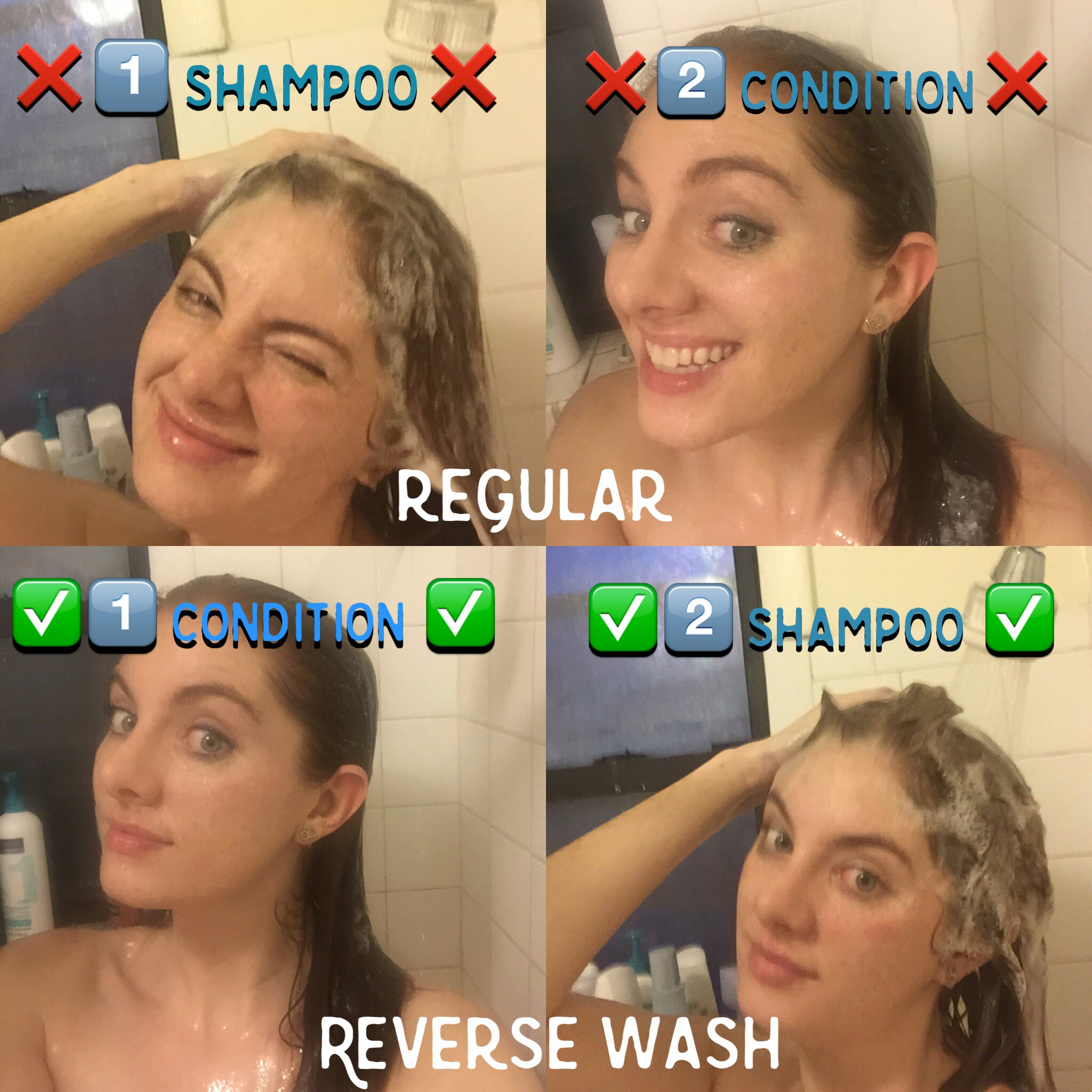
As the beauty market became hyper-competitive, new players and established giants alike realized that they could no longer compete solely on ingredients. They needed to disrupt the ritual itself. This led to the birth of “Reverse Washing”—the strategy of applying conditioner first and shampoo second.
Differentiation Through Methodology
In branding, if you cannot be the best in an established category, you create a new category. By suggesting that consumers should use conditioner first, brands like TRESemmé and various boutique labels successfully “disrupted” the standard shower routine. This wasn’t just a change in advice; it was a repositioning of the brand as an innovator that understands the “true” needs of the consumer (specifically those with fine hair who find traditional conditioning too heavy).
The “Expert” Persona and Authority Building
When a brand tells you that you have been doing something wrong for thirty years, it immediately positions itself as an authority. “Reverse Washing” campaigns are masterclasses in educational marketing. By providing a “secret” or a “new way,” the brand builds a deeper level of trust with the consumer. This strategy shifts the brand from being a mere commodity provider to being a consultant. In the digital age, where information is currency, brands that offer “better” methods gain more traction than those that simply offer “better” products.
Creating a New Product Cycle
The move to change the sequence also allowed brands to develop entirely new product lines. “Pre-wash conditioners” and “Cleansing oils” are essentially rebranding efforts designed to fit into the newly created slots in the consumer’s routine. This increases the “basket size” at checkout. Instead of a two-step process, brands now advocate for a three or four-step system, all predicated on the idea that the traditional sequence might be flawed.
Educational Marketing: Using Routine as a Branding Tool
The question of “what goes on first” is one of the most highly searched queries in the beauty niche. Brands that capture this traffic through high-quality, SEO-driven content are practicing a form of “Inbound Brand Strategy.”
Content as the Top of the Funnel
When a consumer types this question into a search engine, they are in a “state of need.” Brands like Dove, L’Oréal, and Pantene create exhaustive guides on their websites to answer this question. This serves two purposes: it establishes the brand’s digital authority and funnels the user toward a specific product line. By providing the answer, the brand earns the right to suggest the product.
The Psychology of Professional Endorsement
Many brands lean heavily on “Salon Quality” or “Stylist Recommended” branding. By explaining the science of the hair cuticle—how shampoo opens it and conditioner seals it—brands use technical jargon to reinforce their professional identity. This educational approach justifies a higher price point. If a brand can explain why the sequence matters using scientific-sounding terminology, the consumer perceives the brand as more “premium” than a competitor that simply says “wash your hair.”
Personalization and the “Niche” Brand
We are currently seeing a shift from “Mass Branding” to “Personalized Branding.” New-age brands (often Direct-to-Consumer or DTC) use quizzes to determine a customer’s specific hair needs. These brands often customize the sequence for the user. One person might be told to shampoo twice, while another is told to use a “co-wash” (conditioner only). This hyper-personalization makes the consumer feel that the brand is built specifically for them, fostering an intense brand-consumer bond that traditional “one-size-fits-all” brands struggle to match.
The Business of the “System”: Selling the Set
In corporate strategy, the goal is rarely to sell a single bottle of shampoo; it is to sell a “system.” The debate over which goes first is a tactical move to ensure the consumer uses products from the same brand family.
The Chemistry of Cross-Selling
Brands often claim that their shampoo and conditioner are “chemically balanced” to work specifically with each other. This is a powerful brand narrative. It discourages the consumer from “mixing and matching” (e.g., using a Head & Shoulders shampoo with an Oribe conditioner). By insisting that the sequence only works if you use their Step 1 and their Step 2, brands maximize their revenue per customer.
Brand Identity and the “Self-Care” Movement
The modern brand does not just sell a cleaning product; it sells an “experience.” The sequence of shampoo and conditioner has been rebranded as a “ritual” or “ceremony.” This ties the brand to the broader wellness and self-care movement. When the sequence becomes a ritual, the products become emotional purchases rather than functional ones. Brands that tap into this emotional sequence can charge a significant premium because they are selling a feeling of luxury and order in a chaotic world.
Sustainability and the Future of the Sequence
As “Waterless Beauty” and “Solid Bars” become more popular, brands are facing a new challenge: how to maintain the sequence without the traditional plastic bottles. Sustainable brands are using the “shampoo or conditioner first” debate to highlight their eco-friendly credentials. For example, a brand might promote a “2-in-1” bar but frame it as a technological breakthrough that respects the natural oils of the hair, effectively bypassing the sequence debate entirely to position themselves as the “future” of the industry.
Conclusion: The Strategic Power of Sequence
The answer to “what goes on first: shampoo or conditioner” is ultimately a reflection of the brand’s identity. If a brand values tradition and mass-market reliability, it will stick to the “Shampoo First” dogma. If a brand seeks to be a disruptor, an innovator, or a high-end consultant, it will challenge that sequence, offering “Reverse Washing” or “Multi-step Systems.”
For the consumer, the sequence is a matter of hair texture and health. For the brand, the sequence is a matter of market share, consumer psychology, and strategic positioning. By controlling the order in which we use products, brands control our habits, our perceptions of value, and ultimately, our loyalty. In the high-stakes world of brand strategy, the order of operations is never accidental—it is the blueprint for a consumer’s daily life.
aViewFromTheCave is a participant in the Amazon Services LLC Associates Program, an affiliate advertising program designed to provide a means for sites to earn advertising fees by advertising and linking to Amazon.com. Amazon, the Amazon logo, AmazonSupply, and the AmazonSupply logo are trademarks of Amazon.com, Inc. or its affiliates. As an Amazon Associate we earn affiliate commissions from qualifying purchases.