
In the era of the software-defined vehicle, the physical manifestations of mechanical distress have transitioned from mere visual cues to complex data points within a digital ecosystem. When a vehicle emits white exhaust smoke, it is no longer just a sign for a mechanic to interpret by sight; it is a critical failure state that triggers a cascade of sensor data, diagnostic trouble codes (DTCs), and algorithmic analysis. Understanding what white exhaust smoke indicates requires a deep dive into the intersection of automotive engineering, sensor technology, and diagnostic software.
For tech enthusiasts, developers, and hardware specialists, white smoke represents a breach in the system’s integrity—a hardware failure that manifests through chemical reactions and is monitored by sophisticated onboard processing units. This guide explores the technological infrastructure behind exhaust diagnostics and what these visual signals mean for the health of modern transportation systems.
The Sensor Architecture: How Modern Tech Detects Exhaust Anomalies
At the heart of every modern internal combustion engine (ICE) lies the Engine Control Unit (ECU), a powerful microprocessor that acts as the “brain” of the vehicle. To understand white exhaust smoke from a technical perspective, one must first understand the sensor suite that monitors the combustion process.
The Role of Oxygen and Lambda Sensors
While white smoke is often visible to the naked eye, the vehicle’s software detects the conditions leading to it long before the driver might notice a cloud in the rearview mirror. Oxygen sensors (or Lambda sensors) positioned in the exhaust manifold measure the concentration of oxygen in the exhaust gases. If a vehicle is producing white smoke due to a lean fuel mixture (too much air, not enough fuel), the oxygen sensor sends a high-voltage signal to the ECU.
Advanced wideband Lambda sensors provide a granular stream of data, allowing the ECU to adjust fuel trim in real-time. When the software can no longer compensate for the deviation, it logs a specific error code, such as P0171 or P0174, indicating a system lean condition that can cause thin, white vapor-like smoke.
Coolant Temperature and Pressure Sensors
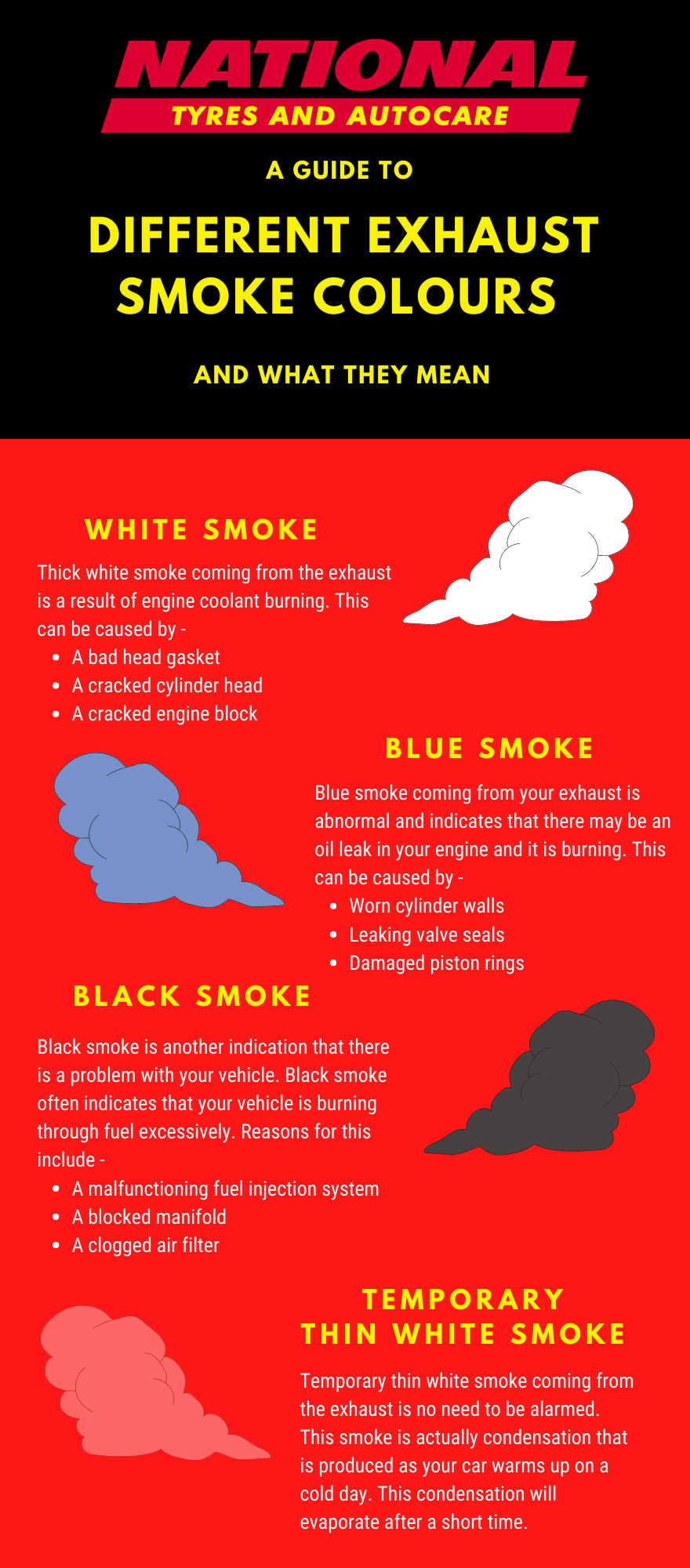
Thick, billowing white smoke is typically a sign of coolant entering the combustion chamber. From a hardware standpoint, this is monitored via the Engine Coolant Temperature (ECT) sensor and, in some high-end performance vehicles, pressure sensors within the cooling system.
When a head gasket fails—a “hardware breach” in the engine block—the ECU detects a rapid rise in operating temperature and a potential drop in pressure within the cooling loop. The white smoke is actually steam, produced when the water-glycol mixture is atomized and burned. Modern diagnostic tools can tap into this real-time data stream to confirm whether the white smoke correlates with a digital “thermal runaway” event.
Particulate Matter (PM) Sensors in Diesel Tech
In diesel-powered technology, white smoke often indicates unburnt fuel passing through the system, frequently due to faulty fuel injection timing. Diesel Particulate Filter (DPF) technology utilizes differential pressure sensors to monitor the health of the exhaust stream. If the injection software or the high-pressure common rail hardware fails, the PM sensors detect an anomaly in the exhaust opacity, triggering a “limp mode” to protect the hardware from further damage.
Diagnostic Software and the OBD-II Ecosystem
The transition from “shade-tree mechanics” to digital diagnostics is facilitated by the On-Board Diagnostics II (OBD-II) protocol. When white smoke appears, the underlying tech stack provides the roadmap for repair.
Interpreting Diagnostic Trouble Codes (DTCs)
The most common way to diagnose white smoke is through an OBD-II scanner paired with specialized software. Professional-grade tools like Autel or Snap-on, as well as consumer-grade Bluetooth dongles like BlueDriver, interpret the hexadecimal data coming from the ECU.
- P0300 Series: Indicates misfires, which can result in unburnt fuel being expelled as white/grey smoke.
- P0117/P0118: Indicates ECT sensor circuit issues, correlating with coolant-related white smoke.
- P0200 Series: Points to injector circuit malfunctions, a primary cause of white smoke in diesel engines.

Data Logging and PID Analysis
For developers and power users, the real value lies in Parameter IDs (PIDs). Using software like Torque Pro or PC-based suites like VCDS, users can log real-time data while the vehicle is running. By graphing the “Long Term Fuel Trim” against “Coolant Temperature” and “Mass Airflow (MAF)” readings, a technician can use data visualization to pinpoint exactly when the white smoke occurs. This level of technical analysis allows for “predictive maintenance,” identifying a failing head gasket through subtle pressure fluctuations before the physical smoke even appears.
Mobile App Integration and Cloud Diagnostics
The “Internet of Things” (IoT) has extended to the exhaust pipe. Modern telematics platforms used by fleet management companies (such as Geotab or Samsara) transmit exhaust data to the cloud. If a vehicle in a fleet begins producing white smoke, the cloud-based AI can analyze the sensor deviations across the entire fleet to determine if a specific batch of hardware or a recent software update is to blame. This macro-level tech analysis is revolutionizing how we understand mechanical failure.
AI and Machine Learning in Predictive Diagnostics
We are entering an era where visual and auditory cues are analyzed by Machine Learning (ML) models. The presence of white exhaust smoke is now a variable in complex predictive algorithms.
Acoustic and Visual Pattern Recognition
Some tech startups are developing AI tools that use a smartphone’s camera and microphone to diagnose engine health. By analyzing the “signature” of the white smoke—its density, how quickly it dissipates, and the sound of the engine idling—ML models can differentiate between a cracked block (thick, sweet-smelling steam) and a faulty fuel injector (thin, acrid-smelling vapor).
Digital Twins and Simulation
Engineers use “Digital Twin” technology to simulate the lifespan of an engine. By inputting data points related to white smoke incidents, software like Ansys or Siemens Digital Industries Software can simulate the thermal stress on the engine components. This allows manufacturers to iterate on hardware designs, creating gaskets and seals that are more resilient to the conditions that lead to white smoke.
The Shift to EV Diagnostics
As the industry moves toward Electric Vehicles (EVs), the concept of “exhaust smoke” is becoming a legacy technical term. However, the tech used to monitor thermal events in ICE exhaust is being repurposed to monitor battery health. “Smoke” in an EV context usually indicates a thermal runaway event in the lithium-ion cells—a much more critical “hardware failure.” The software transition from monitoring exhaust gases to monitoring battery thermals represents the next frontier in automotive diagnostic technology.
Digital Security and Remote Correction
In the connected car landscape, sometimes the cause of white smoke isn’t a physical crack, but a software glitch. This brings digital security and Over-the-Air (OTA) updates into the conversation.
Software Calibration and Injection Timing
If a manufacturer discovers that a specific software calibration is causing engines to run too lean or timing to be retarded (leading to white smoke), they no longer require a physical recall in all cases. Companies like Tesla and Ford are increasingly using OTA updates to patch the ECU’s firmware. By optimizing the fuel injection mapping remotely, they can eliminate the conditions causing white smoke across thousands of vehicles simultaneously.
The Risk of Unauthorized Tuning
Conversely, the tech-savvy community often engages in “tuning” or “remapping” ECUs to gain more horsepower. Unauthorized third-party software can bypass safety protocols, pushing injectors beyond their duty cycle or altering timing in a way that produces white smoke. From a digital security perspective, this highlights the importance of “secure boot” and encrypted firmware in modern vehicle modules to prevent hardware damage caused by unoptimized code.

Conclusion: The Digital Reality of Mechanical Failure
White exhaust smoke is a physical symptom, but in the modern technological landscape, it is fundamentally a data problem. Whether it is an O2 sensor reporting a lean mixture, a telematics unit reporting a coolant pressure drop to the cloud, or an AI model analyzing the opacity of the emission, the tech surrounding our vehicles is designed to translate smoke into actionable intelligence.
As we move forward, the “mechanic” of the future will be as much a data scientist as a technician. By understanding the sensors, the OBD-II protocols, and the AI-driven predictive models, we can see white exhaust smoke for what it truly is: a critical system alert in one of the most complex pieces of hardware we own. Identifying the root cause through a tech-centric lens ensures higher precision, longer vehicle lifespans, and a deeper understanding of the machines that power our world.
aViewFromTheCave is a participant in the Amazon Services LLC Associates Program, an affiliate advertising program designed to provide a means for sites to earn advertising fees by advertising and linking to Amazon.com. Amazon, the Amazon logo, AmazonSupply, and the AmazonSupply logo are trademarks of Amazon.com, Inc. or its affiliates. As an Amazon Associate we earn affiliate commissions from qualifying purchases.