
The economic relationship between the United States and Mexico represents one of the most sophisticated and integrated trade corridors in the world. As the two nations continue to strengthen ties under the framework of the United States-Mexico-Canada Agreement (USMCA), the flow of goods across the southern border has become a primary driver of North American prosperity. For investors, business owners, and financial analysts, understanding exactly what the United States exports to Mexico is not merely an exercise in tallying commodities; it is a vital assessment of supply chain finance, corporate revenue streams, and regional economic stability.
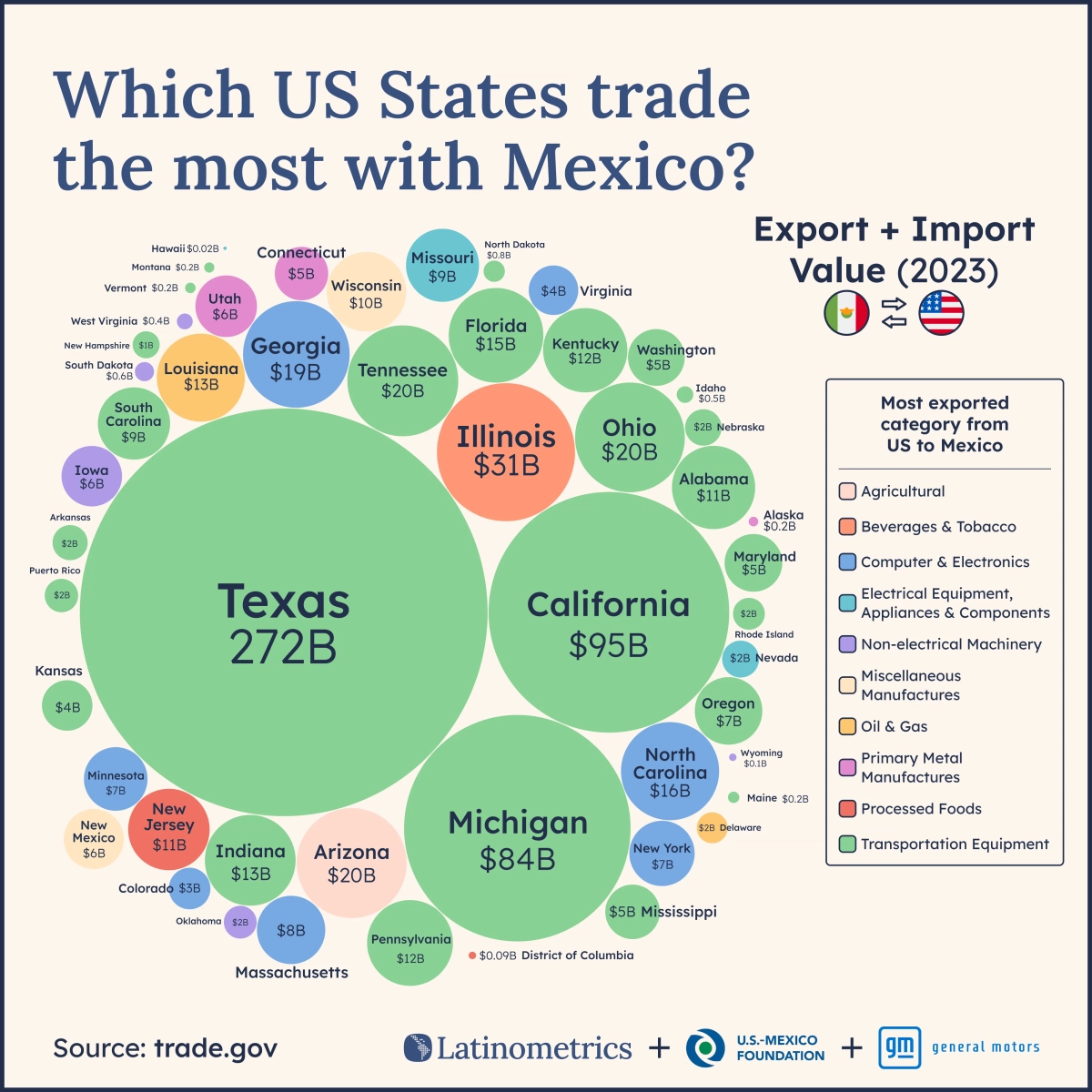
Mexico has consistently ranked as one of the top two trading partners for the U.S., often vying with Canada for the number one spot. The sheer volume of exports—exceeding hundreds of billions of dollars annually—supports millions of American jobs and fuels the growth of diverse sectors ranging from energy to advanced manufacturing. To understand the “money” behind these exports, one must look at the specific categories that dominate the balance sheet and the financial mechanisms that allow this massive cross-border exchange to function.
The Financial Landscape of North American Trade
The integration of the U.S. and Mexican economies is characterized by “co-production.” Unlike traditional trade where one country simply sells a finished product to another, the U.S. and Mexico often build things together. This means that many U.S. exports to Mexico are intermediate goods—parts and components that are integrated into larger systems before being sold globally or sent back to the U.S.
From a business finance perspective, this relationship is bolstered by “nearshoring.” As global corporations seek to reduce their dependence on long-distance Asian supply chains, capital is flowing into the North American corridor. This shift has turned the U.S.-Mexico border into a high-velocity financial zone where trade credit, currency hedging, and logistics financing play critical roles.
The Impact of USMCA on Capital Flows
The transition from NAFTA to USMCA modernized the rules of the game, providing a more stable environment for long-term investment. By reducing tariffs and streamlining customs procedures, the agreement has lowered the “cost of doing business,” directly impacting the bottom line of U.S. exporters. Financial markets react positively to this stability, as it allows for more accurate forecasting of revenue from Mexican markets.
Nearshoring and Direct Investment
The movement of manufacturing facilities closer to the end consumer—primarily the U.S. market—has led to a surge in demand for U.S. capital goods. When a company opens a factory in Monterrey or Querétaro, they frequently source their sophisticated machinery, specialized software, and raw materials from U.S. suppliers. This creates a feedback loop where U.S. capital investment in Mexico drives U.S. export growth.
Key Export Sectors Driving U.S. Corporate Revenue
The composition of U.S. exports to Mexico is heavily weighted toward high-value industrial components and essential commodities. Examining these sectors reveals where the bulk of the financial value lies.
Industrial Machinery and Electronic Components
Machinery and electrical equipment consistently sit at the top of the export list. This category includes everything from computer processors and semi-conductors to heavy industrial equipment used in automotive assembly lines.
For the U.S. tech and manufacturing sectors, Mexico is a critical “customer.” The financial significance here lies in the high margins associated with specialized machinery. U.S. companies like Caterpillar, John Deere, and various semiconductor manufacturers rely on the Mexican industrial base to sustain their quarterly earnings. The export of electronic integrated circuits alone represents a multi-billion dollar revenue stream, highlighting the symbiotic relationship between U.S. innovation and Mexican assembly capabilities.
Mineral Fuels and Energy Products
Energy is perhaps the most strategically significant U.S. export to Mexico. Despite Mexico’s status as an oil producer, it relies heavily on the United States for refined petroleum products, natural gas, and distillates.
The financial infrastructure supporting energy exports is immense. Pipeline networks crossing the border facilitate the constant flow of natural gas, which powers Mexican industry and electricity generation. For U.S. energy firms, Mexico provides a reliable, high-volume market that helps balance domestic supply and demand. This trade is often conducted through long-term contracts and complex energy derivatives, making it a cornerstone of the regional financial energy market.
Agricultural Commodities and Food Systems
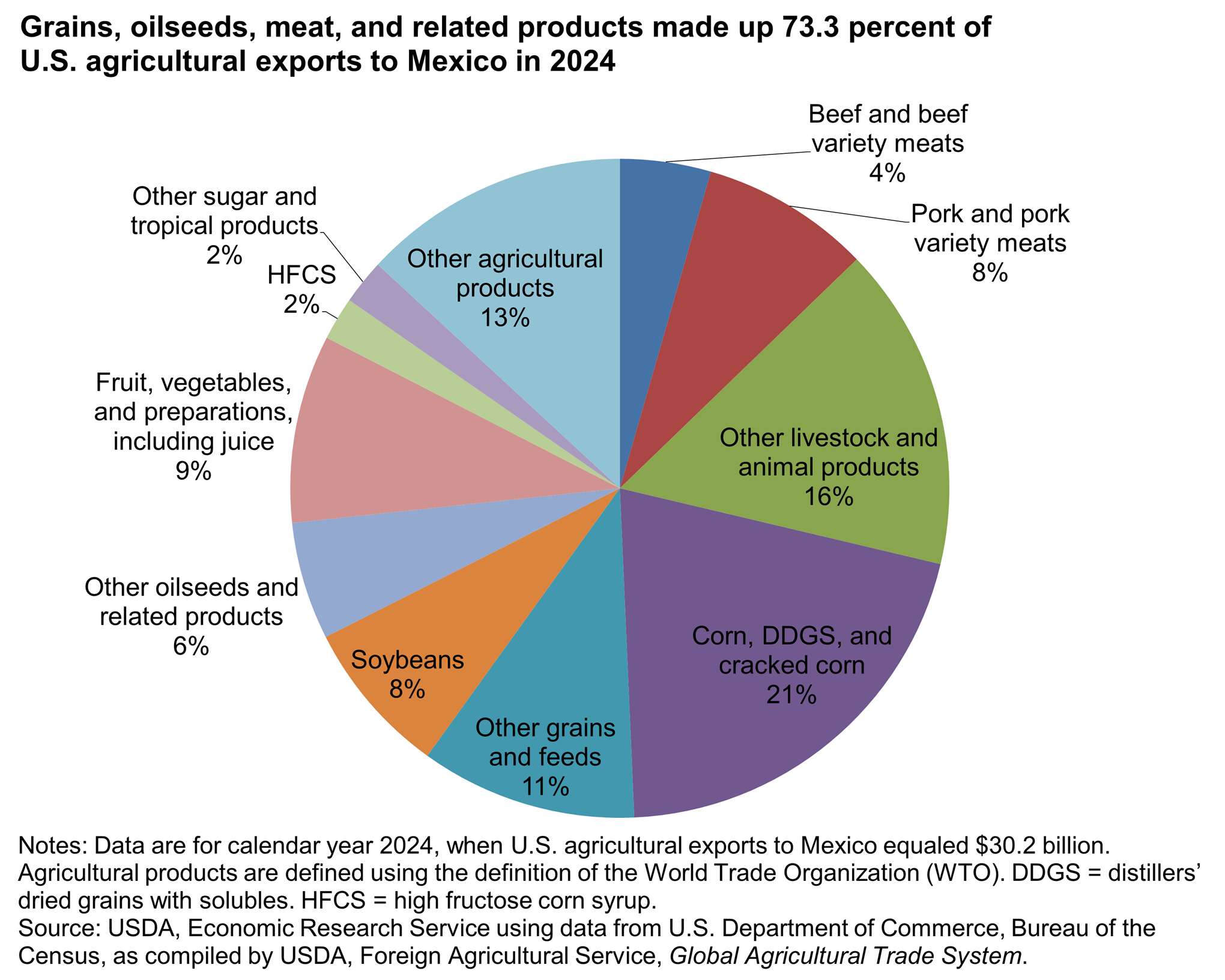
The U.S. is Mexico’s largest supplier of agricultural products. Major exports include corn, soybeans, dairy products, and poultry. This is a high-volume, commodity-driven market where price fluctuations on the Chicago Board of Trade (CBOT) directly impact the cost of food in Mexico and the revenues of U.S. farmers.
The “money” in agricultural exports is tied to the efficiency of the U.S. logistics and rail system. Large agribusinesses utilize sophisticated financial tools, such as futures and options, to manage the risk associated with these massive cross-border shipments. Mexico’s growing middle class has also increased demand for processed foods and high-value meats, shifting the export mix toward higher-margin products.
Transportation and Aerospace Equipment
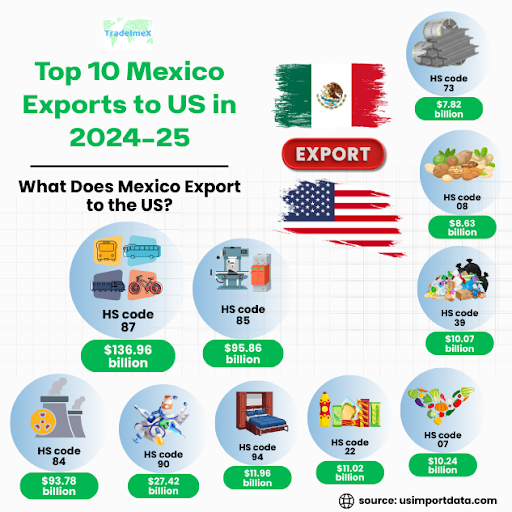
The automotive industry is the backbone of the U.S.-Mexico trade relationship. The U.S. exports a vast array of vehicle parts, engines, and transmissions to Mexico, where they are assembled into vehicles.
Beyond automotive, the aerospace sector is a rapidly growing niche. U.S. aerospace firms export specialized components for aircraft assembly in Mexican aerospace clusters. These are high-capital, high-tech exports that require significant research and development investment. The financial return on these exports is realized over long product cycles, making them a staple for long-term industrial portfolios.
The Role of Cross-Border Financial Tools and Logistics
Exporting goods worth billions of dollars requires more than just trucks and trains; it requires a robust financial ecosystem. Small and medium-sized enterprises (SMEs) in the U.S. are increasingly participating in the Mexican market, utilizing modern financial tools to mitigate risk.
Trade Credit and Insurance
One of the primary hurdles in international trade is the risk of non-payment. U.S. exporters often use trade credit insurance to protect their accounts receivable. Agencies like the Export-Import Bank of the United States (EXIM) provide financing solutions that allow U.S. businesses to offer competitive payment terms to Mexican buyers. This liquidity is essential for maintaining the momentum of trade.
Currency Hedging Strategies
The volatility of the Mexican Peso (MXN) against the U.S. Dollar (USD) can significantly impact the profitability of an export deal. Financial managers use hedging instruments—such as forward contracts and currency swaps—to lock in exchange rates. By stabilizing the cost of goods in local currency terms, U.S. exporters can maintain price consistency and protect their margins against sudden devaluations.
Supply Chain Finance (Factoring)
Supply chain finance, or “reverse factoring,” has become a popular tool in the U.S.-Mexico corridor. It allows Mexican buyers to extend their payment terms while ensuring U.S. suppliers receive their funds early. This optimizes working capital for both parties and ensures that the physical flow of goods is never interrupted by a lack of cash flow.
Investment Implications: Navigating the Trade Corridor
For the individual or institutional investor, the U.S.-Mexico export relationship offers several avenues for capital appreciation. The growth of this trade corridor influences the performance of various asset classes.
Transportation and Infrastructure Stocks
Railroad companies (such as those involved in the recent CPKC merger) and trucking firms that dominate the North-South routes are direct beneficiaries of increased export volumes. As more goods move across the border, these companies see higher utilization rates and pricing power. Investors often look at “carloads” and cross-border crossing times as leading indicators of economic health in this sector.
Real Estate and Logistics Hubs
The demand for “border-plex” real estate—warehousing and distribution centers in cities like Laredo, El Paso, and San Diego—has skyrocketed. U.S. exports need to be staged and processed before crossing the border. Real Estate Investment Trusts (REITs) focusing on industrial properties in these strategic locations have seen significant growth as a result of the export boom.
Diversified Industrial Portfolios
Investing in the blue-chip American companies that provide the “seeds and tools” for Mexican industry remains a classic strategy. From chemical manufacturers providing raw materials for Mexican plastics to tech firms providing the automation software for Mexican factories, the reach of U.S. exports is broad. Diversified exposure to these sectors allows investors to capture the “money” generated by the structural integration of North America.
Future Outlook: The Evolution of Trade Finance
The future of U.S. exports to Mexico will likely be defined by the transition to green energy and the digitalization of trade. We are already seeing an increase in the export of components for electric vehicle (EV) batteries and renewable energy infrastructure.
From a financial perspective, the integration of blockchain and digital ledgers is poised to revolutionize how these exports are tracked and financed. Reducing the “paperwork” of trade through digital certificates of origin and automated customs clearing will further lower the barrier to entry for U.S. businesses.
As the United States continues to pivot its trade strategy toward regional resilience, Mexico will remain its most vital partner. For those focused on the “Money” niche, the U.S.-Mexico export market is not just a list of goods; it is a dynamic, multi-layered financial engine that continues to offer immense opportunities for growth, stability, and strategic investment. Understanding the flow of these exports is key to understanding the future of the North American economy.
aViewFromTheCave is a participant in the Amazon Services LLC Associates Program, an affiliate advertising program designed to provide a means for sites to earn advertising fees by advertising and linking to Amazon.com. Amazon, the Amazon logo, AmazonSupply, and the AmazonSupply logo are trademarks of Amazon.com, Inc. or its affiliates. As an Amazon Associate we earn affiliate commissions from qualifying purchases.