
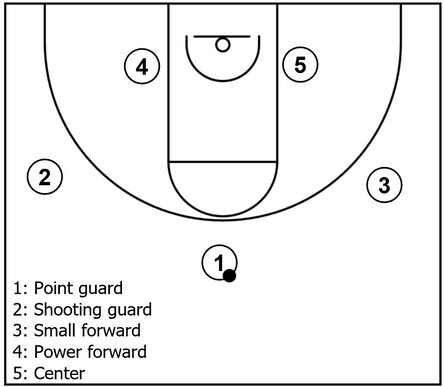
In the modern landscape of professional sports, the power forward—traditionally referred to as the “four”—has undergone a radical transformation from a labor-intensive role into a high-leverage financial asset. Historically, the power forward was the “blue-collar” worker of the roster, tasked with the physical, low-ROI duties of rebounding, setting screens, and defending the post. However, as the NBA and global basketball markets have shifted toward efficiency-driven models, the power forward has become the most critical variable in a team’s financial and strategic portfolio. Understanding what a power forward does today requires looking past the box score and examining the position through the lens of market valuation, capital allocation, and risk management.
The Economic Evolution of the Power Forward Position
To understand the current fiscal value of the power forward, one must look at the transition from a specialized “bruiser” to a multi-faceted “unicorn.” In the 1990s and early 2000s, the power forward was a fixed asset. Their value was tied to physical durability and the ability to control the glass. From a business perspective, this was a low-variance investment. You paid for a specific set of repeatable, physical skills.
From Labor-Intensive to Capital-Efficient
In the traditional era, the power forward’s primary duty was to absorb physical punishment to protect the team’s high-value assets (the guards and centers). They were the defensive insurance policies of the roster. Today, that labor-intensive model has been replaced by a capital-efficient one. The modern power forward is expected to generate high-efficiency scoring while maintaining defensive versatility. This shift has changed the salary structure of the position. No longer are “four-men” merely role players on mid-level exceptions; they are often the “Max Contract” cornerstones around which entire franchises are built.
The financial logic is simple: a player who can perform the duties of three positions provides a higher Return on Investment (ROI) than three specialists. This “positionless” shift has turned the power forward into a flexible financial instrument that allows general managers to optimize their salary cap space.
The Market Valuation of Versatility
In any financial market, versatility reduces risk. In basketball, a power forward who can shoot three-pointers, facilitate the offense, and defend multiple positions acts as a hedge against various tactical threats. When a team invests $30 million to $50 million annually in a top-tier power forward, they are paying for “optionality.” This player allows the organization to pivot their on-court strategy without changing their personnel, saving the massive “transaction costs” associated with trades and free-agent signings. The value of the power forward today is found in their ability to bridge the gap between the perimeter and the paint, making them the most liquid asset on the floor.
Salary Cap Management and the Power Forward Contract
Managing a professional basketball team is essentially a complex exercise in business finance. With a hard or soft salary cap, every dollar must be optimized. The power forward position serves as the ultimate test of a front office’s ability to manage their “Cap Table.” Because the modern power forward’s skill set is so broad, determining their “Fair Market Value” is one of the most difficult tasks in sports analytics.
Maximizing ROI on the Four-Spot
The primary duty of a modern power forward is to maximize the team’s offensive and defensive efficiency ratings—metrics that correlate directly with wins, playoff revenue, and brand valuation. When a power forward can “stretch the floor” (shoot accurately from a distance), they create “spacing.” In economic terms, spacing is a force multiplier. It increases the productivity of every other player on the court by reducing the “friction” of a crowded defense.
Teams now use advanced ROI models to determine if a power forward’s shooting percentage justifies their cap hit. If a power forward can shoot 38% from the three-point line, they effectively increase the “revenue” (points per possession) of the entire offensive unit. This makes them significantly more valuable than a traditional post player who might have a higher individual field goal percentage but provides no spacing for their teammates.
Rookie Scale vs. Veteran Max Deals
From a business finance perspective, the “sweet spot” for a power forward is often during their rookie-scale contract. During the first four years of a player’s career, their salary is suppressed by the collective bargaining agreement. If a team can find a high-performing power forward in the draft, they gain an incredible amount of “surplus value”—performance that far exceeds the cost of the contract.

Conversely, the “Veteran Max” contract for a power forward is a high-risk, high-reward investment. Because the position is so physically demanding, the “depreciation” of the asset can be rapid. A power forward who loses a step of lateral quickness can quickly become a “distressed asset,” consuming 35% of the salary cap while providing diminishing returns on the defensive end.
The Financial Impact of “Stretch” Capabilities
The most significant change in what a power forward does is the requirement to be a “Stretch Four.” This term refers to a player who can pull opposing defenders away from the basket. While this is a tactical advantage, it is also a massive driver of team revenue and marketability.
Quantifying the Value of Floor Spacing
Floor spacing is the “infrastructure” of a modern offense. Without it, the business of scoring becomes prohibitively expensive in terms of energy and turnover risk. A power forward who can shoot creates a “geographic premium” on the court. By occupying a defender 25 feet from the basket, they open up the “high-rent district” of the paint for higher-percentage shots like layups and dunks.
Analytics departments now calculate the “Value Over Replacement Player” (VORP) specifically regarding how much better a team’s star guard performs when a certain power forward is on the floor. The power forward’s job is to act as a facilitator of team-wide productivity. Their success is measured not just by their own output, but by the “dividend” they pay to the rest of the roster.
Revenue Generation through Modern Playstyles
Beyond the win-loss column, what a power forward does affects the bottom line through media rights and ticket sales. The “pace and space” era of basketball, heavily reliant on versatile power forwards, is more aesthetically pleasing to a global audience. This has led to higher television ratings and more lucrative sponsorship deals.
When a power forward operates like a point guard—bringing the ball up the court and initiating the offense—it creates a “premium product” that attracts fans. Organizations like the Golden State Warriors or the Milwaukee Bucks have seen their valuations skyrocket in part because they built their business models around revolutionary power forwards who broke the traditional mold. These players are not just athletes; they are the “Chief Operating Officers” of the on-court product.
Strategic Investment: Building a Roster Around a High-Value PF
In the world of corporate finance, a company must decide which department will receive the most capital. In basketball, teams must decide if the power forward will be their “Primary Capital Expenditure.” If an organization decides to build around a power forward, they are making a strategic bet on the most versatile position in the game.
Risk Management and Injury Considerations
The physical demands on a power forward are unique. They must be large enough to contend with centers but agile enough to chase guards. From a risk management perspective, this makes the position prone to “overuse injuries” and mechanical breakdown. Smart organizations treat their power forwards like high-performance machinery, investing heavily in “biometric maintenance” (sports science) to protect their investment.
A power forward’s “downtime” (games missed due to injury) is a direct hit to the company’s bottom line. Therefore, part of what a power forward does today is engage in a rigorous, data-driven wellness program designed to extend their “productive lifespan.” The longevity of a star power forward can be the difference between a decade of profitability and a catastrophic “rebuild” phase.
The Future of the Position as a Business Model
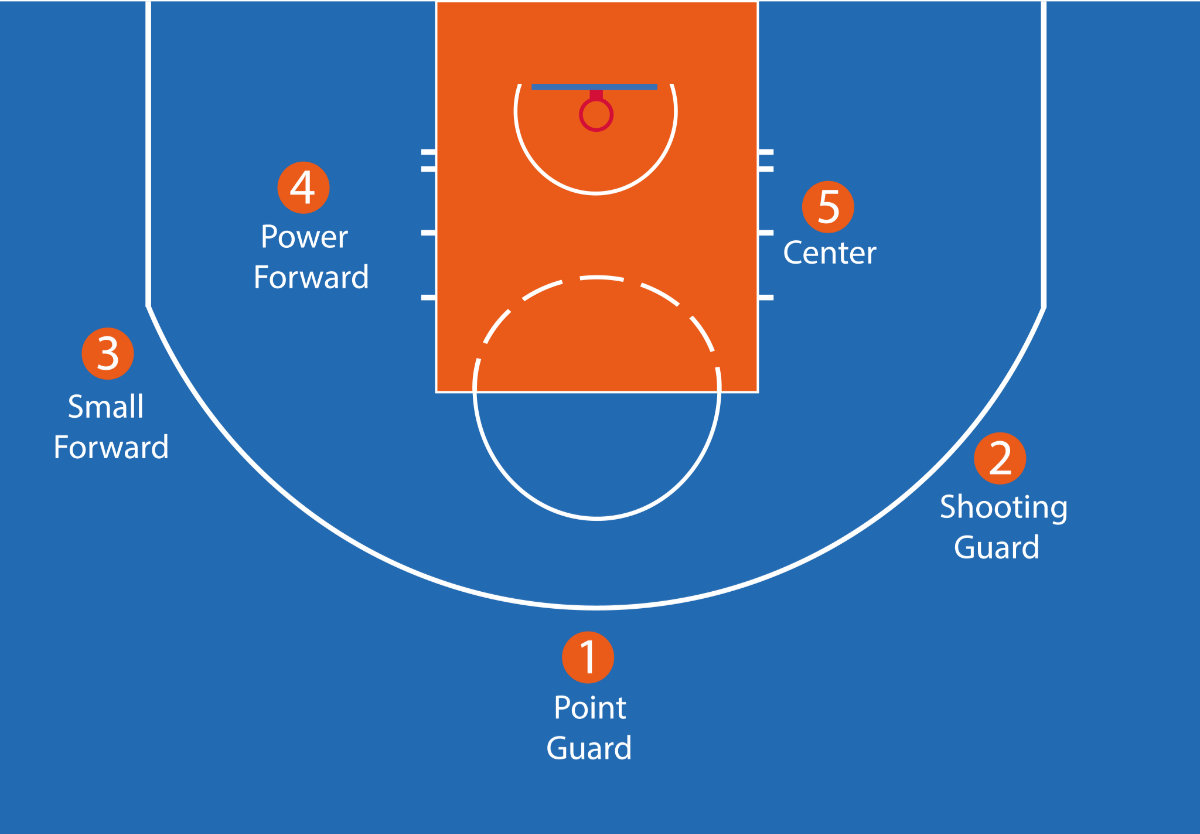
As we look toward the future of the sport, the power forward is becoming the template for the “ideal worker” in the basketball economy. The position is increasingly “positionless,” merging the skills of all five roles on the court. In business terms, this represents the “Generalist” who can specialize at a moment’s notice.
Teams are now looking for “Global Assets”—players from Europe, Africa, and Asia who have been trained in this versatile style from a young age. The search for the next elite power forward is a global talent acquisition race. The organizations that identify and secure these assets early are the ones that will dominate the market for years to come. What the power forward does in basketball is no longer just about playing a game; it is about being the most efficient, versatile, and high-value component of a multi-billion dollar enterprise.
aViewFromTheCave is a participant in the Amazon Services LLC Associates Program, an affiliate advertising program designed to provide a means for sites to earn advertising fees by advertising and linking to Amazon.com. Amazon, the Amazon logo, AmazonSupply, and the AmazonSupply logo are trademarks of Amazon.com, Inc. or its affiliates. As an Amazon Associate we earn affiliate commissions from qualifying purchases.