
In the intricate machinery of modern corporate finance, the role of a controller—often referred to as a financial controller—stands as a critical pillar. While the Chief Financial Officer (CFO) typically commands the spotlight for high-level strategy and external investor relations, the controller is the operational engine that ensures the integrity, accuracy, and reliability of a company’s financial health. Positioned as the lead accountant and the head of the accounting department, the controller bridges the gap between raw data entry and high-level financial decision-making.
The importance of a controller cannot be overstated. Without their oversight, a business risks financial mismanagement, regulatory non-compliance, and strategic failures rooted in inaccurate data. For any organization aiming for sustainable growth, understanding the multi-faceted responsibilities of a controller is essential to building a robust financial infrastructure.
The Strategic Role of a Controller in Modern Business Finance

At its core, the controller is responsible for the entire accounting function of an organization. This involves more than just keeping the books; it requires a strategic approach to financial data that protects the company’s assets and informs its future direction. The controller ensures that every dollar moving through the business is accounted for, categorized correctly, and reported in accordance with established standards.
Financial Reporting and Accuracy
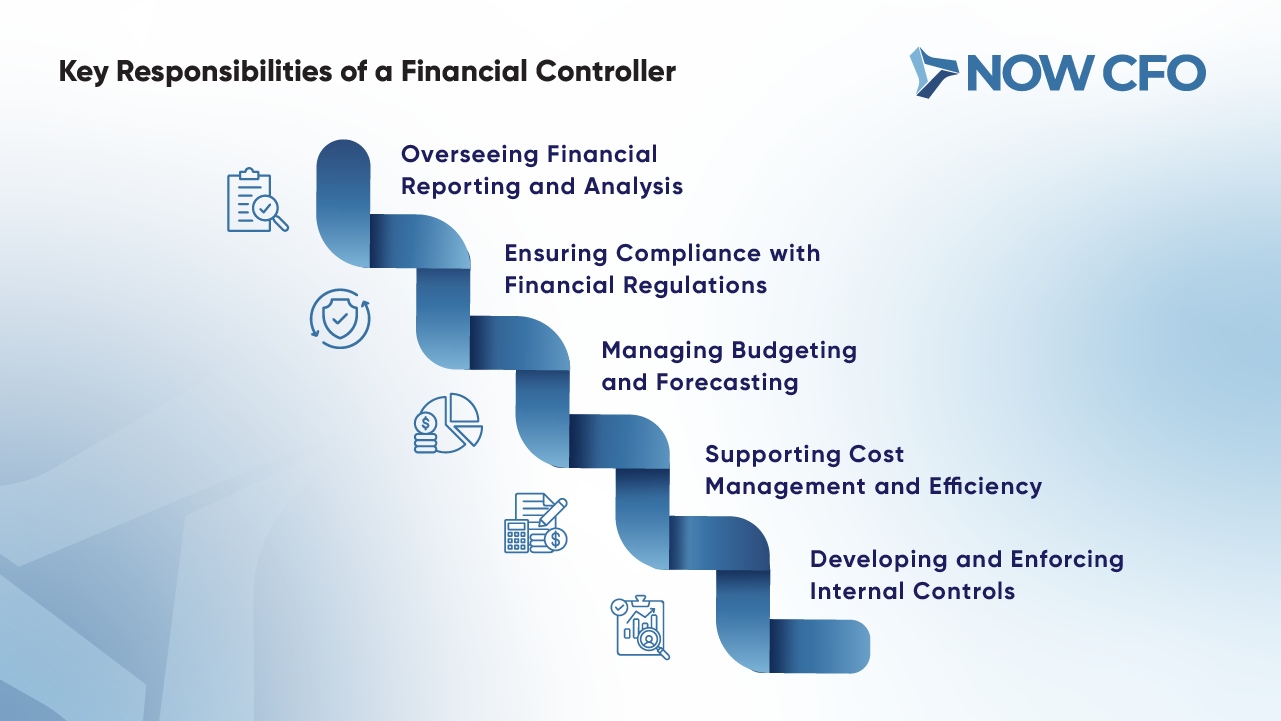
One of the primary duties of a controller is the preparation and presentation of financial statements. These documents—the balance sheet, the income statement, and the statement of cash flows—are the vital signs of a business. The controller ensures that these reports are prepared according to Generally Accepted Accounting Principles (GAAP) or International Financial Reporting Standards (IFRS). Accuracy in this area is non-negotiable, as these reports are used by executives to measure performance, by banks to assess creditworthiness, and by tax authorities to determine liabilities.
Internal Controls and Risk Mitigation
A controller is the architect of a company’s internal controls. These are the policies and procedures designed to prevent errors, deter fraud, and safeguard assets. This includes the segregation of duties—ensuring that the person who authorizes a payment is not the same person who records it—and the implementation of rigorous approval workflows. By identifying financial risks before they manifest as losses, the controller acts as the ultimate guardian of the company’s capital.
Audit Management
Whether it is a routine internal review or a mandatory external audit by a third-party firm, the controller is the primary point of contact. They prepare the necessary documentation, explain accounting treatments, and ensure that the company receives a “clean” audit opinion. This process is vital for maintaining investor confidence and ensuring that the company remains in good standing with regulatory bodies.
Core Responsibilities: From Data Integrity to Operational Excellence
The day-to-day life of a controller is a balance between microscopic attention to detail and macroscopic oversight. They manage the accounting team, which often includes accounts payable (AP) specialists, accounts receivable (AR) clerks, and payroll administrators.
Management of the Accounting Cycle
The controller oversees the full accounting cycle, ensuring that the “close” process—monthly, quarterly, and annually—is completed efficiently and on time. A fast and accurate close allows management to see financial results sooner, enabling quicker pivots in strategy. This cycle includes reconciling bank accounts, verifying ledger entries, and ensuring that depreciation and amortization are correctly calculated.
Budgeting and Forecasting
While the CFO sets the broad financial goals, the controller is often responsible for the mechanics of budgeting and forecasting. They work with department heads to gather data, analyze historical spending patterns, and create a roadmap for future expenditures. By comparing “actuals” against “budgeted” figures on a monthly basis, the controller provides a variance analysis that highlights where the company is overspending or where it has additional capital to deploy.
Treasury and Cash Management
Profitability does not always equate to liquidity. A company can be profitable on paper but fail because it runs out of cash. The controller monitors the company’s cash position daily, managing the timing of payments to vendors and the collection of payments from customers. This treasury function is vital for maintaining healthy relationships with suppliers and ensuring the company has the working capital necessary to sustain operations.
Tax Compliance and Strategy
While a company may hire outside tax firms for complex filings, the controller is responsible for the internal tracking of tax obligations. This includes sales tax, payroll tax, and corporate income tax. They ensure that the company is taking advantage of legitimate tax credits and incentives while remaining fully compliant with local, state, and federal laws.
Controller vs. CFO: Understanding the Hierarchy
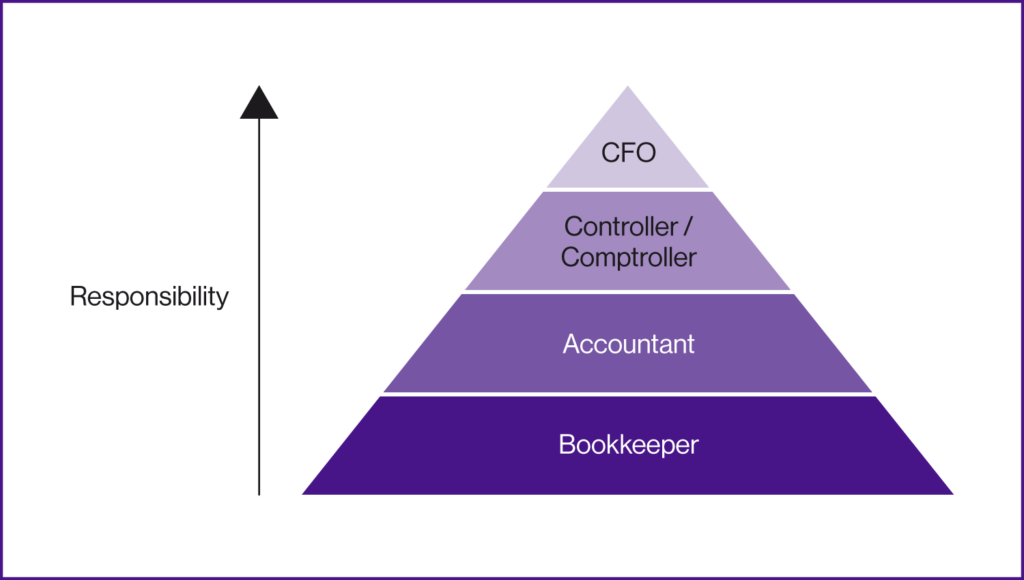
A common point of confusion in business finance is the distinction between a controller and a CFO. While their roles overlap, their focus and objectives are distinct. In a typical corporate structure, the controller reports to the CFO, acting as the tactical execution arm while the CFO focuses on the broader vision.
Tactical Execution vs. Strategic Vision
The controller is backward-looking and current-looking. They focus on what happened (historical reporting) and what is happening (current cash flow and compliance). The CFO, conversely, is forward-looking. They use the data provided by the controller to make decisions about mergers and acquisitions, capital structure, and long-term investment strategies. The controller provides the “what,” while the CFO determines the “so what” and the “what next.”
Data Integrity as a Foundation for Growth
The CFO’s strategy is only as good as the data supporting it. If a controller provides inaccurate financial statements, the CFO might make a disastrous decision based on a false sense of security. Therefore, the controller serves as the “check and balance” to the CFO’s ambitions. They ensure that the company’s growth remains grounded in financial reality.
External vs. Internal Focus
The CFO is the face of the company’s finances to the outside world—banks, investors, and the board of directors. The controller is the face of the finances internally, managing the team, refining processes, and ensuring that the internal plumbing of the financial system is working perfectly.
The Impact of Financial Controllership on Scalability
For small businesses and startups, the owner or a part-time bookkeeper might handle the finances. However, as a company grows, the complexity of its transactions increases, necessitating a full-time controller. The transition from basic bookkeeping to professional controllership is a hallmark of a company maturing into a scalable enterprise.
Process Optimization
As companies scale, manual processes become bottlenecks. A controller identifies these inefficiencies and implements automated systems. Whether it is migrating to a cloud-based Enterprise Resource Planning (ERP) system or implementing automated expense management software, the controller ensures that the finance department can handle increased volume without a proportional increase in headcount.
Cost Control and Profitability Analysis
The controller is uniquely positioned to see where a company is losing money. By performing a deep dive into the cost of goods sold (COGS) or analyzing the ROI of specific marketing campaigns, the controller provides insights that lead to higher profit margins. They are the ones who ask the tough questions about departmental spending and push for leaner, more efficient operations.
Facilitating Fundraising and Exit Strategies
If a company seeks venture capital, private equity investment, or intends to go public (IPO), the controller’s work becomes the focal point of due diligence. Investors will scrutinize years of financial records. A controller who has maintained impeccable books and strong internal controls makes the company a much more attractive—and less risky—prospect for investment.
The Technological Evolution of the Controller Role
In the past, the controller’s role was synonymous with green eyeshades and manual ledgers. Today, the role has been transformed by technology. The modern controller is as much a data scientist and a systems expert as they are an accountant.
Leveraging Fintech and Automation
Modern controllers use sophisticated software to automate repetitive tasks. Artificial Intelligence (AI) and Machine Learning (ML) are now used for anomaly detection in transactions, significantly reducing the time spent on manual audits. By leveraging these tools, controllers can move away from transactional management and toward value-added analysis.
Real-Time Data Analytics
The shift from monthly reporting to real-time data visibility allows controllers to provide “live” insights. Instead of waiting until the middle of the following month to know if the company hit its targets, the modern controller uses dashboards to monitor Key Performance Indicators (KPIs) in real-time. This agility is a competitive advantage in fast-moving industries.
Cybersecurity and Financial Data
As financial records move to the cloud, the controller’s responsibility for “internal controls” now extends to cybersecurity. They must ensure that financial systems are secure, that access is restricted to authorized personnel, and that the company’s financial data is protected from breaches. This intersection of finance and IT is a growing area of focus for the modern controller.
In conclusion, the controller is the steward of a company’s financial integrity. They are the masters of the details, the enforcers of the rules, and the providers of the data that drives the entire organization forward. By maintaining a clear-eyed view of the company’s financial position, the controller provides the stability and confidence necessary for any business to thrive in a competitive marketplace. Without their expertise, the ambitious goals of a company would have no foundation on which to stand.
aViewFromTheCave is a participant in the Amazon Services LLC Associates Program, an affiliate advertising program designed to provide a means for sites to earn advertising fees by advertising and linking to Amazon.com. Amazon, the Amazon logo, AmazonSupply, and the AmazonSupply logo are trademarks of Amazon.com, Inc. or its affiliates. As an Amazon Associate we earn affiliate commissions from qualifying purchases.