
In the modern financial landscape, characterized by high-frequency trading, the gig economy, and the relentless pursuit of “passive income,” the concept of hard work often feels antiquated or misunderstood. We are frequently bombarded with slogans promising “laptop lifestyles” and “overnight success.” However, when we strip away the digital noise and examine the foundational principles of wealth creation, ancient wisdom—specifically biblical text—provides a remarkably sophisticated framework for financial management.
The Bible does not view work as a necessary evil or a consequence of a fallen world; rather, it presents work as a fundamental element of human dignity and a primary vehicle for financial flourishing. To understand what the Bible says about hard work in a financial context, we must look beyond the surface level of “labor” and explore the concepts of stewardship, capital multiplication, and the ethical accumulation of resources.

The Connection Between Diligence and Capital Accumulation
The Book of Proverbs is arguably one of the most comprehensive ancient manuals on personal finance and career development. It repeatedly draws a direct line between the intensity of one’s effort and the state of one’s balance sheet. Proverbs 10:4 states, “Lazy hands make for poverty, but diligent hands bring wealth.” This is not merely a moral observation; it is an economic principle regarding the compounding nature of effort.
Overcoming the Procrastination Tax
In contemporary finance, we often talk about the “inflation tax” or “capital gains tax.” However, the Bible warns against the “procrastination tax”—the hidden cost of delayed action. The biblical “sluggard” is a recurring character who loses potential income not through malice, but through the erosion of time. In a modern context, this translates to the cost of missed market opportunities or the failure to start a side hustle because the conditions aren’t “perfect.”
Diligence, as defined biblically, involves a proactive approach to income generation. It suggests that hard work is the barrier to entry for financial stability. This doesn’t mean working without strategy, but rather applying consistent, focused energy toward one’s professional goals.
Value Creation as the Engine of Income
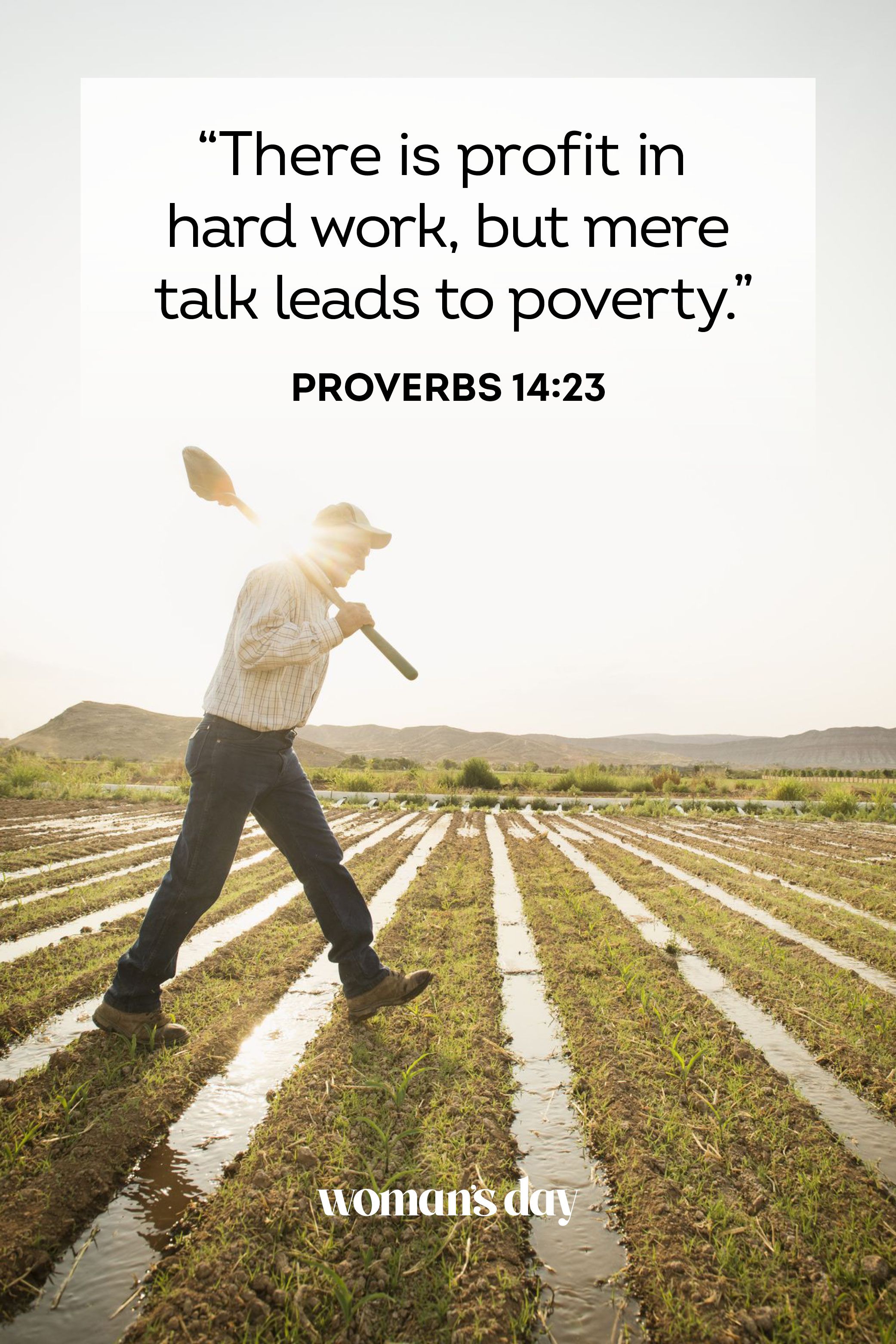
The Bible suggests that profit is the natural byproduct of value creation. Proverbs 14:23 notes, “All hard work brings a profit, but mere talk leads only to poverty.” This distinguishes between “activity” and “productivity.” In the world of business finance, “mere talk” can be equated to endless meetings, over-planning without execution, or the pursuit of “get-rich-quick” schemes that lack a underlying value proposition. Biblical hard work focuses on the “profit” that comes from providing a service or product that meets the needs of others.
The Stewardship Mindset: Transitioning from Consumer to Manager
One of the most profound shifts in financial perspective offered by biblical principles is the transition from “ownership” to “stewardship.” From this viewpoint, we do not simply “own” our money; we manage it on behalf of a higher authority. This mindset changes the nature of hard work from a pursuit of selfish gain to a disciplined management of resources.
The Parable of the Talents: A Lesson in ROI
Perhaps the most famous biblical teaching on investment and hard work is the Parable of the Talents (Matthew 25:14-30). In this narrative, a master entrusts his servants with different amounts of “talents” (a unit of currency). Two servants work diligently to trade and invest their capital, resulting in a 100% return on investment. The third servant, driven by fear and a lack of initiative, buries his capital to “keep it safe.”
The master’s reaction is telling: he praises the productive servants and rebukes the one who was “wicked and lazy.” From a financial standpoint, this parable teaches that capital should not be stagnant. Hard work involves the intellectual and physical effort required to put money to work. It validates the concepts of risk-taking, market engagement, and the expectation of a return. In the modern world, this translates to the importance of moving money from low-yield savings accounts into diversified assets that can grow over time.
Strategic Allocation and Financial Multiplication
Biblical hard work is not just about the hours spent at a desk; it is about the wisdom of resource allocation. Stewardship requires the “hard work” of tracking expenses, budgeting, and planning for the future. The Bible speaks of the “wise man” who saves for the future while the “fool” spends everything he gets (Proverbs 21:20). This highlights that wealth-building is a two-front war: increasing income through diligent labor and protecting that income through disciplined management.
Ethical Wealth: The Long-Term ROI of Integrity
A significant portion of biblical teaching on work focuses on the “how” rather than just the “how much.” In the quest for online income and business growth, there is a constant temptation to cut corners or engage in deceptive marketing. The Bible argues that hard work must be married to integrity if the wealth generated is to be sustainable.
Honest Scales in the Modern Marketplace
Proverbs 11:1 states, “The Lord detests dishonest scales, but accurate weights are his delight.” In the ancient world, this referred to physical scales used in commerce. Today, this principle applies to corporate transparency, ethical branding, and fair pricing. Hard work that is built on a foundation of deception—such as “pump and dump” investment schemes or predatory lending—is viewed as ultimately self-destructive.
From a branding and business perspective, integrity is a long-term asset. It builds “trust equity,” which lowers the cost of customer acquisition and increases the lifetime value of a client. Biblical “hard work” includes the difficult task of maintaining high ethical standards even when they result in short-term financial disadvantage.
Sustainable Profit vs. Short-Term Gains
The Bible warns that “Wealth move through haste will dwindle, but whoever gathers little by little will increase it” (Proverbs 13:11). This is a direct endorsement of the power of compounding and a warning against the volatility of speculative bubbles. The “hard work” here is the patience required to build a business or an investment portfolio incrementally. It rejects the “lottery ticket” mentality that often plagues retail investors and instead promotes the slow, steady accumulation of assets through consistent labor and disciplined saving.
Risk Management and the Principle of Diversification
Many people view the Bible as a book of conservative warnings, but it actually offers sophisticated advice on risk management and diversification—crucial components of any financial strategy. Hard work, in this sense, involves the mental labor of protecting one’s downside.
Spreading Portions: The Ecclesiastes Strategy
Ecclesiastes 11:2 offers a classic piece of investment advice: “Invest in seven ventures, yes, in eight; you do not know what disaster may come upon the land.” This is a clear directive toward diversification. The “hard work” of the modern investor is not just picking one “winning” stock or one “perfect” side hustle, but doing the research and due diligence to spread risk across multiple asset classes—real estate, equities, bonds, and perhaps digital assets.
Preparing for Economic Cycles
The story of Joseph in Genesis provides a masterclass in macroeconomic planning. By working hard to store grain during seven years of abundance, he was able to navigate seven years of famine. This biblical narrative emphasizes that “hard work” includes the foresight to build an emergency fund and “margin” into one’s financial life. It teaches that the objective of work is not just to survive today’s expenses, but to build a surplus that can weather future market contractions or personal setbacks.
The Economics of Rest: Preventing Burnout in the Pursuit of Profit
Finally, any discussion of what the Bible says about hard work must include its counterpoint: the Sabbath. While the Bible condemns laziness, it also warns against the idolatry of work. In a 24/7 digital economy where the boundaries between “home” and “office” have blurred, the biblical principle of rest is more relevant than ever for financial professionals.
The Sabbath as a Productivity Multiplier
The concept of a weekly day of rest (Exodus 20:8-11) is not an anti-work policy; it is a productivity-enhancement strategy. Continuous labor without rest leads to the law of diminishing returns, where the quality of decision-making declines and the risk of burnout increases. In the financial sector, where mental clarity is a primary asset, the “hard work” of observing rest allows for cognitive recovery and long-term sustainability.
Defining “Enough” in a Growth-Obsessed World
The Bible encourages hard work and the creation of wealth, but it also warns against the “love of money” (1 Timothy 6:10). This introduces a psychological element to financial management: the ability to define “enough.” Hard work is a tool to be used for the betterment of one’s family, community, and future, but it should not become an end in itself.
In conclusion, the biblical perspective on hard work is a nuanced blend of aggressive diligence, strategic multiplication of resources, and unwavering ethical standards. It views wealth as a tool for good and work as the honorable means of obtaining it. By applying these ancient principles—diligence, stewardship, integrity, diversification, and disciplined rest—modern investors and professionals can build a financial foundation that is not only profitable but also resilient and meaningful. The “hard work” the Bible speaks of is not just about the sweat of the brow; it is about the wisdom of the heart and the discipline of the mind in managing the resources we have been entrusted with.
aViewFromTheCave is a participant in the Amazon Services LLC Associates Program, an affiliate advertising program designed to provide a means for sites to earn advertising fees by advertising and linking to Amazon.com. Amazon, the Amazon logo, AmazonSupply, and the AmazonSupply logo are trademarks of Amazon.com, Inc. or its affiliates. As an Amazon Associate we earn affiliate commissions from qualifying purchases.