
The landscape of digital communication is characterized by a rapid, often unpredictable evolution of language. Among the myriad of phrases that have permeated the digital sphere, “ooga booga” stands as a prime example of how primitive-sounding phonetic constructs can transform into complex, multi-layered digital assets. To understand what “ooga booga” means in a modern context, one must look beyond its superficial origins and examine its role within the frameworks of internet subcultures, gaming history, and the technological systems—such as Natural Language Processing (NLP) and content moderation algorithms—that attempt to categorize it.

In the contemporary tech ecosystem, “ooga booga” is more than a simple onomatopoeia. It is a linguistic artifact that serves as a case study for how information travels through decentralized networks. From its early appearances in legacy media to its current status as a ubiquitous presence in streaming chatrooms and social media threads, the phrase highlights the tension between human creativity and the rigid structures of digital categorization.
The Origins and Technological Proliferation of Internet Slang
The phrase “ooga booga” has a long history that predates the internet, often associated with stereotypical depictions of “primitive” or “caveman” speech in 20th-century media. However, its digital resurgence is deeply rooted in the gaming industry. For a significant portion of the digital-native population, the phrase is inextricably linked to the 1996 release of Crash Bandicoot on the PlayStation. When the player collects an “Aku Aku” mask, a sound effect plays that many interpreted as “ooga booga.”
From Soundbites to Social Currency
This auditory snippet became a foundational memory for a generation of gamers. As these users migrated to early internet forums like 4chan, Reddit, and eventually Twitch, the phrase was repurposed as a digital “inside joke.” In this context, it lost its literal meaning and became a symbol of shared nostalgia. This transition is a critical concept in the study of digital memes: the transformation of a specific media asset into a versatile tool for social signaling.
The Role of Gaming Communities in Digital Lexicons
Gaming communities act as high-velocity incubators for language. Because communication in these spaces is often fast-paced and reliant on shorthand, phrases like “ooga booga” are adopted for their phonetic impact rather than their semantic depth. On platforms like Twitch, the phrase is frequently paired with specific “emotes”—small graphic icons—to convey surprise, chaos, or a “jumpscare” reaction. This synergy between text and visual assets is a hallmark of modern software interfaces that prioritize expressive, non-linear communication.
Natural Language Processing and the Complexity of Meme Recognition
From a technical perspective, phrases like “ooga booga” present significant challenges for Natural Language Processing (NLP) and Large Language Models (LLMs). These systems are designed to predict and interpret meaning based on vast datasets, but the fluid nature of internet slang often defies standard linguistic rules.
The Challenge for Natural Language Processing (NLP)
Traditional NLP models rely on tokenization—the process of breaking down sentences into individual words or “tokens.” When an AI encounters “ooga booga,” it must determine if the phrase is a greeting, a reference to a specific piece of media, or a nonsensical filler. Because the phrase lacks a fixed definition in a standard dictionary, its meaning is entirely dependent on its surrounding context.
Modern AI tools must now employ “contextual embedding,” where the meaning of a word is derived from the other words around it and the platform on which it is posted. For instance, “ooga booga” appearing in a thread about retro gaming is flagged differently by an algorithm than its appearance in a discussion about cultural stereotypes. This nuance is where current software development is focused: teaching machines to understand intent rather than just syntax.
Sentiment Analysis and the “Stop-word” Problem
In the realm of digital security and brand monitoring, sentiment analysis tools are used to track how users feel about a product or event. Phrases like “ooga booga” are often categorized as “noise” or “stop-words” (words that are filtered out because they don’t add significant meaning). However, if a software tool ignores these phrases, it may miss a burgeoning trend or a shift in community sentiment. As internet language becomes more abstract, developers are forced to refine their algorithms to recognize that “nonsense” strings often carry significant emotional weight.
Content Moderation Systems and the Semantic Shift
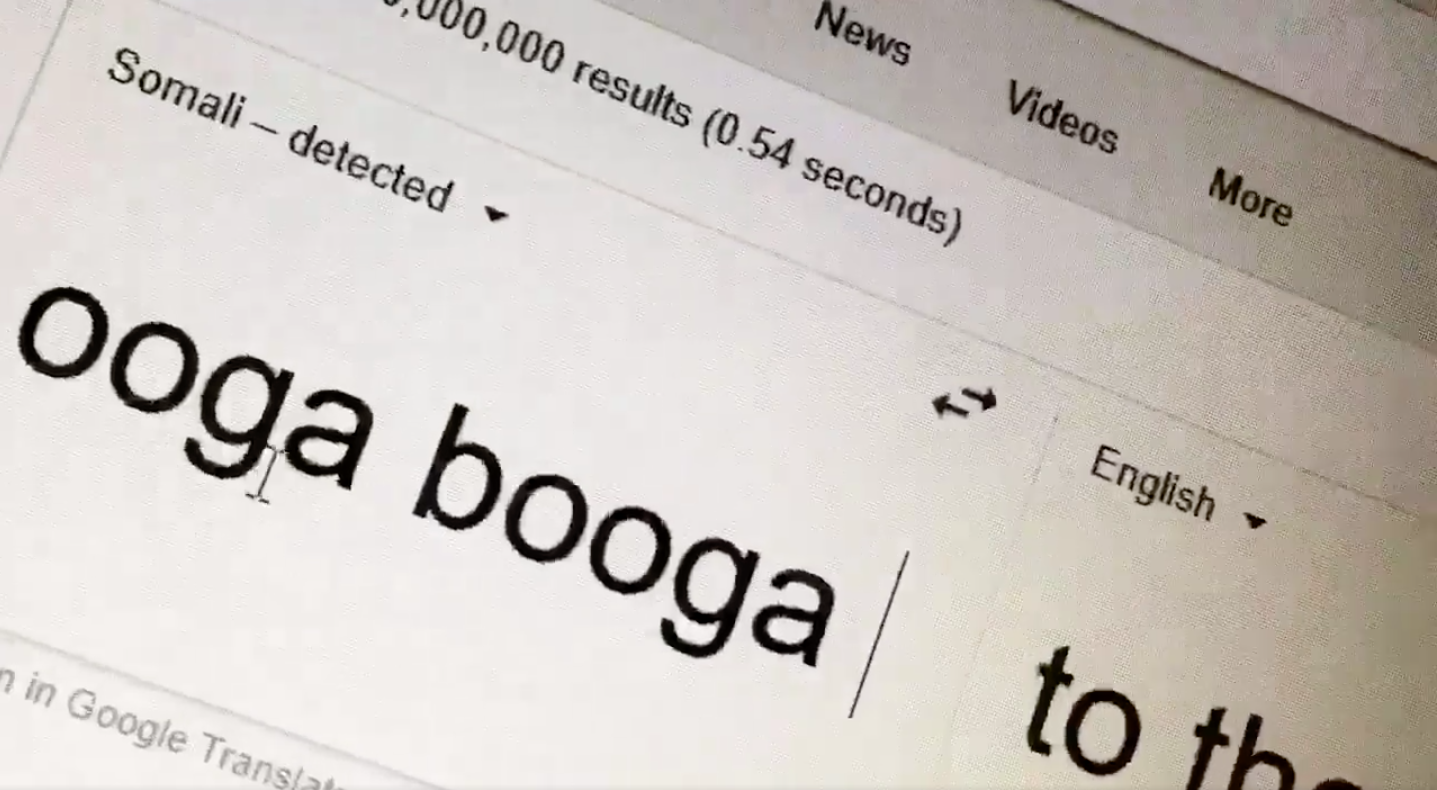
One of the most complex areas where “ooga booga” intersects with technology is in the field of automated content moderation. Large-scale platforms like YouTube, X (formerly Twitter), and Meta use AI-driven filters to maintain community standards. The challenge lies in the “semantic drift” of the phrase—how its meaning changes over time and across different demographics.
Navigating the Ethics of Algorithmic Filtering
Historically, “ooga booga” has been used in derogatory contexts to mock indigenous or African cultures. Consequently, many content moderation systems include the phrase in their “sensitive” or “high-risk” keyword lists. However, the vast majority of modern uses on platforms like Discord or Twitch are entirely divorced from these origins, focusing instead on “jumpscare” humor or gaming references.
This creates a technical dilemma: “False Positives.” If an algorithm automatically bans any user who types the phrase, it risks alienating a large portion of its user base that is using the term in a benign, meme-centric way. Conversely, if the filter is too lenient, the platform risks hosting harmful content. Solving this requires “human-in-the-loop” machine learning, where human moderators provide feedback to the AI to help it distinguish between harmful intent and harmless slang.
Contextual Analysis in Automated Systems
To address these challenges, developers are implementing more sophisticated “heirarchical” moderation systems. These tools don’t just look for a keyword; they analyze the user’s history, the specific community’s norms, and the presence of associated visual media. If a user posts “ooga booga” alongside a clip of a horror game, the software can conclude with high confidence that the intent is a reaction to a “scare,” thereby preventing an unnecessary flag or shadowban.
The Impact of Digital Infrastructure on Global Lexicons
The ubiquity of “ooga booga” is also a byproduct of the infrastructure of the modern web. Browser extensions, API integrations, and the globalization of server networks have allowed localized slang to become global standards almost overnight.
Viral Cycles and Trend Persistence
In the past, slang was localized by geography. Today, it is localized by “digital neighborhood.” A phrase can originate in a small Discord server and, through the power of algorithmic recommendation engines, reach millions of users on TikTok within hours. The technical “virality” of a phrase is often tied to its phonetic simplicity. “Ooga booga” is easy to spell, easy to pronounce, and translates well across different languages, making it an ideal candidate for global digital adoption.
The Role of Emotes and Browser Extensions
Platforms like Twitch have seen the emergence of third-party software like BetterTTV (BTTV) or FrankerFaceZ. These extensions allow users to see custom emotes that aren’t natively supported by the platform. Many of these emotes are specifically tied to phrases like “ooga booga.” This creates a secondary layer of digital language that exists “on top” of the standard web interface. From a software perspective, this demonstrates how community-driven mods can redefine the user experience of a major application.
The Future of Machine Learning in Contextual Interpretation
As we move toward more immersive digital environments, such as the metaverse or advanced AI-driven social platforms, the way we interpret and use phrases like “ooga booga” will continue to evolve. The tech industry is currently in a race to build “culturally aware AI.”
Bridging the Gap Between Code and Culture
The next generation of AI tools will need to do more than just translate languages; they will need to translate “vibes.” This means understanding the irony, sarcasm, and historical baggage associated with internet slang. Developers are currently using “Reinforcement Learning from Human Feedback” (RLHF) to teach models how to navigate these murky linguistic waters.
By feeding AI millions of examples of how “ooga booga” is used in real-world digital interactions, engineers are creating more empathetic and accurate digital assistants. These systems will eventually be able to participate in internet culture in a way that feels natural, rather than robotic, by recognizing the subtle cues that change a word’s meaning from one pixel to the next.

The Longevity of Digital Slang
The phrase “ooga booga” serves as a reminder that even in an age of high-frequency trading and quantum computing, human communication remains rooted in a desire for simplicity and playfulness. As long as there are digital spaces for humans to congregate, they will continue to invent and reinvent language, challenging the software designed to track them. The “meaning” of such phrases is not fixed; it is a living, breathing dataset that reflects the current state of our technological and social integration.
aViewFromTheCave is a participant in the Amazon Services LLC Associates Program, an affiliate advertising program designed to provide a means for sites to earn advertising fees by advertising and linking to Amazon.com. Amazon, the Amazon logo, AmazonSupply, and the AmazonSupply logo are trademarks of Amazon.com, Inc. or its affiliates. As an Amazon Associate we earn affiliate commissions from qualifying purchases.