
In the modern landscape of instant messaging, few applications hold as much sway over our daily communication as WhatsApp. With over two billion active users globally, the platform has standardized a visual language of symbols that dictate the flow and status of our digital interactions. Among these symbols, the “check mark” or “tick” system is perhaps the most scrutinized. We have all experienced the brief moment of anticipation—or perhaps anxiety—that follows sending a message, only to see a single grey check mark lingering at the bottom of the speech bubble.
Understanding what that single grey check mark means is more than just a matter of technical curiosity; it is a fundamental part of navigating digital etiquette and troubleshooting connectivity in a hyper-connected world. While the interface is designed to be intuitive, the technical infrastructure behind that single tick involves a complex handshake between your device, the WhatsApp servers, and the recipient’s hardware.
The Anatomy of WhatsApp Status Icons
To understand the single grey check mark, one must first understand the hierarchy of the WhatsApp delivery system. The platform utilizes a three-stage verification process to inform the sender about the journey of their data packet.
The Single Grey Check Mark: Sent
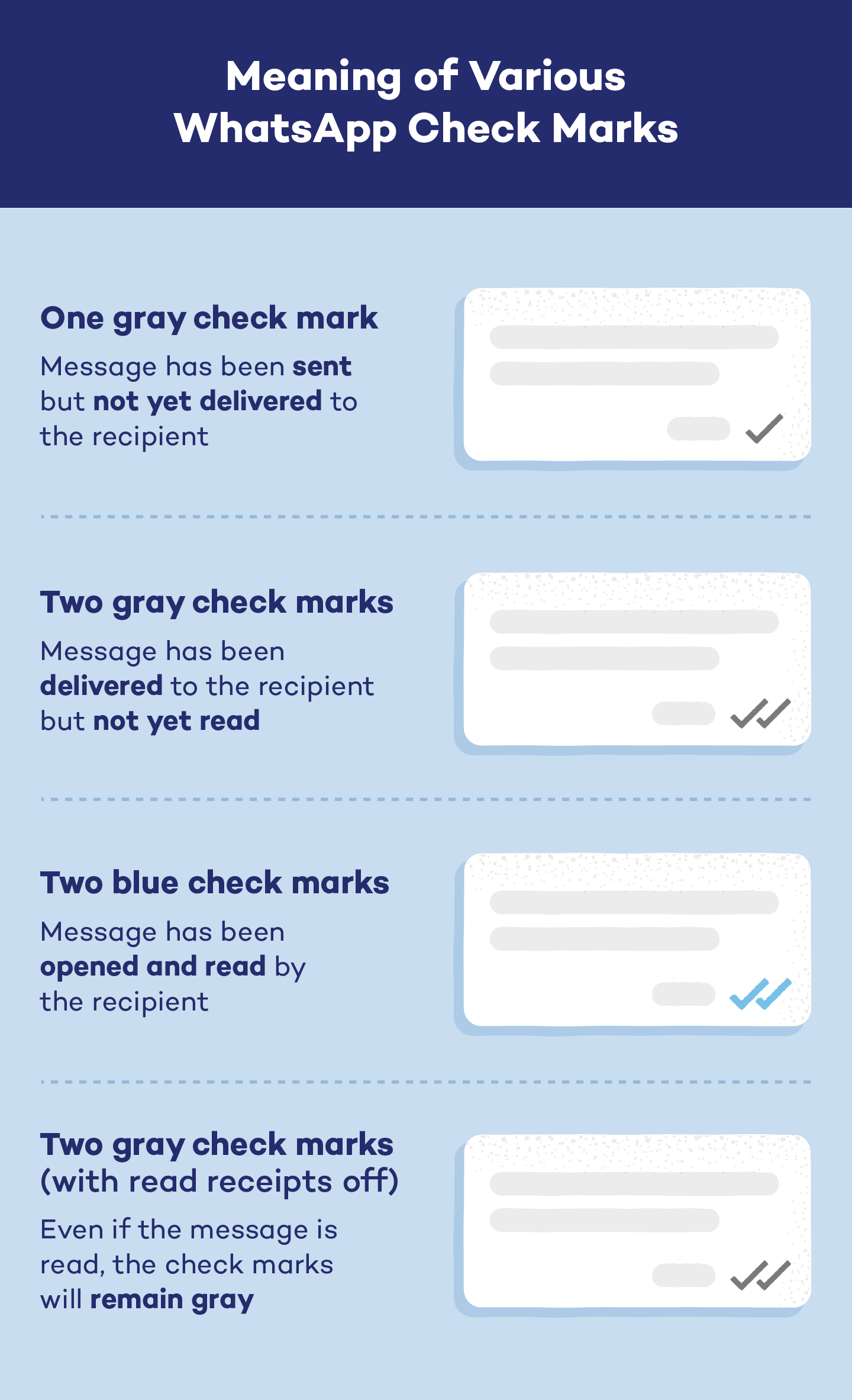
The single grey tick indicates that your message has been successfully sent from your device and has reached the WhatsApp servers. At this stage, the “ball is in the server’s court.” Your phone has completed its task of encrypting the message and uploading it to the cloud. However, the message has not yet been delivered to the recipient’s handset. This is a critical distinction: “Sent” does not mean “Received.”
The Double Grey Check Mark: Delivered
When that single tick doubles, it signifies that the WhatsApp server has successfully pushed the message to the recipient’s device. The data has landed on their phone or tablet. It does not necessarily mean the person has seen the notification or opened the app; it simply confirms that the recipient’s device is online and has acknowledged the receipt of the data.
The Double Blue Check Mark: Read
The transition from grey to blue is the final stage of the pipeline. This indicates that the recipient has opened the specific chat thread containing your message. It is important to note that users can disable “Read Receipts” in their privacy settings, which would keep the ticks grey even after the message has been read. However, for the single grey tick, privacy settings are rarely the culprit—connectivity and availability are the primary drivers.
Why Your Message Stays at One Grey Tick
If a message remains stuck with a single grey check mark for an extended period, it usually points to a breakdown in the communication chain between the WhatsApp server and the recipient’s device. There are several technical and social reasons why this occurs.
The Recipient’s Phone is Powered Off or Out of Range
The most common reason for a lingering single tick is simply that the recipient’s device is not currently connected to the internet. If their phone is turned off, the battery has died, or they are in an area with no cellular or Wi-Fi signal (such as a remote location, an underground subway, or during a flight), the WhatsApp server cannot “hand off” the message. The server will continue to hold the message in a queue, attempting to deliver it periodically until the recipient’s device re-establishes a connection.
Airplane Mode and Do Not Disturb
In some cases, the recipient may have manually toggled “Airplane Mode,” which severs all wireless communication. Similarly, on some operating systems, aggressive battery-saving modes or “Do Not Disturb” settings may prevent apps from fetching data in the background. If the recipient has restricted background data usage for WhatsApp, the message may not trigger a second tick until they manually open the application.
Issues with Push Notifications
Modern smartphones rely on push notification services—Apple Push Notification service (APNs) for iOS and Firebase Cloud Messaging (FCM) for Android. If there is a glitch in these services on the recipient’s phone, the device might not “know” there is a message waiting for it on the server. In this scenario, the sender sees a single tick while the recipient remains unaware of the incoming message until they proactively refresh the app.
The Recipient Has Blocked You
This is the most common social concern associated with the single grey tick. If a contact blocks you on WhatsApp, any messages you send will never progress past the “Sent” status. You will see a single grey tick indefinitely. While WhatsApp does not explicitly notify users when they have been blocked—to protect user privacy—the persistent single tick is a primary indicator. If this is accompanied by the disappearance of the contact’s profile picture and the inability to see their “Last Seen” or “Online” status, it is highly probable that a block is in place.
Account Deactivation or Uninstalled App
If a user uninstalls WhatsApp from their device without deleting their account, the WhatsApp servers still recognize the account as active. However, since there is no local client to receive the message, it will remain at a single tick. Similarly, if the recipient has changed their phone number and hasn’t updated their WhatsApp account, the old “ghost” account will continue to receive sent messages that can never be delivered.

Technical Troubleshooting for Senders and Receivers
While the single tick often relates to the recipient’s status, there are instances where the sender’s environment or the app’s internal state can cause confusion.
Network Latency and Sync Issues
Sometimes, a message might actually be delivered, but the sender’s app hasn’t updated the UI to show the second tick. This is often due to a poor internet connection on the sender’s end. If your data connection is fluctuating, your phone might successfully push the message out, but it fails to receive the “acknowledgment” signal from the server confirming delivery to the recipient. Restarting the app or toggling your Wi-Fi can often force a UI refresh.
The Role of WhatsApp Web and Multi-Device
With the introduction of WhatsApp’s multi-device feature, the logic of check marks has become slightly more complex. You can now send messages from a desktop or browser even when your primary phone is offline. If you send a message from WhatsApp Web, it goes to the server (single tick). If the recipient’s phone is online, it gets the double tick. However, if you are checking the status on your phone later and your phone is having sync issues, you might see a single tick even if the recipient has already replied.
Clearing Cache and Updating Software
In rare cases, software bugs can interfere with status updates. Ensuring that both the sender and receiver are running the latest version of WhatsApp is vital. On Android, clearing the app’s cache can resolve “stuck” notification statuses. On iOS, offloading and reinstalling the app (ensuring backups are current) serves a similar purpose.
Group Chats: A Different Set of Rules
The single grey check mark behaves differently in the context of WhatsApp Groups. In a one-on-one chat, the second tick appears the moment the recipient’s device receives the data. In a group chat, the icons follow a cumulative logic.
When Everyone is “In”
In a group, a single grey tick means the message has reached the WhatsApp server. The second grey tick only appears when every single member of the group has received the message on their device. If a group has thirty members and twenty-nine have received it, but one person has their phone turned off, you will still see only one grey tick.
Checking Individual Delivery Status
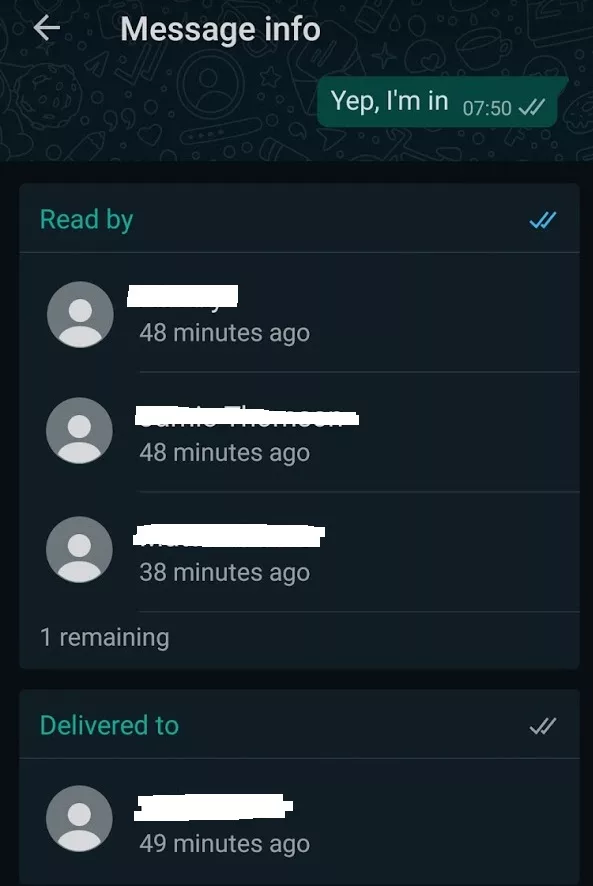
To see who has received the message in a group, you can long-press your sent message and select “Info” (on iOS) or tap the three dots and select “Info” (on Android). This screen provides a granular breakdown of who the message has been “Delivered to” and who has “Read” it. This feature is particularly useful for business communication and organizing events, as it bypasses the ambiguity of the collective single tick.
The Psychological Impact of the Single Tick
Beyond the technicalities, the single grey check mark has a profound impact on digital psychology. In an era of “Always On” communication, a message that stays at “Sent” for hours can trigger a variety of responses, from concern for the recipient’s safety to social anxiety regarding the state of a relationship.
Managing Expectations
The transition from asynchronous communication (like email) to near-instantaneous feedback (like WhatsApp) has shifted our expectations for response times. The single tick serves as a digital “waiting room.” Recognizing that the single tick is usually a result of technical factors—dead batteries, poor reception, or focused “deep work” time—is essential for maintaining healthy digital habits.
Privacy and the “Right to Disconnect”
As developers continue to refine these features, there is a growing movement toward “Digital Wellbeing.” Some users intentionally leave their data off or use third-party tools to delay delivery to maintain their privacy. The single grey tick, in this light, is a symbol of the recipient’s current unavailability in the digital sphere, whether by choice or by circumstance.
Conclusion: The Logic of the Digital Handshake
The single grey check mark on WhatsApp is a vital piece of information in the ecosystem of digital communication. It signifies that your message has successfully left your device and is waiting in the cloud for the right moment to land on the recipient’s hardware. Whether it is caused by a dead battery, a remote location, a software glitch, or a privacy boundary, the single tick is a reminder of the complex infrastructure that allows us to stay connected across the globe.
By understanding the technical nuances—from push notification protocols to group chat dynamics—users can better interpret their digital interactions. The next time you see that lone grey tick, remember that it represents a message in transit, a bridge partially built, and a testament to the sophisticated “handshake” that happens millions of times a second across the global internet. Turning our attention away from the “stuck” tick and toward the reality of the recipient’s potential offline status can lead to a more patient and tech-literate approach to modern messaging.
aViewFromTheCave is a participant in the Amazon Services LLC Associates Program, an affiliate advertising program designed to provide a means for sites to earn advertising fees by advertising and linking to Amazon.com. Amazon, the Amazon logo, AmazonSupply, and the AmazonSupply logo are trademarks of Amazon.com, Inc. or its affiliates. As an Amazon Associate we earn affiliate commissions from qualifying purchases.