
In the competitive landscape of modern commerce, the ancient aphorism found in Matthew 7:6—cautioning against casting pearls before swine—serves as a profound metaphorical blueprint for high-level brand strategy. At its core, this principle addresses the critical intersection of value perception and audience alignment. In a world where brands often feel pressured to achieve maximum reach at any cost, the strategic wisdom of Matthew 7:6 suggests that indiscriminate exposure is not a virtue, but a risk. For brand architects, this translates to a rigorous commitment to protecting the “sacred” elements of a brand’s identity and ensuring that its highest-value offerings are reserved for those capable of recognizing and reciprocating that value.

To understand what this means for a brand in the 21st century, one must look past the literal imagery and focus on the mechanics of brand equity. A brand is more than a logo or a product; it is a repository of trust, prestige, and perceived excellence. When a brand ignores the directive of selective engagement, it risks the “trampling” of its reputation by an audience that seeks only price utility rather than brand philosophy.
The Philosophy of High-Value Resource Allocation
The first step in applying this framework is identifying what constitutes the “pearls” within a corporate structure. These are the proprietary technologies, the unique design languages, and the cultural cachet that define a brand’s premium status. Strategic brand management requires a defensive posture regarding these assets. If a luxury brand, for instance, began distributing its exclusive designs through mass-market discount retailers, the immediate influx of revenue would be overshadowed by a permanent loss of prestige. This is the modern equivalent of giving what is sacred to those who do not hold it as such.
Identifying Your Brand’s “Sacred” Assets
Every brand possesses a core “sanctity”—a unique value proposition (UVP) that separates it from the commodity market. For a company like Apple, this is the seamless integration of hardware and software; for a brand like Patagonia, it is an uncompromising commitment to environmental ethics. These are not merely marketing slogans; they are the “sacred” components of the brand. When these assets are treated as disposable or are compromised for short-term gains, the brand’s foundation begins to erode.
Strategic selectivity means recognizing that not every customer is a “good” customer. A brand that tries to be everything to everyone ultimately becomes nothing to anyone. By identifying the sacred assets, leaders can build a perimeter around their brand, ensuring that their most valuable innovations are marketed to a demographic that values innovation over mere cost-savings.
The Cost of Improper Positioning
Improper positioning occurs when a high-value brand attempts to communicate its value to a low-affinity audience. In brand strategy, this often manifests as excessive discounting or aggressive entry into market segments that are fundamentally misaligned with the brand’s core values. The result is almost always a dilution of brand equity. When pearls are cast before those who do not appreciate them, the “swine” (the unappreciative market segment) do not become more refined; rather, the “pearls” (the brand’s value) are treated as common stones. This leads to a feedback loop where the brand must continue to lower its standards to meet the expectations of an audience that was never its intended target.
Defining Your Audience: Why Broad Targeting is Strategic Suicide
The directive of Matthew 7:6 emphasizes the danger of a misaligned audience. In the digital age, the prevailing wisdom often suggests that more data and more reach lead to better outcomes. However, brand strategy experts argue that reach without resonance is a liability. Targeting an audience that is indifferent or hostile to a brand’s premium positioning leads to a “trampling” effect where the brand is criticized for its price point or its exclusivity by individuals who were never meant to be part of the brand’s ecosystem.
Moving Beyond Mass Marketing
Mass marketing is the antithesis of the “pearls” strategy. It treats the consumer base as a monolith. In contrast, elite brand strategy focuses on “tribalism” and exclusivity. By intentionally limiting access or focusing communication on a specific subset of the market, a brand increases its perceived value. This is why luxury automakers do not run television advertisements during low-brow reality shows; the environment in which a pearl is presented determines its perceived worth.
Selectivity serves as a filter. It ensures that the brand’s narrative is being told to those who have the cultural or financial literacy to appreciate it. This is not about elitism for its own sake, but about the preservation of the brand’s “sacred” identity. When a brand speaks to everyone, its voice becomes noise. When it speaks to a curated few, its voice becomes an invitation.
Protecting Your Intellectual Capital
In the knowledge economy, intellectual capital is the most precious pearl a brand possesses. This includes trade secrets, strategic roadmaps, and high-level insights. Matthew 7:6 warns that sharing these high-value assets with those who might “turn and tear you to pieces” is a fatal error. In a brand context, this refers to the risk of “copycatting” or the commoditization of high-level ideas.
If a brand reveals its most innovative concepts to a market that only values “the cheapest version possible,” it invites competitors to strip away the innovation and sell a hollowed-out version of the same idea. True brand strategy involves “guarding the gates,” ensuring that high-level intellectual property is only deployed in environments where it can be protected and leveraged for long-term growth rather than short-term imitation.
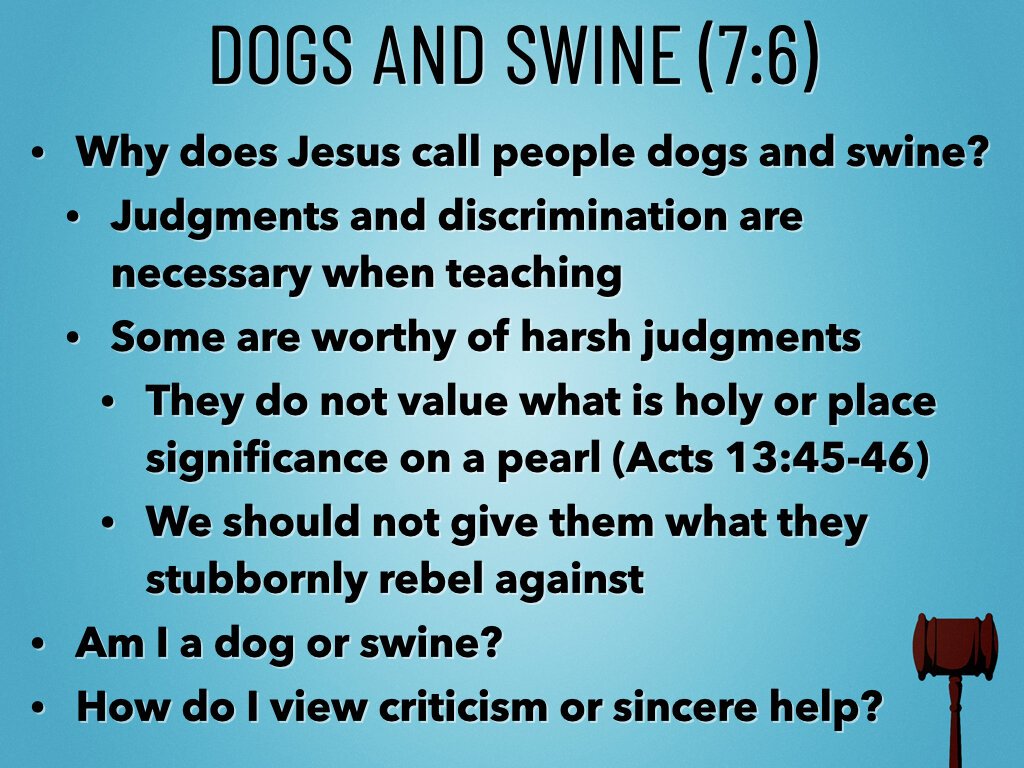
The “Trample” Effect: How Devaluation Destroys Corporate Identity
The second half of the Matthew 7:6 warning describes a visceral reaction: the audience tramples the gift and then turns to attack the giver. This is a perfect metaphor for what happens when a premium brand experiences a “race to the bottom.” When a company devalues its product to appeal to a disinterested or price-sensitive demographic, that demographic does not show loyalty. Instead, they demand even deeper discounts and ultimately criticize the brand for being “overpriced” even when it is on sale.
Discounting and the Dilution of Premium Status
Discounting is the most common way brands “cast their pearls.” While a seasonal sale is a standard retail tool, habitual discounting signals to the market that the brand’s “sacred” value is negotiable. Once the customer perceives the pearl as a common pebble, the brand loses its ability to command a premium. The market “tramples” the value by refusing to ever pay full price again.
Consider the “department store syndrome,” where certain brands are permanently on the clearance rack. These brands have lost their sanctity. They are no longer viewed as desirable icons of style or quality; they are viewed as commodities. They are being “trampled” by a consumer base that has been trained to wait for the next price drop, effectively destroying the brand’s profit margins and its corporate identity.
Navigating Negative Brand Sentiment from Misaligned Segments
A brand that attracts the wrong audience often suffers from a PR perspective. When “pigs”—in this case, consumers who are fundamentally incompatible with the brand’s culture—interact with a premium product, they often find it wanting. They may find a high-end software tool “too complex” or a boutique hotel “too quiet.” They then take to social media and review platforms to “tear the brand to pieces.”
Strategic brand management involves recognizing that negative feedback from the wrong audience is actually a sign that the brand is maintaining its standards. If a brand that targets ultra-high-net-worth individuals receives complaints about its high prices from a budget-conscious demographic, the brand should not pivot. To pivot would be to cast more pearls. Instead, the brand must strengthen its barriers to ensure it is only engaging with its intended audience.
Practical Implementation: Strategic Guarding of Digital Presence
In the modern digital environment, the “pearls” are often the content, the community, and the user experience. How does a brand implement the wisdom of Matthew 7:6 in a world of social media and open access? It requires a shift from “open” systems to “curated” ecosystems.
Curating Exclusive Customer Experiences
The most successful brands are creating walled gardens. Whether through membership programs, exclusive apps, or high-tier loyalty circles, these brands are ensuring that their best content and most “sacred” experiences are reserved for their most dedicated followers. By creating these barriers, the brand protects its value from being diluted by the casual, unappreciative browser.
This curation acts as a seal of quality. When a consumer enters an exclusive brand environment, they know they are being presented with “pearls.” The environment itself elevates the product. This is why flagship stores in luxury districts are designed like galleries or temples; they signal that what is inside is sacred and not to be treated with the indifference of a common marketplace.
Selectivity in Partnerships and Influencer Marketing
Influencer marketing is a primary area where Matthew 7:6 applies. A brand that partners with every “swine” (influencer) who has a high follower count, regardless of their content quality or audience alignment, is casting its pearls into the mud. A single misalignment can “tear a brand to pieces,” as the influencer’s negative actions or poor reputation can instantly stain the brand.
Strategic brand alignment requires rigorous vetting. Partnerships should only be formed with those who can reflect the “sacred” nature of the brand. It is better to have no influencers than to have the wrong ones. A brand’s associations are its destiny; by guarding who is allowed to represent the brand, a company ensures that its pearls remain in the hands of those who will polish them, not trample them.

The Resilience of the Selective Brand
Ultimately, understanding what Matthew 7:6 means in a brand context is about the courage to be selective. It is the realization that a brand’s value is not determined by its accessibility, but by its integrity. In an era of “fast” everything—fast fashion, fast tech, fast food—there is immense power in slowing down and guarding the gate.
A brand that protects its pearls is a brand that survives. It builds a base of “true believers”—customers who don’t just buy a product but join a movement or adopt an identity. These customers don’t trample the brand; they elevate it. They recognize the sacred nature of what is being offered and respond with a loyalty that transcends price points and market fluctuations. By adhering to the principle of selective excellence, a brand ensures that it remains a source of value, prestige, and inspiration, standing firm against the trampling forces of commoditization.
aViewFromTheCave is a participant in the Amazon Services LLC Associates Program, an affiliate advertising program designed to provide a means for sites to earn advertising fees by advertising and linking to Amazon.com. Amazon, the Amazon logo, AmazonSupply, and the AmazonSupply logo are trademarks of Amazon.com, Inc. or its affiliates. As an Amazon Associate we earn affiliate commissions from qualifying purchases.