
In the rapidly evolving landscape of digital communication, acronyms have become the shorthand syntax of the modern era. Among the most pervasive and enduring of these is “JK,” which stands for “just kidding.” While its literal definition is straightforward, its application within the context of mobile technology, social media platforms, and professional messaging applications reveals a complex layer of digital etiquette, psychological buffering, and linguistic evolution.
Understanding what “JK” means when texting requires more than a simple dictionary definition. It necessitates an exploration of how character limits, interface designs, and the absence of non-verbal cues have forced human beings to innovate new ways to convey tone and intent through glass screens.
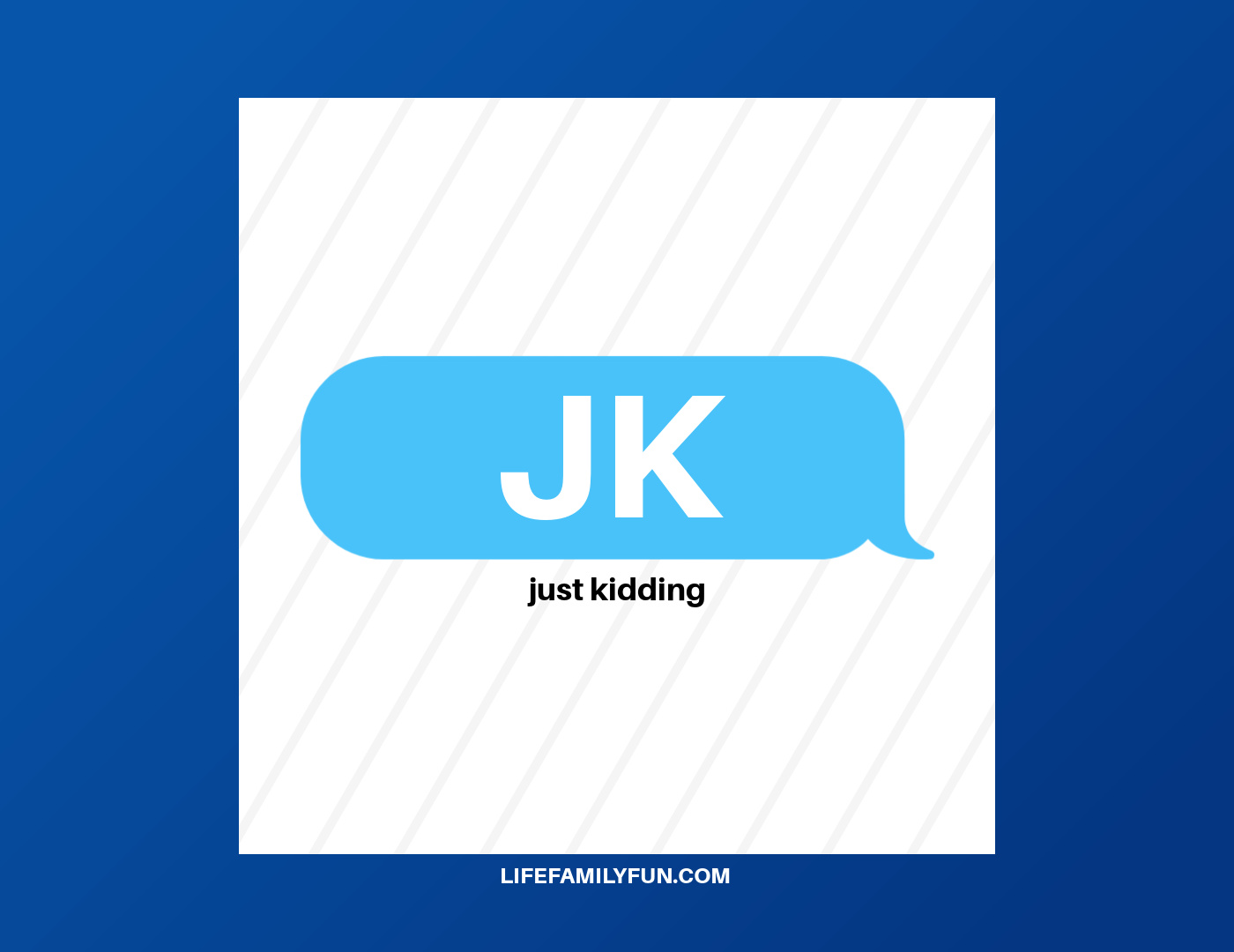
The Etymology and Evolution of JK in the Digital Age
The origin of “JK” is inextricably linked to the hardware limitations of early mobile technology. In the era of the Global System for Mobile Communications (GSM) and the rise of Short Message Service (SMS), users were restricted to 160 characters per message. Furthermore, the physical act of typing on a T9 predictive text keypad—where a single button represented three or four different letters—made brevity not just a preference, but a necessity for efficiency.
From SMS Limits to Instant Messaging
As texting transitioned from a niche technical feature to a primary mode of global communication, “JK” emerged alongside other stalwarts like “LOL” (laugh out loud) and “BRB” (be right back). These acronyms served as functional tools to save time and reduce the “cost” of communication, both in terms of physical effort and carrier charges per character.
With the advent of smartphones and the shift toward internet-based messaging apps like WhatsApp, iMessage, and Telegram, the character limit largely vanished. However, the culture of shorthand remained. “JK” survived the transition from T9 keypads to QWERTY touchscreens because it fulfilled a communicative need that expanded beyond simple brevity: the need to clarify intent in a medium devoid of vocal inflection.
The Linguistic Impact of Character Constraints
The technical constraints of early mobile devices fundamentally altered modern linguistics. By forcing users to compress complex emotions into three or fewer letters, technology created a new dialect. “JK” functions as a “metalinguistic marker.” It is a piece of data about the data being sent. When a user appends “JK” to a sentence, they are providing a decoding key for the recipient, ensuring that the previous statement is processed as humor or sarcasm rather than a literal assertion.
Navigating the Nuances: When and How to Use JK
In the world of digital communication, “JK” acts as a social safety net. Because text-based communication lacks the “paralinguistic” features of face-to-face interaction—such as eyebrow raises, smirks, or tone shifts—the risk of a joke being misinterpreted as an insult or a serious demand is significantly higher.
Softening the Blow: The “Psychological Buffer”
Technologically mediated communication often suffers from “online disinhibition,” where users say things via text that they might not say in person. “JK” is frequently used as a psychological buffer to mitigate this effect. If a sender makes a provocative statement or a “hot take,” adding “JK” allows them to test the waters of a conversation. If the recipient reacts negatively, the sender can retreat behind the shield of “just kidding,” claiming the technology failed to convey their humorous intent.
In this context, “JK” serves a vital role in conflict de-escalation within digital threads. It provides a “delete” or “undo” function for social interactions, allowing users to recalibrate the tone of a conversation in real-time.
Sarcasm and Irony in Text-Based Environments
One of the greatest challenges for software developers and AI researchers today is the detection of sarcasm in text. For human users, “JK” is the manual solution to this software limitation. Because text is “flat,” “JK” adds a layer of depth. However, the placement and capitalization of “JK” can change its meaning:
- “jk” (lowercase): Often indicates a lighthearted, casual dismissal or a minor joke.
- “JK!!!” (uppercase with punctuation): Suggests a more emphatic need to clarify that the previous statement was not serious, often used after a statement that could be particularly inflammatory.
- “jk…” (with ellipses): Can imply a trailing thought or a “half-joke,” where there may be a kernel of truth hidden in the sarcasm.
Professional vs. Personal: JK Across Different Communication Platforms
As technology has blurred the lines between personal life and professional work, the usage of “JK” has migrated from private SMS threads into corporate environments. The context of the platform—whether it is an enterprise-grade tool or a social media app—dictates how “JK” is perceived.
Slack and Teams: Is JK Office-Appropriate?
In professional communication tools like Slack, Microsoft Teams, or Google Chat, the use of “JK” is common but requires a high degree of situational awareness. These platforms are designed to mimic the speed and informality of texting while maintaining the structure of a workplace.
In a high-stakes engineering channel or a project management thread, an ill-placed “JK” can lead to confusion. For example, if a developer says, “I just deleted the entire production database, jk,” the initial panic felt by the team can damage trust, even if the “JK” follows immediately. Conversely, in a “random” or “watercooler” channel, “JK” helps build rapport and humanize digital-first or remote-first company cultures.
Social Media and Public Forums
On platforms like X (formerly Twitter) or Reddit, “JK” is often used to signal irony to a broad, anonymous audience. In these environments, the acronym helps prevent “ratioing” (receiving an overwhelming amount of negative replies) by signaling to the algorithm and the audience that the post is satirical. Here, “JK” acts as a tag, similar to a hashtag, that categorizes the post’s intent for the reader’s “internal processor.”
The Technical Mechanics of Texting Language
The way we type “JK” is increasingly influenced by the software running beneath our fingertips. Modern mobile operating systems (iOS and Android) utilize sophisticated machine learning models to predict what we want to say next.
Predictive Text and the Automating of Slang
When a user types “j,” the predictive text bar frequently suggests “jk” as the first option. This creates a feedback loop: the software anticipates the slang, making it easier to use, which in turn reinforces the slang’s dominance in the digital lexicon. This automation of “JK” means that the acronym is no longer just a conscious linguistic choice; it is a facilitated technical shortcut.
Furthermore, “autocorrect” features have been programmed to recognize these acronyms as valid “words.” In the early 2000s, a phone might have corrected “jk” to “hi” or “in.” Today, the underlying dictionaries of our devices are populated with digital-first shorthand, reflecting the tech industry’s recognition of these terms as fundamental to human connectivity.
How AI Interpretations Shape Digital Tone
As we move into the era of Generative AI and Large Language Models (LLMs), “JK” plays a critical role in sentiment analysis. When an AI analyzes a dataset of customer feedback or social media posts, the presence of “JK” can flip the sentiment score of a sentence from negative to neutral or positive.
For developers building chatbots or customer service AI, teaching the machine to understand the nuance of “JK” is essential. An AI that takes a “JK” statement literally will fail to provide a human-like interaction. Thus, this simple acronym has become a benchmark for how well machines can understand human irony and the technical “subtext” of our digital lives.
Avoiding Miscommunication in a Text-First World
Despite its utility, “JK” is not a universal solution for the pitfalls of digital communication. Relying too heavily on shorthand can lead to “semantic satiation,” where the term loses its meaning, or worse, leads to deeper misunderstandings.
The Risk of Overuse
In digital security and social engineering, “JK” can be used as a tactic to disarm a target. A malicious actor might send a probing or inappropriate request, then follow it with “JK” to see how the target responds. If the target is comfortable, the actor continues; if the target is offended, the actor uses “JK” as a technicality to avoid being blocked or reported.
On a more mundane level, overusing “JK” in a professional setting can make a user appear indecisive or unprofessional. If every instruction or critique is followed by a “just kidding” marker, the underlying message is lost, and the digital “signal-to-noise” ratio is degraded.
Cultural Variations in Digital Slang
While “JK” is a standard in the English-speaking digital world, technology is global. Different cultures have their own technical shorthand (such as “www” in Japanese or “555” in Thai). For those navigating international tech teams or global social communities, understanding that “JK” is a specific Western technological artifact is important. Misinterpreting or misusing these markers across cultural boundaries can lead to “digital friction,” where the technology facilitates the connection but the language creates the barrier.

Conclusion: The Future of Digital Intent
As we look toward the future of communication—incorporating augmented reality (AR) glasses, neural interfaces, and even more advanced AI—the way we signal “just kidding” will continue to evolve. We are already seeing the transition from text-based “JK” to emoji-based reactions (the crying-laughing emoji or the tongue-out emoji) and even animated GIFs.
However, “JK” remains a foundational element of the tech-communication stack. It represents the moment when human beings took control of a rigid, character-limited technology and forced it to carry the weight of human humor. Whether we are texting a friend on a smartphone or messaging a colleague across a global server, “JK” remains our most efficient tool for ensuring that our digital voice, however brief, is understood exactly as intended.
aViewFromTheCave is a participant in the Amazon Services LLC Associates Program, an affiliate advertising program designed to provide a means for sites to earn advertising fees by advertising and linking to Amazon.com. Amazon, the Amazon logo, AmazonSupply, and the AmazonSupply logo are trademarks of Amazon.com, Inc. or its affiliates. As an Amazon Associate we earn affiliate commissions from qualifying purchases.