
At its most fundamental level, the Spanish word “hay” translates to “there is” or “there are.” Derived from the verb haber, it serves as an impersonal form used to denote existence or presence. While this may seem like a straightforward entry in a bilingual dictionary, the word represents a significant milestone in the evolution of computational linguistics and natural language processing (NLP). For software developers, AI researchers, and tech-driven language learners, “hay” is a case study in how machines interpret context, manage grammatical irregularities, and bridge the gap between human thought and binary code.
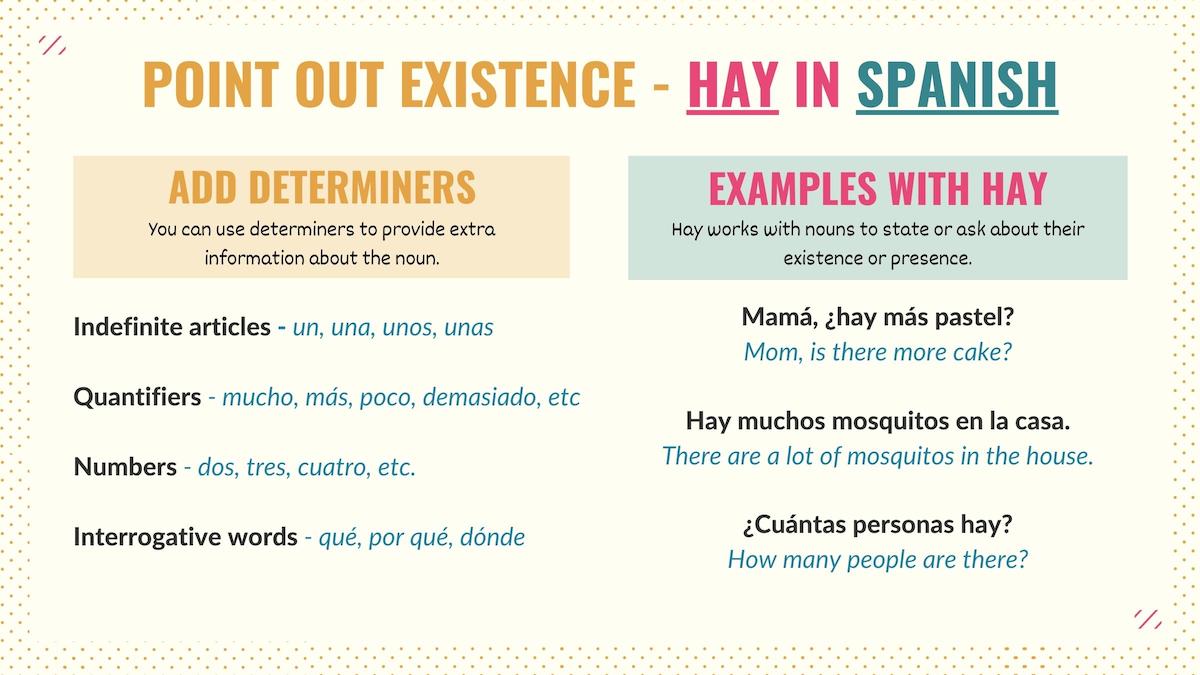
Understanding “hay” through the lens of modern technology requires moving beyond simple definitions. It involves exploring how neural networks, large language models (LLMs), and localized software ecosystems handle a word that performs a heavy lifting role in the Spanish language without following standard conjugation rules.
The Computational Complexity of a Three-Letter Word
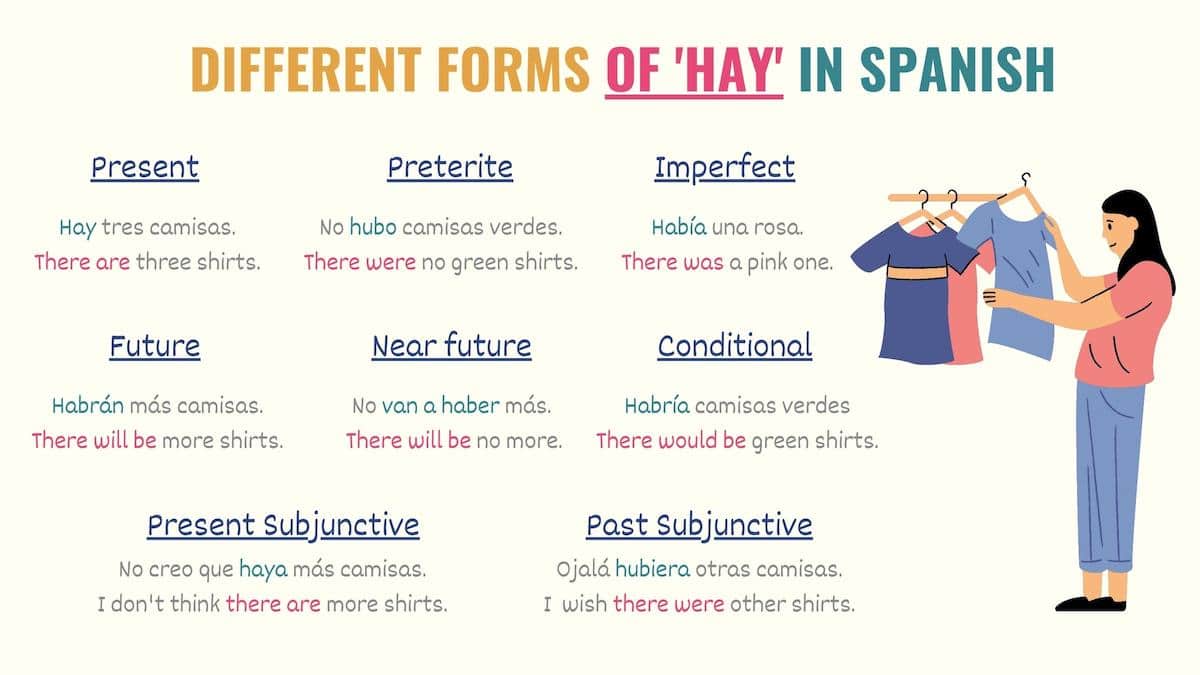
In the early days of machine translation—specifically Rule-Based Machine Translation (RBMT)—words like “hay” presented a unique challenge for programmers. Unlike most Spanish verbs, “hay” is invariant. Whether you are discussing a single item (“Hay un servidor”) or a thousand items (“Hay mil servidores”), the word remains the same.
The Invariance Challenge in Early Coding
Traditional algorithms were often built on a system of number and gender agreement. When a machine encountered a plural subject, it looked for a plural verb. In English, we switch from “there is” to “there are.” In Spanish, however, the verb does not change. Early software often attempted to “correct” this by outputting ungrammatical pluralizations of the verb haber that do not exist in standard Spanish. This taught developers a vital lesson in digital linguistics: language is not always a logical progression of mathematical rules.
Transitioning to Statistical Machine Translation (SMT)
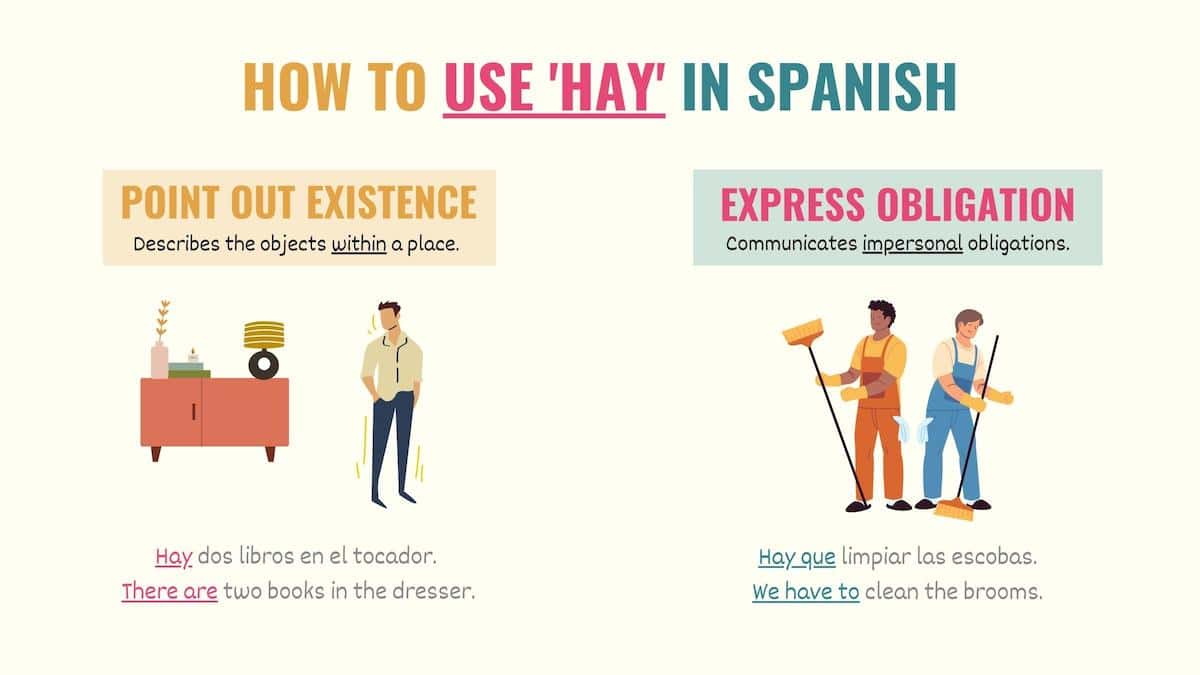
As the industry moved toward Statistical Machine Translation, the focus shifted from hard-coded rules to probability. Systems like the early versions of Google Translate analyzed massive corpora of bilingual text to see how “hay” was most frequently translated. By looking at surrounding words, SMT could determine that if “hay” was followed by a plural noun, the English output should be “there are.” While this improved accuracy, it still lacked a fundamental “understanding” of the text, often failing when “hay” was used in more complex idiomatic structures, such as “hay que” (meaning “it is necessary to” or “one must”).
Beyond Simple Translation: “Hay” in Natural Language Processing (NLP)
The current era of technology is defined by Neural Machine Translation (NMT) and the rise of Transformer architectures. For these systems, “hay” is no longer just a string of characters; it is a vector in a high-dimensional space.
Contextual Awareness and Vector Embeddings
Modern NLP models utilize word embeddings—mathematical representations where words with similar meanings are placed close together in a virtual map. In this space, “hay” is linked not just to “existence” but to “obligation” (when paired with que) and “availability.” When a user types a query into a search engine or an AI assistant, the system uses self-attention mechanisms to weigh the importance of “hay” relative to the rest of the sentence.
If a user asks, “¿Qué hay de nuevo?”, the AI must recognize that this is an idiomatic expression for “What’s new?” rather than a literal inquiry about the existence of something “new.” The technology identifies patterns across billions of parameters to ensure the nuance of the Spanish language is preserved in the digital output.
Handling “Hay Que” in Algorithmic Frameworks
One of the most complex tasks for an AI is distinguishing between the existential “hay” (there is) and the modal “hay que” (one must). This distinction is critical for productivity software and automated task managers. If a voice assistant interprets “Hay que actualizar el software” as “There is a need to update the software” versus a literal “There is that update,” the functional outcome changes. Modern LLMs use deep learning to identify these triggers, ensuring that the intent of the speaker is translated into the correct action within the software environment.
The Evolution of Language Learning Apps: Teaching “Hay” Through Tech
The educational technology (EdTech) sector has revolutionized how we learn the meaning of words like “hay.” Gone are the days of rote memorization from a textbook. Today, sophisticated apps use AI to personalize the learning experience.
Gamification and Spaced Repetition Systems (SRS)
Platforms like Duolingo or Memrise use Spaced Repetition Systems (SRS) to help learners internalize the use of “hay.” The software tracks how often a user confuses “hay” with “está” (another form of “to be”). Using machine learning, the app identifies these specific points of friction and adjusts the curriculum in real-time, presenting “hay” in various contexts until the user’s performance metrics reach a certain threshold. This is a data-driven approach to linguistics, where “meaning” is measured by a user’s ability to correctly deploy a word in a simulated environment.
Large Language Models as Personalized Tutors
We are now seeing the integration of LLMs like GPT-4 into language learning platforms. These AI tutors can explain why “hay” is used in a specific sentence, providing a level of depth that previous software could not. A student can ask, “Why did you use ‘hay’ instead of ‘está’ here?” and the AI can provide a technical breakdown of the difference between existence (hay) and location (está). This represents a shift from static software to dynamic, conversational interfaces that simulate human interaction.
The Future of Real-Time Localization and Universal Translators
As we look toward the future, the meaning of “hay” in the tech world extends into the realm of real-time localization and augmented reality (AR).
Latency and Accuracy in Wearable Tech
The goal of universal translation—devices that sit in your ear and translate speech in real-time—relies on the rapid processing of foundational words. Because “hay” is used so frequently in Spanish, any latency in its translation can disrupt the flow of conversation. Developers are working on “edge computing” solutions where these common linguistic structures are processed locally on the device rather than in the cloud. This reduces the “lag” in communication, making digital translation feel more natural and human.
Bridging the Cultural Data Gap
Technology is also being used to map how “hay” is used differently across various Spanish-speaking regions. In some dialects, the impersonal nature of “hay” is handled with slight variations in informal speech. Tech companies are now using “Big Data” to refine localization strategies, ensuring that a brand’s digital presence feels authentic whether the user is in Mexico City, Madrid, or Buenos Aires. By analyzing social media trends and regional speech patterns, AI can help companies use “hay” in a way that resonates with local audiences, proving that even a three-letter word has significant “Brand” and “Tech” value.
Synthesizing Linguistics and Software Engineering
The question “what does hay in Spanish mean” is ultimately a gateway into the complex world of modern software engineering and artificial intelligence. To a machine, “hay” is a data point, a probability, and a functional command. To the user, it is a fundamental tool for communication.
The technology we use every day—from the search engines that index Spanish-language websites to the AI that translates our emails—has been trained to master the nuances of this word. As we continue to refine neural networks and expand the capabilities of NLP, our understanding of how to bridge human languages will only grow. The journey of “hay” from a simple dictionary entry to a complex component of an AI’s vocabulary is a testament to the incredible progress of the digital age. We are no longer just translating words; we are teaching machines to understand the very fabric of human existence, one “hay” at a time.
aViewFromTheCave is a participant in the Amazon Services LLC Associates Program, an affiliate advertising program designed to provide a means for sites to earn advertising fees by advertising and linking to Amazon.com. Amazon, the Amazon logo, AmazonSupply, and the AmazonSupply logo are trademarks of Amazon.com, Inc. or its affiliates. As an Amazon Associate we earn affiliate commissions from qualifying purchases.