
In the landscape of modern finance, the concept of self-control is often rebranded as “discipline,” “grit,” or “delayed gratification.” However, when we look at the root of these concepts—specifically through the lens of ancient wisdom and spiritual principles—we find that self-control is not merely a personality trait, but a foundational law of prosperity. Whether viewed through the eyes of a theologian or a seasoned portfolio manager, the verdict is the same: without the mastery of the self, the mastery of capital is impossible.
When we ask what the highest principles of wisdom—often referred to as “God’s word” in a spiritual context—say about self-control, we uncover a rigorous framework for financial management. It suggests that wealth is a byproduct of character, and the most essential character trait is the ability to govern one’s impulses. In the world of personal finance, investing, and business building, this translates into a strategy of stewardship over consumption.

The Principle of Stewardship: Wealth as a Trust
At the heart of the conversation regarding self-control and money is the principle of stewardship. In many spiritual traditions, humans are not seen as the ultimate “owners” of their wealth but as managers or stewards of resources provided by a higher source. This shift in perspective is the ultimate catalyst for financial self-control.
Understanding the Managerial Mindset
If you view money as something you “own” entirely, you feel entitled to spend it on your whims. However, if you view money as a resource entrusted to you for a specific purpose, your relationship with it changes. Self-control becomes an act of professional management. In corporate finance, a CFO does not spend the company’s capital on personal luxuries; they allocate it to areas that generate the highest return. Similarly, practicing self-control in your personal finances means treating your income as a capital fund that requires wise allocation.
The Small Things Rule
A recurring theme in wisdom literature is that those who are faithful with little will be trusted with much. In financial terms, this is the law of scalability. If an individual cannot control a $50,000 annual salary—finding themselves in a cycle of “paycheck to paycheck” living—they are unlikely to manage a $5,000,000 windfall effectively. Self-control at the micro-level (the daily lattes, the impulsive Amazon orders) builds the “muscle” required to manage macro-level assets.
The Mathematical Power of Delayed Gratification
The concept of self-control is perhaps most visible in the mathematical reality of compound interest. Einstein famously called compound interest the eighth wonder of the world, noting that he who understands it earns it, and he who doesn’t pays it. From a spiritual and practical perspective, delayed gratification is the ultimate expression of self-control.
The War Against the Immediate
We live in an “on-demand” economy designed to erode our self-control. One-click ordering, high-interest consumer credit, and social media marketing are all engineered to trigger the dopamine hit of immediate acquisition. However, the path to wealth requires a “no” to the present for a much larger “yes” in the future.
When you exercise the self-control to invest $500 a month rather than financing a luxury vehicle, you are not just saving money; you are buying time. Over thirty years, that $500 a month at a 7% return grows to over $500,000. The “cost” of that luxury vehicle isn’t just the sticker price; it is the half-million dollars of future freedom you sacrificed for a current status symbol.
Resilience in Market Volatility
Self-control is not just about spending; it is also about the temperament required for investing. The stock market is a device for transferring money from the impatient to the patient. When the market dips, the biological impulse is “fight or flight”—specifically, the urge to sell and “save” what remains.
However, the disciplined investor exercises self-control to stick to a long-term thesis. They understand that volatility is the price of admission for superior returns. By controlling the internal state of panic, an investor allows the laws of economics to work in their favor rather than being a victim of their own emotional turbulence.
Guarding the Gates: Building Systems for Financial Restraint
Wisdom suggests that while the spirit may be willing, the flesh is often weak. In the context of money, this means that even with the best intentions, we are prone to lapses in judgment. True self-control, therefore, involves creating systems that remove the need for constant willpower.

Automating the “Good”
One of the most effective ways to exercise financial self-control is to automate your virtues. By setting up automatic transfers to savings, 401(k) contributions, and investment accounts, you remove the decision-making process. You are essentially “hacking” your lack of self-control by making sure the money is gone before you have the chance to spend it. This is the financial equivalent of “fleeing temptation.”
The “Margin” Strategy
In traditional wisdom, living at the edge of one’s means is considered folly. “Margin” is the space between your income and your expenses. A person with high self-control intentionally creates a wide margin. This margin serves as a hedge against the unexpected.
In the world of business finance, this is known as “liquidity.” Companies with high self-control keep cash on the balance sheet. This allows them to survive downturns and, more importantly, to capitalize on opportunities when others are forced to sell. Without self-control, you have no margin; without margin, you have no options.
The Psychology of Contentment vs. The Hedonic Treadmill
What does God—or any higher wisdom—say about the desire for “more”? Usually, that the love of money is a root of various evils, but notably, that contentment is great gain. In financial strategy, contentment is the ultimate competitive advantage.
Breaking the Link Between Income and Lifestyle
The “Hedonic Treadmill” is the phenomenon where as a person makes more money, their expectations and desires rise in tandem, resulting in no permanent gain in happiness or financial security. This is a failure of self-control.
A professional with high financial self-control practices “lifestyle capping.” Even as their side hustle takes off or they receive a corporate promotion, they maintain a standard of living far below their new means. This allows them to shovel the surplus into income-producing assets. Contentment is the psychological tool that makes self-control possible; if you are satisfied with what you have, the siren call of consumerism loses its power over your wallet.
Distinguishing Needs from Wants
A disciplined financial life requires a constant audit of “needs” versus “wants.” This is not an argument for asceticism or poverty, but for intentionality. Self-control allows an individual to enjoy high-quality things without becoming a slave to them. It is the difference between owning a luxury watch because you appreciate the craftsmanship and owning it because you need the world to see you own it. One is an informed choice; the other is a lack of emotional self-regulation.
Legacy and the Purpose of Financial Self-Mastery
Ultimately, the reason why self-control is emphasized so heavily in both spiritual and financial texts is that it serves a purpose higher than mere accumulation. Wealth gathered without self-control is usually dissipated within one or two generations. Wealth governed by self-control, however, becomes a legacy.
Capital for a Cause
When an entrepreneur exercises self-control by reinvesting profits rather than taking massive draws for personal use, they are building an institution. This institution provides jobs, solves problems, and creates value for the community. The “self-control” of the founder is what allows the business to scale. In this sense, self-control is an act of service. It allows you to build a “war chest” that can be used for philanthropy, venture capital, or family legacy.
The Generosity Paradox
Interestingly, those who exercise the most self-control are often the most generous. Because they have mastered their own desires, they have the surplus required to help others. Financial self-control is the “fuel” for impact. If you spend every dollar you earn, you are effectively useless to the person in need or the startup looking for its first seed investment. By saying “no” to yourself, you gain the power to say “yes” to the world.
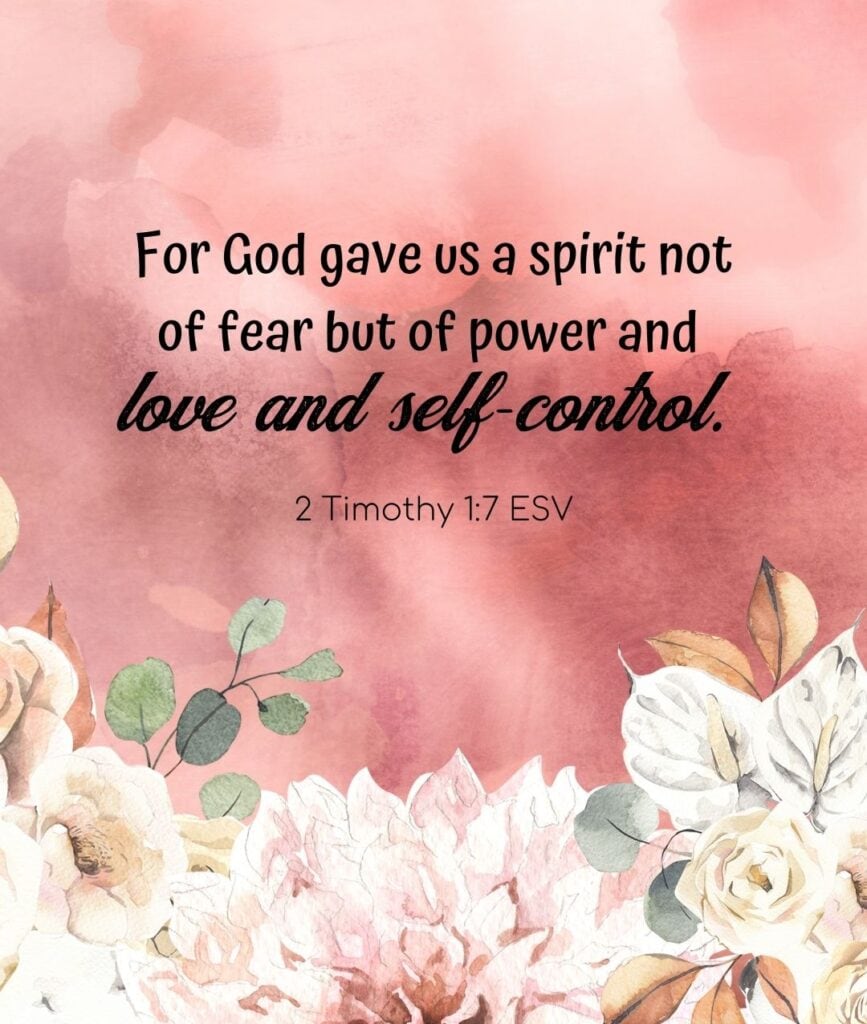
Conclusion: The Quiet Strength of the Disciplined Mind
In conclusion, what is said about self-control in a spiritual sense is perfectly mirrored in the world of money. It is the “fruit” of a well-ordered life. It is the barrier between a life of financial stress and a life of financial freedom.
Self-control is not a restriction of your freedom; it is the ultimate expression of it. The person who cannot say no to a purchase is not free; they are a slave to their impulses and the marketing departments of major corporations. The person who exercises self-control, who plans their spending, who invests for the long term, and who lives with contentment, is the only one truly free to design their life. In the end, the “God-given” ability to control one’s self is the greatest asset any investor or entrepreneur can ever possess.
aViewFromTheCave is a participant in the Amazon Services LLC Associates Program, an affiliate advertising program designed to provide a means for sites to earn advertising fees by advertising and linking to Amazon.com. Amazon, the Amazon logo, AmazonSupply, and the AmazonSupply logo are trademarks of Amazon.com, Inc. or its affiliates. As an Amazon Associate we earn affiliate commissions from qualifying purchases.