
In the complex and high-stakes world of global finance, professional designations serve as a shorthand for expertise, dedication, and specialized knowledge. Among the most prestigious of these is the FRM. But what does FRM mean, and why has it become a cornerstone of modern financial career development?
FRM stands for Financial Risk Manager. It is a globally recognized professional certification offered by the Global Association of Risk Professionals (GARP). Unlike general finance degrees or broader certifications, the FRM is laser-focused on the identification, assessment, and mitigation of risk. In an era defined by market volatility, rapid technological shifts, and global economic interconnectivity, the role of an FRM has moved from the back office to the very center of corporate strategy.

Understanding the FRM: More Than Just an Acronym
To understand what the FRM means in a professional context, one must look at the organization behind it. GARP established the FRM designation in 1997 to set a global standard for the risk management profession. Since then, it has become the gold standard for those who wish to demonstrate a mastery of the tools and techniques used to manage financial exposure.
The Global Standard for Risk Management
The FRM is not bound by a specific country’s regulations or banking systems. Instead, it provides a universal language for risk. Whether a professional is working in New York, London, Hong Kong, or Mumbai, the FRM designation signals to employers that the individual possesses a rigorous understanding of how markets fail, how credit collapses, and how operational oversights can lead to systemic ruin. Holding the certification means joining an elite network of over 75,000 certified professionals worldwide who are tasked with protecting the stability of the global financial ecosystem.
The GARP Connection
The Global Association of Risk Professionals is the leading professional organization for risk managers. By maintaining the FRM program, GARP ensures that the curriculum evolves alongside the industry. The organization frequently updates the “FRM Body of Knowledge” to include emerging threats, such as climate-related financial risks and digital asset volatility. For the professional, the FRM is not a static achievement but an entry point into a lifelong community of practice focused on financial stability.
The Core Components of the FRM Curriculum
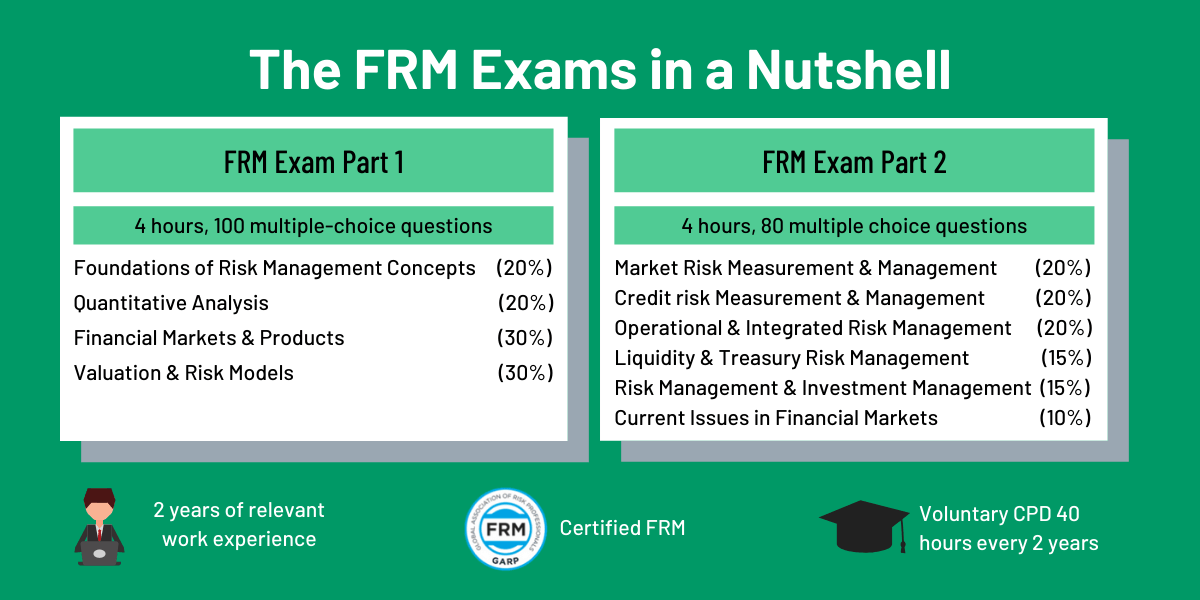
What sets the FRM apart from other financial certifications is its depth of technical rigor. To earn the right to use the letters, candidates must pass two grueling exams—Part I and Part II—and demonstrate two years of relevant professional work experience. The curriculum is divided into several key domains that provide a comprehensive toolkit for any modern financial professional.
Foundations of Risk Management
This area introduces the fundamental concepts of risk management and how they integrate into corporate governance. It covers the trade-off between risk and return, the basic building blocks of portfolios, and the various types of risk (market, credit, and operational). Crucially, this section also delves into the history of financial disasters, teaching candidates how to learn from the systemic failures of the past to prevent future catastrophes.
Quantitative Analysis and Financial Markets
The FRM is a quant-heavy designation. Candidates must master probability and statistics, regression analysis, and time-series modeling. This mathematical foundation is then applied to financial markets and products. Understanding the mechanics of bonds, derivatives, options, and futures is essential. For an FRM, these aren’t just investment vehicles; they are tools that can either hedge risk or, if misused, amplify it.
Valuation and Risk Models
This domain focuses on the practical application of risk measurement. It covers Value-at-Risk (VaR), stress testing, and the valuation of complex financial instruments. Candidates learn how to build models that predict how a portfolio might behave under extreme market conditions. This is the “engine room” of the FRM curriculum, where theoretical math meets the hard reality of market fluctuations.
Market, Credit, and Operational Risk
In Part II of the FRM program, the focus shifts toward specialized application. Market risk focuses on interest rates and foreign exchange volatility. Credit risk looks at the likelihood of counterparty default, particularly in lending and structured products. Operational risk, which has gained massive importance recently, deals with risks arising from internal processes, systems, and human error. Together, these sections prepare a professional to look at a financial institution holistically and identify where the “leaks” are.
Why the FRM is Essential in Today’s Financial Climate
In the decades leading up to the 2008 financial crisis, risk management was often viewed as a “check-the-box” compliance function. That perspective has vanished. Today, risk management is seen as a competitive advantage. Companies that manage risk well can survive downturns that bankrupt their competitors.
Navigating Global Economic Volatility
We live in an age of “permacrisis.” From geopolitical tensions and supply chain disruptions to sudden inflationary spikes, the global economy is more volatile than it has been in decades. For an investor or a corporate board, an FRM provides the analytical framework needed to navigate this uncertainty. By quantifying the “unquantifiable,” FRMs help organizations make informed decisions about where to deploy capital safely.
The Rise of FinTech and Cybersecurity Risks
The digitalization of money has introduced entirely new categories of risk. As banking moves to the cloud and decentralized finance (DeFi) challenges traditional models, the “operational risk” component of the FRM becomes vital. FRMs are now being called upon to assess the risks of algorithmic trading, the security of digital ledgers, and the systemic impact of a major cyber-attack on the banking infrastructure.
Regulatory Compliance and Ethical Standards
Following the 2008 crash, global regulators introduced the Basel Accords, which set strict capital requirements for banks. Implementing these regulations requires a deep understanding of risk-weighted assets—a core topic for FRMs. Furthermore, the FRM program emphasizes professional ethics. In a world where financial fraud can wipe out billions in value overnight, having a workforce committed to ethical risk reporting is a primary defense for any business.
Career Paths and Earning Potential for FRM Holders
For those looking to advance their “Money” niche career, the FRM is one of the most effective ways to boost earning potential and open doors to leadership roles. It is highly regarded by the world’s top investment banks, asset managers, and hedge funds.
Roles in Banking and Asset Management
Most FRMs find their homes in major financial institutions. Common job titles include Risk Quantitative Analyst, Credit Risk Manager, and Market Risk Lead. In asset management, FRMs work as Portfolio Managers who specialize in “downside protection,” ensuring that a fund’s exposure remains within the limits agreed upon with investors. At the executive level, the FRM is a natural stepping stone to becoming a Chief Risk Officer (CRO).
Consulting and Corporate Finance
Beyond the banking sector, management consulting firms like McKinsey, BCG, and the “Big Four” accounting firms (Deloitte, PwC, EY, KPMG) value the FRM designation for their risk advisory practices. Furthermore, large multinational corporations hire FRMs for their treasury departments to manage foreign exchange risk and interest rate exposure on their corporate debt.
Salary Expectations and Long-term Growth
While salaries vary by region and experience, FRM holders consistently earn a premium over their non-certified peers. In major hubs like New York or London, an FRM designation can add 15% to 25% to a professional’s base salary, not including bonuses. More importantly, the designation provides “career insurance.” Because risk management is a counter-cyclical field—meaning it becomes even more important during a recession—FRMs often enjoy greater job security during economic downturns.
FRM vs. CFA: Choosing the Right Path for Your Financial Career
A common question among finance professionals is whether to pursue the Chartered Financial Analyst (CFA) or the FRM. While both are prestigious, they serve different masters.
Specialized Depth vs. Broad Breadth
The CFA is often described as the “gold standard” for investment professionals. It covers a vast range of topics including equity analysis, portfolio management, and financial reporting. It is a generalist’s degree for those who want to pick stocks or manage wealth. The FRM, by contrast, is a specialist’s degree. It doesn’t care as much about how to make money as it does about how to avoid losing it. If the CFA is about the “gas pedal” of finance, the FRM is about the “brakes.”
Exam Structure and Difficulty
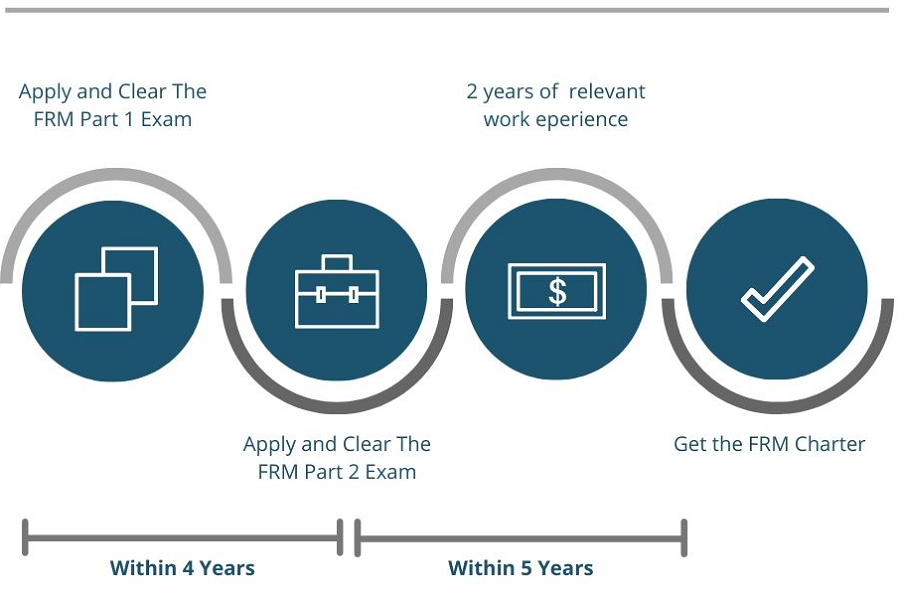
The CFA consists of three levels and is generally considered a three-to-four-year commitment. The FRM consists of two parts and can technically be completed in a single year, though most candidates take two. However, do not mistake the shorter timeframe for lack of difficulty. The pass rates for the FRM are typically between 40% and 50%, reflecting the intense mathematical and analytical requirements of the exam. For many, the FRM is the perfect complement to the CFA, providing a niche expertise that makes them a more well-rounded candidate for high-level finance roles.
Ultimately, “what FRM means” is a commitment to excellence in the face of uncertainty. It is a designation for those who enjoy solving puzzles, who find beauty in probability, and who want to be the calm voice of reason in a volatile market. As the world of finance becomes increasingly complex, the value of the Financial Risk Manager will only continue to rise.
aViewFromTheCave is a participant in the Amazon Services LLC Associates Program, an affiliate advertising program designed to provide a means for sites to earn advertising fees by advertising and linking to Amazon.com. Amazon, the Amazon logo, AmazonSupply, and the AmazonSupply logo are trademarks of Amazon.com, Inc. or its affiliates. As an Amazon Associate we earn affiliate commissions from qualifying purchases.