
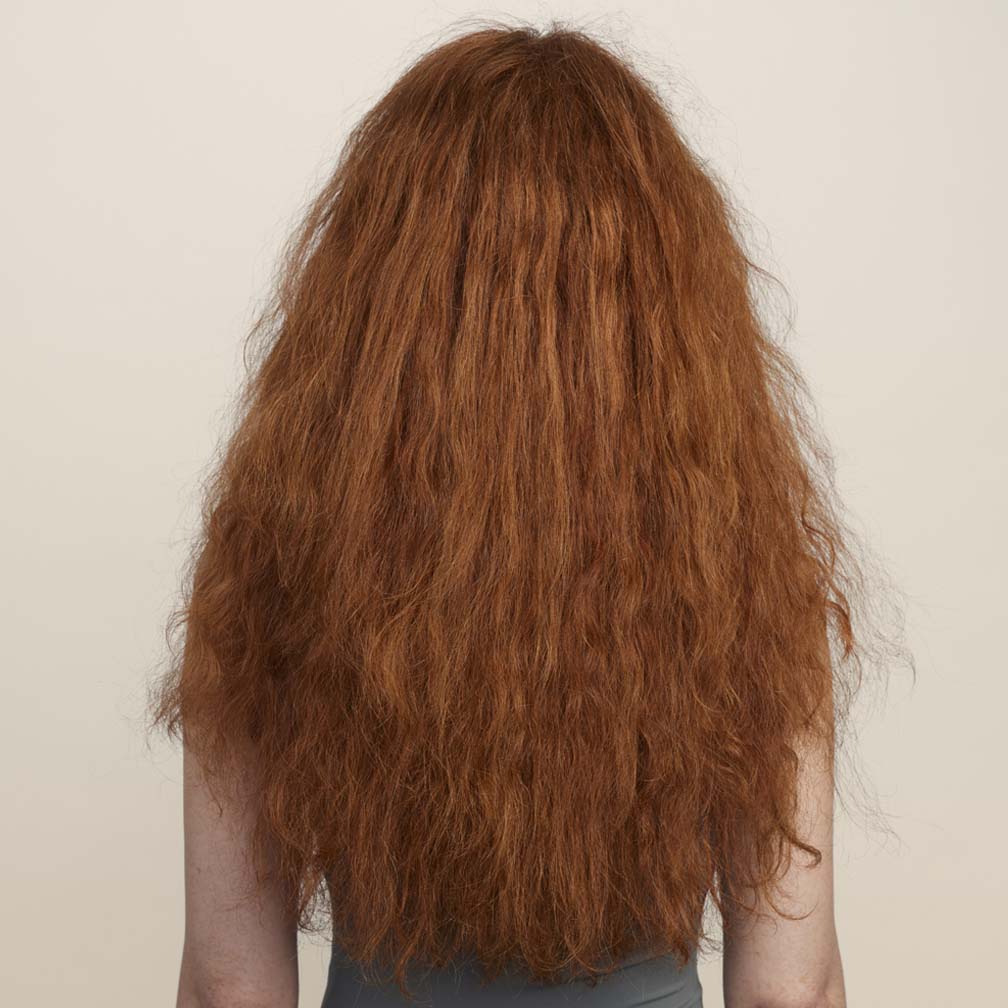
In the realm of computer graphics and artificial intelligence, the quest for photorealism has conquered mountains, oceans, and skin textures. However, one of the most persistent hurdles for developers and digital artists remains the simulation of human hair—specifically, the complex, non-uniform texture known as frizz. When we ask “what does frizzy hair look like” through a technological lens, we are not discussing a bad hair day; we are discussing a high-frequency data problem involving light scattering, physics-based simulation, and neural rendering.
To a machine, frizzy hair is a chaotic system of thousands of individual curves that defy the organized patterns of “smooth” hair. Understanding and replicating this look is essential for the next generation of digital humans, virtual avatars, and AI-generated imagery.
The Computational Complexity of Chaos: Why Frizz is a Technical Milestone
From a technical perspective, the “look” of frizzy hair is defined by its lack of geometric alignment. In traditional 3D modeling, hair is often treated as a series of interpolated splines or “hair cards” (textured polygons). Frizz, however, occurs when individual strands deviate from the parent bundle, creating a visual halo of low-density, high-frequency noise.
Beyond Smooth Polygons
In early CGI, hair was often rendered as a solid mass or a series of stiff ribbons. This was because calculating the interaction of light with 100,000 individual strands was computationally prohibitive. Frizz represents the ultimate stress test for these systems. What we perceive as frizz is actually the result of “flyaway” strands—individual fibers that have different curvature and orientation than the surrounding group. To render this accurately, an engine must handle “non-manifold geometry,” where strands cross and intersect in unpredictable ways.
The Kajiya-Kay and Marschner Models
To understand what frizzy hair looks like in a digital environment, engineers rely on shading models. The Kajiya-Kay model was an early attempt to simulate how light reflects off hair cylinders, but it failed to capture the depth of frizzy textures. The Marschner model, introduced in 2003, revolutionized the field by accounting for the way light enters a hair fiber, reflects off the inner cuticle, and exits.
For frizzy hair, the Marschner model becomes incredibly complex. Because frizzy strands are often drier and have more raised cuticles, the “diffuse” component of the light increases while the “specular” (shiny) component decreases. In tech terms, frizzy hair looks like a high-entropy surface where light is scattered in multiple directions rather than reflected in a clean, coherent highlight.
AI and Neural Rendering: Training Models to See the “Mess”
With the rise of Generative AI tools like Midjourney, Stable Diffusion, and DALL-E, the question of what frizzy hair looks like has moved from manual 3D modeling to latent space representation. AI models do not “know” what hair is; they understand statistical distributions of pixels.
Data Sets and Diversity
One of the primary challenges in AI development is the bias toward “groomed” hair in training data. Most high-quality photography used to train AI features models with smooth, styled hair. Consequently, early iterations of AI image generators struggled to define frizz, often interpreting it as digital artifacts or “noise.”
To teach an AI what frizzy hair looks like, developers have had to introduce more diverse datasets that include varying humidity levels, natural textures, and unstyled states. This allows the neural network to learn the “visual signature” of frizz: a soft, semi-transparent volume surrounding the head, characterized by a specific frequency of pixel variance.
Real-time Synthesis in Generative AI
In real-time applications, such as deepfake technology or AI-driven video filters, rendering frizz is a temporal nightmare. Because frizzy hair is so fine, it often falls below the “Nyquist frequency” of the camera sensor, leading to aliasing or “shimmering” in video. Tech companies are now using temporal anti-aliasing (TAA) and neural upscaling (like NVIDIA’s DLSS) to maintain the look of frizz without it turning into a pixelated mess. The “look” of frizz in AI is therefore a balance between sharp detail and smoothed-out noise.

Simulation Engines and the Physics of Humidity
If AI handles the appearance of frizz, physics engines handle the behavior. In high-end game engines like Unreal Engine 5 or proprietary VFX software like Pixar’s Presto, frizzy hair is a byproduct of complex physics simulations.
Solving for Collision and Static
What we visually identify as frizz is often caused by static electricity or lack of moisture, causing strands to repel each other. In a digital environment, this is simulated through “coulomb forces” or repulsive fields between hair splines. When a developer increases the “frizz” parameter in a tool like XGen (used in Maya), they are essentially telling the computer to randomize the “clumping” weights and increase the “noise” function of the hair guides.
The visual result is a volumetric expansion. Frizzy hair looks “bigger” because the individual strands are taking up more 3D space, creating more air gaps. This requires the engine to calculate more “self-shadowing”—the way one strand casts a shadow on another. This is why frizzy hair often looks more matte and less vibrant than smooth hair; the internal shadowing cancels out the light.
Strands vs. Cards: A Performance Trade-off
For years, video games avoided frizzy hair because it was too expensive to render. They used “hair cards,” which are flat planes with hair textures. These cards look great for straight hair but terrible for frizz, as the flat planes become obvious when they are supposed to look “fluffy.”
The breakthrough came with “strand-based” rendering, where each hair is a rendered geometry. This allows frizzy hair to look like a cloud of individual fibers rather than a textured block. Systems like Unreal Engine’s “Groom” component now allow for real-time physics on frizzy hair, calculating how these messy strands react to wind and movement.
The Future of Virtual Identity: High-Fidelity Personalization
As we move toward a more immersive “Metaverse” or digital-first identity, the technical ability to represent frizzy hair is more than just a visual achievement; it is a matter of digital inclusion and brand representation.
The Role of Path Tracing
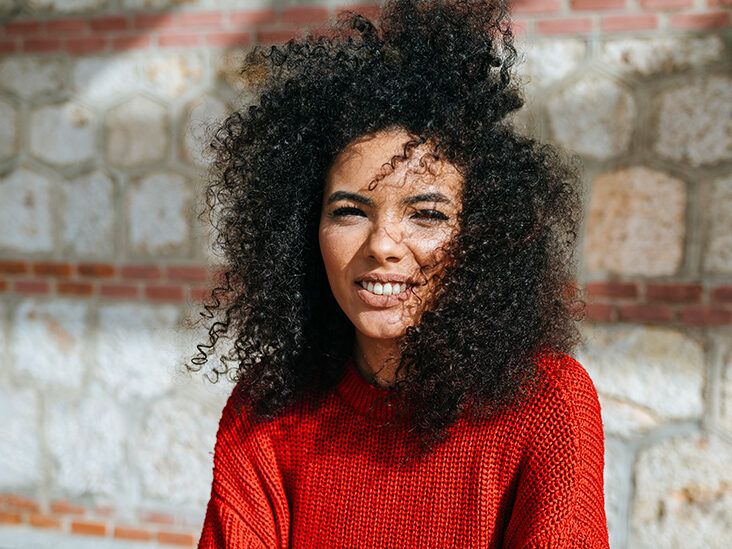
The most realistic “look” for frizzy hair currently comes from path tracing—a rendering technique that simulates the actual path of light rays. In a path-traced environment, frizzy hair takes on a luminous quality. Light “bounces” within the frizzy mass, creating a realistic “rim light” effect where the sun or a light source catches the flyaway strands. This creates that specific “aura” or glow that we associate with frizzy hair in real-life sunlight.
For brands building digital twins or virtual influencers, capturing this look is vital for authenticity. If a digital character’s hair is too perfect, it triggers the “uncanny valley” effect. By introducing “frizz data,” tech artists can make a character look more human and relatable.
Real-Time Customization Tools
We are now seeing the emergence of “Character Creators” in gaming and professional software that allow users to toggle “frizz intensity,” “dryness,” and “humidity response.” These tools use procedural noise algorithms (like Perlin or Simplex noise) to distort hair guides in real-time. This allows the user to define exactly what frizzy hair looks like for their specific digital persona, moving away from “one-size-fits-all” hair assets toward high-fidelity, personalized textures.
The Horizon of Photorealistic Texture Simulation
In conclusion, the question of what frizzy hair looks like is a gateway into the most advanced sectors of modern technology. It is a convergence of optical physics, high-level mathematics, and machine learning. To represent frizz is to represent the “imperfections” of the physical world within a digital medium.
As hardware capabilities increase—driven by more powerful GPUs and specialized AI tensors—the gap between “rendered frizz” and “real frizz” is closing. We are entering an era where the digital look of hair is no longer a limitation of the software, but a choice made by the artist. Whether through the lens of a path-traced cinematic or a generative AI model, frizzy hair is being decoded into a language of light, shadow, and geometry, proving that even the most chaotic natural textures can be mastered through technological innovation.
aViewFromTheCave is a participant in the Amazon Services LLC Associates Program, an affiliate advertising program designed to provide a means for sites to earn advertising fees by advertising and linking to Amazon.com. Amazon, the Amazon logo, AmazonSupply, and the AmazonSupply logo are trademarks of Amazon.com, Inc. or its affiliates. As an Amazon Associate we earn affiliate commissions from qualifying purchases.