
In the world of hardware engineering, PC building, and thermal management, performance is often dictated by a single, critical metric: CFM. Standing for Cubic Feet per Minute, CFM is the measurement of the volume of air that a fan can move in sixty seconds. While it might seem like a simple figure, understanding the nuances of CFM is essential for anyone looking to optimize hardware longevity, maintain peak processing speeds, and manage the thermodynamic environment of modern technology.
As processors become more dense and power-hungry, the ability to move air efficiently is no longer just a luxury—it is a technical necessity. Whether you are managing a massive data center or fine-tuning a high-end gaming rig, the CFM rating of your cooling solution is the primary indicator of its heat-dissipation potential.

The Physics of Airflow: Understanding CFM in Modern Hardware
To understand CFM, one must first understand the relationship between air volume and heat transfer. In a closed system, such as a computer chassis or a server rack, components generate heat as a byproduct of electrical resistance. If this heat is not removed, it builds up, leading to thermal throttling or hardware failure.
Defining Cubic Feet per Minute
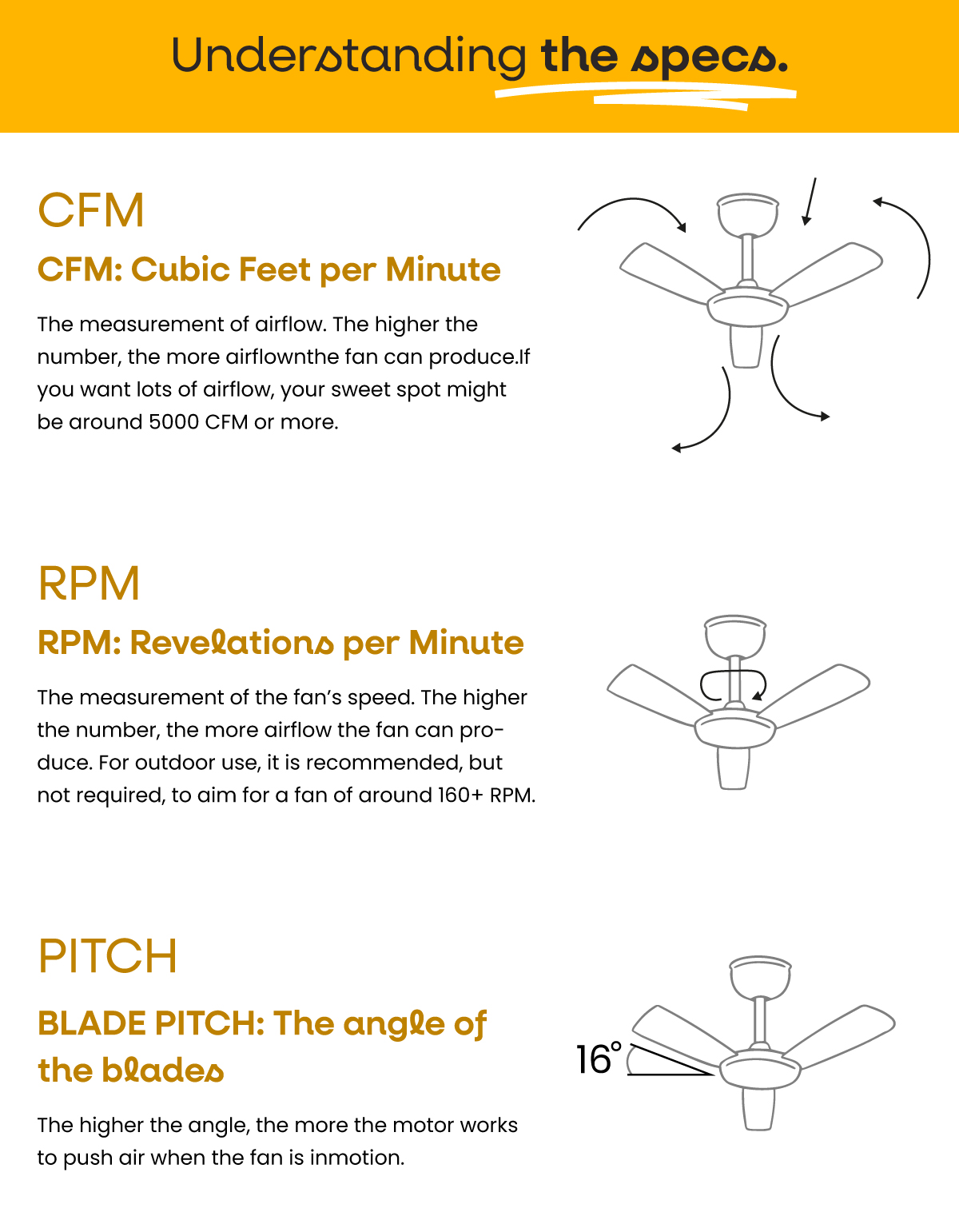
At its core, CFM measures the “quantity” of air. If a fan has a rating of 100 CFM, it is capable of moving 100 cubic feet of air every minute in an unobstructed environment. From a tech perspective, this is vital because air acts as the medium for heat transport. The more air you can move across a heatsink or through a case, the more thermal energy you can carry away from the sensitive silicon components.
However, CFM is rarely a constant. It is measured under “free flow” conditions. Once a fan is installed inside a device where it faces resistance—such as dust filters, mesh panels, or dense radiator fins—the actual CFM output will drop. This is why engineers look at the CFM curve rather than just the peak number listed on the box.
The Relationship Between RPM and CFM
The speed at which a fan rotates, measured in Revolutions Per Minute (RPM), is the primary driver of CFM. Generally, as RPM increases, CFM increases linearly. However, this comes with a trade-off: noise and power consumption. In the tech sector, the goal is often to maximize CFM while minimizing the acoustic profile. High-quality fans use specialized blade geometry—such as shark-fin designs or steep attack angles—to move more air at lower RPMs, thereby achieving high CFM without the high-pitched whine associated with server-grade cooling.
Why CFM is the Critical Metric for High-Performance Tech
When evaluating gadgets and internal hardware, CFM is the benchmark for “Airflow Fans.” These are designed specifically to move as much air as possible through open spaces. This distinguishes them from “Static Pressure” fans, which are designed to push air through tight restrictions.
PC Cooling and Overclocking Efficiency
For enthusiasts and professional workstations, CFM is the lifeblood of the system. In a standard ATX or Small Form Factor (SFF) build, the “exhaust” fans must have a high enough CFM to ensure that the hot air generated by the GPU and CPU is evacuated faster than it can accumulate.
When overclocking—pushing a processor beyond its factory-set clock speeds—the heat output increases exponentially. In these scenarios, a fan’s CFM rating directly correlates with the “thermal ceiling” of the system. If your intake fans provide 50 CFM but your components are generating heat that requires 80 CFM of air displacement to stay cool, your hardware will eventually throttle its performance to protect itself.
Industrial Cooling Solutions for Data Centers
On a larger scale, CFM is the metric that governs data center design. Rack-mounted servers generate immense amounts of heat. Engineers calculate the total heat output (in BTUs or Watts) and then determine the necessary CFM required to maintain a specific ambient temperature. In these environments, fans are often hot-swappable and run at extreme CFM levels—sometimes exceeding 300 CFM per unit—to ensure that high-density blade servers do not reach critical temperatures.
Static Pressure vs. CFM: Navigating Technical Trade-offs
A common mistake in tech assembly is assuming that a high CFM rating is always better. In reality, CFM must be balanced against Static Pressure (measured in mmH2O). Understanding the difference is crucial for effective thermal engineering.

When Airflow Meets Resistance
CFM is a measure of volume, whereas Static Pressure is a measure of force. If you place a high-CFM fan against a thick liquid-cooling radiator, the fan may struggle to actually push that volume through the narrow fins. The air “backs up,” creating turbulence and noise, while the actual airflow drops to a fraction of its rated CFM.
In tech applications, we use High-CFM fans for:
- Case exhaust (where there are no obstructions).
- Large, open-air enclosures.
- Active cooling for components with widely spaced fins.
We use High-Static Pressure fans for:
- CPU heatsinks with dense fin stacks.
- Water-cooling radiators.
- Intake fans situated behind restrictive dust filters.
Choosing the Right Fan for the Right Enclosure
The most efficient tech setups use a hybrid approach. For example, a workstation might use high-static pressure fans for the front intake (to pull air through filters) and high-CFM fans for the rear and top exhaust (to clear out the hot air quickly). This creates “positive pressure,” which not only optimizes cooling but also prevents dust from entering through small gaps in the chassis.
Optimizing Your Tech Environment with CFM Data
Beyond the internal components of a computer, CFM is a vital metric for the gadgets and appliances that make up a modern tech-driven home or office. From air purifiers to smart ventilation systems, the ability to calculate and control CFM is a hallmark of the “Smart Home” era.
Calculating Necessary Airflow for Tech Hubs
If you have a home office filled with monitors, external drives, and powerful computers, the ambient temperature can rise significantly. To maintain a healthy operating environment for your gear, you can use a simple CFM calculation:
CFM = (Cubic Feet of the Room) / (Minutes per Air Change)
For a room dedicated to high-end tech, you generally want an air exchange every 3 to 5 minutes. If your office is 1,000 cubic feet, you would need a ventilation or fan system capable of at least 200 to 333 CFM to prevent heat soak.
The Impact of Smart Controls and Variable Speeds
Modern tech fans are rarely “on or off.” Pulse Width Modulation (PWM) allows for granular control over fan speeds. This means a fan can sit at a low CFM during idle tasks—like browsing the web—and ramp up to its maximum CFM only when the system detects a high thermal load, such as during 8K video rendering or AI model training. This intelligent scaling is what allows modern laptops and desktops to remain silent most of the time while still having the “burst” cooling capacity needed for intensive workloads.
The Future of Cooling Technology: Beyond Standard CFM
As we look toward the future of hardware, the limitations of traditional CFM are driving innovation in materials science and fluid dynamics. We are moving toward a world where airflow is managed by more than just spinning plastic blades.
AI-Driven Thermal Management
Artificial Intelligence is now being integrated into fan controllers at the BIOS and OS levels. These AI tools monitor dozens of thermal sensors across a motherboard and predict heat spikes before they happen. Instead of reacting to heat, the system preemptively increases the CFM of specific fans based on the type of software being launched. This “predictive cooling” maximizes efficiency and minimizes mechanical wear on the fans.
Magnetic Levitation and Bio-mimicry
Traditional fans use ball bearings or fluid bearings, which create friction and limit the maximum effective CFM due to heat and wear. Newer “MagLev” (Magnetic Levitation) fans suspend the fan rotor using magnetic fields. This allows for higher RPMs and, consequently, higher CFM ratings with significantly less noise and a much longer lifespan.
Furthermore, engineers are looking at “bio-mimetic” designs—fan blades shaped like owl wings or whale fins—to move air more quietly. These designs allow for high-volume airflow (CFM) while breaking up the air vortices that cause the “whooshing” sound. In the future of tech gadgets, we can expect to see devices that move massive amounts of air while remaining virtually silent.
Conclusion: The Metric of Efficiency
CFM is more than just a specification on a box; it is the fundamental measurement of a system’s ability to breathe. In an era where tech performance is synonymous with thermal management, understanding CFM allows users and engineers to build faster, quieter, and more reliable machines. Whether it’s the tiny fan inside a VR headset or the massive blowers in a server farm, CFM remains the gold standard for measuring the power of cooling.
aViewFromTheCave is a participant in the Amazon Services LLC Associates Program, an affiliate advertising program designed to provide a means for sites to earn advertising fees by advertising and linking to Amazon.com. Amazon, the Amazon logo, AmazonSupply, and the AmazonSupply logo are trademarks of Amazon.com, Inc. or its affiliates. As an Amazon Associate we earn affiliate commissions from qualifying purchases.