
When a sudden, throbbing toothache strikes, the immediate concern is usually pain relief. However, once the initial shock wears off and a dentist mentions the words “root canal,” the focus quickly shifts to the financial implications. For many individuals and families, a root canal represents a significant, often unexpected, budgetary event. Understanding the economics of endodontic treatment is essential for any savvy consumer of healthcare, as the price tag can vary wildly based on a dozen different variables.
A root canal is not a fixed-price commodity like a gallon of milk or a digital subscription. It is a complex microsurgical procedure designed to save a natural tooth that has become infected or severely damaged. From a personal finance perspective, it is an investment in your long-term health and a strategic move to avoid the even higher costs of tooth extraction and replacement.
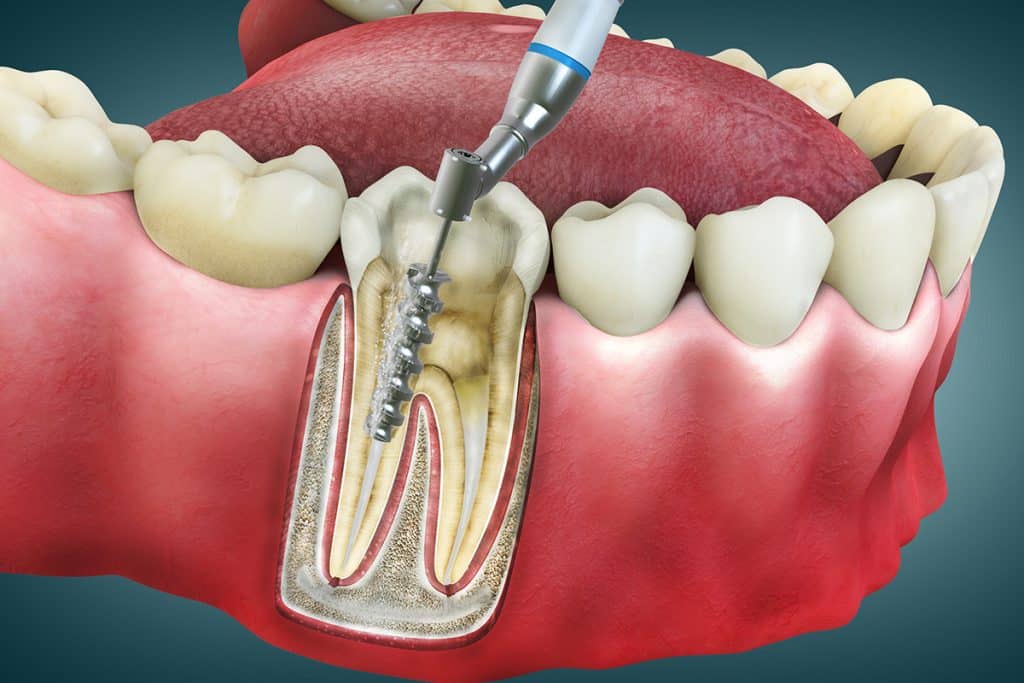
Understanding the Base Factors of Root Canal Pricing
The cost of a root canal is rarely a single, flat fee. Instead, it is determined by the complexity of the biological structure being treated and the expertise required to perform the procedure. When you receive a quote from a dental office, several primary drivers are at play.
Tooth Location and Complexity
The most significant factor in the base price of a root canal is which tooth requires treatment. Teeth are categorized into three main groups: anterior (front teeth), premolars (bicuspids), and molars (back teeth).
Front teeth usually have a single root canal, making the procedure faster and less complex. Consequently, these are the least expensive, often ranging from $600 to $1,100. Premolars typically have one or two canals and fall in the middle of the pricing spectrum. Molars, however, are the heavy lifters of the mouth and can have three, four, or even five canals. They are located at the back of the mouth, making access difficult, and their internal anatomy is often curved or calcified. Because of this complexity, a molar root canal is the most expensive, frequently costing between $1,200 and $1,800.
General Dentist vs. Endodontist
Who performs the procedure significantly impacts the final bill. A general dentist is a “primary care provider” for your teeth and may perform straightforward root canals. However, many patients are referred to an endodontist—a specialist who has completed two or more years of advanced training specifically in root canal therapy.
Endodontists use specialized equipment, such as operating microscopes and digital imaging, and they generally charge a premium for their expertise. While a general dentist might charge $900 for a molar, an endodontist might charge $1,300 for the same tooth. From a financial planning standpoint, paying the specialist premium can often be viewed as a risk-mitigation strategy; endodontists have higher success rates in complex cases, potentially saving you the cost of a “re-treatment” down the road.
Geographic Location and Local Market Rates
Just as housing and groceries vary by zip code, so does dental care. In major metropolitan areas with high overhead costs—such as New York City, San Francisco, or London—prices will be significantly higher than in rural areas. Practitioners must account for their own commercial rent, staff wages, and insurance premiums, all of which are passed on to the patient. When budgeting for dental work, it is helpful to use regional cost-of-living calculators to estimate where your local providers likely fall on the national average.
The Full Financial Picture: Beyond the Procedure Fee
One of the most common mistakes in dental budgeting is assuming the “root canal” quote covers the entire restoration of the tooth. In reality, a root canal is often just one phase of a multi-step restorative process. To understand the true out-of-pocket cost, you must look at the peripheral expenses.
Diagnostic Costs: X-rays and Exams
Before the procedure begins, the dentist must diagnose the issue. This involves a clinical examination and diagnostic imaging. Standard 2D X-rays are usually inexpensive (often covered by insurance or costing under $100), but complex cases may require a CBCT (Cone Beam Computed Tomography) scan. A CBCT provides a 3D view of the tooth and surrounding bone. This advanced imaging can cost between $200 and $400, and while it adds to the upfront cost, it provides the precision necessary to avoid complications.
Restorative Costs: Build-ups and Crowns
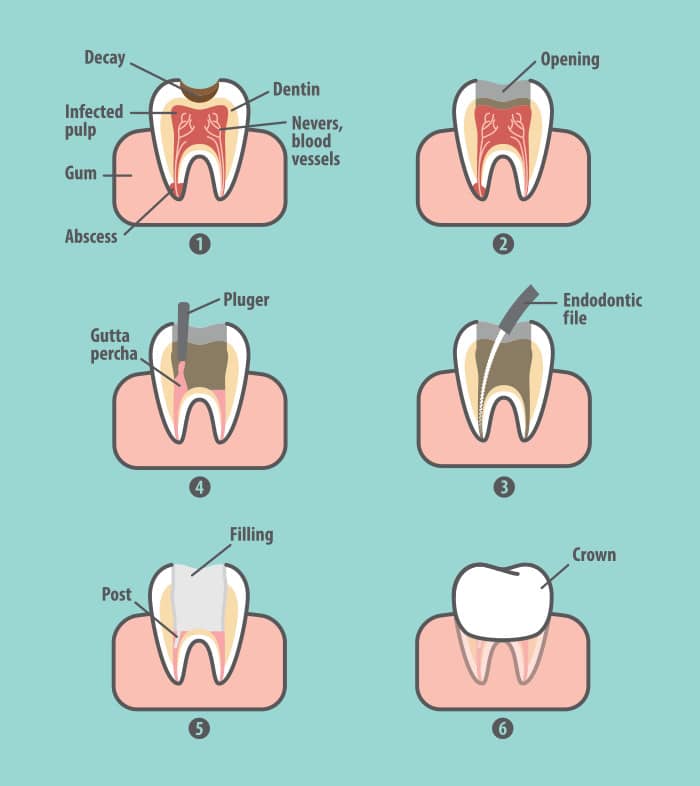
A tooth that has undergone a root canal is often structurally compromised. Once the internal infection is cleared and the canals are sealed, the tooth must be “built back up” and protected. This almost always requires a “core build-up”—a specialized filling that replaces the lost tooth structure—which can cost between $200 and $500.

For most molars and premolars, a crown (or cap) is mandatory to prevent the tooth from fracturing under the pressure of chewing. A dental crown is a separate financial line item. Depending on the material used (porcelain, zirconia, or gold), a crown can cost anywhere from $1,000 to $2,500. When you combine the root canal, the build-up, and the crown, the total investment for a single tooth can easily exceed $3,000.
Emergency vs. Planned Procedures
Financial emergencies often coincide with medical ones. If you require an emergency root canal over a weekend or after hours, you may incur “emergency visit” fees. Furthermore, if the infection has spread, you may need prescriptions for antibiotics or high-strength pain relievers, which add a small but additional layer to the total expenditure.
Navigating Insurance and Payment Strategies
Given that the total cost can reach several thousand dollars, most patients look for ways to offset the burden. Managing these costs requires a proactive approach to insurance and financial tools.
How Dental Insurance Impacts Out-of-Pocket Costs
Dental insurance operates differently than health insurance. Most dental plans have an “annual maximum”—the total amount the insurance company will pay in a single year—which usually ranges from $1,000 to $2,000.
Root canals are typically classified as “Basic” or “Major” services. If classified as Basic, the insurance might cover 80% of the cost. If classified as Major, they might only cover 50%. Because the cost of a root canal and crown often exceeds the $1,500 annual maximum, many patients find themselves “maxing out” their insurance on a single tooth. In these cases, timing is everything. If the procedure is not an immediate emergency, some patients choose to have the root canal at the end of one calendar year and the crown at the beginning of the next to utilize two years of insurance maximums.
FSA and HSA Strategies
Flexible Spending Accounts (FSA) and Health Savings Accounts (HSA) are powerful tools for managing dental costs. Since root canals are a qualified medical expense, you can use pre-tax dollars to pay for the procedure. This effectively provides a discount equal to your marginal tax rate. If you are in a 24% tax bracket, using an HSA to pay for a $2,000 procedure saves you nearly $500 in taxes you would have otherwise paid.
Financing Plans and Medical Credit Cards
For those who cannot afford the upfront cost, many dental offices partner with third-party financing companies like CareCredit or LendingClub. These services often offer “no-interest” periods (ranging from 6 to 24 months) if the balance is paid in full within the promotional window. This allows patients to break a $3,000 bill into manageable monthly payments. However, caution is required: if the balance is not paid off in time, the deferred interest rates are often extremely high, sometimes exceeding 26%.
The Cost of Delay: Evaluating the Financial Risk of Avoidance
When faced with a high estimate, the temptation is often to delay treatment or opt for a cheaper alternative, such as extraction. However, from a long-term financial perspective, these choices are often more expensive.
From Root Canal to Extraction and Implants
A common question is: “Why not just pull the tooth for $200?” While the extraction itself is cheap, the subsequent consequences are not. A missing tooth allows surrounding teeth to shift, leading to bite misalignment, jawbone loss, and potential periodontal issues.
To replace a missing tooth and restore function, you would eventually need a dental bridge or a dental implant. A single dental implant—including the post, the abutment, and the crown—typically costs between $3,500 and $6,000. When compared to the $2,500–$3,000 cost of a root canal and crown, saving the natural tooth is actually the more cost-effective financial decision over a ten-year horizon.
Long-term Financial Health and Preventative ROI
The economics of dentistry reinforce the old adage that “an ounce of prevention is worth a pound of cure.” Most root canals are the result of untreated cavities. A simple composite filling might cost $200. If that cavity is ignored and reaches the pulp, the cost jumps to $2,500 for a root canal and crown. If the tooth is then lost, the cost jumps to $5,000 for an implant.
Treating dental issues at their earliest detection provides the highest return on investment. Regular cleanings and exams, which are often 100% covered by insurance, serve as the primary defense against the high-ticket costs of endodontic therapy. For the financially conscious individual, a root canal should be seen as a necessary “repair and maintenance” cost for a vital asset. While the price may be high, the cost of doing nothing is almost always higher. Through a combination of insurance optimization, tax-advantaged accounts, and timely intervention, the financial impact of a root canal can be managed without derailing your broader financial goals.
aViewFromTheCave is a participant in the Amazon Services LLC Associates Program, an affiliate advertising program designed to provide a means for sites to earn advertising fees by advertising and linking to Amazon.com. Amazon, the Amazon logo, AmazonSupply, and the AmazonSupply logo are trademarks of Amazon.com, Inc. or its affiliates. As an Amazon Associate we earn affiliate commissions from qualifying purchases.