
In the modern financial landscape, Bitcoin is often discussed in terms of tens of thousands of dollars, institutional adoption, and its role as “digital gold.” However, to truly understand the unprecedented trajectory of this asset, one must look back to a time when it had no measurable market value at all. The story of Bitcoin’s original price is not just a historical curiosity; it is a fundamental case study in price discovery, the psychology of value, and the evolution of a new asset class.
When Satoshi Nakamoto mined the Genesis Block on January 3, 2009, Bitcoin did not have a price tag. There were no exchanges, no order books, and no liquidity. For the first several months of its existence, the “price” of Bitcoin was effectively zero. It was a technical experiment shared among a small circle of cryptographers and cypherpunks. Yet, within fifteen years, that zero-value experiment would become one of the best-performing assets in human history.
The Era of Theoretical Value: 2009 and the Genesis Block
For the majority of 2009, Bitcoin existed purely as a proof-of-concept. The software was open-source, and anyone with a standard computer could participate in “mining”—the process of securing the network and earning newly minted coins. During this period, Bitcoin was a hobbyist endeavor rather than a financial investment.
The Concept of Zero-Value Mining
In the early days, the cost of acquiring Bitcoin was simply the cost of the electricity required to run a CPU. There were no secondary markets where one could buy 1 BTC with a credit card or a bank transfer. If you wanted Bitcoin, you had to mine it. Because the network difficulty was incredibly low, a standard home computer could generate thousands of coins in a single day. At this stage, the value was purely internal to the network; participants were essentially collecting digital tokens that had no purchasing power in the physical world.
Satoshi Nakamoto’s Vision of Sound Money
The lack of an initial price was intentional. Unlike modern “Initial Coin Offerings” (ICOs) where tokens are sold to investors to raise capital, Bitcoin was distributed through “Proof of Work.” This ensured that the coins had to be earned through the expenditure of resources. From a financial perspective, this created a “fair launch” model. The original price of zero allowed for a slow, organic distribution, preventing a centralized entity from controlling the supply from the outset.
Establishing the First Market Price: The New Liberty Standard
The first recorded exchange rate for Bitcoin didn’t appear until October 5, 2009, nearly ten months after the network launched. This milestone was facilitated by a website called “New Liberty Standard,” which established a price based on the cost of production—specifically, the electricity required to mine a single coin.
The 1,309 BTC for $1 Milestone
New Liberty Standard set the initial exchange rate at 1,309.03 BTC to $1 USD. To put this into perspective, a single Bitcoin was valued at roughly $0.00076. At this price, a $10 investment would have yielded over 13,000 Bitcoins. This was the first time that a mathematical relationship was established between the US Dollar and Bitcoin, marking the official birth of Bitcoin as a tradable commodity.
The methodology used by New Liberty Standard was grounded in classic economic theory: the Labor Theory of Value. By calculating the average power consumption of a computer running a high CPU load, multiplied by the cost of electricity in the United States, and divided by the number of Bitcoins generated, they provided a logical floor for the asset’s value. It was no longer just “internet money”; it was a digital representation of expended energy.
The First Peer-to-Peer Trades
While New Liberty Standard provided a benchmark, the early community also engaged in informal peer-to-peer trades. These occurred on forums like Bitcointalk, where users would negotiate trades via private messages. One of the earliest recorded trades involved Martti Malmi, an early developer, who sold 5,050 Bitcoins for $5.02 via PayPal in late 2009. This transaction further solidified the idea that Bitcoin could be exchanged for fiat currency, even if the amounts were negligible at the time.
From Theoretical to Tangible: The Bitcoin Pizza Transaction
While the New Liberty Standard gave Bitcoin a price in terms of electricity, the asset still lacked “purchasing power” in the real world. That changed on May 22, 2010, an event now immortalized in financial history as “Bitcoin Pizza Day.”
Laszlo Hanyecz’s 10,000 BTC Order
Laszlo Hanyecz, a programmer and early Bitcoin miner, posted a request on the Bitcointalk forum offering 10,000 Bitcoins to anyone who would order him two large pizzas. A fellow enthusiast accepted the offer, purchasing two Papa John’s pizzas for approximately $41 and receiving the 10,000 BTC in return.
This transaction was a pivotal moment in the history of money. For the first time, Bitcoin was used to purchase a physical good. By doing so, the “price” of Bitcoin was effectively set at $0.0041 per coin. While this was a massive leap from the $0.00076 price set months earlier, it remains one of the most lopsided trades in history when viewed through the lens of modern valuations.
Validating Bitcoin as a Medium of Exchange
The pizza transaction proved that Bitcoin could function as a medium of exchange. In the eyes of economists and early investors, this was the “proof of concept” required to move Bitcoin from a collector’s item to a functional financial tool. It demonstrated that as long as two parties agreed on the value of the digital token, it could facilitate commerce without the need for a bank or a centralized clearinghouse. This realization began to drive demand, which in turn began to drive the price upward.
The Rise of Exchanges and the Path to Parity
As 2010 progressed, the infrastructure around Bitcoin began to professionalize. The creation of centralized exchanges allowed for more fluid price discovery, moving away from forum posts and toward real-time order books.
The Birth of Mt. Gox
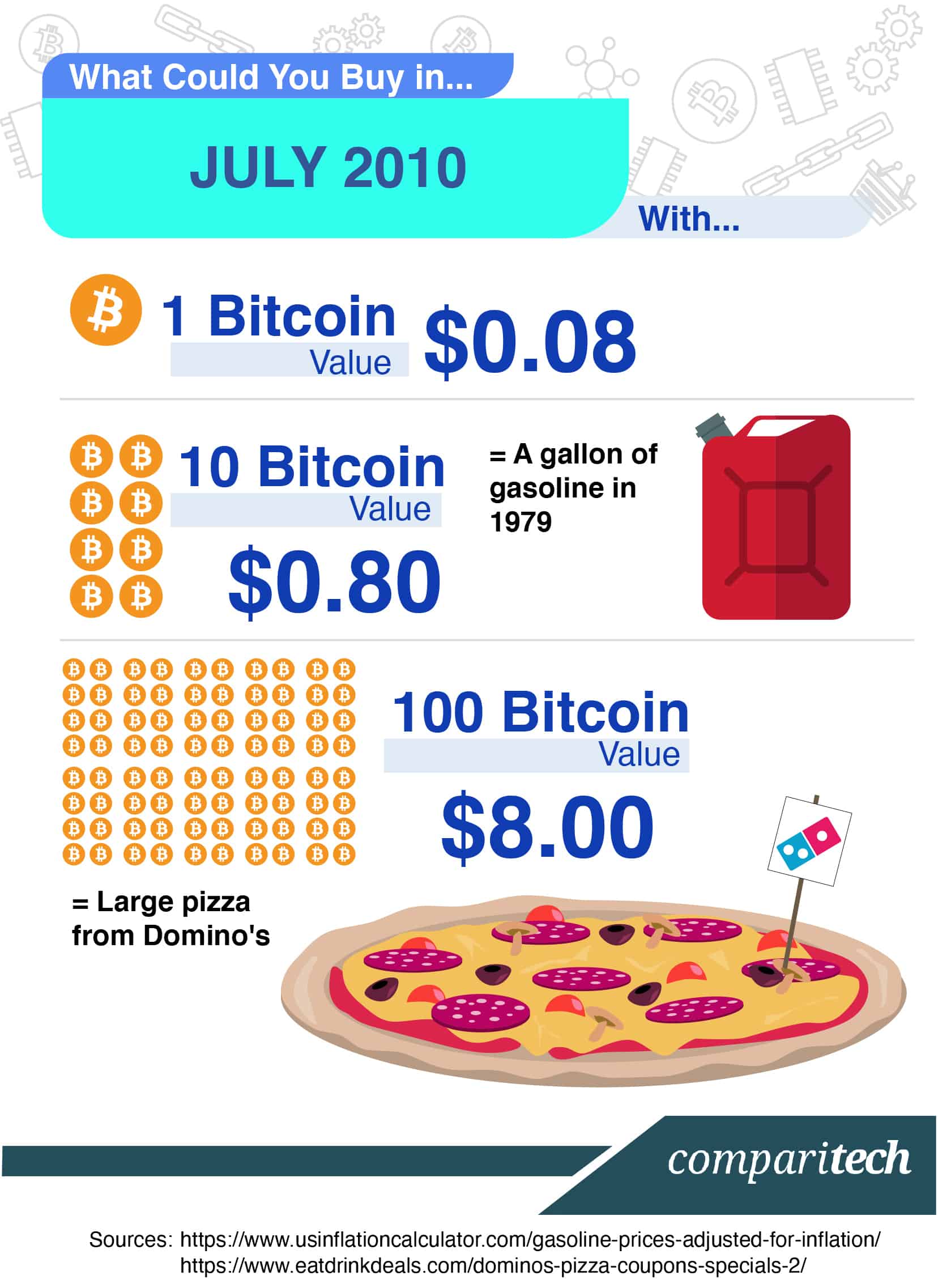
In July 2010, the Mt. Gox exchange was launched. By providing a platform where users could buy and sell Bitcoin instantly, Mt. Gox helped establish a “market price” that was updated in real-time. Within months of the exchange’s launch, the price of Bitcoin rose from pennies to roughly $0.08.
The increased liquidity attracted a new wave of speculators and tech enthusiasts. No longer was Bitcoin limited to those who could mine it; anyone with a digital wallet and a few dollars could participate in this new financial experiment. This accessibility was the catalyst for the first major price rallies.
Reaching Dollar Parity in 2011
A major psychological milestone was reached on February 9, 2011, when Bitcoin hit a price of $1.00 on the Mt. Gox exchange. Reaching parity with the US Dollar was a watershed moment for the community. It signaled that Bitcoin had moved beyond being a fractional-cent curiosity and was becoming a legitimate unit of value.
The journey from $0.00076 to $1.00 represented a gain of over 130,000% in less than two years. This volatility and potential for astronomical returns began to catch the attention of the broader financial world, leading to the first “bull run” where prices spiked to nearly $30 in mid-2011 before experiencing its first major market correction.
Lessons in Asset Appreciation and Financial Sovereignty
Looking back at the original price of Bitcoin provides essential insights for modern investors and students of finance. The transition from $0 to a trillion-dollar market cap is not just a story of “getting lucky”; it is a story of how value is perceived and assigned in a digital age.
The Power of Scarcity and Decentralization
The reason Bitcoin was able to move from an original price of zero to its current heights lies in its underlying mechanics: a hard cap of 21 million coins and a decentralized ledger. In traditional finance, currencies are subject to the monetary policies of central banks. Bitcoin offered an alternative—a predictable, deflationary model. As the world navigated various financial crises and inflationary periods, the “original price” of Bitcoin became less relevant than its “original purpose”: to serve as a hedge against centralized financial failure.
The Psychological Shift in Modern Investing
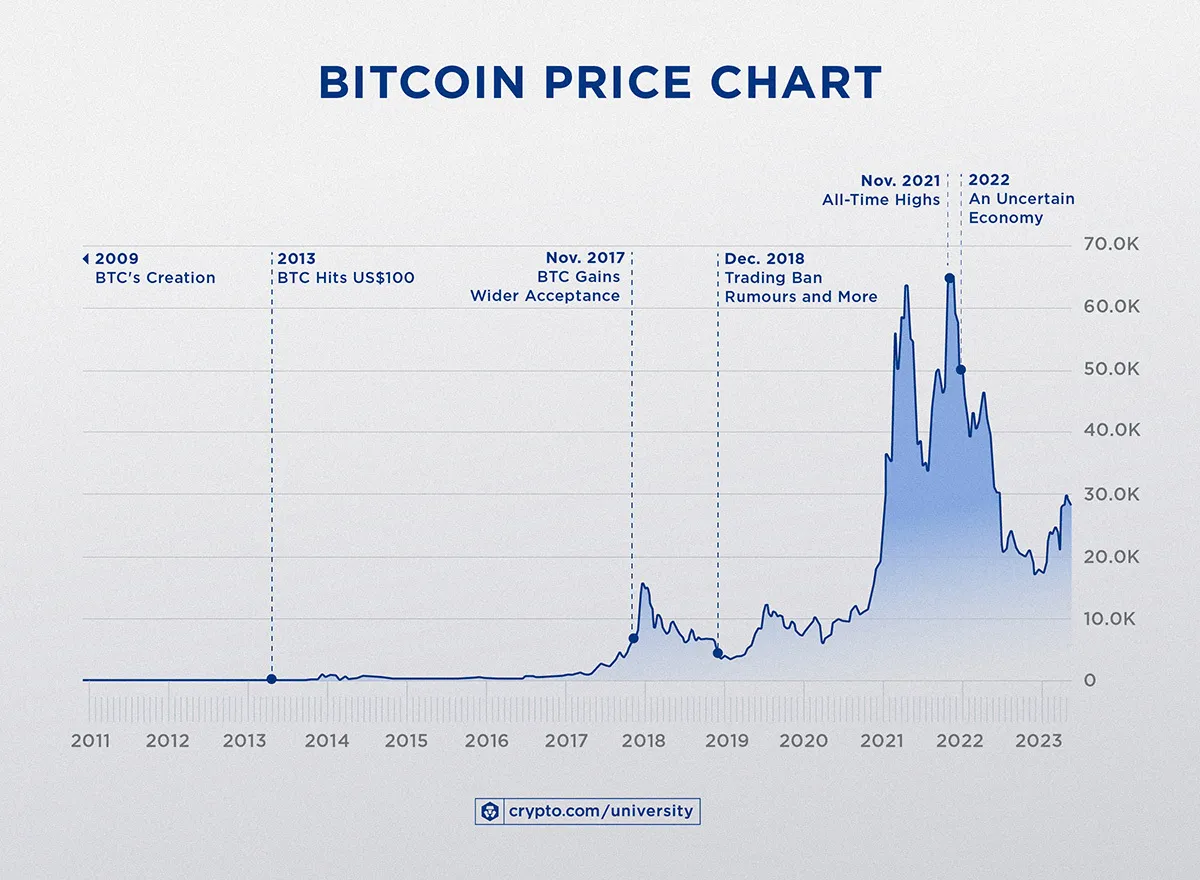
The history of Bitcoin’s price discovery has changed how investors view early-stage technology. It taught the market that digital scarcity has tangible value. Today, we see institutional investors, pension funds, and even sovereign nations holding Bitcoin. They aren’t looking at the $0.00076 price of 2009; they are looking at the foundational shift Bitcoin represented—the decoupling of money from the state.
In conclusion, while the original price of Bitcoin was technically zero, its “cost” was always the innovation, electricity, and conviction of its early adopters. From the first exchange rate on New Liberty Standard to the infamous pizza transaction, every step of Bitcoin’s early price history was a brick in the wall of a new financial system. Understanding that Bitcoin once traded for a thousandth of a cent serves as a powerful reminder of the transformative power of decentralized technology and the unpredictable nature of financial evolution.
aViewFromTheCave is a participant in the Amazon Services LLC Associates Program, an affiliate advertising program designed to provide a means for sites to earn advertising fees by advertising and linking to Amazon.com. Amazon, the Amazon logo, AmazonSupply, and the AmazonSupply logo are trademarks of Amazon.com, Inc. or its affiliates. As an Amazon Associate we earn affiliate commissions from qualifying purchases.