
The Fair Labor Standards Act (FLSA) of 1938 stands as one of the most consequential pieces of legislation in the history of American finance and labor relations. Often referred to as the “Bill of Rights” for the American worker, this federal law established the baseline for how labor is valued, compensated, and regulated. For business owners, financial planners, and individual earners, understanding the FLSA is not merely a history lesson—it is a fundamental requirement for navigating the modern economic landscape.
At its core, the FLSA was designed to protect workers from exploitation and to ensure that the American economy functioned on a level playing field. By establishing a federal minimum wage, a standard workweek, and strict rules regarding overtime and child labor, the Act fundamentally altered the cost-benefit analysis of business operations. Today, the FLSA continues to dictate the flow of billions of dollars in payroll, affecting everything from corporate profit margins to the personal savings rates of millions of employees.
The Economic Context and the Birth of Modern Labor Finance
To understand the FLSA, one must look back at the economic desolation of the 1930s. During the Great Depression, the American financial system was in a state of collapse. Unemployment was rampant, and those who did have jobs often worked in grueling conditions for subsistence wages. There was a “race to the bottom” where businesses competed by slashing wages to the lowest possible levels, which in turn suppressed consumer spending and deepened the economic crisis.
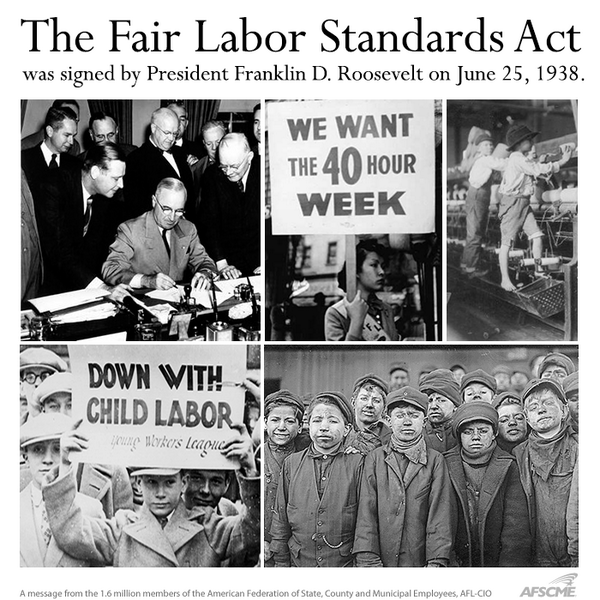
President Franklin D. Roosevelt championed the FLSA as part of his New Deal, signing it into law on June 25, 1938. The legislative intent was twofold: to provide a social safety net that prevented poverty-level wages and to stimulate the economy by putting more “spending money” into the hands of the working class. From a macro-financial perspective, the FLSA was a tool of economic stabilization. By setting a floor for wages, the government ensured that competition between firms would be based on innovation and efficiency rather than the exploitation of labor.
Initially, the Act set the federal minimum wage at a modest $0.25 per hour and limited the workweek to 44 hours (later reduced to 40 hours). While these figures seem small by modern standards, they represented a seismic shift in the financial relationship between employers and employees. For the first time, the federal government asserted that the “cost of doing business” must include a living wage for the human capital involved.
The Pillars of the FLSA: Impact on Business and Personal Finance
The FLSA is built upon three primary pillars that directly influence the financial health of both corporations and households. Each pillar carries specific requirements that, if ignored, can lead to significant financial liability for businesses.
The Federal Minimum Wage
The minimum wage is perhaps the most visible aspect of the FLSA. It establishes the lowest hourly rate that an employer can legally pay a covered, non-exempt employee. From a business finance perspective, the minimum wage serves as the “entry price” for labor. It forces companies to build their financial models around a fixed baseline cost. For individuals, particularly those in entry-level positions or the service industry, the federal minimum wage dictates their primary income potential and their ability to engage in the broader economy.
While many states have enacted higher minimum wages, the FLSA provides the “floor.” If a state’s minimum wage is higher, the employer must pay the higher rate. This interplay between state and federal law is a critical component of payroll budgeting and tax compliance.
Overtime Pay and the 40-Hour Workweek
The FLSA introduced the concept of the 40-hour workweek and the requirement for “time and a half” pay for any hours worked beyond that threshold. This was a revolutionary financial concept. By making overtime expensive, the Act encouraged employers to hire more workers rather than overworking their existing staff.
For the modern professional, overtime pay is a vital tool for increasing personal income. For the business owner, overtime represents a significant variable cost. Failure to accurately track and pay overtime is one of the leading causes of multi-million dollar class-action lawsuits in the corporate world. Effective financial management requires a rigorous understanding of which employees are entitled to this premium pay.
Recordkeeping and Child Labor Protections
The FLSA also mandated strict recordkeeping practices. Employers must maintain accurate records of hours worked and wages paid. From a financial auditing perspective, these records are the primary defense against claims of wage theft. Additionally, the Act strictly regulates child labor, ensuring that minors are not employed in hazardous conditions or in ways that interfere with their schooling. This not only protected the future workforce but also prevented businesses from using cheap, underaged labor to undercut competitors who paid adult wages.
Strategic Financial Management: Navigating Exempt vs. Non-Exempt

In the realm of business finance, one of the most critical distinctions created by the FLSA is the classification of employees as either “exempt” or “non-exempt.” This classification determines whether an employer must pay overtime, and it is a frequent point of financial contention.
Defining Non-Exempt Employees
Non-exempt employees are typically paid hourly and are entitled to all the protections of the FLSA, including minimum wage and overtime. For a business, managing a non-exempt workforce requires precise time-tracking software and a budget that accounts for fluctuations in labor hours. From a personal finance standpoint, non-exempt workers have the benefit of earning extra income through overtime, though their base pay may be lower.
Defining Exempt Employees
Exempt employees are generally “salaried” and are not eligible for overtime pay. However, the FLSA does not allow employers to simply label anyone as exempt to avoid paying overtime. To be exempt, an employee must usually meet three criteria:
- Salary Level: They must earn a minimum salary set by the Department of Labor (DOL).
- Salary Basis: They must receive a predetermined and fixed salary that is not subject to reduction because of variations in the quality or quantity of work.
- Duties Test: Their primary job duties must involve executive, administrative, or professional responsibilities.
Misclassifying a worker—labeling a non-exempt employee as exempt—is a catastrophic financial mistake for a business. The resulting liabilities for unpaid overtime, back taxes, and legal penalties can bankrupt small to mid-sized enterprises.
The Hidden Financial Risks of Non-Compliance
For any entity focused on wealth preservation or business growth, FLSA compliance is a matter of risk management. The Department of Labor’s Wage and Hour Division (WHD) is tasked with enforcing the Act, and they have the authority to conduct audits and recover back wages.
Back Pay and Liquidated Damages
If an employer is found to have violated FLSA standards, they are typically required to pay back wages for a period of up to two years (or three years if the violation was willful). Furthermore, the FLSA allows for “liquidated damages,” which effectively doubles the amount of back pay owed. For a large corporation with thousands of misclassified employees, this can result in settlements reaching into the hundreds of millions of dollars.
Legal and Reputational Costs
Beyond the direct financial penalties, FLSA lawsuits carry heavy legal fees and can damage a brand’s reputation. In an era where “Environmental, Social, and Governance” (ESG) scores influence investment decisions, a company’s history of labor compliance is a key metric for institutional investors. A business that fails to pay its workers fairly is seen as a high-risk investment.
The FLSA in the Modern Economy: Remote Work and the Gig Economy
The financial landscape has changed significantly since 1938, and the FLSA has had to evolve alongside it. The rise of remote work and the “gig economy” has created new challenges for labor finance and compliance.
Remote Work and Time Tracking
With millions of employees now working from home, tracking “hours worked” has become a complex financial task. Under the FLSA, employers are responsible for paying for all “suffered or permitted” work. This means that if an employee is answering emails at 9:00 PM, that time may be compensable. Businesses must now invest in sophisticated digital tools to ensure they are accurately capturing labor costs and avoiding “off-the-clock” work liabilities.
The Independent Contractor Debate
Perhaps the most significant modern challenge to the FLSA is the classification of independent contractors versus employees. In the gig economy, companies like Uber, Lyft, and various freelance platforms rely on independent contractors who are not covered by the FLSA. From a corporate finance perspective, using contractors reduces costs by 20% to 30% because the company does not have to pay payroll taxes, overtime, or benefits.
However, the Department of Labor and various courts are increasingly scrutinizing these relationships. If a “contractor” is found to be an “employee” under the FLSA’s “economic reality” test, the financial fallout for the company can be devastating. For the individual, being an employee offers the financial security of the FLSA, while being a contractor offers the potential for higher gross income but with the added burden of self-employment taxes and no guaranteed minimum wage.

Conclusion: The FLSA as a Foundation for Financial Stability
What was the Fair Labor Standards Act? It was, and remains, the bedrock of the American financial relationship between employer and employee. For the worker, it provides a floor for their income and a ceiling for their hours, protecting their time and their earning potential. For the business owner, it provides a clear set of rules for labor costs, ensuring that they can compete in a market defined by fairness rather than exploitation.
In the world of money and business, the FLSA is more than just a law—it is a critical factor in payroll management, tax strategy, and risk mitigation. Whether you are an entrepreneur scaling a startup or a professional managing your personal wealth, the principles established in 1938 continue to shape every paycheck and every profit margin in the modern economy. Understanding its nuances is not just a legal necessity; it is a financial imperative.
aViewFromTheCave is a participant in the Amazon Services LLC Associates Program, an affiliate advertising program designed to provide a means for sites to earn advertising fees by advertising and linking to Amazon.com. Amazon, the Amazon logo, AmazonSupply, and the AmazonSupply logo are trademarks of Amazon.com, Inc. or its affiliates. As an Amazon Associate we earn affiliate commissions from qualifying purchases.