
The concept of the three-digit lottery, often referred to as “the numbers game” or “Pick 3,” represents a fascinating intersection of cultural history, high-stakes probability, and the evolution of state-managed revenue. Long before the multi-state powerballs and digital scratch-offs of the modern era, the three-digit lottery was the primary vehicle for small-scale gambling in urban centers across the United States. To understand what this game was and what it has become, one must examine its origins as an underground financial system, its transition into a legalized revenue stream for governments, and the stark mathematical realities that define its place in the world of personal finance today.

The Historical Roots: From Underground Economy to State Revenue
The three-digit lottery did not begin in a government office; it began on the streets. During the late 19th and early 20th centuries, particularly in the post-Prohibition era, the “numbers game” was an illegal but ubiquitous part of life in many American cities. For many marginalized communities, it served as more than just a game of chance—it was a shadow banking system and a primary source of local capital.
The Era of the “Policy” Games
In its original form, the game was often called “policy.” Players would bet small amounts—sometimes as little as a nickel or a dime—on a three-digit sequence. The winning number was often derived from a source that the “bankers” could not manipulate, such as the last three digits of the daily total volume of the New York Stock Exchange or the results of horse races. Because the numbers were published in daily newspapers, the game had a veneer of transparency that built trust among players.
In neighborhoods where traditional banks refused to provide loans, “numbers kings” and “policy queens” often acted as unofficial community financiers. While the industry was controlled by organized crime, it also created local jobs for runners and collectors. It was an informal economy that thrived because it offered the one thing that traditional financial institutions did not: a low barrier to entry and the possibility of a significant payout on a microscopic investment.
The Legalization Shift in the 1970s
By the mid-20th century, state governments began to view the massive profits of the illegal numbers games with envy. Facing budget shortfalls and a growing demand for public services without raising taxes, legislators looked to “bring the numbers out of the shadows.” New Jersey became a pioneer in this regard, launching the first modern state lottery in 1971.
The transition from illegal street games to state-sanctioned lotteries fundamentally changed the mechanics of the three-digit lottery. The state-run version, typically called “Pick 3” or “The Daily Number,” replaced the street runner with a licensed lottery terminal. The draw became a televised event, and the state became the “house,” taking a significant cut of the handle to fund education, infrastructure, and programs for the elderly. This shift transformed a community-based, albeit illegal, financial network into a formalized tool of public fiscal policy.
The Mechanics of Play: How the 3-Digit System Works
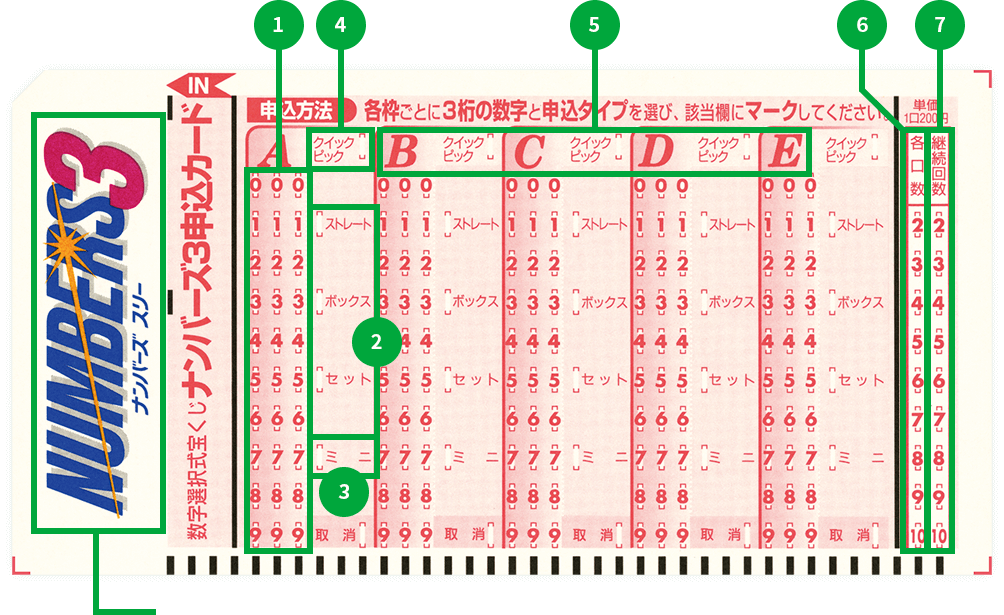
The three-digit lottery is deceptively simple, which is a major part of its enduring appeal. Unlike complex sports betting or poker, which require a degree of skill or research, the three-digit game is a pure game of chance. However, the various “play types” offer different levels of risk and reward, which players often mistake for a financial strategy.
Straight vs. Boxed Bets
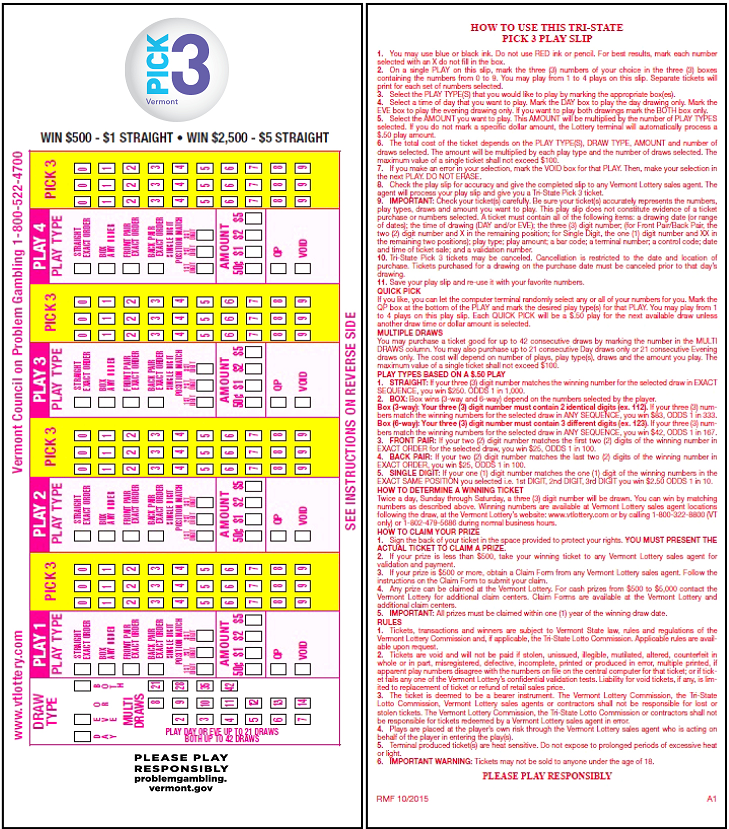
The most fundamental way to play the three-digit lottery is the “Straight” bet. In this scenario, the player chooses a sequence from 000 to 999. To win, the chosen digits must appear in the exact order drawn. Because there are 1,000 possible combinations, the odds of winning a straight bet are 1 in 1,000.
To mitigate the difficulty of hitting an exact sequence, the “Box” bet was introduced. A boxed bet allows a player to win regardless of the order in which their three digits are drawn. For example, if a player boxes the number 123, they win if the result is 123, 132, 213, 231, 312, or 321. While the odds of winning increase significantly (to 6 in 1,000 for a 3-way box or 3 in 1,000 for a 6-way box), the payout decreases proportionally. This trade-off between “hit frequency” and “payout size” is a classic principle of gambling mechanics that mirrors the risk-reward profiles found in more traditional financial markets.
The Role of the “Daily Number”
In many states, the three-digit draw happens twice a day—midday and evening. This frequency creates a cycle of high engagement. From a financial perspective, the daily nature of the game encourages “chasing,” where players reinvest small winnings or increase their bets to recover losses. Unlike long-term investment vehicles like a 401(k) or an Index Fund, which rely on the compounding of time and market growth, the three-digit lottery relies on the speed of the result. It is designed to be a high-velocity transaction, moving money from the player to the state treasury with maximum efficiency.
The Mathematics of Probability: Why the Odds Matter in Personal Finance
When discussing the three-digit lottery within the context of money and personal finance, it is essential to look at the “expected value” (EV). In financial terms, expected value is the average amount a player can expect to win or lose per bet if they played the same game an infinite number of times.
House Edge and Expected Value
In a “fair” game, the payout would match the odds. If the odds of hitting a straight number are 1 in 1,000, a $1 bet should theoretically pay out $1,000. However, state lotteries are not in the business of breaking even. A typical state-run Pick 3 game pays out $500 for a $1 straight bet.
Mathematically, this means the state is keeping 50% of every dollar wagered. In the world of finance, this is an astronomical “expense ratio.” For comparison, a typical passively managed mutual fund might have an expense ratio of 0.05% to 0.10%. Even a high-fee hedge fund rarely takes more than 2% of assets under management. The three-digit lottery, by contrast, operates on a 50% house edge. This makes it one of the most mathematically disadvantaged “investments” a person can make.
Comparison with Other Investment Vehicles
From a wealth-building perspective, the three-digit lottery is often described as a “tax on people who are bad at math.” While that may be an oversimplification, the opportunity cost is real. If an individual spends $5 a day on the three-digit lottery—amounting to roughly $150 a month—and instead invested that money into a diversified stock portfolio with a 7% annual return, they would have over $78,000 after 20 years. In contrast, the statistical reality of the lottery suggests that over those same 20 years, the player would lose roughly half of their total “investment.”
The Socioeconomic Impact: The “Poor Man’s Stock Market”
The three-digit lottery has a unique psychological profile. For many, it isn’t just entertainment; it is viewed as a “side hustle” or a low-cost way to potentially solve immediate financial problems. This perception has significant socioeconomic implications.
Wealth Redistribution or Wealth Depletion?
Studies have consistently shown that lottery participation is highest in lower-income zip codes. For a household struggling to save for a down payment on a home or fund a college education, the lottery offers a “lottery ticket to the middle class.” The $500 payout from a $1 win can cover a car repair, a utility bill, or a month’s worth of groceries.
However, because the game is mathematically weighted against the player, it acts as a regressive tax. It pulls capital out of the communities that can least afford to lose it and redistributes it into state coffers. While the state may use those funds for public goods like schools, the source of that funding is disproportionately the pockets of the working poor. This creates a cycle where the “hope” provided by the game actually undermines the long-term financial stability of the players.
The Psychology of the Small Win
One reason the three-digit lottery remains more popular than the massive multi-million dollar jackpots is the frequency of the “small win.” While winning $100 million is a statistical impossibility for almost everyone, winning $500 feels attainable. People often know someone—a neighbor, a coworker, a family member—who “hit the number” recently. This “near-miss” and “frequent hit” psychology keeps players engaged. In behavioral finance, this is known as the “availability heuristic,” where people overestimate the probability of an event because examples of it are easily brought to mind.
Modern Alternatives and the Future of Digital Lotteries
As we move further into the digital age, the three-digit lottery is evolving. The transition from physical slips to mobile apps has changed how people interact with the game, but it has also opened the door to more sustainable financial habits.
Mobile Apps and the Gamification of Gambling
Modern lottery apps have made it easier than ever to play the numbers. With a few taps on a smartphone, a player can set up recurring bets, track “hot and cold” numbers, and receive instant notifications of wins. This gamification increases the “stickiness” of the game, making it a seamless part of daily life. However, it also removes the friction that once acted as a natural barrier to over-spending. When the transaction is digital, the “pain of paying” is reduced, often leading players to wager more than they intended.
Building a Sustainable Financial Strategy Beyond the Draw
The true “win” in the modern financial landscape isn’t found in the lottery draw, but in the application of lottery-like mechanics to saving. Concepts like “prize-linked savings accounts” (PLSAs) are gaining traction as a healthy alternative to the three-digit lottery. In a PLSA, instead of losing their principal on a bet, the user deposits money into a savings account. For every dollar saved, they earn entries into a drawing for cash prizes.
This model satisfies the psychological urge for a “win” while protecting the individual’s capital. It turns the “numbers game” on its head, using the thrill of the draw to encourage wealth accumulation rather than wealth depletion.
The three-digit lottery, in its various forms, has been a staple of the financial landscape for over a century. Whether viewed as an underground community relic, a state-mandated revenue stream, or a mathematical curiosity, it remains a powerful testament to the human desire for a shortcut to financial security. Understanding the history and the math behind the game is the first step in moving from a strategy of chance to a strategy of choice. In the end, the most reliable “number” in personal finance isn’t the one drawn on television; it is the one that represents your personal savings rate and the long-term growth of your assets.
aViewFromTheCave is a participant in the Amazon Services LLC Associates Program, an affiliate advertising program designed to provide a means for sites to earn advertising fees by advertising and linking to Amazon.com. Amazon, the Amazon logo, AmazonSupply, and the AmazonSupply logo are trademarks of Amazon.com, Inc. or its affiliates. As an Amazon Associate we earn affiliate commissions from qualifying purchases.