
For decades, the answer to “What time does the grocery store close?” was a simple “never” for many major metropolitan areas. The 24/7 grocery model was a hallmark of the modern consumer economy, a symbol of infinite availability and logistical prowess. However, in the current economic landscape, that reality has shifted dramatically. Today, the question of store hours is no longer just a logistical inquiry for a late-night shopper; it is a complex intersection of labor economics, corporate financial strategy, and the evolving side-hustle economy.
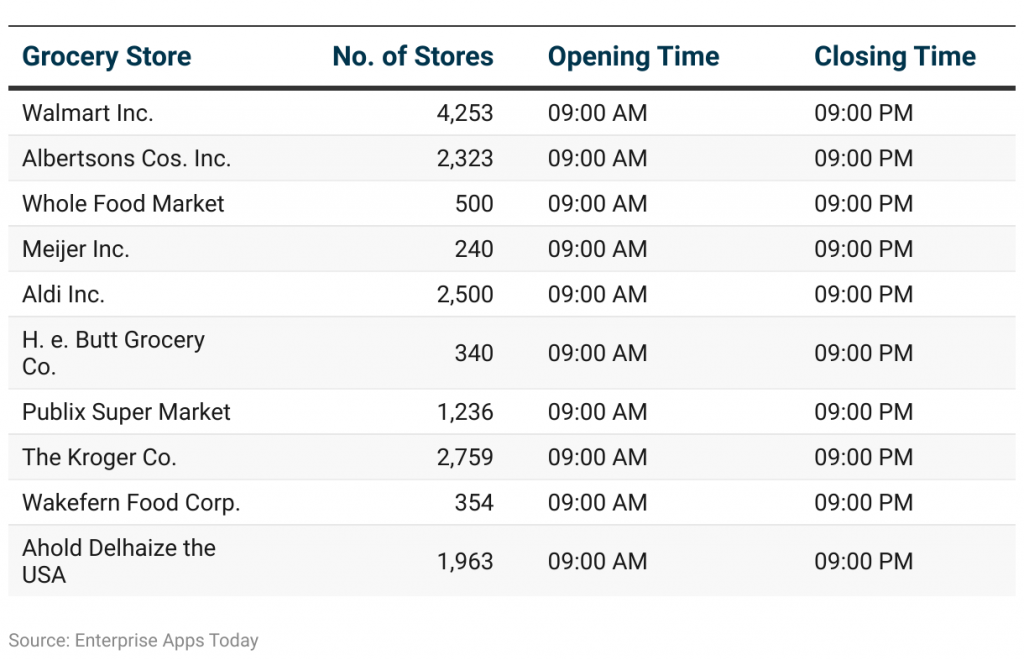
As grocery chains across North America and Europe pull back from around-the-clock operations, the decision-making process behind those closing times reveals the underlying financial pressures facing the retail sector. From the perspective of business finance and personal wealth management, the “closing time” is a barometer for the health of the retail market and the changing value of the hourly wage.
The Financial Blueprint of Operational Hours: Margins vs. Maintenance
At the core of every retail decision is the relationship between marginal revenue and marginal cost. In the grocery industry, where profit margins are famously razor-thin—often hovering between 1% and 3%—every hour of operation must be justified on the balance sheet.
Labor Costs and the Variable Expense Ratio
The most significant variable cost in keeping a grocery store open is labor. In a post-pandemic economy characterized by rising minimum wages and a competitive labor market, the cost of staffing a store during “graveyard” shifts has become prohibitive. For a store to remain profitable during the 11:00 PM to 6:00 AM window, the revenue generated must not only cover the hourly wages of cashiers, stockers, and security personnel but also provide a contribution margin that justifies the risk of operation.
When foot traffic drops below a certain threshold, the “cost-to-serve” ratio spikes. Modern data analytics allow regional managers to see real-time transaction volumes; if a store is only processing ten transactions an hour at midnight, the labor cost per transaction can exceed the gross profit of the items sold. Consequently, closing earlier is a strategic move to protect the EBITDA (Earnings Before Interest, Taxes, Depreciation, and Amortization) of individual locations.
Energy Consumption and Overhead
Beyond labor, the overhead of maintaining a massive footprint is a constant drain on resources. Commercial electricity rates, specialized refrigeration maintenance, and HVAC costs continue regardless of whether a customer is in the aisle. However, by closing the doors to the public, stores can implement “power-save” modes on lighting and non-essential systems. Furthermore, closing to the public allows for more efficient “night-stocking.” Without the need to navigate around customers, staff can replenish shelves faster, reducing the total man-hours required for inventory management and thus improving the store’s operational efficiency.
The Death of 24/7: A Post-Pandemic Business Finance Case Study
The shift away from 24-hour operations was accelerated by the global pandemic, but it was sustained by a fundamental change in corporate financial strategy. Major players like Walmart, Kroger, and Hy-Vee have largely abandoned the 24/7 model, and the reasons are rooted in risk management and asset protection.
Shrinkage and Risk Mitigation
In business finance, “shrinkage” refers to the loss of inventory due to theft, administrative error, or damage. Retailers found that late-night hours were disproportionately associated with higher rates of organized retail crime and opportunistic shoplifting. With fewer staff on-site and lower foot traffic to act as a deterrent, the financial loss from theft often outpaced the profit from legitimate sales during those hours. By standardizing closing times—typically between 10:00 PM and midnight—retailers have significantly mitigated their exposure to shrinkage, directly impacting their net income at the end of the fiscal year.
The Reallocation of Capital
By reducing operating hours, grocery conglomerates have been able to reallocate capital toward digital transformation. The money saved on late-night utility bills and overnight staffing is being funneled into “click-and-collect” infrastructure and delivery logistics. From an investment perspective, this is a transition from an “always-open” physical model to an “always-available” digital model. Investors favor this shift because it lowers the fixed costs of physical locations while expanding the store’s reach through e-commerce, which often carries higher average order values.
Consumer Finance: The High Cost of Convenience Shopping
While the closure of grocery stores at earlier hours makes sense for corporate balance sheets, it has a ripple effect on personal finance. For the average consumer, the time a store closes dictates their spending habits and, by extension, their monthly budget.
The “Convenience Markup” Trap
When a primary grocery store closes, consumers who need essential items late at night are forced to turn to convenience stores or gas station markets. From a personal finance standpoint, this is a “convenience tax.” Prices at 24-hour convenience stores can be 30% to 50% higher than at standard supermarkets for the exact same SKUs. Frequent late-night shopping, necessitated by a lack of access to traditional grocery stores, can lead to “budget creep,” where a household’s food expenditure rises without an increase in the volume of goods purchased.
Impulsive Spending and Planning
The psychological shift from a 24/7 availability mindset to a “timed” mindset encourages better financial planning. When consumers know the store closes at 10:00 PM, they are more likely to engage in “batch shopping” and meal planning. This behavior is fundamentally better for wealth preservation. Studies in consumer behavior suggest that late-night shopping trips are often high-velocity and high-impulse, leading to the purchase of processed snacks and non-essential goods rather than bulk staples. Therefore, the earlier closing times of major chains may, ironically, be a catalyst for more disciplined personal spending.
The Side Hustle Economy: Gig Work and Retail Cycles
The question of “What time does the grocery store close?” is perhaps most vital to the participants of the gig economy. For Instacart shoppers, DoorDash drivers, and Shipt personal shoppers, store hours are the boundaries of their earning potential.
Optimizing Earnings for Delivery Drivers
For those using grocery delivery as a side hustle, the “closing time” represents a period of peak demand and potential “surge” pricing. As the clock ticks toward closing, there is often a flurry of last-minute orders from customers who missed the window to visit the store themselves. Professional gig workers track these hours across different chains to optimize their routes. A driver may start their evening at a chain that closes at 11:00 PM and then move to a neighboring municipality where a different brand remains open until midnight, effectively extending their “earning window.”
The Operational Impact of “Dark Stores”
To bridge the gap between closing physical doors and maintaining revenue, many brands are experimenting with the “dark store” concept. These are locations closed to the public but open to gig workers for fulfillment. This model changes the financial dynamics of the grocery store entirely. It eliminates the need for expensive “front-of-house” aesthetics and customer service staff, focusing entirely on logistical throughput. For the gig worker, this means faster picking times and higher hourly earnings; for the grocery brand, it means capturing late-night revenue without the overhead of a fully operational retail environment.
Future Trends: Automation and the 24-Hour Digital Grocery
As we look toward the future of retail finance, the concept of a “closing time” may eventually become obsolete—but not in the way we previously understood it. The integration of technology and automated financial systems is paving the way for a new model of 24-hour access that doesn’t rely on expensive human labor.
The Rise of Unstaffed Retail
In markets like Sweden and parts of the United States, unstaffed “autonomous” grocery stores are being tested. These locations use computer vision and AI-driven payment systems (similar to Amazon Go) to allow 24/7 access. From a business finance perspective, this is a game-changer. It converts the variable cost of labor into a fixed cost of technology and software licensing. Once the initial capital expenditure (CAPEX) for the sensors and gates is paid down, the cost to keep the store “open” drops to near zero, apart from electricity and security monitoring.
The Shift to Micro-Fulfillment
The grocery industry is increasingly moving toward micro-fulfillment centers (MFCs). These are highly automated, small-scale warehouses often located within or behind existing grocery stores. These centers can operate 24/7, fulfilling online orders via robots while the “human-facing” part of the store remains closed. This hybrid approach allows a company to maximize the utility of its real estate assets, ensuring that the capital invested in inventory is constantly turning over, even while the public is asleep.
In conclusion, “What time does the grocery store close?” is a question that serves as a pulse check for the modern economy. For the corporation, closing early is a calculated move to preserve margins and mitigate risk. For the consumer, it is an invitation to more disciplined financial planning. And for the gig worker, it is a shifting boundary in the quest for optimized earnings. As the retail landscape continues to evolve, the “closed” sign is not a signal of decline, but rather a strategic pivot toward a more efficient, digitally integrated financial future.
aViewFromTheCave is a participant in the Amazon Services LLC Associates Program, an affiliate advertising program designed to provide a means for sites to earn advertising fees by advertising and linking to Amazon.com. Amazon, the Amazon logo, AmazonSupply, and the AmazonSupply logo are trademarks of Amazon.com, Inc. or its affiliates. As an Amazon Associate we earn affiliate commissions from qualifying purchases.