
The disaster at the Chernobyl Nuclear Power Plant on April 26, 1986, remains the most significant technological failure in the history of civilian nuclear power. While popular narratives often focus on the human drama and political fallout, a technical autopsy of the event reveals a catastrophic intersection of flawed reactor architecture, primitive human-machine interfaces, and a lack of digital fail-safes that are standard in modern industrial control systems. Understanding what really happened requires looking past the “human error” label and examining the specific engineering and software-logic deficiencies of the RBMK-1000 reactor.
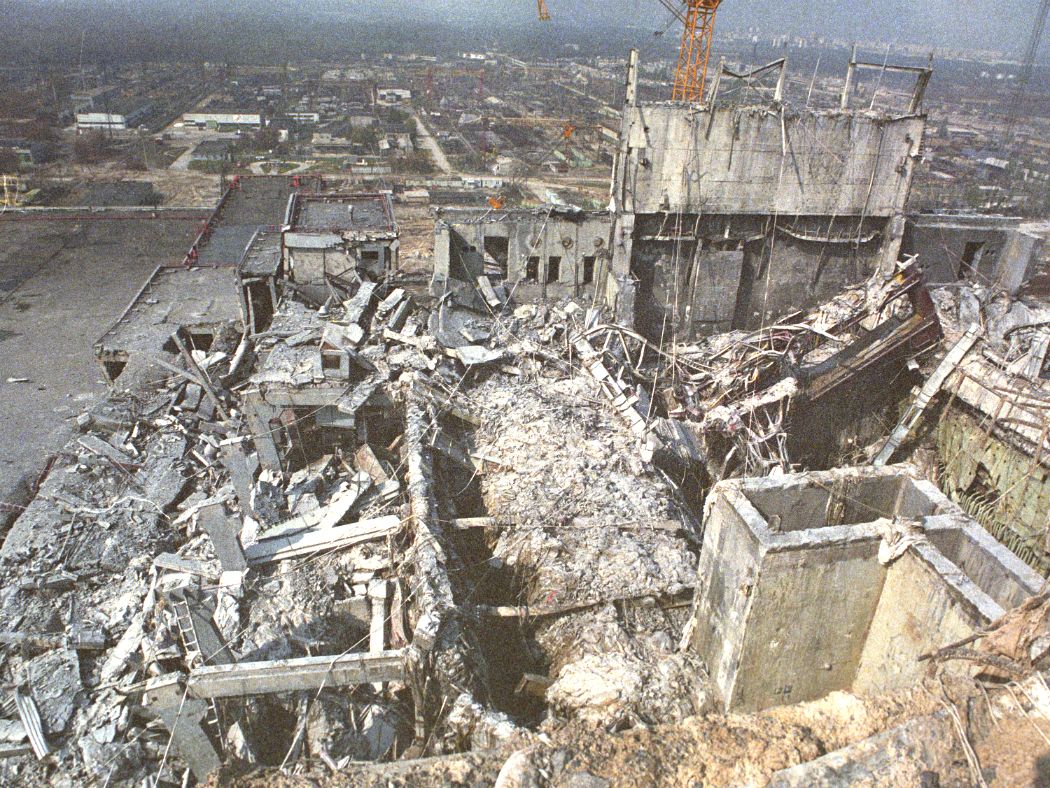
The RBMK-1000 Architecture: A Fatal Design in Reactor Physics
The RBMK (Reaktor Bolshoy Moshchnosti Kanalnyy) was a Soviet-designed, graphite-moderated nuclear power reactor. Unlike the Pressurized Water Reactors (PWRs) common in the West, the RBMK utilized a unique design that allowed for refueling while the reactor was online. However, this flexibility introduced a fundamental instability in the reactor’s physics that modern technology has since rendered obsolete.
The Positive Void Coefficient and Instability
The most critical technical flaw of the RBMK was its “positive void coefficient.” In most reactor designs, if the cooling water turns to steam (forming “voids”), the nuclear reaction slows down because the water acts as a moderator needed to sustain the reaction. In the RBMK, water acted primarily as a coolant and a neutron absorber. When the water boiled into steam, it absorbed fewer neutrons, causing the reactivity to increase. This created a positive feedback loop: more steam led to more power, which created more heat, which created more steam.
In modern digital control environments, sensors would detect this exponential curve in milliseconds and trigger an automated shutdown. In 1986, the analog sensors and the mechanical lag of the system were too slow to counteract the physics of a reactor operating at low power levels, where the void coefficient was at its most volatile.
The Graphite Tip Flaw: A Failure of Emergency Shutdown Systems
The ultimate technical irony of the Chernobyl disaster lay in the “AZ-5” button—the emergency shutdown command. When the operators pressed AZ-5 to insert the control rods and stop the reaction, it actually triggered the final explosion.
The control rods were made of boron, which absorbs neutrons, but they were tipped with graphite to displace water and improve efficiency during normal operation. As the rods entered the core during the emergency scram, the graphite tips momentarily displaced the cooling water at the bottom of the reactor. This caused a localized, massive spike in reactivity. In a high-tech environment today, the mechanical design of a safety-critical component would undergo rigorous digital twin simulations to identify such “edge case” failures before deployment. The RBMK designers, however, relied on theoretical models that failed to account for this displacement effect under low-power conditions.
Information Lag and the Human-Machine Interface
The control room of Reactor 4 was a masterclass in poor UI/UX (User Interface/User Experience) design. In the minutes leading up to the explosion, the operators were effectively flying blind, hampered by data latency and an overwhelming “signal-to-noise” ratio.
The SKALA Computer System and Real-Time Data Deficiencies
The RBMK was managed by a centralized computer system known as SKALA. By modern standards, SKALA was incredibly primitive. It was not a real-time control system but rather a data-logging system that provided periodic updates on the reactor’s status. During the critical minutes of the experiment, the data provided to the operators was several seconds—and sometimes minutes—out of date.
The “Operator Process Parameter” (ORM), a calculation of how many control rods were equivalent to being fully inserted in the core, was a vital safety metric. On the night of the disaster, the SKALA system took nearly 15 minutes to calculate the ORM. By the time the operators saw that they had dropped below the safe limit, the reactor’s internal state had already shifted beyond the point of recovery. Modern Industrial Internet of Things (IIoT) sensors now provide sub-millisecond telemetry, ensuring that the delta between a physical event and a digital alert is virtually non-existent.
UI/UX in the Control Room: Cognitive Overload and Signal Noise
The Chernobyl control room featured thousands of dials, switches, and indicator lights. There was no “dashboard” that aggregated the most critical safety data into a digestible format. When the reactor began to fail, the operators were bombarded with hundreds of conflicting alarms. This is a classic example of “alarm fatigue,” a concept now central to the design of software for power plants, aviation, and cybersecurity.
Without a prioritized data visualization strategy, the operators could not distinguish between minor technical deviations and a core-melt scenario. Today’s SCADA (Supervisory Control and Data Acquisition) systems use AI-driven prioritization to highlight the “root cause” alarm, suppressing secondary alerts to prevent operator cognitive overload.

Digital Forensics and the Physics of the Explosion
The explosion itself was not a nuclear explosion in the sense of a weapon, but a combined steam and chemical explosion that destroyed the reactor building. Modern digital forensics and 3D modeling have allowed scientists to reconstruct the final seconds with high precision, revealing exactly how the hardware failed.
The Failed Turbine Rundown Experiment
The disaster occurred during a test of the turbine’s ability to provide power to the cooling pumps during a blackout. This was a “software logic” test performed on hardware. The goal was to see if the residual kinetic energy of a spinning turbine could bridge the 45-second gap until the backup diesel generators kicked in.
Because the test required the reactor to be at low power, the operators disabled several automated shutdown systems to prevent the test from being interrupted. In a modern automated system, “safety-interlock” software would make it impossible to operate the hardware if the safety protocols were bypassed. The manual overrides available in 1986 allowed the operators to force the machine into an unstable state that the hardware was never designed to handle.
Reconstructing the Event Through Modern Simulations
Using Monte Carlo N-Particle (MCNP) modeling, researchers have simulated the neutron flux during those final seconds. These simulations show that the power surged to over 100 times the reactor’s rated capacity in less than four seconds. The heat caused the fuel cladding to rupture, and the resulting steam pressure blew the 2,000-ton biological shield (the “lid”) off the reactor. This type of “computational fluid dynamics” (CFD) modeling is now used to stress-test every nuclear component, ensuring that even if a surge occurs, the structural integrity of the containment vessel remains uncompromised.
The High-Tech Future of Decommissioning: Robotics and AI
What really happened at Chernobyl didn’t end in 1986. The site has become a living laboratory for the most advanced robotics and remote-sensing technology on the planet. Because the radiation levels inside the “Sarcophagus” remain lethal, the cleanup is being handled by a new generation of machines.
The New Safe Confinement: Engineering a 100-Year Shield
In 2016, the New Safe Confinement (NSC) was slid into place over the ruins of Reactor 4. It is the largest movable land-based structure ever built. More than just a “dome,” the NSC is a high-tech cleanroom equipped with heavy-duty robotic cranes controlled via fiber-optic links. These robots are tasked with the eventual dismantling of the unstable 1986 sarcophagus and the removal of Fuel-Containing Materials (FCMs).
Autonomous Systems in High-Radiation Environments
Standard electronics fail in high-radiation zones because gamma rays interfere with silicon chips. Engineers at Chernobyl are now deploying “radiation-hardened” robotics. This includes the use of Boston Dynamics’ “Spot” robot, which has been used to map radiation levels and create 3D digital twins of the interior of the reactor. By using LiDAR and specialized sensors, these autonomous systems can navigate areas where no human could survive, providing data that allows engineers to plan the decommissioning process without risking lives.
Lessons for Modern Industrial Technology and Cybersecurity
The legacy of Chernobyl has migrated from the realm of nuclear physics into the broader world of technology trends and digital security. The disaster changed the way we think about “fail-safe” architecture and the protection of critical infrastructure.
Redundancy and the “Fail-Safe” Philosophy
In software engineering and cloud architecture, the “Chernobyl scenario” is a common metaphor for a cascading failure. Modern systems are now designed with “Defense in Depth.” This means that multiple, independent layers of security and safety must fail simultaneously for a disaster to occur. Unlike the RBMK, which had systemic flaws that could be exploited by a single sequence of events, modern industrial software uses “Air-Gapping” and redundant logic controllers to ensure that a single point of failure—whether human or technical—cannot compromise the entire grid.

Securing the Grid: From Physical Safety to Digital Resilience
Today, the threat to nuclear facilities is as much digital as it is physical. The lessons of Chernobyl’s “logic failures” are applied to cybersecurity. Protecting a power plant now involves defending against Stuxnet-style malware that could manipulate the same types of sensors and valves that failed in 1986. By implementing “Zero Trust” architectures and real-time anomaly detection, modern technology ensures that the parameters of the reactor are always within “known good” states, with AI systems capable of overriding human commands if they threaten the integrity of the core.
What really happened at Chernobyl was a collision between 20th-century heavy engineering and a lack of 21st-century digital foresight. The disaster serves as a permanent reminder that in the age of complex systems, the interface between the machine, the code, and the operator must be seamless, transparent, and, above all, designed to fail safely. Through the lens of modern technology, Chernobyl is no longer just a historical event; it is the ultimate case study in the necessity of technical rigor and the continuous evolution of safety-critical systems.
aViewFromTheCave is a participant in the Amazon Services LLC Associates Program, an affiliate advertising program designed to provide a means for sites to earn advertising fees by advertising and linking to Amazon.com. Amazon, the Amazon logo, AmazonSupply, and the AmazonSupply logo are trademarks of Amazon.com, Inc. or its affiliates. As an Amazon Associate we earn affiliate commissions from qualifying purchases.