
The United States national debt is a figure that often appears in headlines as a staggering, almost incomprehensible sum. As of mid-2024, the total outstanding public debt has surpassed $34.7 trillion. While the number itself is massive, understanding what it represents, how it affects the global economy, and what it means for your personal financial health requires looking beyond the digits on the ticker.
The national debt is the accumulation of the federal government’s annual budget deficits. When the government spends more on programs, infrastructure, defense, and social services than it collects in tax revenue, it must borrow the difference. This borrowing is facilitated through the issuance of U.S. Treasury securities—bills, notes, and bonds—which are sold to investors around the world. As the debt continues to climb at an accelerated pace, it has become a central pillar of macroeconomic discussion, impacting everything from interest rates to the long-term viability of the American dollar.

The Current State of the National Debt
To grasp the magnitude of the current fiscal situation, one must look at both the raw numbers and the broader economic context. The $34.7 trillion figure is not a static one; it grows by billions of dollars every week as the Treasury Department manages the cash flow requirements of the federal government.
Breaking Down the Numbers: Debt Held by the Public vs. Intragovernmental Holdings
The total national debt is composed of two distinct categories. The first is “Debt Held by the Public,” which accounts for roughly $27 trillion. This includes Treasury securities held by individual investors, institutional investors, the Federal Reserve, and foreign governments. This is the portion of the debt that most directly affects financial markets and interest rates.
The second category is “Intragovernmental Holdings,” which totals about $7 trillion. This represents money that the government owes to itself, specifically to various trust funds like Social Security and Medicare. When these programs run a surplus, the excess cash is “invested” in Treasury securities, which the government then uses to fund other operations. While this is technically debt, it functions differently than the debt traded on the open market.
The Debt-to-GDP Ratio
Economists often argue that the raw dollar amount of the debt is less important than the debt-to-GDP ratio. This metric compares the country’s total debt to its annual economic output (Gross Domestic Product). It measures the nation’s ability to “pay back” what it owes.
Currently, the U.S. debt-to-GDP ratio stands at approximately 120%. To put this in perspective, during the post-World War II era, the ratio was around 106%. A high debt-to-GDP ratio can signal to investors that a country may struggle to service its debt in the future, which can lead to higher borrowing costs and potential credit rating downgrades.
Why the National Debt is Growing So Fast
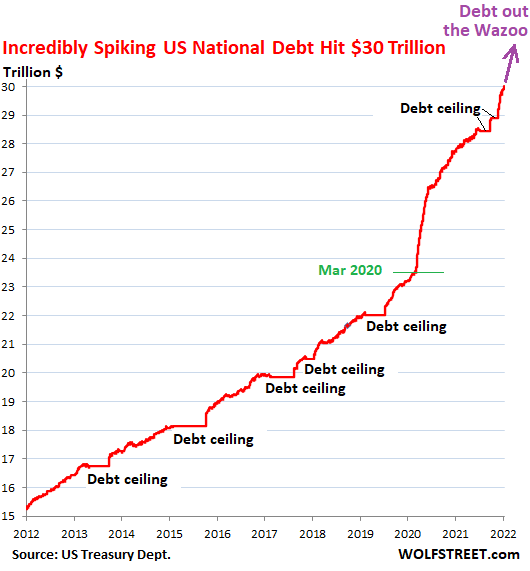
The trajectory of the national debt has shifted significantly over the last two decades. While debt has been a part of the American financial landscape since the country’s inception, the speed at which it is now accumulating is unprecedented in peacetime.
Structural Deficits and Mandatory Spending
The primary driver of the national debt is the structural deficit—the gap between what the government brings in and what it spends. A significant portion of federal spending is “mandatory,” meaning it is dictated by existing laws rather than the annual appropriations process.
Social Security, Medicare, and Medicaid make up the largest share of this spending. As the “Baby Boomer” generation continues to retire, the cost of providing healthcare and retirement benefits has skyrocketed. Without significant legislative reform or a massive increase in tax revenue, these mandatory programs will continue to put upward pressure on the national debt for decades to come.
The Impact of Rising Interest Rates: The “Interest Trap”
Perhaps the most concerning factor in the recent spike of the national debt is the cost of servicing it. For much of the 2010s, interest rates were at historic lows, allowing the government to borrow trillions of dollars cheaply. However, as the Federal Reserve raised interest rates to combat inflation starting in 2022, the cost of borrowing increased dramatically.
In 2023 and 2024, the interest payments on the national debt became one of the fastest-growing items in the federal budget. The U.S. now spends more on interest payments than it does on its entire national defense budget. This creates a “snowball effect” or an “interest trap,” where the government must borrow more money just to pay the interest on the money it previously borrowed, further inflating the total debt.
Emergency Spending and Historical Context
Black swan events have also played a massive role in the current debt level. The 2008 Financial Crisis and the COVID-19 pandemic necessitated trillions of dollars in emergency stimulus and relief spending. While these measures were designed to prevent total economic collapse, they were funded entirely through borrowing. The “normalization” of multi-trillion dollar annual deficits has become a standard feature of the federal budget, regardless of the economic cycle.
Who Does the United States Owe?
The U.S. national debt is not owed to a single entity; it is distributed across a vast network of domestic and international stakeholders. This distribution is part of what makes the U.S. Treasury market the deepest and most liquid financial market in the world.
Domestic Ownership and the Federal Reserve
A significant portion of the debt is owned by Americans. This includes pension funds, mutual funds, insurance companies, and individual investors who buy Treasury bonds for their stability and “risk-free” return. The Federal Reserve also holds trillions of dollars in Treasuries as part of its monetary policy operations. By buying and selling these securities, the Fed influences the money supply and interest rates.
Foreign Ownership and Global Financial Stability
Foreign entities hold roughly $8 trillion of the U.S. debt. Japan and China remain the largest foreign holders, though their strategies have diverged in recent years. Many countries hold U.S. Treasuries as part of their foreign exchange reserves because the dollar is the world’s primary reserve currency.
This international reliance on U.S. debt creates a symbiotic relationship. Foreign nations provide the U.S. with the capital it needs to run deficits, while the U.S. provides a safe haven for global capital. However, if foreign demand for Treasuries were to drop significantly, the U.S. would be forced to offer higher interest rates to attract buyers, further worsening the fiscal deficit.
What This Means for Your Personal Finances and Investments
For the average individual, the national debt can feel like an abstract political issue. In reality, the level of federal borrowing has a direct and tangible impact on your wallet, your purchasing power, and your investment strategy.
Inflation and Purchasing Power
While the relationship between debt and inflation is complex, persistent high deficits can contribute to inflationary pressure. If the government prints money or the Federal Reserve buys debt to keep the system liquid, the supply of dollars increases. When the supply of money grows faster than the supply of goods and services, the value of each dollar decreases. This results in higher prices for groceries, fuel, and housing, effectively acting as a “hidden tax” on consumers.
Interest Rates and the Cost of Borrowing
The national debt acts as a benchmark for almost all other interest rates in the economy. When the government has to pay more to borrow money, it puts upward pressure on the yields of Treasury bonds. Because these bonds are used to price everything from 30-year mortgages to auto loans and credit card rates, a rising national debt often leads to higher borrowing costs for the average American family.
Implications for the Stock Market and Portfolio Diversification
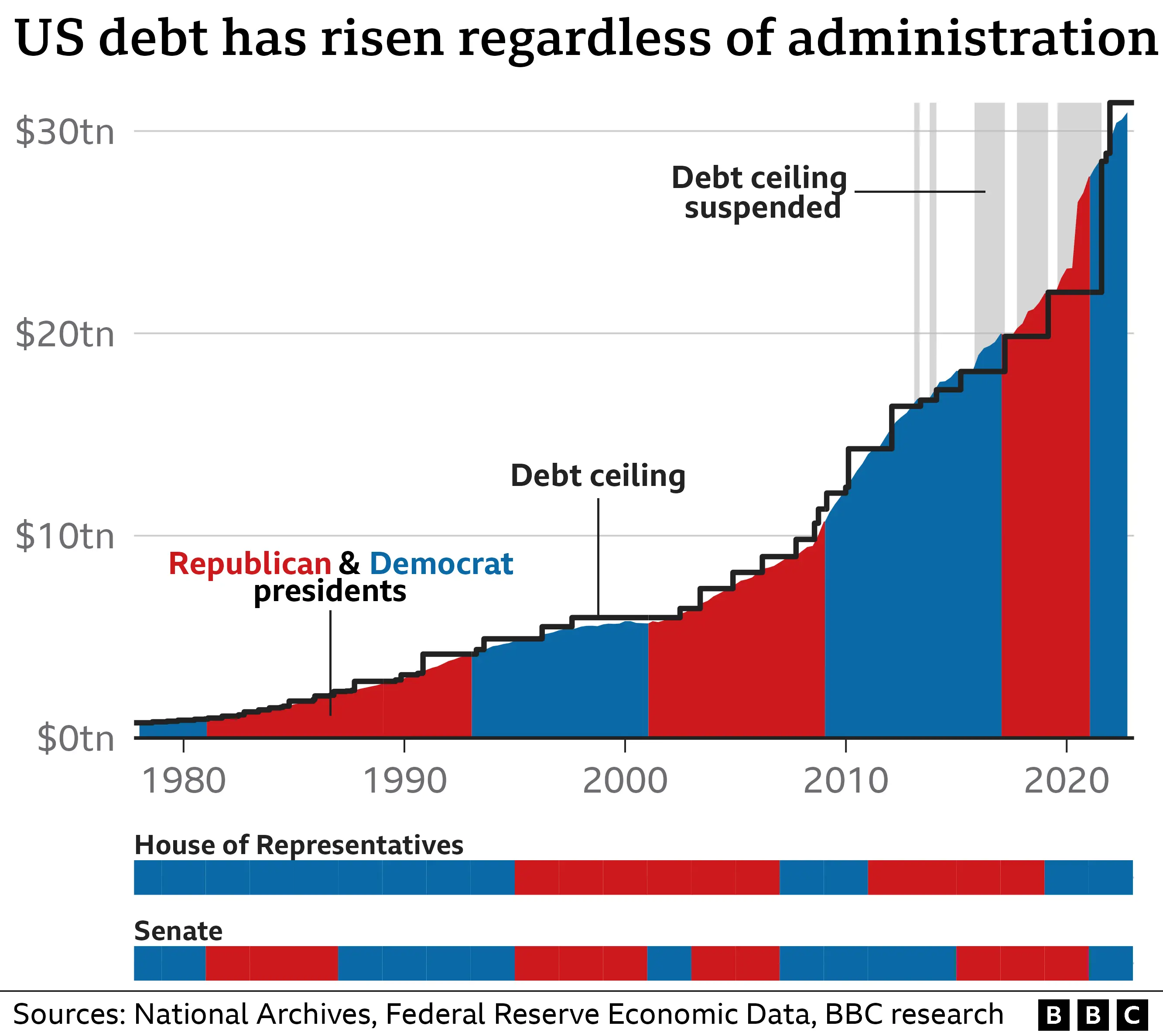
Investors must account for the national debt when building a long-term portfolio. High debt levels can lead to increased market volatility, especially during “debt ceiling” debates or credit rating reviews.
To hedge against the potential risks associated with a massive national debt, many investors look toward diversification. This might include:
- Treasury Inflation-Protected Securities (TIPS): Bonds designed to increase in value as inflation rises.
- Hard Assets: Real estate, gold, and commodities that tend to hold value when the currency depreciates.
- International Equities: Investing in companies outside the U.S. to reduce exposure to the domestic fiscal situation.
- Growth Stocks: Companies with strong cash flows that can navigate a high-interest-rate environment.
Potential Long-Term Consequences and Solutions
The current path of the U.S. national debt is widely considered unsustainable by non-partisan organizations like the Congressional Budget Office (CBO). Without a change in fiscal policy, the debt-to-GDP ratio is projected to reach nearly 170% by 2050.
The Threat of a Sovereign Credit Downgrade
The United States has historically enjoyed a “AAA” credit rating, but that has come under fire. Ratings agencies like Fitch and Standard & Poor’s have expressed concern over “fiscal deterioration” and the recurring political brinkmanship surrounding the debt ceiling. A lower credit rating could lead to even higher interest rates, as investors demand a higher “risk premium” to hold U.S. debt.
Fiscal Policy Options: Tax Hikes vs. Spending Cuts
Addressing the debt requires a combination of two politically difficult actions: increasing revenue and decreasing spending. On the revenue side, options include raising corporate tax rates, closing loopholes, or implementing a value-added tax (VAT). On the spending side, the most effective measures would involve reforming mandatory spending programs, which currently consume the majority of the budget.
Economic growth is the third piece of the puzzle. If the U.S. economy grows faster than the debt, the debt-to-GDP ratio improves. This is why policies that encourage innovation, productivity, and workforce participation are essential. However, relying on growth alone to “solve” a $34 trillion debt is increasingly viewed as an optimistic, rather than realistic, strategy.
Ultimately, the U.S. national debt is a reflection of the nation’s priorities and its economic philosophy. For the modern investor and citizen, staying informed about these numbers is not just about following the news—it is about understanding the structural forces that will shape the financial landscape for the next generation. As the debt continues to hit new milestones, the ability to adapt your personal financial strategy to a high-debt world will be a critical skill for wealth preservation and growth.
aViewFromTheCave is a participant in the Amazon Services LLC Associates Program, an affiliate advertising program designed to provide a means for sites to earn advertising fees by advertising and linking to Amazon.com. Amazon, the Amazon logo, AmazonSupply, and the AmazonSupply logo are trademarks of Amazon.com, Inc. or its affiliates. As an Amazon Associate we earn affiliate commissions from qualifying purchases.