
The United States federal budget is far more than a mere collection of spreadsheets or a bureaucratic formality. It is the most influential financial document in the world, serving as a comprehensive blueprint for the nation’s economic priorities, social safety nets, and geopolitical strategies. For the individual investor, the business owner, and the everyday consumer, understanding the federal budget is essential for navigating the complexities of personal finance and market volatility.
At its core, the US government budget is an itemized plan for public revenues and expenditures. It dictates how much the government intends to collect in taxes and how it plans to distribute those funds across various sectors, from national defense and infrastructure to healthcare and education. Because the federal government is the largest employer and consumer in the US economy, its spending decisions ripple through every corner of the financial landscape, influencing interest rates, inflation, and the performance of the stock market.

The Fundamentals of the Federal Budget Process
The creation of the US government budget is a complex, multi-stage process that involves both the executive and legislative branches of government. Understanding this cycle is vital for anyone tracking economic trends, as the timeline often dictates periods of market uncertainty or opportunity.
The Fiscal Year and the President’s Proposal
The federal government operates on a fiscal year (FY) that begins on October 1 and ends on September 30 of the following calendar year. The process typically begins nearly a year in advance when the President submits a comprehensive budget proposal to Congress. This proposal serves as a statement of policy priorities, signaling to the markets which industries—such as green energy, defense, or technology—may see increased federal backing.
The Role of Congress: Authorization and Appropriation
While the President proposes the budget, the power of the purse resides with Congress. The process moves through various committees where “budget resolutions” are passed to set overall spending limits. This is followed by the “appropriations” process, where specific funding levels are determined for individual agencies and programs. For those involved in business finance, these legislative stages are critical periods for monitoring potential changes in government contracts, subsidies, or regulatory funding.
The Reality of Continuing Resolutions
In recent decades, it has become rare for Congress to pass all required appropriations bills by the October 1 deadline. This often leads to “continuing resolutions” (CRs), which extend current funding levels to avoid a government shutdown. From a financial perspective, these periods can introduce significant market volatility as investors weigh the risks of administrative halts or delays in federal payments.
Decoding the Components: Mandatory vs. Discretionary Spending
To truly grasp how the US government manages its money, one must distinguish between the two primary types of federal spending: mandatory and discretionary. This distinction is crucial for understanding the long-term fiscal health of the country and the potential future tax burden on citizens.
Mandatory Spending: The Non-Negotiables
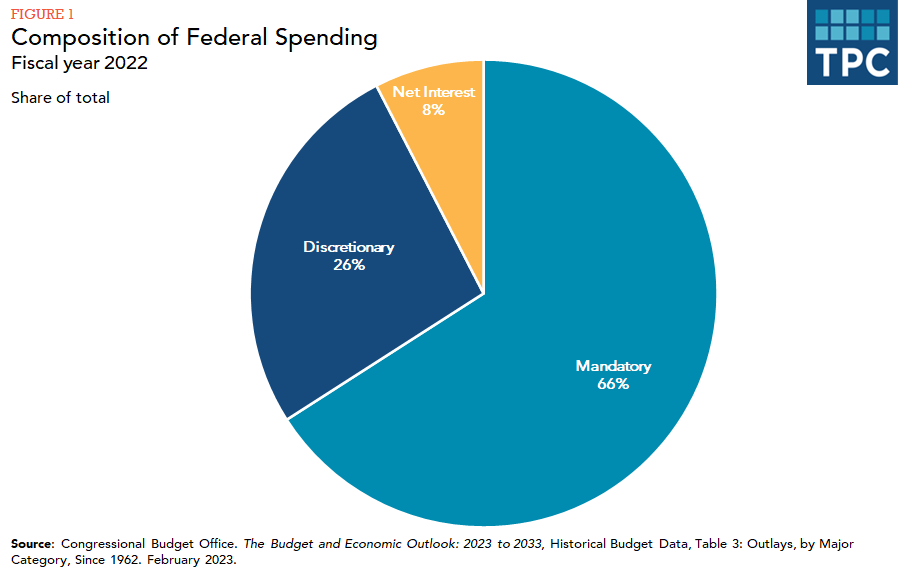
Mandatory spending currently accounts for the largest portion of the federal budget—typically over 60%. These expenditures are dictated by existing laws and do not require annual approval from Congress. The primary drivers of mandatory spending are “entitlement programs” such as Social Security, Medicare, and Medicaid.
As the US population ages, the financial pressure from these programs increases. For the individual focused on personal finance and retirement planning, the sustainability of mandatory spending is a key variable. It influences expectations regarding future Social Security benefits and the likelihood of tax hikes to cover potential shortfalls in these trust funds.
Discretionary Spending: The Policy Lever
Discretionary spending is the portion of the budget that Congress must authorize annually through appropriations bills. This accounts for roughly one-third of federal spending. The largest single component of discretionary spending is national defense. The remaining funds are allocated to “non-defense discretionary” programs, including education, transportation, environmental protection, and international aid.
Investors often pay close attention to discretionary allocations. A surge in infrastructure spending, for instance, can lead to significant gains in the construction and industrial sectors, while increased research and development (R&D) funding can spur growth in the tech and pharmaceutical industries.
Interest on the National Debt
A third and increasingly significant category is the interest paid on the national debt. As the total debt grows and interest rates fluctuate, the cost of servicing this debt consumes a larger share of the budget. In a high-interest-rate environment, debt service can compete with other spending priorities, potentially leading to “crowding out” in the financial markets, where government borrowing makes it more expensive for private businesses to secure loans.
Revenue Generation: How the Government Funds Its Budget

A budget is only half of the story; the other half is revenue. How the US government generates income has a direct and immediate impact on personal wealth, corporate profitability, and investment strategy.
Individual and Corporate Income Taxes
The vast majority of federal revenue comes from taxes. Individual income taxes are the largest source, followed by payroll taxes (which fund Social Security and Medicare). Corporate income taxes contribute a smaller but still significant portion. For anyone focused on wealth management, staying abreast of changes in tax brackets, deductions, and credits is a fundamental part of financial planning. Federal tax policy can either incentivize investment (through lower capital gains rates) or encourage consumer spending (through tax rebates or credits).
The Impact of Fiscal Deficits
When the government’s expenditures exceed its revenues, it results in a budget deficit. To cover this gap, the US Treasury issues debt instruments, such as Treasury bonds, notes, and bills. While running a deficit can stimulate the economy during a recession, persistent long-term deficits contribute to a growing national debt.
From a macro-finance perspective, the level of federal debt relative to the Gross Domestic Product (GDP) is a key indicator of economic stability. High debt-to-GDP ratios can lead to concerns about future inflation and the government’s ability to respond to future crises, influencing the long-term yields on government bonds and, by extension, mortgage rates and business loan costs.
How the National Budget Influences Personal Finance and Investing
The federal budget is not just a high-level economic concept; it is a force that shapes the financial reality of every household and business. There are several direct channels through which the budget affects your money.
Inflation and Purchasing Power
Significant increases in government spending, especially when not matched by revenue, can lead to an increase in the money supply or higher demand for goods and services. If the economy is already at full capacity, this can trigger inflation. For consumers, this means reduced purchasing power; for investors, it requires a shift toward assets that traditionally perform well during inflationary periods, such as real estate, commodities, or inflation-protected securities (TIPS).
Interest Rates and Market Liquidity
The government’s need to borrow affects the broader interest rate environment. When the Treasury issues a high volume of bonds to fund the budget, it increases the supply of debt. If demand does not keep pace, interest rates must rise to attract buyers. Since federal interest rates serve as the benchmark for almost all other types of credit, a “heavy” budget can lead to higher costs for car loans, mortgages, and corporate credit lines.
Sector-Specific Opportunities
A careful analysis of the federal budget can reveal “follow the money” opportunities for investors. If the budget emphasizes cybersecurity and defense technology, companies in those niches are likely to see steady revenue streams through government contracts. Conversely, a budget that cuts subsidies for traditional energy while boosting incentives for renewables can signal a long-term shift in market leadership within the energy sector.
Strategic Financial Planning in a Changing Fiscal Landscape
Given the profound impact of the US government budget, how should individuals and businesses adapt their financial strategies?
Tax-Efficient Investing
Since federal revenue needs often lead to changes in tax policy, tax diversification is essential. This involves utilizing a mix of taxable accounts, tax-deferred accounts (like traditional 401(k)s), and tax-free accounts (like Roth IRAs). By spreading investments across different tax treatments, you can better protect your portfolio against future shifts in the federal budget’s revenue requirements.
Monitoring Fiscal Policy for Market Timing
While “timing the market” is generally discouraged for long-term investors, being aware of the “fiscal cliff” or “debt ceiling” debates is crucial. These political events, tied directly to the budget and the government’s borrowing authority, often create short-term market dips. For the savvy investor, these dips can represent buying opportunities in high-quality assets that are temporarily undervalued due to political uncertainty.
Business Resilience and Government Policy
For business owners, the budget provides a roadmap for future regulatory and economic conditions. Understanding the direction of federal spending can help in making long-term capital expenditure decisions. For example, if the budget signals a multi-year commitment to rebuilding domestic manufacturing through grants and tax credits, a business might choose to expand its US-based operations rather than look abroad.
Conclusion
The US government budget is the ultimate expression of the nation’s financial priorities. It acts as an economic engine that drives growth, a safety net that protects the vulnerable, and a primary factor in the global financial markets. By understanding the mechanics of how the budget is formed, where the money goes, and how it is funded, you gain a powerful tool for managing your own financial future.
Whether you are looking to optimize your tax strategy, build a more resilient investment portfolio, or simply understand the news headlines, the federal budget is the foundational document that explains the “why” behind much of the modern economic landscape. In an era of shifting fiscal policies and evolving economic challenges, staying informed about the national budget is not just a matter of civic duty—it is a cornerstone of sound financial management.
aViewFromTheCave is a participant in the Amazon Services LLC Associates Program, an affiliate advertising program designed to provide a means for sites to earn advertising fees by advertising and linking to Amazon.com. Amazon, the Amazon logo, AmazonSupply, and the AmazonSupply logo are trademarks of Amazon.com, Inc. or its affiliates. As an Amazon Associate we earn affiliate commissions from qualifying purchases.