
The question of “what is the minimum wage right now” is deceptively simple. While there is a single federal figure that sets a baseline for the United States, the reality for workers and business owners is far more complex. Depending on where you live, the industry you work in, and even the size of your employer, the answer can range from $7.25 to over $17.00 per hour.
Understanding the current state of the minimum wage is not just a matter of curiosity; it is a critical component of personal finance management, business budgeting, and broader economic forecasting. As inflation continues to reshape the purchasing power of the dollar, the gap between statutory minimums and the actual cost of living has become a focal point for financial planning.

The Current State of Federal and State Minimum Wages
The foundational figure for the American labor market is the federal minimum wage, which currently stands at $7.25 per hour. This rate has remained unchanged since July 2009, marking the longest period without an increase since the federal minimum wage was first established under the Fair Labor Standards Act in 1938.
However, the federal floor is only part of the story. Because the cost of living varies drastically across the country, a majority of states have exercised their right to set higher minimums.
The Great Divergence: State vs. Federal Rates
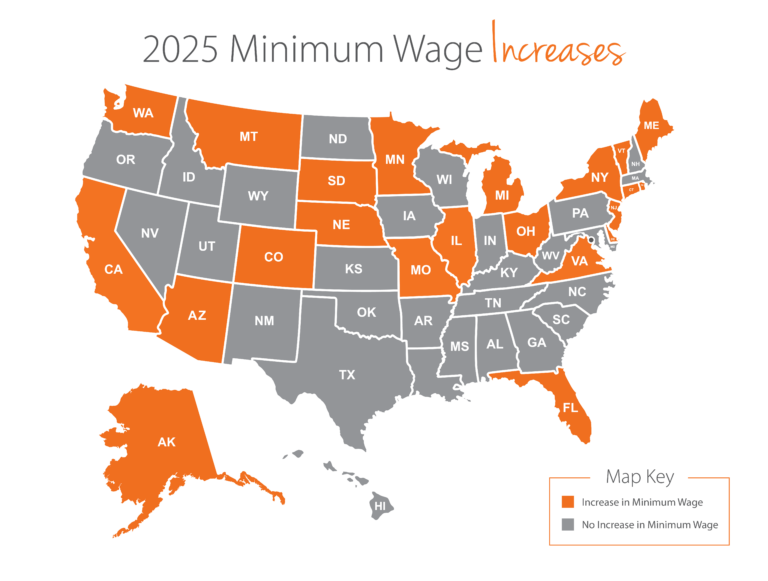
As of 2024, 30 states and the District of Columbia have established minimum wages that exceed the federal requirement. In states like California, New York, and Washington, the minimum wage has climbed past the $15.00 or $16.00 mark. These states often include “inflation triggers,” which are automatic annual adjustments based on the Consumer Price Index (CPI). This ensures that as the price of milk, rent, and gasoline rises, the base pay for workers moves in tandem.
Conversely, 20 states still adhere to the $7.25 federal floor. Some of these states have no state-level minimum wage law at all, while others have a state law that matches the federal rate. This creates a stark economic divide. A worker in Seattle may be earning double what a worker in Houston or New Orleans earns for the same entry-level position, despite both being subject to the same federal tax codes and similar national inflationary pressures.
Municipal Increases and “Local Minimums”
Beyond state lines, several major cities have taken it upon themselves to raise the bar even further. Cities like San Francisco, Seattle, and New York City often have municipal minimum wages that are significantly higher than their respective state averages. For a business owner, this means that “what the minimum wage is right now” depends on the specific zip code of the storefront. These local mandates are often driven by the high cost of urban housing, where a state-level minimum would be insufficient to sustain a local workforce.
The Tipped Minimum Wage Controversy
A significant carve-out in the minimum wage landscape is the “tipped minimum wage.” Under federal law, employers of tipped workers (such as servers and bartenders) are only required to pay $2.13 per hour in direct wages, provided that the employee’s tips bring them up to the standard $7.25 federal minimum. If tips fall short, the employer must make up the difference. However, several states, including California and Oregon, have abolished the tipped credit, requiring employers to pay the full state minimum wage before tips are even factored in. This represents a massive shift in business finance and payroll management for the hospitality sector.
Understanding the Gap Between Minimum Wage and a Living Wage
From a personal finance perspective, there is a distinct difference between a “statutory minimum wage” and a “living wage.” A living wage is defined as the minimum income necessary for a worker to meet their basic needs—including housing, food, healthcare, and transportation—without falling into poverty or requiring government assistance.
The Erosion of Purchasing Power
The primary challenge with the $7.25 federal rate is the erosion of purchasing power. When the rate was set in 2009, the economic landscape was vastly different. Since then, cumulative inflation has surpassed 40%. This means that $7.25 today buys significantly less than it did fifteen years ago. For individuals relying on these wages, the “money” aspect of their daily lives becomes a constant exercise in deficit management. Without legislative increases, the real value of the federal minimum wage continues to decline every year that prices rise.
The MIT Living Wage Calculator
Researchers at the Massachusetts Institute of Technology (MIT) developed a Living Wage Calculator that highlights the disparity between what is legal and what is sustainable. In most major American metropolitan areas, the living wage for a single adult with no children often exceeds $20.00 per hour. When children or dependents are added to the equation, that number can soar to $30.00 or $40.00 per hour.

For the modern worker, knowing the “minimum wage right now” is often a starting point for a side hustle or an aggressive upskilling strategy. Relying on the minimum wage alone has become increasingly untenable in the current rental market, where many landlords require a monthly income equal to three times the rent—a threshold almost impossible to meet at $7.25 or even $10.00 per hour.
The Financial “Cliff Effect”
A nuanced issue in personal finance for low-wage earners is the “cliff effect.” This occurs when a small increase in wages—perhaps a raise to a new state minimum—results in the total loss of public assistance benefits, such as SNAP (food stamps) or housing subsidies. In some cases, a worker might find themselves financially worse off after a raise because the value of the lost benefits exceeds the increase in their take-home pay. Navigating this transition requires careful financial planning and an understanding of how income thresholds interact with social safety nets.
The Business Perspective: Managing Rising Labor Costs
For entrepreneurs and corporate financial officers, the minimum wage is one of the most significant variables in the “cost of goods sold” (COGS) equation. When the minimum wage rises, it doesn’t just affect the lowest-paid employees; it creates a “ripple effect” across the entire payroll.
The Wage Ripple Effect
If a state raises its minimum wage from $12.00 to $15.00, an employer cannot simply raise the pay of their entry-level staff. They must also adjust the wages of supervisors who were already making $15.00 to maintain a vertical pay scale and preserve morale. This compression of wages can put a significant strain on business finance, especially for small businesses operating on thin margins, such as independent bookstores, cafes, and retail boutiques.
Strategies for Offsetting Labor Costs
Businesses generally respond to minimum wage hikes in three ways:
- Price Adjustments: Passing the cost onto the consumer. This is common in the fast-food industry, where a 10% increase in labor costs might result in a 2-3% increase in menu prices.
- Operational Efficiency: Reducing hours or optimizing schedules to ensure that labor is only used during peak revenue-generating times.
- Capital Investment: Investing in technology to replace low-skill tasks. This is why we see an increase in self-checkout kiosks and digital ordering systems. When the cost of labor exceeds the amortized cost of a machine, the financial incentive shifts toward automation.
Recruitment and Retention as a Competitive Edge
While a higher minimum wage increases costs, it can also provide financial benefits to a company. Higher pay is often linked to lower turnover rates. In the world of business finance, the cost of recruiting, hiring, and training a new employee can range from $1,500 to $5,000 for even entry-level roles. By paying a “competitive wage” that exceeds the legal minimum, businesses can save money in the long run through increased productivity and reduced vacancy rates.
Future Outlook: Inflation, Automation, and Legislative Trends
The trajectory of the minimum wage is currently being shaped by two competing forces: the legislative push for a $15.00 (or even $20.00) federal floor and the rapid advancement of artificial intelligence and automation.
The “Fight for $15” and Beyond
The “Fight for $15” movement, which seemed radical a decade ago, has largely succeeded in many parts of the country. However, in high-cost states, the conversation has already shifted to a “Fight for $20.” For example, California recently implemented a $20.00 minimum wage specifically for fast-food workers at large chains. This sector-specific approach represents a new trend in labor economics, where wages are determined by the profitability and scale of specific industries rather than a blanket geographic rate.
Inflation and Indexing
The most significant trend in minimum wage legislation is “indexing.” Rather than waiting for a legislative body to vote on a raise, many jurisdictions now automatically adjust their rates based on inflation. This provides a level of predictability for both workers and businesses. For workers, it protects the real value of their earnings; for businesses, it allows for better long-term financial forecasting, as they can predict labor cost increases based on broader economic indicators.
The Role of Technology in Capping Wages
As the minimum wage rises, the “automation floor” becomes more relevant. In the tech-driven economy, every dollar increase in the minimum wage makes software and robotics more attractive to business owners. For those looking to increase their income, the lesson is clear: financial security in the coming decade will likely depend on moving away from roles that are easily automated and toward roles that require high-level problem-solving, emotional intelligence, or technical expertise.
Conclusion: Navigating the Financial Reality
Whether you are an employee looking to optimize your personal budget or a business owner projecting your 2025 labor costs, the “minimum wage right now” is a moving target. The stagnation of the federal rate has led to a fragmented landscape where your earning potential is largely dictated by geography and industry.
In this environment, financial literacy is paramount. For individuals, it means understanding that the legal minimum is rarely a sufficient target for long-term wealth building or stability. For businesses, it means recognizing that labor is not just a cost to be minimized, but an investment that must be managed with strategic foresight. As the debate over the “right” minimum wage continues, the most successful actors in the economy will be those who look beyond the statutory minimum and plan for the actual cost of living and doing business in a high-inflation world.
aViewFromTheCave is a participant in the Amazon Services LLC Associates Program, an affiliate advertising program designed to provide a means for sites to earn advertising fees by advertising and linking to Amazon.com. Amazon, the Amazon logo, AmazonSupply, and the AmazonSupply logo are trademarks of Amazon.com, Inc. or its affiliates. As an Amazon Associate we earn affiliate commissions from qualifying purchases.