
For millions of Americans, Social Security represents the bedrock of retirement planning. While it was never intended to be a retiree’s sole source of income, for many, it provides a significant portion of their monthly cash flow. As inflation fluctuates and the cost of living continues to rise, the question of how much one can realistically expect from the Social Security Administration (SSA) becomes a central focus of high-net-worth individuals and middle-class savers alike. Specifically, the “maximum benefit” serves as a benchmark for what is possible under the current tax laws and benefit formulas.
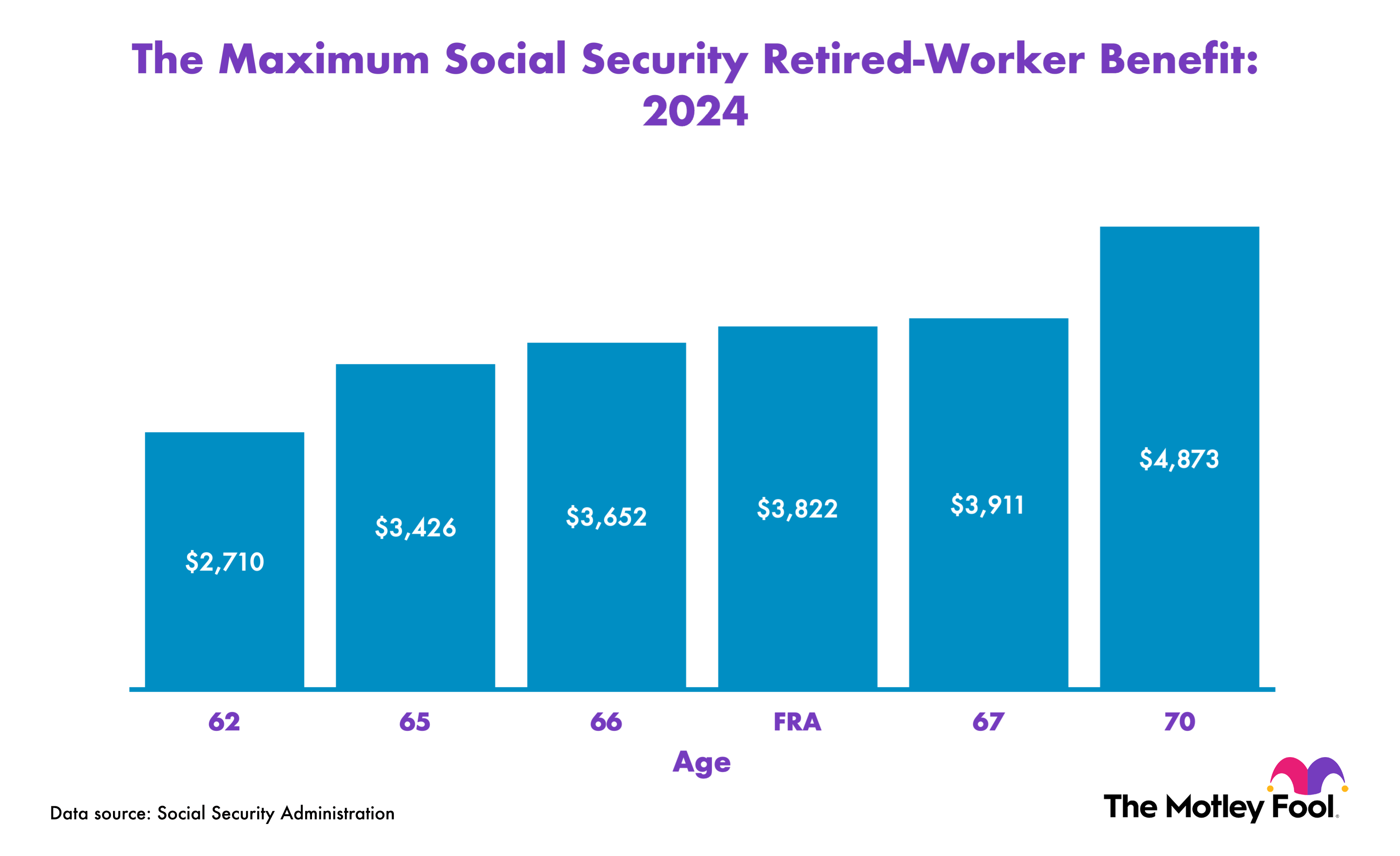
Understanding the current maximum Social Security benefit requires a deep dive into the intersection of earnings history, retirement age, and annual cost-of-living adjustments. For 2024, the maximum monthly benefit for a worker retiring at age 70 is $4,873. However, achieving this figure is a complex feat that requires decades of high-level earnings and a disciplined approach to the timing of one’s claim.
Decoding the 2024 Maximum Benefit Levels
The maximum benefit is not a single, static number applied to all retirees. Instead, it is a sliding scale based primarily on the age at which an individual elects to begin receiving payments. The SSA penalizes early filers and rewards those who wait, creating a massive disparity between the minimum and maximum possible payouts.
The Age 70 Milestone
To receive the absolute maximum payout of $4,873 per month in 2024, a worker must wait until age 70 to claim their benefits. This is because the SSA offers “delayed retirement credits” for every month you delay filing past your Full Retirement Age (FRA). For those born in 1960 or later, the FRA is 67. By waiting those three additional years—from 67 to 70—the benefit increases by roughly 8% per year. This 24% total increase is what pushes the benefit toward the upper limit, making it the gold standard for retirees looking to maximize their guaranteed, inflation-adjusted income.
The Full Retirement Age (FRA) Threshold
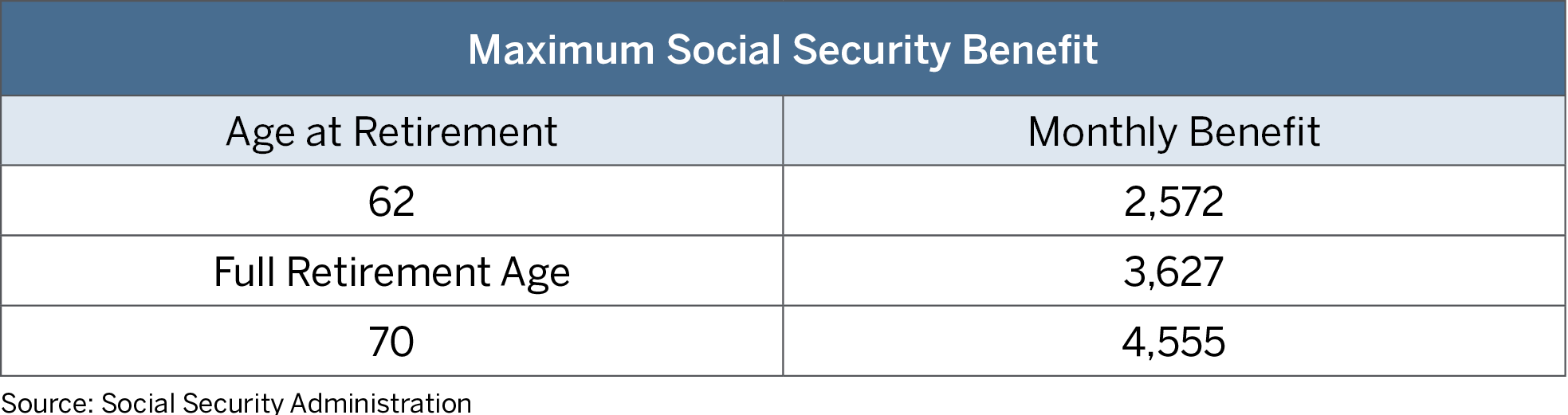
For those who choose to retire exactly at their Full Retirement Age in 2024, the maximum monthly benefit is significantly lower, sitting at $3,822. This figure represents the “Primary Insurance Amount” (PIA) for a high-earner who has reached the maximum taxable wage base for at least 35 years of their career but chooses not to accrue delayed retirement credits. While $3,822 is a substantial monthly sum, the difference between filing at 67 and filing at 70 amounts to over $12,000 in additional annual income, highlighting the high cost of “early” retirement for those in the top tier of earners.
The Early Retirement Reduction (Age 62)
On the opposite end of the spectrum is the worker who chooses to claim as early as possible. At age 62, the maximum benefit drops precipitously to $2,710 per month. This reduction is permanent and serves as a cautionary tale for those who may not need the income immediately. When you claim at 62, your benefit is reduced by about 30% compared to what you would have received at age 67. For high earners, this represents a massive opportunity cost over a 20- or 30-year retirement window.
How Your Earnings History Shapes the Maximum Payout
Reaching the maximum benefit isn’t just about when you claim; it’s about what you earned during your working years. The Social Security formula is designed to be progressive, replacing a higher percentage of income for lower-wage earners, but for those seeking the maximum check, the requirements are stringent.
The Taxable Wage Base Cap
Social Security is funded through payroll taxes, but those taxes only apply to income up to a certain limit, known as the “taxable wage base.” In 2024, this cap is $168,600. To qualify for the maximum benefit, a worker must have earned at least the maximum taxable wage base amount for at least 35 years of their career. If you earned $160,000 in a year when the cap was $168,600, you did not contribute the maximum amount to the system for that year, and thus, your future benefit will fall slightly short of the absolute maximum.
The “High 35” Calculation Method
The SSA calculates your benefit based on your Average Indexed Monthly Earnings (AIME) over your 35 highest-earning years. If you worked for 40 years, the SSA ignores the five lowest-earning years. However, if you only worked for 30 years, the SSA will plug in five years of “zero” earnings into the formula. These zeros can drastically pull down the average, making it impossible to hit the maximum benefit even if you were a high earner during those 30 years. Consequently, career longevity is just as important as the size of the paycheck.
Impact of Consistent High Earnings
Because the maximum taxable wage base increases almost every year to keep pace with wage inflation, a worker must have been at the top of the earnings scale throughout their entire career. For example, in 1990, the maximum taxable earnings were only $51,300. To get the max benefit today, you would have needed to earn at least that amount in 1990, and then hit every subsequent cap as it rose over the next three decades. This is why the maximum benefit is achieved by a very small percentage of the population—it requires a career of sustained, high-level professional success.

Strategic Pathways to Increasing Your Monthly Check
While not everyone can hit the absolute maximum, there are specific financial strategies that can help individuals move closer to that ceiling. Maximizing Social Security is less about “gaming the system” and more about understanding the actuarial mathematics that govern the program.
Leveraging Delayed Retirement Credits
As mentioned previously, the 8% annual increase for delaying benefits between age 67 and 70 is one of the best “guaranteed returns” available in the financial world. In a low-interest-rate environment or a volatile stock market, the ability to increase a lifetime, inflation-indexed government annuity by 24% is an unparalleled advantage. For many retirees, it makes sense to spend down IRA or 401(k) assets between the ages of 67 and 70 to allow their Social Security benefit to reach its maximum potential.
Managing the 35-Year Career Window
If you are nearing retirement and realize you have a few low-earning years in your “High 35,” working just a few more years can have a disproportionate impact on your benefit. By replacing a year where you earned very little (perhaps early in your career or during a period of unemployment) with a current year of high earnings, you can nudge your AIME higher. For those on the cusp of the maximum benefit, this “replacement” strategy is a powerful tool for boosting the final calculation.
Spousal and Survivor Benefit Considerations
For married couples, the maximum benefit strategy becomes a two-person game. Often, the highest-earning spouse should delay until age 70 not just to maximize their own check, but to maximize the potential survivor benefit for the remaining spouse. If the high-earner passes away first, the surviving spouse can step into that higher monthly payment. By securing the $4,873 maximum, the high-earner is essentially purchasing a high-value insurance policy for their partner.
The Role of COLA and Inflation in Future Adjustments
The maximum benefit is not a static figure; it evolves annually through the Cost-of-Living Adjustment (COLA). This mechanism ensures that the purchasing power of Social Security does not erode as the price of goods and services rises.
Understanding the Consumer Price Index (CPI-W)
The SSA determines the annual COLA based on the Consumer Price Index for Urban Wage Earners and Clerical Workers (CPI-W). When the prices of fuel, housing, and food rise, the COLA is applied to the benefit the following year. This is why the maximum benefit in 2024 is higher than it was in 2023. For retirees, this inflation protection is one of the most valuable features of Social Security, as few private annuities offer a comparable cost-of-living adjustment.
Historical COLA Trends and 2025 Forecasts
In recent years, we have seen some of the largest COLA increases in decades due to post-pandemic inflation. While the 2024 increase was 3.2%, the 2023 increase was a staggering 8.7%. Looking forward to 2025, the maximum benefit is expected to cross the $5,000 threshold for those retiring at age 70, reflecting the continued upward pressure on wages and prices. Staying informed about these adjustments is crucial for long-term cash flow modeling in a retirement plan.
Integrating Social Security into a Total Wealth Strategy
The maximum Social Security benefit should be viewed as one component of a broader “Money” strategy. Even at nearly $60,000 per year for a single person, the maximum benefit may not be enough to sustain a high-end lifestyle in retirement without supplemental savings.
Tax Implications of High Social Security Benefits
High earners must be aware that “maximizing” the benefit also increases the likelihood of paying taxes on those benefits. If your “provisional income” (half of your Social Security plus other taxable income) exceeds $34,000 for individuals or $44,000 for couples, up to 85% of your Social Security benefits may be subject to federal income tax. Strategic withdrawals from Roth IRAs, which do not count toward provisional income, can help high-benefit recipients keep more of their checks.
Bridging the Gap with Private Savings and 401(k)s
Ultimately, the journey toward the maximum Social Security benefit highlights the importance of a multi-pillar approach to finance. While the goal is to secure the highest possible government-guaranteed floor, true financial independence comes from combining that maximum benefit with a robust portfolio of stocks, bonds, and real estate. By understanding the rules of the SSA, investors can ensure they aren’t leaving money on the table, allowing their private investments to serve as the engine for growth while Social Security serves as the safety net.
aViewFromTheCave is a participant in the Amazon Services LLC Associates Program, an affiliate advertising program designed to provide a means for sites to earn advertising fees by advertising and linking to Amazon.com. Amazon, the Amazon logo, AmazonSupply, and the AmazonSupply logo are trademarks of Amazon.com, Inc. or its affiliates. As an Amazon Associate we earn affiliate commissions from qualifying purchases.