
The financial landscape of the past several years has been defined by the meteoric rise of NVIDIA Corporation (NVDA). Once known primarily by niche gaming enthusiasts for its high-performance graphics processing units (GPUs), the company has transitioned into the undisputed heavyweight of the global semiconductor industry and the primary engine of the artificial intelligence (AI) investment boom. For investors, analysts, and casual observers alike, the behavior of NVIDIA’s stock has become a barometer for the broader health of the technology sector and the viability of the AI revolution.
Understanding what is currently happening with NVIDIA stocks requires a multi-faceted approach that looks beyond simple price action. It involves an analysis of fundamental earnings growth, the psychological impact of stock splits, the shifting dynamics of market valuation, and the macroeconomic pressures that influence high-growth equities.
The Fundamental Drivers of Revenue and Profitability
At the core of NVIDIA’s stock performance is an unprecedented explosion in its financial fundamentals. Unlike many historical market bubbles where valuations were driven by speculation rather than earnings, NVIDIA has consistently delivered “beat and raise” quarters that have left even the most optimistic analysts recalibrating their models.
The Data Center Dominance
The primary engine behind NVIDIA’s stock price is its Data Center segment. This division, which provides the H100 and newer Blackwell architecture chips, has become the company’s largest revenue generator. From a financial perspective, what is happening with NVIDIA is a fundamental shift in capital expenditure from major “Hyperscalers”—companies like Microsoft, Alphabet, Meta, and Amazon. These entities are locked in an AI arms race, and NVIDIA holds the keys to the kingdom.
The revenue growth in this sector has been exponential, often doubling or tripling year-over-year. For investors, this represents a rare “gold rush” scenario where NVIDIA is the primary supplier of the “picks and shovels.” This fundamental strength provides a floor for the stock price, as the demand for accelerated computing continues to outpace supply.
Gross Margins and Pricing Power
Another critical factor in the stock’s trajectory is NVIDIA’s incredible pricing power. Currently, the company maintains gross margins in the neighborhood of 75% to 80%. In the hardware world, these figures are almost unheard of, typically reserved for high-end software-as-a-service (SaaS) companies. This indicates that NVIDIA is not just selling a commodity; it is selling a proprietary ecosystem (the CUDA platform) that makes its hardware indispensable. For the “Money” niche, this high margin is a key indicator of a “moat,” a competitive advantage that protects long-term profitability and justifies a premium valuation.
Market Dynamics: Valuation, Volatility, and the Stock Split
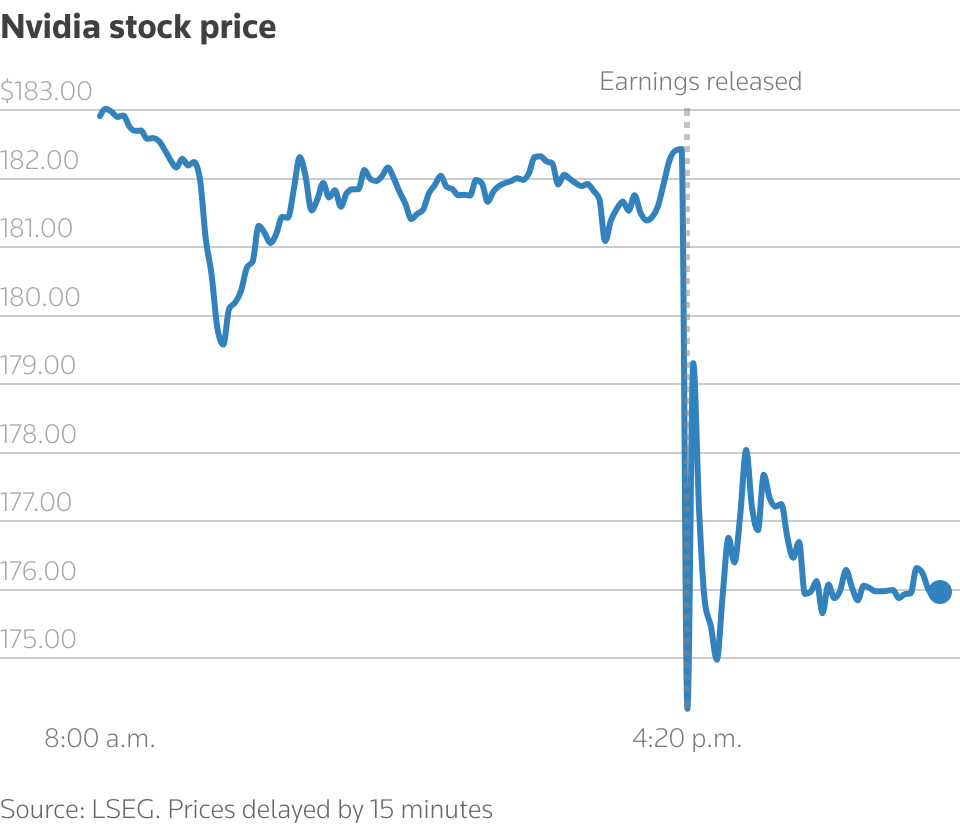
When discussing what is happening with NVIDIA stocks, one cannot ignore the mechanics of the market itself. The stock has experienced significant volatility, driven by high expectations and the technical adjustments that come with being one of the world’s most valuable companies.
Deciphering the Valuation Multiples
A common question among investors is whether NVIDIA is “expensive.” To answer this, we must look at the Price-to-Earnings (P/E) ratio. While the trailing P/E might look high, the forward P/E—which accounts for projected future earnings—has often remained surprisingly reasonable compared to other high-growth tech stocks. This is because NVIDIA’s earnings are growing as fast as, or faster than, its share price.
What we are seeing is a “re-rating” of the stock. Investors are no longer valuing NVIDIA as a cyclical chipmaker subject to the ups and downs of the PC market. Instead, they are valuing it as a foundational infrastructure provider for the next era of computing. This shift in perception is a primary reason why the stock has been able to sustain its high price levels even after massive rallies.
The Psychological Impact of the 10-for-1 Stock Split
In mid-2024, NVIDIA executed a 10-for-1 stock split. While a split does not change the fundamental value of a company (it’s like cutting a pizza into ten slices instead of one), it has significant implications for liquidity and investor sentiment. By lowering the price per share from over $1,000 to approximately $100, the stock became more accessible to retail investors and allowed for easier participation in options markets.
This move increased the daily trading volume and contributed to the stock’s inclusion in various retail-heavy indices. More importantly, it signaled management’s confidence in the continued upward trajectory of the company’s value. The post-split environment has seen a normalization of the stock’s price action, though it remains a favorite for institutional “whale” investors who use it as a core holding for tech exposure.
External Pressures and Macroeconomic Risks
Despite the internal strength of NVIDIA, its stock does not exist in a vacuum. It is subject to global economic forces and geopolitical tensions that can cause sharp, sudden corrections.
Interest Rates and the Cost of Capital
As a high-growth “risk-on” asset, NVIDIA is sensitive to the Federal Reserve’s monetary policy. When interest rates are high or rising, the present value of future earnings is discounted more heavily, which can put downward pressure on tech valuations. Conversely, as the market anticipates rate cuts, NVIDIA often leads the charge in market rallies. What is happening now is a tug-of-war between strong corporate earnings and the broader macroeconomic environment. Investors must watch the yield curve and inflation data as closely as they watch NVIDIA’s product launch cycles.
Geopolitical Tensions and Export Controls
Perhaps the most significant risk factor currently impacting NVIDIA stocks is the geopolitical landscape, specifically concerning U.S.-China relations. The U.S. government has implemented strict export controls on high-end AI chips to China, a market that has historically accounted for a significant portion of NVIDIA’s revenue.
NVIDIA has navigated this by creating “lite” versions of its chips that comply with regulations, but the threat of further restrictions remains a persistent “black swan” risk. Any escalation in trade barriers or conflict in the Taiwan Strait—where NVIDIA’s primary manufacturer, TSMC, is located—could lead to immediate and severe volatility in the stock. This “geopolitical premium” is something that every sophisticated investor must price into their NVIDIA holdings.
Strategic Considerations for the Modern Investor
For those looking at their portfolios and wondering how to approach NVIDIA stocks, the current situation demands a blend of discipline and vision.
Long-Term Growth vs. Short-Term Speculation
The stock has become a battleground for two types of investors: those holding for the “AI decade” and those looking to profit from weekly swings. For long-term investors, the focus remains on the roadmap of GPU architectures (from Hopper to Blackwell to Rubin) and the expansion into software and services. These investors view dips in the stock price as opportunities to accumulate more shares of a generational winner.
On the other hand, the high volatility of NVIDIA makes it a prime candidate for short-term speculation. High-frequency trading and algorithmic models often key off NVIDIA’s movements to dictate broader market direction. This can lead to “cascading” sell-offs or “melt-ups” that are disconnected from the company’s actual news flow. Understanding this distinction is crucial for maintaining emotional composure during periods of market turbulence.
Diversification and Portfolio Weighting
Because NVIDIA has grown so much, it now makes up a massive percentage of the S&P 500 and the Nasdaq-100. For many investors, this means they may be “accidentally” over-concentrated in NVIDIA through their index funds. In the context of business finance and personal wealth management, it is essential to periodically rebalance. While it is tempting to “let winners run,” the sheer size of NVIDIA means that its movements now have a disproportionate impact on entire portfolios. A prudent strategy involves ensuring that while one participates in NVIDIA’s upside, they are not so exposed that a single regulatory change or missed earnings beat could derail their entire financial plan.
The Future Outlook: The “Blackwell” Cycle and Beyond
Looking ahead, the narrative surrounding NVIDIA stocks is shifting toward the execution of its next generation of chips. The “Blackwell” platform is expected to drive the next massive wave of upgrades. Financial analysts are closely monitoring the supply chain for any signs of bottlenecks or delays, as the market has already priced in a near-perfect rollout.
Furthermore, the emergence of “Sovereign AI”—nations investing in their own domestic AI infrastructure—presents a new, untapped revenue stream. Countries like Saudi Arabia, the UAE, and various European nations are beginning to purchase NVIDIA hardware directly to build national computing power. This diversification of the customer base away from just “Big Tech” could provide the next leg of growth for the stock.
In conclusion, what is happening with NVIDIA stocks is a reflection of a fundamental shift in the global economy toward accelerated computing. While the stock faces challenges ranging from high valuation expectations to geopolitical hurdles, its position at the center of the AI ecosystem makes it one of the most critical assets in modern finance. For the savvy investor, NVIDIA represents both a high-octane growth engine and a complex study in market dynamics, requiring constant vigilance and a clear-eyed understanding of the intersection between technology and capital.
aViewFromTheCave is a participant in the Amazon Services LLC Associates Program, an affiliate advertising program designed to provide a means for sites to earn advertising fees by advertising and linking to Amazon.com. Amazon, the Amazon logo, AmazonSupply, and the AmazonSupply logo are trademarks of Amazon.com, Inc. or its affiliates. As an Amazon Associate we earn affiliate commissions from qualifying purchases.