
The General Data Protection Regulation (GDPR) stands as the most stringent privacy and security law in the world. Enforced by the European Union (EU), it imposes obligations onto organizations anywhere, so long as they target or collect data related to people in the EU. For businesses operating in the digital landscape, achieving GDPR compliance is no longer a peripheral legal concern; it is a fundamental pillar of modern technical infrastructure and data governance.
Understanding the Pillars of GDPR Compliance
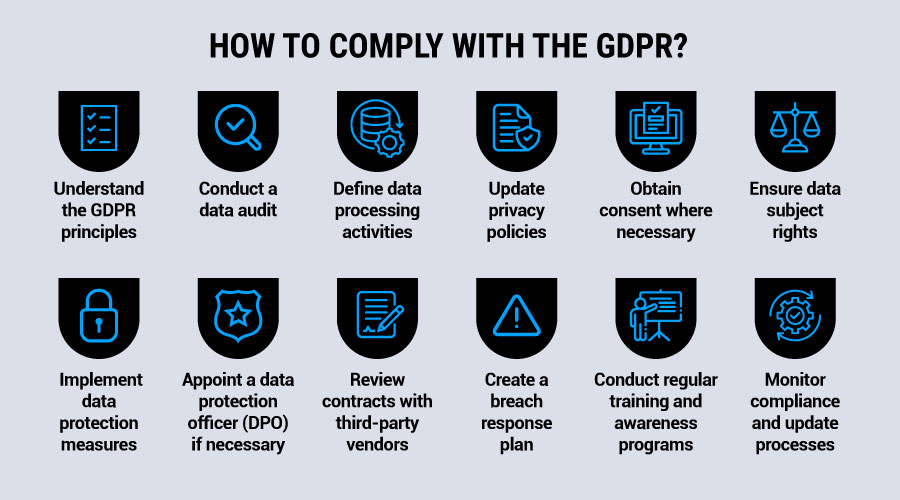
To be GDPR compliant, a business must do more than simply post a privacy policy on its website. It requires a fundamental shift in how data is ingested, processed, stored, and deleted. Compliance is built upon several core principles outlined in the regulation, which dictate the lifecycle of personal information.

Lawfulness, Fairness, and Transparency
The principle of lawfulness requires that you have a valid legal basis for processing personal data. Under GDPR, there are six legal bases, including consent, contractual necessity, legal obligation, vital interests, public task, and legitimate interests. Transparency implies that you must be clear and open with users about what data you are collecting and why. This is typically achieved through concise, easily accessible, and jargon-free privacy notices.
Purpose Limitation and Data Minimization
Organizations must limit their data collection to what is strictly necessary for the purposes for which it is processed. If you are running an e-commerce platform, collecting a user’s home address is necessary for shipping, but collecting their political affiliation or granular location data without a specific, justified purpose would violate the principle of data minimization. You must define your purpose upfront and avoid “function creep,” where data collected for one task is repurposed for another without renewed consent.
Accuracy and Storage Limitation
GDPR requires that personal data be accurate and kept up to date. Furthermore, you cannot keep data longer than necessary. Once the data has served its intended purpose, it must be securely deleted or anonymized. Implementing an automated data retention policy is a hallmark of a technically mature and compliant organization.
Technical Safeguards and Data Security
Compliance is deeply rooted in the architecture of your software. You cannot achieve GDPR compliance if your database is a “black box” where user data is mixed, unencrypted, and difficult to isolate.
Privacy by Design and Default
Privacy by Design is a legal requirement under Article 25 of the GDPR. It mandates that data protection measures be integrated into the development of business processes and software systems from the very beginning. For example, when building a web form, the “opt-in” boxes should be unchecked by default. When designing a database, you should implement encryption-at-rest and pseudonymization techniques to ensure that even if a data breach occurs, the information remains unintelligible to unauthorized parties.
Implementing Secure Access Controls
Access control is a critical technical component of compliance. Not every employee in your organization needs access to the entire user database. Implementing the Principle of Least Privilege (PoLP) ensures that users and systems are granted only the access rights essential to perform their duties. Technical measures such as Multi-Factor Authentication (MFA), robust logging, and regular security audits are essential to demonstrate that you are taking “appropriate technical and organizational measures” to protect user data.
Managing Data Subject Access Requests (DSARs)
A core component of being GDPR compliant is the ability to fulfill Data Subject Access Requests. Users have the right to request access to their personal data, correct inaccuracies, request the deletion of their data (“the right to be forgotten”), and object to their data being processed. To comply, your technical infrastructure must be able to:
- Identify all data associated with a specific user across distributed systems.
- Export that data in a machine-readable format.
- Permanently purge that data from your production environment, backups, and third-party SaaS integrations.
Navigating Consent and Cookie Management
For most websites, the most visible aspect of GDPR compliance is the cookie banner. However, the legal requirements for consent are significantly more complex than a simple “Accept” button.
The Standard for Valid Consent
Under GDPR, consent must be freely given, specific, informed, and unambiguous. Silence, pre-ticked boxes, or inactivity do not constitute consent. Furthermore, it must be as easy to withdraw consent as it is to give it. This necessitates the use of a Consent Management Platform (CMP) that provides granular control to the user, allowing them to opt-in to specific types of cookies (e.g., performance, functional, or marketing) while opting out of others.
Managing Third-Party Scripts and Pixels
Modern websites are often composed of dozens of third-party scripts, including analytics trackers, social media pixels, and advertising tags. These scripts often collect data on behalf of third-party processors. To be compliant, you must audit all third-party services running on your site. You are responsible for ensuring that these vendors also adhere to GDPR standards. This often involves signing Data Processing Agreements (DPAs) with your vendors to ensure they act only under your instructions and maintain high security standards.
Accountability: Documentation and Governance
The final pillar of GDPR is accountability. You must be able to demonstrate that you are compliant. Regulators do not just look at your results; they look at your documentation and your commitment to a culture of privacy.
Keeping Records of Processing Activities (ROPA)
Article 30 requires most organizations to maintain detailed records of their processing activities. This document acts as an internal audit trail, detailing:
- The purpose of data processing.
- The categories of data subjects and personal data.
- The recipients to whom the data is disclosed.
- Where possible, the envisaged time limits for erasure.
- A general description of the technical and organizational security measures implemented.
Data Protection Impact Assessments (DPIAs)
For high-risk processing activities—such as utilizing AI for automated decision-making or processing large-scale sensitive data—you must conduct a Data Protection Impact Assessment. A DPIA helps you identify and minimize data protection risks early in a project. It serves as a vital document to show regulators that you have proactively considered the impact of your technology on user privacy.
The Role of the Data Protection Officer (DPO)
Depending on the scale and nature of your data processing, you may be legally required to appoint a Data Protection Officer. The DPO acts as an independent advisor who monitors internal compliance, provides advice on DPIAs, and serves as the primary point of contact for supervisory authorities. Even if not legally mandated for your specific business size, appointing a DPO or a dedicated compliance lead is a proactive step that signals to your users—and to the law—that you take data rights seriously.

Conclusion: Compliance as a Competitive Advantage
Achieving GDPR compliance is often viewed as a burden—an expensive, time-consuming set of hoops to jump through. However, viewed through the lens of modern tech strategy, it is a significant competitive advantage. As digital consumers become increasingly privacy-conscious, businesses that treat data protection as a core feature rather than a legal annoyance build greater trust with their audience.
Compliance forces you to clean your data, audit your third-party integrations, and streamline your software architecture. It reduces the risk of massive financial penalties, but more importantly, it reduces the risk of data breaches that could destroy your brand reputation. GDPR compliance is a continuous process of evolution. It requires regular audits, continuous training for your development and marketing teams, and a commitment to adapting as technology and regulations evolve. In the digital age, privacy is the new standard of quality. By mastering GDPR, you are not just checking boxes for regulators; you are building a more resilient, transparent, and trustworthy digital operation.
aViewFromTheCave is a participant in the Amazon Services LLC Associates Program, an affiliate advertising program designed to provide a means for sites to earn advertising fees by advertising and linking to Amazon.com. Amazon, the Amazon logo, AmazonSupply, and the AmazonSupply logo are trademarks of Amazon.com, Inc. or its affiliates. As an Amazon Associate we earn affiliate commissions from qualifying purchases.