
At its core, the minimum wage is a foundational pillar of modern economic policy—a government-mandated price floor for labor. By establishing a legal baseline for what employers must pay their workers per hour, policymakers aim to prevent the exploitation of labor, reduce income inequality, and ensure that those who participate in the workforce can afford the basic necessities of life. However, the mechanism is far more complex than a simple number on a paycheck; it sits at the intersection of social welfare, macroeconomic stability, and business viability.
The Economic Philosophy Behind Minimum Wage
The minimum wage exists primarily as a tool for market intervention. In a perfectly competitive market, theory suggests that wages are determined entirely by the supply of labor and the demand for it. In reality, labor markets are rarely perfect. The concept of “monopsony power”—where employers have significant leverage over employees—can lead to suppressed wages that do not reflect the true value of the work performed.

Correcting Market Imbalances
When a few large employers dominate a local market, they can effectively set wages lower than the market equilibrium because workers have few alternatives. A statutory minimum wage serves as a counterweight to this power imbalance. By setting a floor, the government prevents a “race to the bottom,” where competition for low-cost labor forces wages below subsistence levels.
The Standard of Living Argument
From a social perspective, the minimum wage is designed to uphold a minimum standard of living. Proponents argue that if a business model relies on paying employees less than what is required for basic food, housing, and clothing, that model is effectively being subsidized by social safety nets. When full-time workers require government assistance like food stamps or housing vouchers to survive, the minimum wage acts as a mechanism to shift the cost of labor back to the employer, theoretically reducing the burden on the taxpayer.
The Microeconomic Impact on Business Finance
For small business owners and corporate executives alike, the minimum wage is a critical line item in the financial ledger. A mandated increase in the floor wage does not exist in a vacuum; it triggers a ripple effect across the entire business financial ecosystem.
Adjusting Operating Margins
When the minimum wage rises, a business must decide how to absorb the increased cost of labor. This creates three primary pathways for financial adjustment:
- Price Adjustments: Companies may pass the cost on to consumers by raising the prices of goods and services. This is most common in industries with low price elasticity, such as food service or retail.
- Operational Efficiency: Management may invest in automation, self-service technology, or optimized scheduling software to do more with fewer man-hours. This shifts the expense from variable labor costs to capital expenditure.
- Margin Compression: In highly competitive markets where raising prices would lead to a loss of customers, firms may simply absorb the cost, resulting in lower net profit margins and reduced capital for expansion or reinvestment.
The Compression Effect
It is not just the entry-level workers who are affected by minimum wage shifts. Businesses often face “wage compression,” where the gap between the lowest-paid workers and those in slightly more skilled or senior roles shrinks. If the minimum wage jumps, a supervisor who was previously earning 20% more than a base-level employee might suddenly find their relative pay advantage diminished. To retain talent, companies often feel pressured to provide “across-the-board” raises, which multiplies the financial impact of a minimum wage hike beyond the initial hourly increase.
Debating the Macroeconomic Consequences
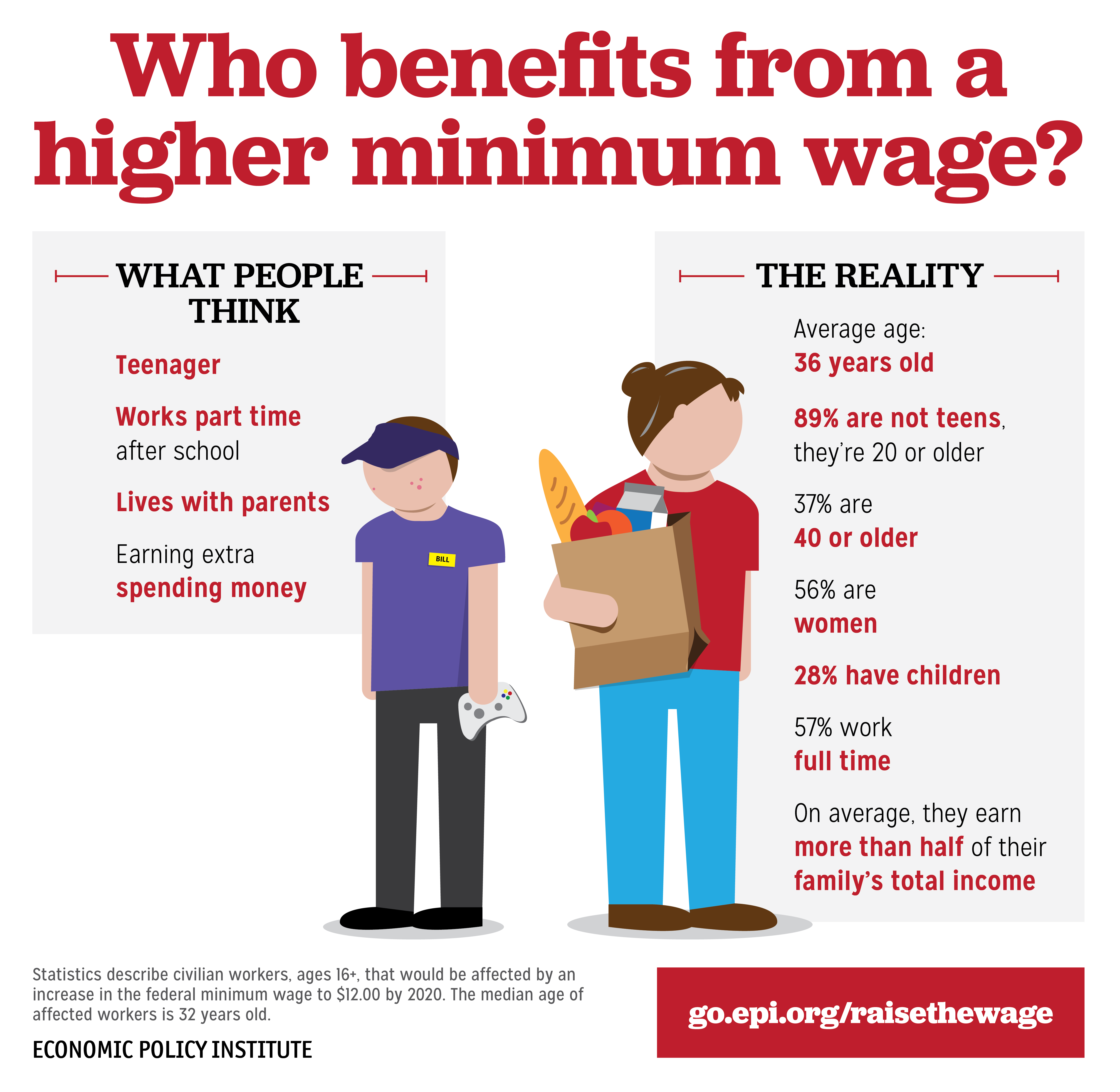
The debate over the minimum wage is a perennial fixture in economic discourse, characterized by a fundamental tension between poverty alleviation and the potential for job loss.
The Job Loss Hypothesis
The traditional neoclassical economic view suggests that if the price of labor is forced above the market equilibrium, the demand for labor will drop. According to this logic, employers will hire fewer people, reduce hours, or accelerate the transition to automation to avoid the higher cost. If a business cannot sustain the new, higher wage, it may be forced to downsize or shutter entirely, ironically harming the very demographic the policy was intended to help.
The Stimulus Perspective
Conversely, modern institutional economists often point to the stimulative effect of higher wages. When low-wage workers earn more, they tend to spend that money immediately on necessities. This increases the “marginal propensity to consume.” If the lowest-paid members of society have more disposable income, that money circulates through the local economy, potentially increasing the demand for goods and services, which in turn could lead to higher revenue for businesses and potentially more hiring. This is often referred to as the “multiplier effect.”
Navigating the Future of Compensation
As we move toward a more digital and automated future, the definition of “minimum wage” is beginning to evolve beyond simple hourly pay. We are seeing a shift toward “living wage” calculations, which account for regional differences in the cost of living, recognizing that a universal national wage cannot address the vastly different economic realities of a rural town versus a major metropolitan center.
Geographic Disparity and Policy
One of the greatest challenges in fiscal policy is the “one-size-fits-all” trap. A minimum wage that is sustainable in a high-cost urban hub like New York City or San Francisco may be devastating to small businesses in rural Mississippi or Ohio. Increasingly, states and municipalities are opting for localized wage tiers. For business leaders, this requires a sophisticated approach to regional human resources, where payroll budgets must be calibrated based on the specific legislative environment of each operational location.
The Role of Technology in Labor Costs
We are currently witnessing a historic shift where labor cost is no longer just about the hourly rate; it is about the “cost per unit of output.” As AI and robotics integrate further into retail and manufacturing, the value of manual, repetitive tasks is changing. Businesses are re-evaluating their labor strategies, moving away from low-skilled, low-wage models toward high-skilled models where employees are better trained and paid more, but tasked with managing the technology that handles the repetitive work.
Conclusion: The Bottom Line for Finance and Society
Ultimately, the minimum wage is a balancing act. It is a financial floor that provides a safety net for workers, but it is also a cost structure that defines the boundaries of profitability for businesses. For individuals, understanding how these wages are set provides insight into their own earning potential and the broader economic climate. For business owners, the minimum wage is a constant variable in the equation of growth, demanding strategic planning, disciplined pricing, and a commitment to operational efficiency.
Whether one views the minimum wage as a vital social protection or a burdensome market distortion, its reality is undeniable. It remains one of the most powerful levers of economic policy—one that shapes the wealth of households and the financial health of the private sector in equal measure. In an era of rapid technological change and shifting economic norms, the minimum wage will continue to evolve, requiring both workers and businesses to adapt their financial strategies to an ever-changing baseline.
aViewFromTheCave is a participant in the Amazon Services LLC Associates Program, an affiliate advertising program designed to provide a means for sites to earn advertising fees by advertising and linking to Amazon.com. Amazon, the Amazon logo, AmazonSupply, and the AmazonSupply logo are trademarks of Amazon.com, Inc. or its affiliates. As an Amazon Associate we earn affiliate commissions from qualifying purchases.