
For many individual investors, the question “how much is Apple stock?” is the starting point of a much deeper financial journey. As of the current market cycle, Apple Inc. (AAPL) remains one of the most significant components of the S&P 500 and the Nasdaq-100, serving as a bellwether for the health of the broader economy. However, understanding the price of Apple stock requires looking beyond the daily ticker symbol and into the fundamental value, market capitalization, and long-term growth prospects that define this financial titan.
In the world of finance, the “cost” of a stock is relative. While the nominal share price tells you what you need to pay for a single unit of ownership, the true value of Apple lies in its cash flow, its dividend reliability, and its ability to innovate in high-margin sectors.
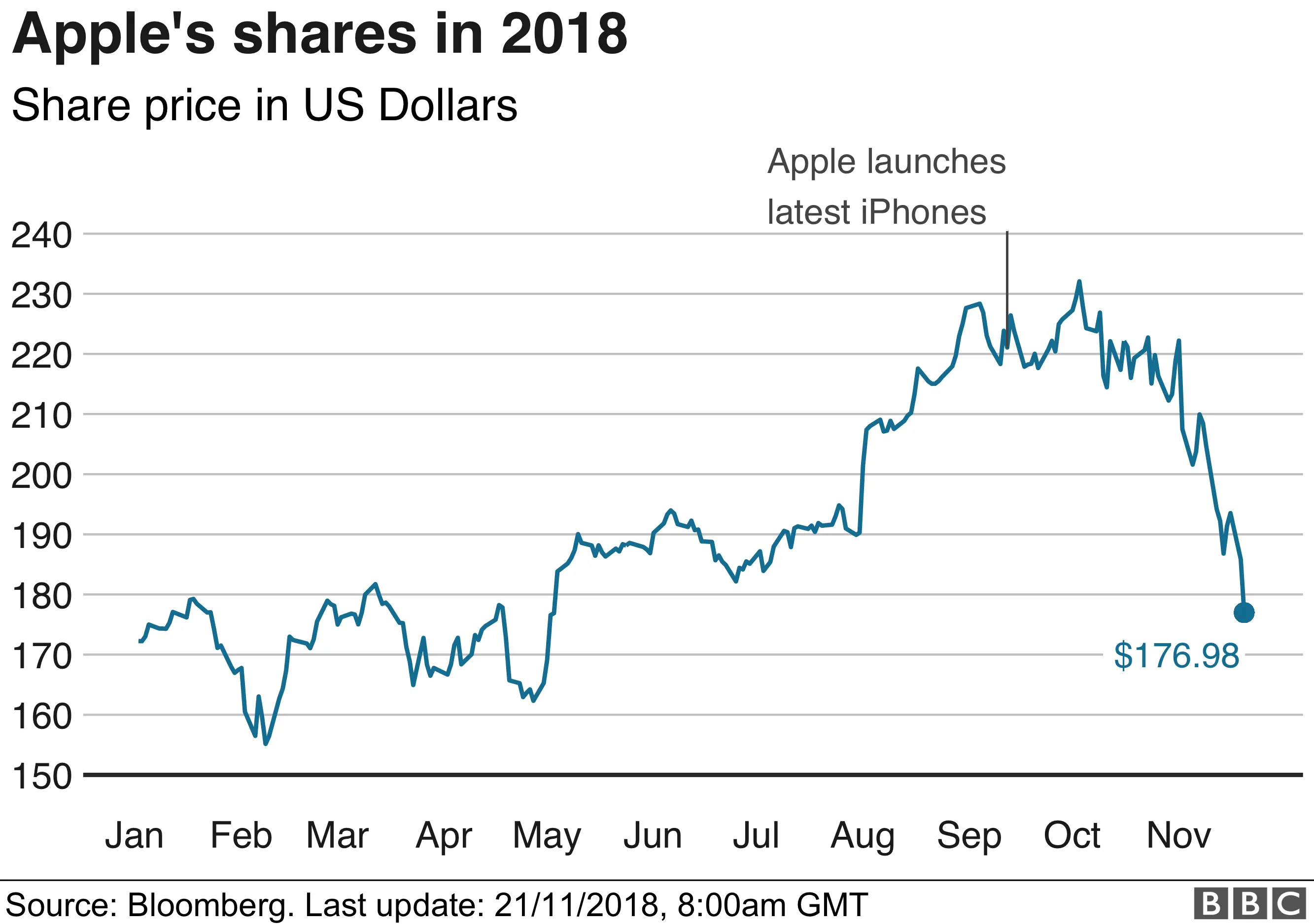
Understanding Apple’s Current Market Position
To answer “how much” Apple is worth, one must first look at its market capitalization—the total dollar market value of all outstanding shares. Apple has historically led the charge as the first company to hit the $1 trillion, $2 trillion, and $3 trillion milestones. This massive scale influences how the stock behaves during periods of market volatility.
Market Capitalization and Share Price Basics
The share price of Apple is a reflection of investor sentiment, quarterly earnings performance, and macroeconomic conditions. Unlike “penny stocks” or high-volatility speculative assets, AAPL is considered a “blue-chip” stock. This means it is perceived as a high-quality, reliable investment that often anchors the portfolios of institutional investors and pension funds. When you buy a share of Apple, you are buying a piece of a company that generates more annual profit than many small nations’ entire GDPs.
Historical Context: From Growth to Stability
Looking at the historical trajectory of Apple’s stock price reveals a transition from a high-growth tech disruptor to a mature “value-growth” hybrid. Following several stock splits—most recently a 4-for-1 split in 2020—Apple has kept its nominal share price accessible to retail investors while maintaining a massive valuation. For investors, the “price” today is built on a foundation of decades of ecosystem lock-in, where hardware sales drive software subscriptions, creating a recurring revenue model that is the envy of Wall Street.
Key Financial Metrics Driving the Price of AAPL
Professional investors do not look at the share price in a vacuum. Instead, they use specific financial ratios to determine if the stock is “expensive” or “cheap” relative to its earnings power. If you are asking how much Apple stock is, you are essentially asking about its valuation metrics.
Price-to-Earnings (P/E) Ratio: Is Apple Overvalued?
The P/E ratio is the primary tool used to value Apple. It measures the current share price relative to its per-share earnings (EPS). Historically, Apple traded at a lower P/E ratio when it was viewed primarily as a hardware company. However, as the company pivoted toward services and recurring revenue, its P/E multiple expanded. Investors are now willing to pay more for every dollar of Apple’s profit because those profits are seen as more stable and predictable than they were a decade ago.
Revenue Streams: The Power of Services
A major driver of the stock price is the diversification of revenue. While the iPhone remains the flagship product, the “Services” segment—which includes the App Store, iCloud, Apple Music, and Apple Pay—boasts significantly higher profit margins than hardware. When Services revenue grows, the stock price often responds positively because it signals higher overall profitability. Analysts closely watch the “attach rate” of these services to see how effectively Apple is monetizing its active install base of over 2 billion devices.
Dividend Yield and Share Buybacks
For the “Money” conscious investor, Apple is not just a growth play; it is a capital return machine. Apple has one of the most aggressive share buyback programs in corporate history. By repurchasing its own shares, the company reduces the total supply, which inherently increases the value of the remaining shares. Additionally, Apple pays a quarterly dividend. While the yield may seem modest compared to utility stocks, the consistency and growth of the dividend make it a favorite for long-term “buy and hold” strategies.
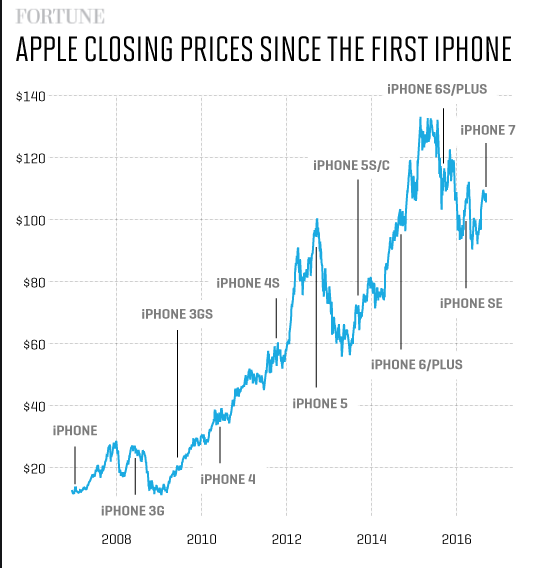
Factors Influencing Future Stock Performance
The price of Apple stock tomorrow depends on more than just yesterday’s sales. The market is forward-looking, pricing in expectations for the next three to five years. Several external and internal factors dictate whether the stock price will climb or face resistance.
Macroeconomic Pressures: Inflation and Interest Rates
As a mega-cap stock, Apple is highly sensitive to the Federal Reserve’s interest rate policy. High-interest rates generally put downward pressure on tech valuations because they increase the discount rate used to value future cash flows. Furthermore, inflation affects consumer discretionary spending. If consumers in key markets like the U.S., Europe, and China feel the pinch of rising costs, they may delay upgrading to the latest iPhone, which can lead to earnings misses and a subsequent drop in the stock price.
The AI Frontier and Product Innovation
In the current financial landscape, Artificial Intelligence (AI) is the primary driver of tech valuations. Apple’s entry into this space via “Apple Intelligence” represents a significant catalyst for the stock. Investors are looking for signs that AI features will trigger a “super-cycle” of hardware upgrades. If Apple can prove that its integrated AI approach offers a superior user experience, the stock price could see a significant re-rating as it enters a new era of growth.
Supply Chain and Geopolitical Risks
Because Apple’s manufacturing is heavily concentrated in certain regions, geopolitical tensions can impact its stock price. Trade relations between the U.S. and China are particularly relevant. Any disruption in the supply chain or regulatory hurdles in major markets can lead to price volatility. Investors often price in a “risk premium” for Apple based on these international complexities, monitoring the company’s efforts to diversify manufacturing into India and Vietnam.
Investment Strategies for Apple Stock
Deciding “how much” to invest in Apple requires a clear understanding of your personal financial goals. Whether you are a conservative saver or an aggressive investor, Apple often fits into a variety of strategic frameworks.
Long-term Growth vs. Value Investing
Is Apple a growth stock or a value stock? The answer is both. For long-term investors, Apple offers the stability of a value stock due to its massive cash reserves and dominant market position, alongside the upside of a growth stock through its R&D in AI, AR/VR (Vision Pro), and automotive software. A common strategy is “dollar-cost averaging,” where an investor buys a set dollar amount of Apple stock at regular intervals, regardless of the price, to mitigate the impact of short-term volatility.
Portfolio Allocation and Diversification
Given Apple’s heavy weighting in major indices, many investors already own Apple through their 401(k) or index funds (like VTI or SPY) without realizing it. When purchasing individual shares, it is crucial to consider your total exposure. Over-concentration in a single stock, even one as successful as Apple, carries risk. Financial advisors often recommend balancing a core position in AAPL with other sectors like healthcare, energy, or consumer staples to ensure a well-rounded financial plan.
How to Monitor Your Investment
To stay informed on “how much” Apple stock is worth in the context of your portfolio, you should follow the quarterly earnings calls. These reports provide the raw data on iPhone units sold, services growth, and management’s guidance for the future. Utilizing financial tools and platforms—ranging from basic brokerage apps to advanced Bloomberg terminals—allows investors to track real-time price action and technical indicators like moving averages, which help identify optimal entry and exit points.

Conclusion: More Than Just a Number
When you ask “how much is Apple stock,” you are engaging with a complex ecosystem of global finance. The price of a share is a consensus reached by millions of participants—from retail traders on their phones to high-frequency trading algorithms in Manhattan.
While the nominal price fluctuates by the second, the intrinsic value of the company is built on its unparalleled brand loyalty, its fortress-like balance sheet, and its strategic pivot toward high-margin services. For the disciplined investor, the current price is merely a snapshot; the real story lies in the company’s ability to maintain its “moat” and continue returning value to shareholders through dividends and innovation. As always, in the realm of personal finance and investing, due diligence and a long-term perspective remain the most valuable assets in any portfolio.
aViewFromTheCave is a participant in the Amazon Services LLC Associates Program, an affiliate advertising program designed to provide a means for sites to earn advertising fees by advertising and linking to Amazon.com. Amazon, the Amazon logo, AmazonSupply, and the AmazonSupply logo are trademarks of Amazon.com, Inc. or its affiliates. As an Amazon Associate we earn affiliate commissions from qualifying purchases.