
In the world of finance, percentages are more than just numbers on a page; they are the fundamental language of growth, risk, and value. Whether you are analyzing a stock portfolio, managing a corporate budget, or calculating the interest on a mortgage, the ability to “take a percent” accurately is the baseline for all sophisticated financial decision-making. Quantitative literacy is the dividing line between those who simply earn money and those who strategically build wealth. Understanding the mechanics of percentages allows an individual to strip away the noise of raw data and reveal the underlying health of an investment or business venture.

The Fundamentals of Financial Percentages
Before one can master complex financial modeling, one must have an intuitive grasp of the percentage formula. At its core, a percentage is a ratio that expresses a fraction of 100. In financial terms, this represents the “rate” at which a “principal” amount is being evaluated.
Understanding the Formula: Base, Rate, and Amount
The universal formula for calculating a percentage is: (Part / Whole) x 100 = Percentage. However, in the context of money management, we often work in reverse. To find a specific dollar amount based on a percentage—for instance, a 15% down payment on a $500,000 property—the formula is Total Value x (Percentage / 100) = Amount.
Professional financiers rarely use the “divide by 100” step manually; instead, they operate in decimals. Moving the decimal point two places to the left (turning 15% into 0.15) is a mental habit that facilitates rapid analysis during negotiations. Mastering this allows you to quickly determine “the take”—the portion of a transaction that belongs to a specific stakeholder.
Converting Decimals and Fractions for Rapid Analysis
In the fast-paced environment of a trading floor or a boardroom, speed is an asset. Understanding the relationship between common fractions and percentages is essential. Knowing that 1/8th of a percent (a common increment in bond yields) is 0.125% allows for a level of precision that “ballparking” cannot provide.
Furthermore, when dealing with “basis points” (BPS), a term frequently used in interest rate discussions, one must remember that 100 basis points equal 1%. When the Federal Reserve adjusts rates by 25 basis points, they are moving the needle by 0.25%. Being able to fluidly convert between fractions, decimals, percentages, and basis points is the hallmark of a financial professional.
Calculating Investment Returns and ROI
The primary reason to “take a percent” in a financial context is to measure the performance of capital. Return on Investment (ROI) is the most ubiquitous metric in the world of money, providing a standardized way to compare the efficiency of different investments, regardless of their size.
Annualized Returns vs. Cumulative Growth
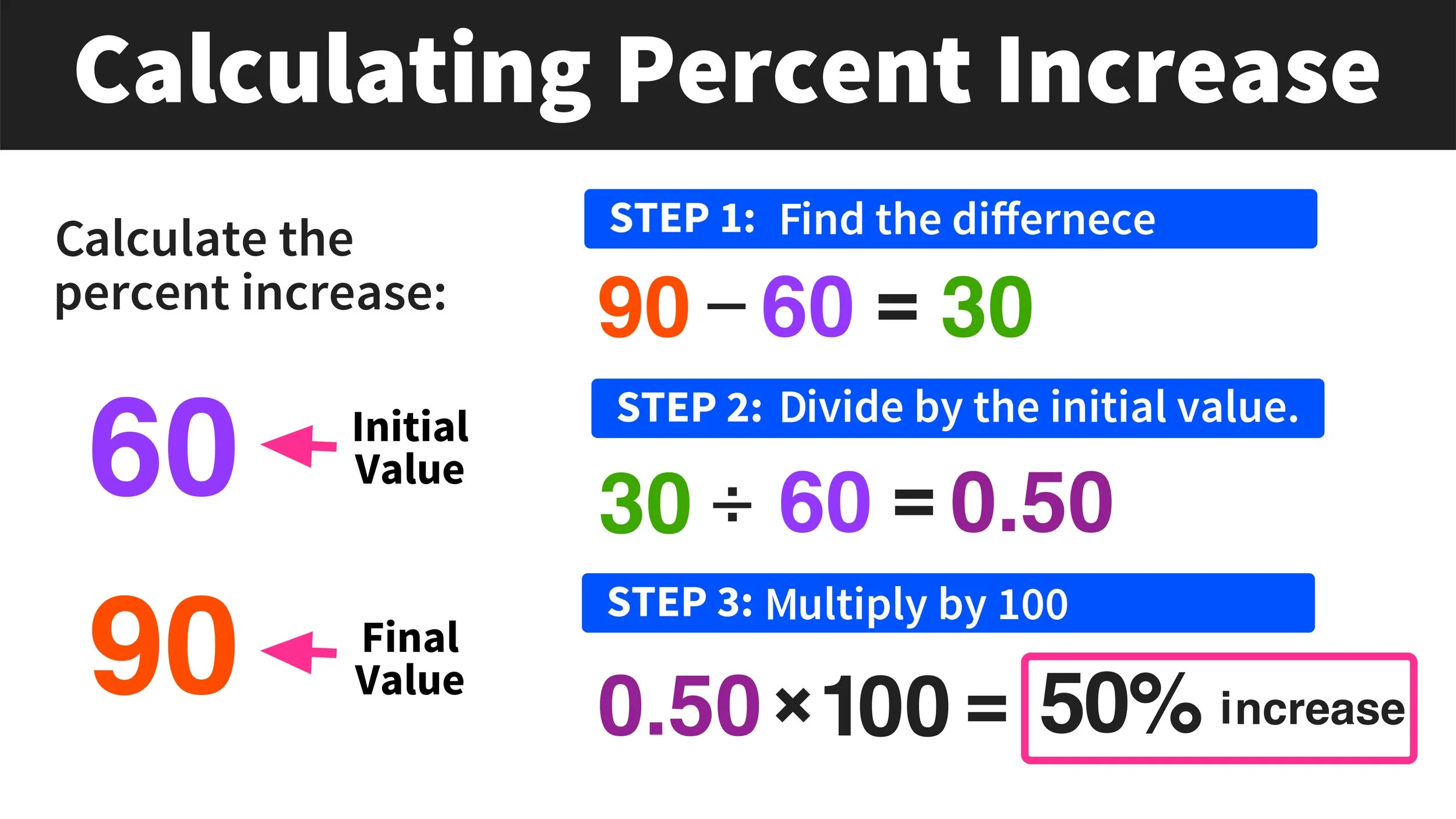
When evaluating an investment over several years, a simple percentage increase can be misleading. For example, if an investment grows by 50% over five years, it does not mean it grew by 10% each year. This is due to the nature of compounding.
To calculate the “true” percent, investors look at the Compound Annual Growth Rate (CAGR). This metric provides a smoothed annual rate of return, accounting for the reality that gains in the second year are calculated on the higher balance of the first year. Understanding this distinction is vital for personal finance: it allows you to compare a volatile stock market return against the steady, guaranteed percentage of a high-yield savings account or a government bond.
The Impact of Compound Interest on Long-Term Wealth
Albert Einstein famously referred to compound interest as the “eighth wonder of the world.” From a mathematical perspective, “taking a percent” through compounding means you are earning interest on your interest.
If you invest $10,000 at a 7% annual return, you earn $700 in the first year. In the second year, you aren’t just earning 7% on your original $10,000; you are earning 7% on $10,700. Over 30 years, this percentage-based growth creates an exponential curve. Financial literacy involves recognizing that a small difference in percentage—say, the difference between a 1% management fee and a 0.25% fee—can result in hundreds of thousands of dollars in lost wealth over a lifetime due to the erosion of compounding potential.
Mastering Profit Margins and Business Ratios
For entrepreneurs and corporate executives, percentages are the primary tools used to gauge operational efficiency. Simply looking at “revenue” is a vanity metric; the “percent” is where the truth lies.

Gross vs. Net Profit Margin: Navigating the P&L
The Gross Profit Margin is calculated by taking total revenue, subtracting the Cost of Goods Sold (COGS), and dividing that result by the total revenue. This percentage tells you how efficiently a company is producing its products.
However, the Net Profit Margin is the “bottom line” percentage. It accounts for all expenses: taxes, interest, marketing, and administrative costs. A company might have a massive 70% gross margin but a slim 5% net margin. By “taking the percent” of each expense category relative to total revenue, a business owner can identify exactly where capital is leaking and which departments are over-leveraged.
Markup vs. Margin: Avoiding the Common Entrepreneurial Trap
One of the most frequent financial errors made by new business owners is confusing markup with margin. If you buy an item for $100 and want to make a 25% profit, you might be tempted to mark it up by 25% to $125. However, your profit margin in this scenario is actually only 20% ($25 profit divided by $125 selling price).
To achieve a true 25% margin, you must divide the cost by the reciprocal of the desired margin (100 – 25 = 75). In this case, $100 / 0.75 = $133.33. Understanding how to take the correct percentage when pricing products ensures that a business remains solvent and profitable.
Tax Planning and Deductions: Taking the Right Percent
In the realm of personal and business finance, “taking a percent” is also the mechanism by which the state collects revenue. Effective tax planning is essentially the art of managing these percentages to retain as much capital as possible.
Effective Tax Rate vs. Marginal Tax Rate
The “tax bracket” you fall into is your marginal tax rate—the percentage paid on the last dollar you earned. However, because of progressive tax systems, your effective tax rate is the actual percentage of your total income that goes to the government.
Sophisticated taxpayers focus on lowering their effective rate by utilizing deductions and credits. If you earn $100,000 and the government “takes” $20,000, your effective rate is 20%, regardless of whether your top marginal bracket is 24%. By understanding these percentages, you can make informed decisions about contributing to pre-tax accounts like a 401(k), which effectively lowers the percentage of your income subject to taxation.
Strategies for Minimizing Tax Liability Through Percentages
Asset location and capital gains percentages are also crucial. Long-term capital gains are often taxed at a lower percentage (e.g., 0%, 15%, or 20%) than ordinary income. By strategically “taking” profits at the right time—holding an asset for more than a year—you can significantly change the percentage of the gain you keep versus the percentage you surrender to the IRS. This is the essence of wealth preservation.
Psychological Finance: The Power of Proportional Thinking
Finally, the most successful individuals use percentages to govern their behavioral finance. Rather than thinking in absolute dollar amounts, they think in proportions. This levels the playing field, making financial management scalable regardless of income level.
The 50/30/20 Rule for Personal Budgeting
A popular financial framework involves taking specific percentages of your net income for different purposes: 50% for needs (housing, utilities), 30% for wants (entertainment, dining), and 20% for savings and debt repayment.
Thinking in percentages prevents “lifestyle creep.” If you receive a raise, the absolute dollar amounts in each category increase, but the percentages stay the same. This disciplined approach to “taking a percent” for your future self ensures that as your income grows, your wealth grows alongside it, rather than just your expenses.
Risk Assessment: Calculating Percentage-Based Stop Losses
In trading and investing, risk management is defined by percentages. Professional traders often use a “2% Rule,” where they never risk more than 2% of their total account equity on a single trade. By calculating the percentage distance between their entry price and their “stop loss” price, they can determine the exact position size to take. This mathematical rigor prevents a single bad decision from wiping out a portfolio.
Conclusion
To “take a percent” is to exercise control over your financial destiny. It is the bridge between raw data and actionable insight. By mastering the calculation of returns, the nuances of profit margins, the complexities of tax rates, and the discipline of proportional budgeting, you transform money from a source of stress into a tool for growth. In the modern economy, wealth is not just about how much you make; it is about understanding the percentages of what you keep, what you grow, and what you risk. Professional financial management is, ultimately, the mastery of the ratio.
aViewFromTheCave is a participant in the Amazon Services LLC Associates Program, an affiliate advertising program designed to provide a means for sites to earn advertising fees by advertising and linking to Amazon.com. Amazon, the Amazon logo, AmazonSupply, and the AmazonSupply logo are trademarks of Amazon.com, Inc. or its affiliates. As an Amazon Associate we earn affiliate commissions from qualifying purchases.