
Market volatility is an inherent characteristic of the financial world, yet when the screens turn red and indices like the S&P 500 or the Dow Jones Industrial Average take a tumble, investors naturally seek clarity. Understanding “why the stock market is down today” requires looking beyond a single headline. It involves a sophisticated interplay of macroeconomic data, geopolitical shifts, corporate health, and the often-unpredictable nature of human psychology.
For the disciplined investor, a market downturn is not merely a moment of concern but a period of analysis. By dissecting the fundamental drivers of market movement, one can distinguish between a short-term correction and a long-term shift in economic fundamentals.
Macroeconomic Drivers: The Influence of Monetary Policy and Inflation
The most frequent catalyst for broad market sell-offs in the modern era is the shift in macroeconomic indicators, specifically those related to inflation and the subsequent reactions of central banks. The stock market is essentially a forward-looking mechanism that prices in the future value of cash flows. When the macroeconomic environment shifts, those valuations must be recalculated.
The Role of Interest Rates and the Federal Reserve
Central banks, such as the Federal Reserve in the United States, use interest rates as their primary tool to manage economic growth and control inflation. When the “cost of money” increases, the stock market often reacts negatively. Higher interest rates mean that it becomes more expensive for companies to borrow money for expansion. Furthermore, higher rates increase the “discount rate” used in financial models to value future earnings. When the discount rate rises, the present value of those future earnings drops, leading to a decline in stock prices—particularly for high-growth sectors like technology.
Inflationary Pressures and Purchasing Power
Inflation is the silent predator of market stability. When the Consumer Price Index (CPI) or the Producer Price Index (PPI) comes in higher than anticipated, it signals that the purchasing power of the currency is eroding. For businesses, inflation means higher input costs—raw materials, labor, and logistics. If a company cannot pass these costs on to consumers, its profit margins shrink. Investors, sensing this impending squeeze on profitability, may sell off shares to protect their capital, leading to a down day in the markets.
Bond Yields and the Equity Risk Premium
There is a constant tug-of-war between the bond market and the stock market. When government bond yields rise, they offer a “risk-free” alternative to stocks. If an investor can get a guaranteed 4% or 5% return on a Treasury bond, they are less likely to take a risk on a volatile stock unless the potential return is significantly higher. This is known as the equity risk premium. As yields climb, money often flows out of equities and into fixed-income assets, putting downward pressure on stock prices.
Geopolitical Instability and Global Economic Health
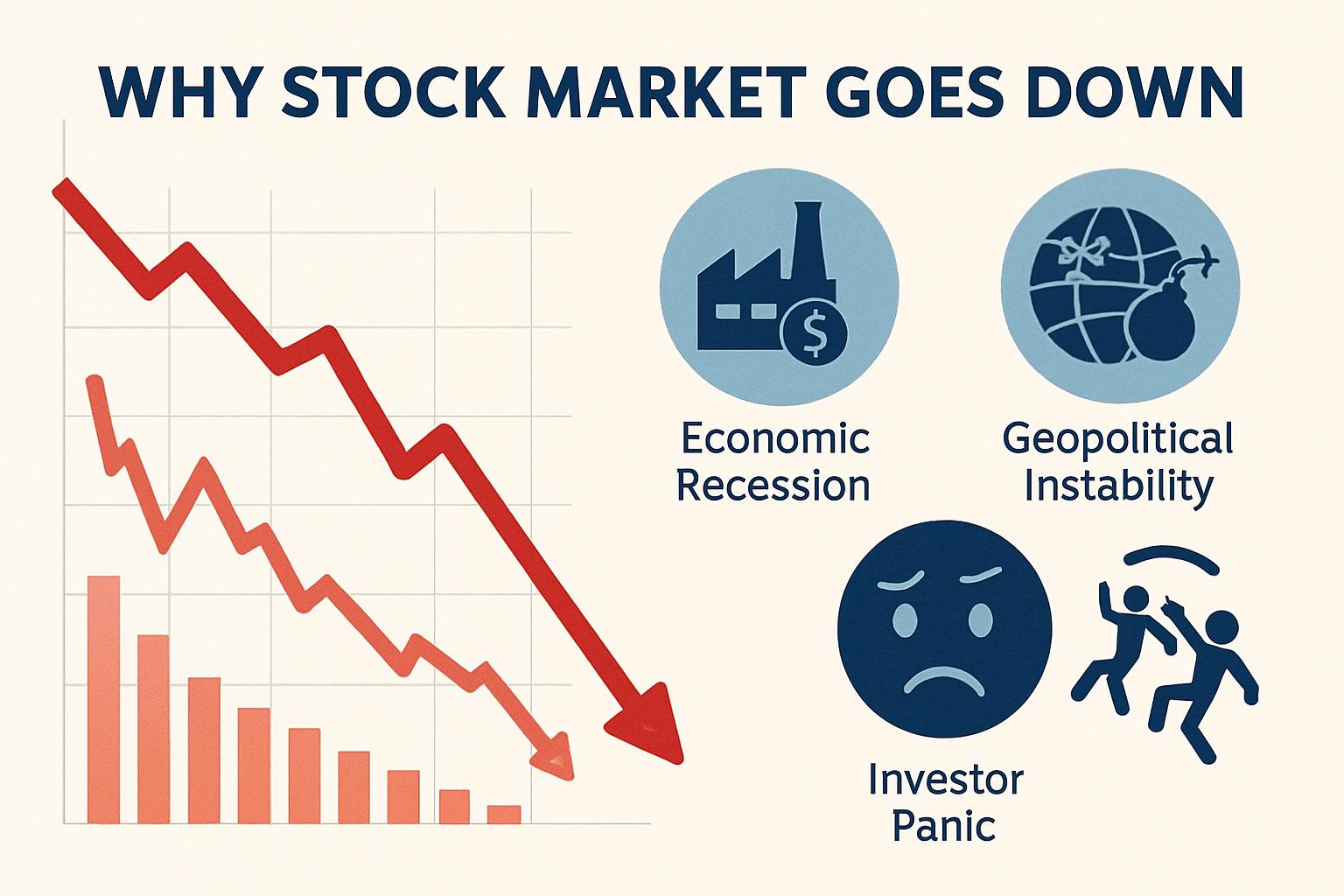
The stock market does not operate in a vacuum; it is a global ecosystem. Events occurring halfway across the world can have an immediate and profound impact on domestic trading floors. Uncertainty is the enemy of the market, and geopolitical conflict is the ultimate source of uncertainty.
Energy Costs and Supply Chain Disruptions
Geopolitical tensions in oil-rich regions or key manufacturing hubs can lead to immediate spikes in energy prices and supply chain bottlenecks. Because energy is a fundamental input for almost every industry, a surge in crude oil or natural gas prices acts as a de facto tax on both corporations and consumers. When investors anticipate that supply chains will be hindered or that fuel costs will eat into corporate earnings, a market-wide sell-off is often the result.
Trade Relations and Regulatory Shifts
The global economy is built on a complex web of trade agreements. Sudden shifts in trade policy, such as the imposition of tariffs or the implementation of export restrictions, can disrupt the revenue streams of multinational corporations. Additionally, regulatory crackdowns in major economies—whether they concern antitrust laws, data privacy, or environmental standards—can lead to sector-specific downturns that eventually spill over into the broader market.
Currency Fluctuations and International Revenue
For many companies listed on major exchanges, a significant portion of their revenue is generated abroad. When the domestic currency (such as the USD) strengthens significantly against other currencies, those international earnings are worth less when converted back into the home currency. This “currency headwind” can lead to earnings misses, prompting investors to reassess the value of global brands and contribute to a downward trend in the index.
Corporate Earnings and Market Sentiment
While macro factors set the stage, the individual performance of companies provides the script. Earnings season is a critical period where the “hypothetical” value of a company meets the “reality” of its financial statements.
The Impact of “Guidance” and Growth Forecasts
A company can report record-breaking profits and still see its stock price plummet. This often happens because of “guidance”—the company’s forecast for its future performance. If management expresses caution about the upcoming quarters, citing slowing demand or rising costs, investors will often “sell the news.” The market is always looking six to twelve months into the future; if the outlook is dim, the current price will adjust downward to reflect that new reality.
Investor Psychology and the “Herd Mentality”
The stock market is driven by two primary emotions: fear and greed. When a few major players begin to sell, it can trigger a domino effect. As prices drop, “stop-loss” orders are triggered, which leads to more selling, creating a self-fulfilling prophecy of downward momentum. This herd mentality can cause the market to overreact to news, leading to “oversold” conditions where the price of a stock falls far below its intrinsic value simply because of panic.
Sector Rotations and Profit Taking
Sometimes the market is down not because of bad news, but because of a “sector rotation.” Investors who have seen significant gains in a particular area—such as technology or healthcare—may decide to “take profits” and move their capital into more defensive sectors like utilities or consumer staples. If the sectors being sold have a high market capitalization, their decline can drag down the entire index, even if the underlying economy remains relatively healthy.
Technical Factors and Market Structure
In the modern era, the stock market is increasingly dominated by algorithms and institutional frameworks that can exacerbate downward movements. Understanding these technicalities is key to understanding sudden, sharp drops.
Algorithmic Trading and High-Frequency Execution
A vast majority of daily trading volume is now executed by computers running complex algorithms. These programs are often designed to sell when certain technical levels are breached (such as a 50-day or 200-day moving average). When a market begins to dip, these algorithms can execute thousands of trades in milliseconds, accelerating the decline and creating “flash” movements that might seem disconnected from fundamental news.
Margin Calls and Liquidity Crunches
Many institutional and individual investors trade on “margin,” meaning they borrow money from brokers to buy more stocks. When the market drops to a certain level, brokers issue “margin calls,” requiring investors to either deposit more cash or sell their positions immediately. This forced selling adds an immense amount of downward pressure on the market, as investors are compelled to sell regardless of whether they believe in the long-term value of the asset.
Options Expiration and Hedging
The derivatives market (options and futures) has a massive influence on the underlying stock market. On days when large amounts of options contracts expire, market makers—the large institutions that facilitate these trades—must rebalance their hedges. This process can lead to significant volatility. If the market is already leaning bearish, the delta-hedging activities of these large institutions can inadvertently push prices even lower.
Navigating a Downward Market: Strategies for the Disciplined Investor
While seeing the market down can be unsettling, it is an essential part of the economic cycle. Successful investing is often defined not by how one performs during a bull market, but by how one manages their portfolio during a downturn.
The Importance of Diversification and Asset Allocation
The most effective defense against a down market is a well-diversified portfolio. By spreading investments across different asset classes—stocks, bonds, real estate, and commodities—and different geographical regions, an investor ensures that a downturn in one specific area does not liquidate their entire wealth. Diversification is the only “free lunch” in finance, providing a buffer against the volatility of any single sector.
Long-Term Perspective and Dollar-Cost Averaging
For those with a long-term time horizon, market downturns are often viewed as “sales.” Dollar-cost averaging—the practice of investing a fixed amount of money at regular intervals—allows investors to buy more shares when prices are low and fewer shares when prices are high. Over time, this lowers the average cost per share and removes the emotional stress of trying to “time the market.” Historically, the stock market has recovered from every single downturn it has ever faced; patience is frequently the most profitable virtue.
Rebalancing and Quality Assessment
A down market is an excellent time to conduct a “portfolio audit.” It allows investors to see which of their holdings are resilient and which are failing. Rebalancing involves selling assets that have performed well and buying those that have underperformed to maintain a target asset allocation. This forces the investor to “buy low and sell high,” adhering to the most fundamental rule of wealth creation. Focus on “quality” companies—those with strong balance sheets, consistent cash flow, and competitive moats—as these are the entities most likely to emerge stronger once the market stabilizes.
In conclusion, when the stock market is down today, it is rarely the result of a single factor. It is a confluence of interest rate expectations, geopolitical ripples, corporate guidance, and the technical mechanics of the trade. By understanding these pillars, an investor can move from a state of reactionary fear to one of strategic action, recognizing that volatility is not a barrier to wealth, but a necessary component of it.
aViewFromTheCave is a participant in the Amazon Services LLC Associates Program, an affiliate advertising program designed to provide a means for sites to earn advertising fees by advertising and linking to Amazon.com. Amazon, the Amazon logo, AmazonSupply, and the AmazonSupply logo are trademarks of Amazon.com, Inc. or its affiliates. As an Amazon Associate we earn affiliate commissions from qualifying purchases.