
For the modern investor, the stock market often feels like a living, breathing entity that never sleeps. In an era of 24/7 cryptocurrency trading and globalized digital finance, the sight of a “Market Closed” notification on a brokerage app can be jarring. Whether you are a seasoned day trader or a long-term retirement planner, understanding the cadence of the financial markets is essential for maintaining a disciplined investment strategy.
When the stock market is closed, it is typically due to one of three primary reasons: a scheduled federal holiday, a weekend, or—in rarer, more dramatic cases—a technical or regulatory intervention known as a circuit breaker. This article explores the mechanics behind these pauses, why they are necessary for financial stability, and how you can use market downtime to refine your personal finance strategy.
The Standard Calendar: Why Federal Holidays and Weekends Dictate Trading Hours
The most common reason the stock market is closed today is the adherence to a strictly regulated annual calendar. The New York Stock Exchange (NYSE) and the Nasdaq generally follow the federal holiday schedule of the United States, but with a few specific nuances designed to ensure market liquidity.
The Rationale for Scheduled Closures
The stock market does not close simply to give traders a vacation. These breaks are fundamental to the “Money” ecosystem. They allow institutional banks, clearinghouses, and regulatory bodies to perform deep-system maintenance and reconciliations. Furthermore, market closures prevent “thin trading,” which occurs when there aren’t enough participants to ensure fair pricing. By concentrating trading into specific hours, the exchanges ensure that buy and sell orders meet in a high-volume environment, reducing the “spread” and protecting investors from extreme price manipulation.
Key Holidays on the Financial Calendar
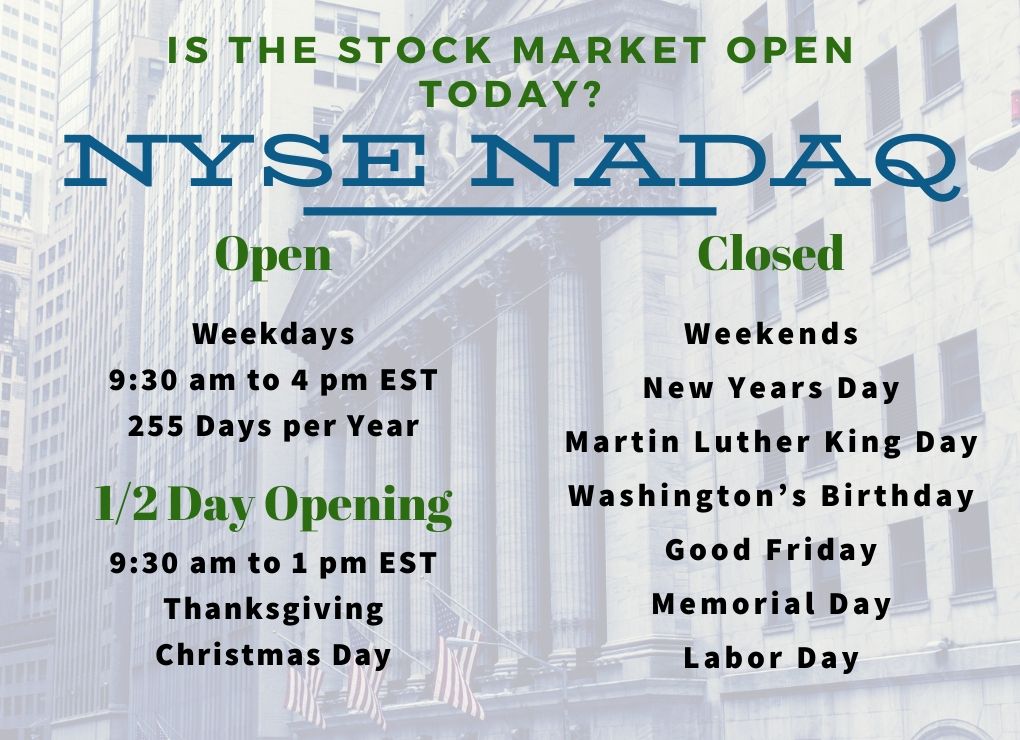
While most federal holidays result in a full closure, some occasions—like the day after Thanksgiving or Christmas Eve—often feature an “early close” at 1:00 PM EST. The standard list of full-day closures includes:
- New Year’s Day
- Martin Luther King, Jr. Day
- Presidents’ Day
- Good Friday (Note: This is a market holiday, though not a federal one)
- Memorial Day
- Juneteenth National Independence Day
- Independence Day
- Labor Day
- Thanksgiving Day
- Christmas Day
Understanding this schedule allows investors to anticipate periods of low liquidity. Often, the days leading up to a major holiday see reduced trading volume, which can lead to increased volatility. For the disciplined investor, knowing the calendar is the first step in avoiding “panic” trades during thin market windows.
Beyond the Calendar: Market-Wide Circuit Breakers and Volatility Halts
Sometimes, the market is closed not because of a holiday, but because of an emergency intervention. If the stock market suddenly stops mid-day during a period of intense selling, you are likely witnessing the “Circuit Breaker” mechanism in action.
The History and Purpose of the Circuit Breaker
Following the “Black Monday” crash of 1987, regulators realized that high-speed, emotional selling could create a feedback loop that destroys value regardless of economic fundamentals. To combat this, they implemented market-wide circuit breakers. These are temporary trading halts designed to give investors time to breathe, digest information, and make rational decisions rather than emotional ones.
The Three Levels of Market Halts
In the U.S. markets, the S&P 500 index serves as the benchmark for these halts. There are three specific thresholds:
- Level 1 (7% Drop): If the S&P 500 falls 7% below the previous day’s close before 3:25 PM, trading is halted for 15 minutes.
- Level 2 (13% Drop): If the decline reaches 13% before 3:25 PM, trading is halted for another 15 minutes.
- Level 3 (20% Drop): If the market falls 20% at any time during the day, the market is closed for the remainder of the session.
For an investor, these halts are a signal of extreme systemic stress. While they can be frightening, they are a vital “Money” tool designed to protect the integrity of your capital by preventing a total freefall.

Technical and Extraordinary Closures: From Glitches to Force Majeure
While rare, the stock market may close due to circumstances beyond human control or technical failures. These “black swan” events can disrupt the financial system and require immediate intervention to prevent unfair advantages or systemic collapse.
Technical Glitches and Cybersecurity
In the digital age, the “market” is essentially a massive network of interconnected servers. In 2013, a technical glitch famously halted trading on the Nasdaq for over three hours. More recently, individual exchanges have faced brief pauses due to data feed errors. When the pricing data becomes unreliable, the exchange must close to prevent “stale” prices from being used in trades, which would unfairly disadvantage retail investors.
Natural Disasters and National Emergencies
History provides several examples of the market closing for extended periods due to external crises. The most notable in recent history was the four-day closure following the September 11 attacks in 2001. Similarly, in 2012, Hurricane Sandy caused a two-day closure—the first time since 1888 that the NYSE closed for two consecutive days due to weather.
In these instances, the closure is a matter of safety and infrastructure. If the financial district in Manhattan cannot physically operate, or if the digital infrastructure is compromised, the market closes to ensure that all participants have equal access once operations resume.
Strategic Moves: What to Do When the Market Is Closed
For many, a closed market is a source of frustration. However, for a sophisticated wealth-builder, market downtime is a gift. It is an opportunity to step back from the “noise” of ticking candles and green or red numbers to focus on the “signal” of long-term financial health.
Perform a Portfolio Audit
When you cannot execute trades, you are forced to be an observer. This is the perfect time to review your asset allocation. Are you over-leveraged in one sector? Does your current portfolio align with your risk tolerance? Use the quiet hours to analyze your holdings without the temptation to make a “reactive” trade based on the day’s headlines.
Research and Fundamental Analysis
The best investments are often found when the market is quiet. Use the closure to read through 10-K filings, analyze quarterly earnings reports, or study the macro-economic trends affecting your niche. Developing a “Watch List” during market closures ensures that when the opening bell rings, you are acting on a well-researched plan rather than an impulsive whim.
Focus on Passive Income Streams
If the closure makes you anxious about your “Money” growth, it may be a sign that you are too dependent on active trading. Use this time to explore side hustles, high-yield savings accounts, or dividend-reinvestment plans (DRIPs). Diversifying your income so that it doesn’t solely rely on the 9:30 AM to 4:00 PM trading window is a hallmark of true financial independence.
Conclusion: The Importance of a Long-Term Perspective
The question “why is the stock market closed today?” often stems from a desire for immediate action. However, the most successful investors understand that wealth is built over decades, not days. Market closures—whether scheduled for a holiday or triggered by a circuit breaker—are reminders that the financial system requires balance, maintenance, and moments of reflection.
By understanding the regulatory, historical, and strategic reasons behind these pauses, you can transform a “Market Closed” notification from a hurdle into an advantage. Use the silence of the trading floor to sharpen your financial literacy, refine your investment thesis, and remind yourself that in the world of money, sometimes the best move is no move at all. When the market eventually reopens, you will be better prepared, more informed, and more disciplined than the crowd.
aViewFromTheCave is a participant in the Amazon Services LLC Associates Program, an affiliate advertising program designed to provide a means for sites to earn advertising fees by advertising and linking to Amazon.com. Amazon, the Amazon logo, AmazonSupply, and the AmazonSupply logo are trademarks of Amazon.com, Inc. or its affiliates. As an Amazon Associate we earn affiliate commissions from qualifying purchases.