
In the modern financial landscape, few companies have commanded as much attention—and capital—as NVIDIA. As the primary architect of the hardware powering the artificial intelligence revolution, NVIDIA has transitioned from a niche gaming hardware manufacturer to a global economic bellwether. However, the trajectory of its stock price is rarely a straight line upward. Even the most dominant market leaders face periods of correction, consolidation, and “red days” that leave investors questioning the long-term thesis.
Understanding why NVIDIA stock experiences downward pressure requires a deep dive into the mechanics of the stock market, the nuances of valuation, and the broader macroeconomic environment. While the company’s underlying technology remains transformative, its stock price is subject to the rigorous, often cold, logic of institutional finance and market psychology.
Valuation Pressures and the “Perfection Price”
One of the most common reasons for a decline in NVIDIA’s share price has little to do with the company’s performance and everything to do with the math of valuation. When a stock undergoes a historic rally, it often begins to trade at a premium that implies near-perfection in its future execution.
Extreme P/E Ratios and Mean Reversion
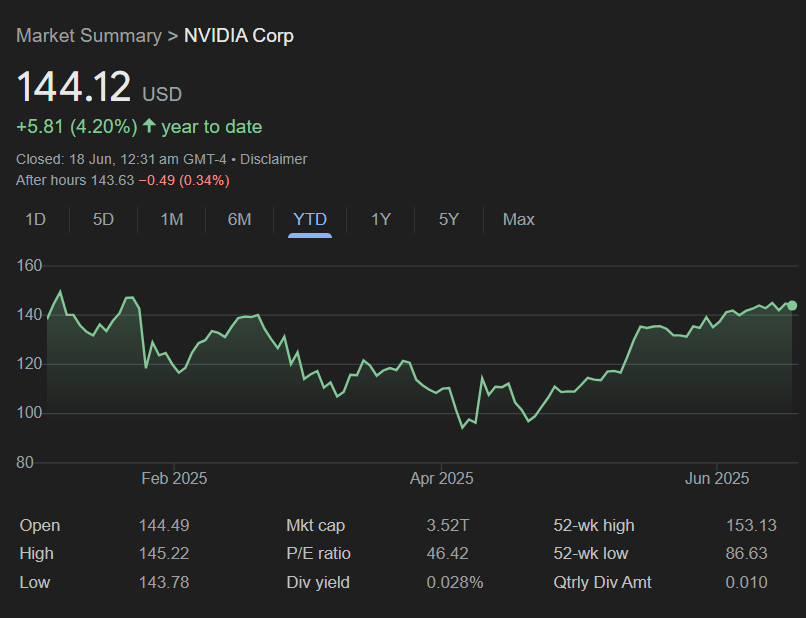
Investors frequently measure a company’s value through the Price-to-Earnings (P/E) ratio. Throughout its ascent, NVIDIA has often traded at multiples significantly higher than the S&P 500 average or even its peers in the semiconductor industry. When a stock’s valuation becomes “stretched,” it becomes hyper-sensitive to any news. Even if NVIDIA reports record-breaking profits, the stock may fall because the market had already “priced in” those results and more. This phenomenon is known as “selling the news.” When the valuation reaches a point where future growth cannot possibly accelerate further, the stock undergoes mean reversion, pulling back to more sustainable levels.
The High Bar of Earnings Expectations
For NVIDIA, “good” earnings are no longer enough to satisfy the market. Because the company has consistently beaten analyst estimates by wide margins, the “whisper numbers”—the unofficial expectations held by institutional traders—are often much higher than the public forecasts. If NVIDIA provides a forward guidance that is merely “strong” rather than “spectacular,” the market perceives it as a slowdown. This creates a paradoxical situation where a company can report 100% year-over-year revenue growth and still see its stock price drop because the market was secretly hoping for 110%.
Macroeconomic Headwinds and Interest Rate Sensitivity
NVIDIA does not exist in a vacuum; it is part of a global financial ecosystem that is heavily influenced by the Federal Reserve and international economic policy. As a high-growth “tech” stock, NVIDIA is particularly sensitive to the cost of money.
Federal Reserve Policy and the Cost of Capital
The relationship between interest rates and growth stocks is generally inverse. When the Federal Reserve maintains high interest rates to combat inflation, the “discount rate” used in financial models to value future cash flows increases. Since much of NVIDIA’s perceived value lies in the massive profits it is expected to generate years from now, higher interest rates make those future dollars less valuable in today’s terms. Consequently, when inflation data comes in higher than expected or the Fed signals a “higher for longer” stance on rates, NVIDIA’s stock often faces a sell-off as investors recalibrate their risk-reward calculations.
Rotational Shifts from Growth to Value
The stock market often moves in cycles of “sector rotation.” Large institutional funds—which manage trillions of dollars—frequently shift their allocations based on the economic outlook. If there are signs of a slowing economy or if defensive sectors like utilities and healthcare become more attractive, fund managers may trim their positions in high-flying tech names like NVIDIA to lock in gains and move that capital into safer, dividend-paying assets. This institutional rebalancing can create significant downward pressure regardless of NVIDIA’s individual fundamentals.
Supply Chain Normalization and Regulatory Scrutiny
As a hardware company, NVIDIA’s revenue is inextricably linked to its ability to manufacture, ship, and sell physical chips. Any friction in this pipeline, or any regulatory barrier to its markets, acts as a catalyst for a stock decline.
Export Restrictions and the China Market Factor
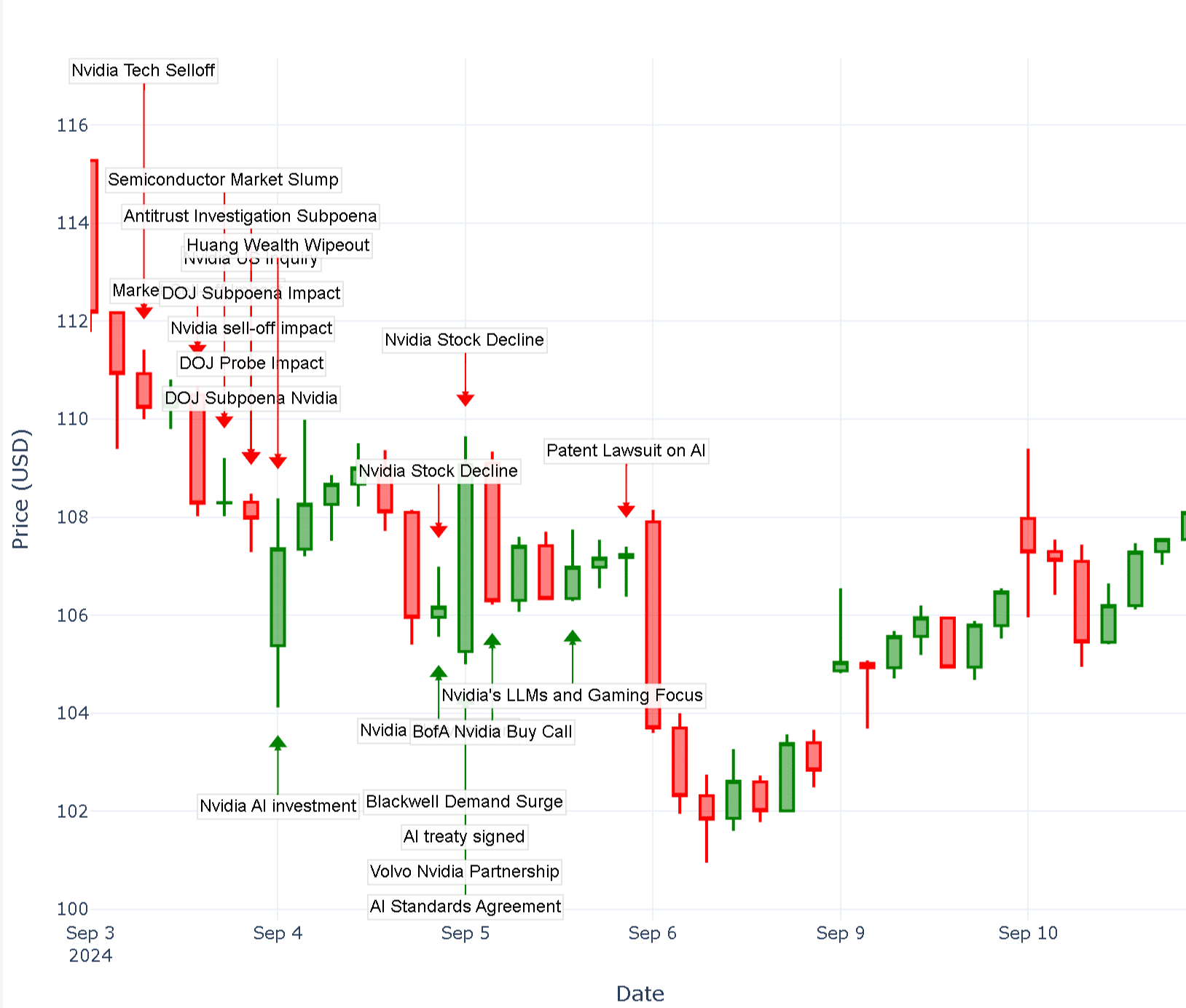
Geopolitics play a massive role in NVIDIA’s valuation. China has historically represented a significant portion of the global demand for high-performance computing and gaming chips. When the U.S. Department of Commerce imposes or tightens export controls—restricting NVIDIA from selling its most advanced AI chips (like the H100 or Blackwell series) to Chinese entities—it creates an immediate revenue vacuum. Even if NVIDIA develops “downgraded” versions to comply with regulations, the uncertainty regarding future restrictions leads to a “risk premium” being applied to the stock, dragging the price down.
The Sustainability of Triple-Digit Growth
There is a persistent debate among financial analysts regarding the “sustainability” of the AI infrastructure build-out. Bears (investors who expect the price to fall) argue that we are currently in a period of “hyper-provisioning,” where big tech companies like Microsoft, Meta, and Google are buying as many chips as possible to avoid falling behind. The fear is that once these data centers are built, demand will hit a “plateau.” Any indication that capital expenditure (CapEx) from these major customers is slowing down is viewed as a signal that the peak of the cycle has passed, leading to proactive selling by investors.
Market Psychology and the Anatomy of a Pullback
Finally, the movement of NVIDIA’s stock is driven by the collective psychology of millions of traders. In a market driven by both algorithms and human emotion, momentum works in both directions.
Profit-Taking after Historic Rallies
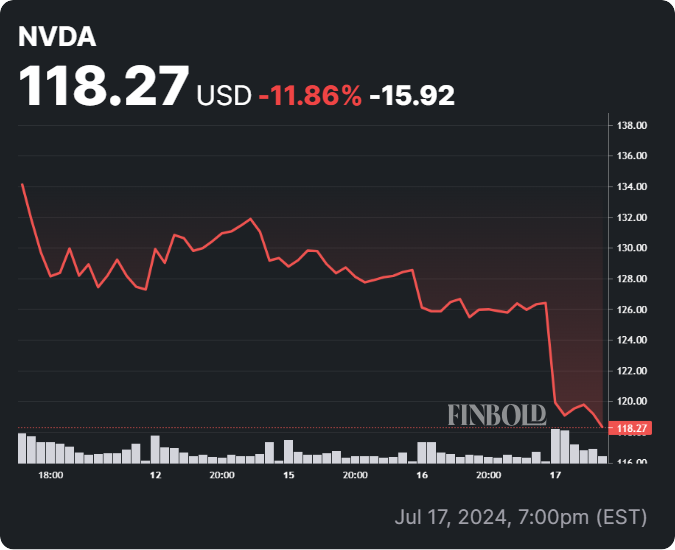
It is a fundamental rule of investing: nothing goes up forever. Investors who bought NVIDIA shares years, or even months, ago often sit on life-changing gains. When the stock reaches a psychological milestone or when the broader market looks shaky, these investors may decide to “take chips off the table.” When a large number of participants decide to realize their profits simultaneously, it creates a surge in sell orders that can trigger a cascading decline. This is often healthy for a stock’s long-term trajectory, as it “shakes out” weak hands and creates a new base for future growth, but in the short term, it results in a sea of red on the ticker.
The Impact of Concentration Risk and ETF Rebalancing
NVIDIA’s massive market capitalization means it carries a heavy weight in major indices like the S&P 500 and the Nasdaq-100. It is also a top holding in countless Exchange Traded Funds (ETFs). This creates “concentration risk.” If an ETF sees large outflows (investors withdrawing money from the fund), the fund manager is forced to sell the underlying stocks in proportion to their weight. Because NVIDIA is such a large part of these funds, it is often sold in massive quantities during general market downturns, even if the reason for the downturn has nothing to do with the semiconductor industry.
Conclusion: Perspective on the Downward Trend
When NVIDIA stock is down, it is rarely due to a singular failure of the company’s vision or product quality. Instead, it is usually a combination of high-altitude valuations meeting the gravity of macroeconomic reality. For the disciplined investor, these periods of decline are often viewed not as a sign of a failing business, but as a necessary cooling period for an overheated market.
Navigating NVIDIA’s volatility requires an understanding that the stock is a vehicle for speculating on the future of human productivity. While the “Money” side of the equation—P/E ratios, interest rates, and export bans—can cause short-term pain, the underlying story of the company remains tied to its dominance in the most important technological shift of the 21st century. Understanding the “why” behind the dip is the first step in moving from emotional trading to strategic investing.
aViewFromTheCave is a participant in the Amazon Services LLC Associates Program, an affiliate advertising program designed to provide a means for sites to earn advertising fees by advertising and linking to Amazon.com. Amazon, the Amazon logo, AmazonSupply, and the AmazonSupply logo are trademarks of Amazon.com, Inc. or its affiliates. As an Amazon Associate we earn affiliate commissions from qualifying purchases.