
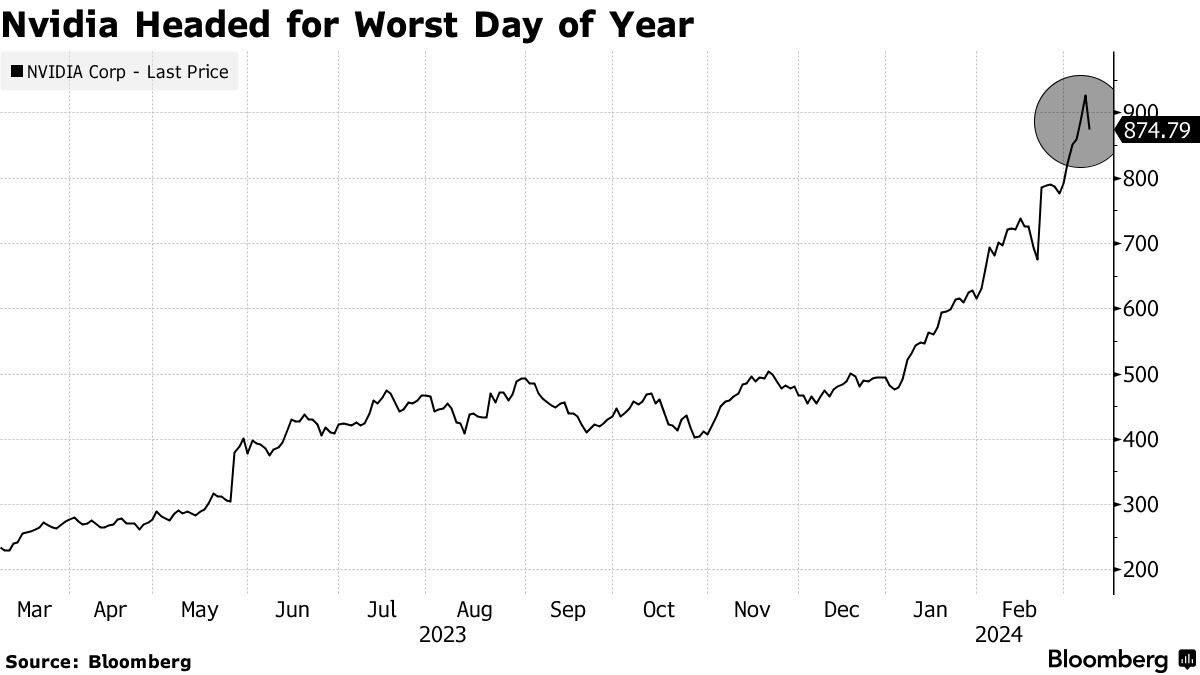
In the realm of modern investing, few names command as much gravity as NVIDIA. Over the past several years, the company has transformed from a niche manufacturer of gaming hardware into the undisputed backbone of the global artificial intelligence revolution. However, even the most meteoric rises are punctuated by periods of turbulence. When investors see “NVDA” flashing red on their dashboards, the immediate question is: Why is NVIDIA dropping?
To understand the downward pressure on NVIDIA’s stock price, one must look beyond the surface-level news. The fluctuations are rarely about a single failed product or a poor earnings report—in fact, NVIDIA has consistently beaten analyst expectations. Instead, the “drop” is usually a complex cocktail of macroeconomic shifts, technical market corrections, and evolving expectations regarding the long-term ROI of AI infrastructure.
1. Macroeconomic Headwinds and Interest Rate Sensitivity
NVIDIA does not exist in a vacuum. As a “growth stock” with a high valuation multiple, its price is hypersensitive to the broader economic environment, particularly the policies dictated by the Federal Reserve.
The “Higher for Longer” Interest Rate Narrative
One of the primary drivers of volatility in the tech sector is the trajectory of interest rates. When interest rates are high, the “discount rate” applied to future cash flows increases. For a company like NVIDIA, whose valuation is based on massive profits expected years into the future, higher rates make those future dollars less valuable today. Whenever economic data suggests that inflation is sticky or that the Federal Reserve will delay rate cuts, investors often rotate out of high-flying tech stocks and into “safer” value plays or fixed-income assets.
Market Rotation and Sentiment Shifts
In the world of institutional finance, “rotation” is a common phenomenon. After a period of extreme outperformance by the “Magnificent Seven” (the group of mega-cap tech stocks including NVIDIA), fund managers often rebalance their portfolios. If NVIDIA has grown to represent a disproportionately large percentage of an index or a specific fund, managers may sell shares simply to manage risk, regardless of the company’s fundamental health. This “sector rotation” often sees capital moving from high-growth technology into underperforming sectors like energy, utilities, or small-cap stocks, creating downward pressure on NVIDIA’s price.
2. Technical Factors: Profit Taking and Mean Reversion
For many retail and institutional investors, the decision to sell NVIDIA isn’t about a lack of faith in AI; it’s about the reality of realized gains.
The Psychology of “Sell the News”
NVIDIA has established a pattern of delivering “beats and raises”—reporting earnings that exceed expectations and raising future guidance. However, the market often prices these expectations in well before the announcement. This leads to a “sell the news” event, where the stock price drops despite a positive report because the “whisper numbers” (the even higher unofficial expectations of traders) weren’t met, or because investors decided it was the perfect time to lock in profits.
Overextension and Support Levels
From a technical analysis perspective, NVIDIA frequently enters “overbought” territory. When a stock’s price moves too far and too fast above its 50-day or 200-day moving averages, it is considered “extended.” Markets have a natural tendency toward mean reversion—a fancy way of saying what goes up must eventually come down to a more sustainable level. When NVIDIA drops, it is often searching for a “floor” or a support level where buyers feel the valuation once again aligns with reality. These corrections are healthy for the long-term trajectory of a stock, as they shake out speculative “weak hands” and allow for a period of consolidation.
3. Fundamental Concerns: The Sustainability of AI Capex
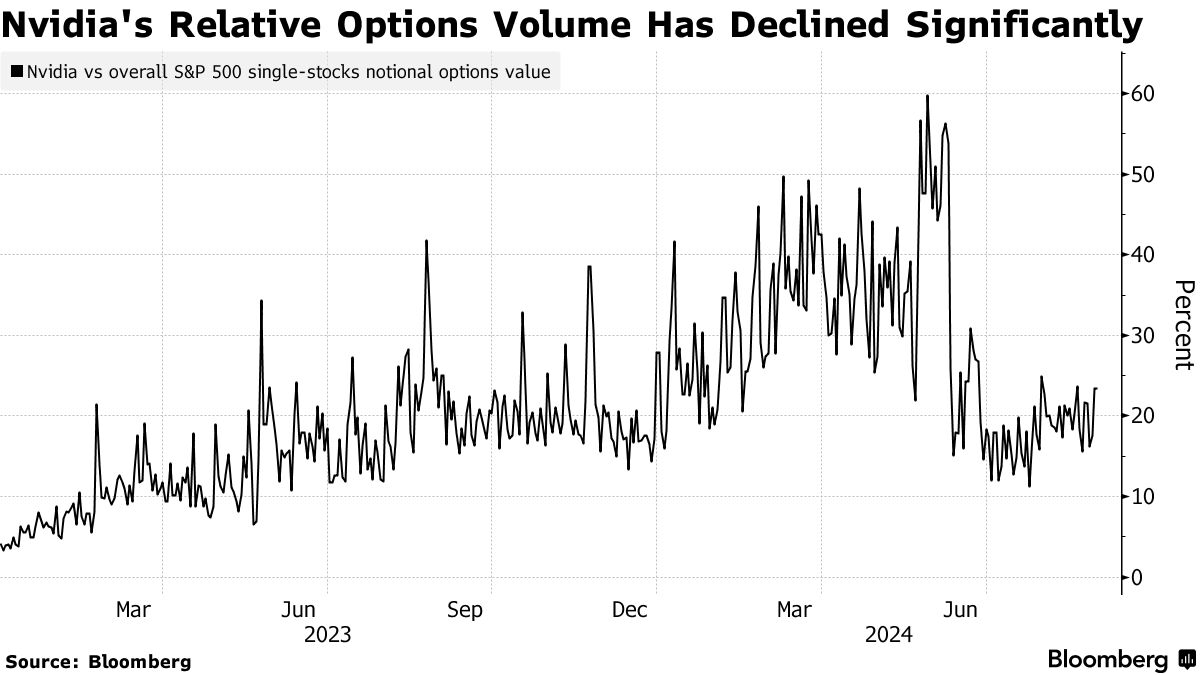
While NVIDIA’s current revenue growth is staggering, the market is a forward-looking machine. Investors are beginning to ask the “trillion-dollar question”: How long can NVIDIA’s customers afford to keep buying these chips?
The ROI of Generative AI
NVIDIA’s primary customers are “Hyperscalers”—companies like Microsoft, Meta, Alphabet, and Amazon. These giants are spending tens of billions of dollars on NVIDIA’s H100 and Blackwell GPUs to build out AI data centers. However, if these companies do not see a clear path to monetizing AI services for their own end-users, they may eventually scale back their capital expenditure (Capex). Any hint in a quarterly report from Microsoft or Meta that they are slowing down their AI spending can cause a localized “crash” in NVIDIA’s stock price as investors fear the peak of the hardware cycle has passed.
Increasing Competitive Pressures
For years, NVIDIA has enjoyed a near-monopoly on high-end AI training chips. However, the landscape is shifting. Competitors like AMD are gaining ground with their MI300 series, and perhaps more significantly, NVIDIA’s own customers are becoming its competitors. Google has its TPUs (Tensor Processing Units), Amazon has Trainium and Inferentia chips, and Meta is developing its own custom silicon. While NVIDIA currently maintains a massive lead through its CUDA software ecosystem, the long-term threat of “in-housing” chip design creates an overhang of uncertainty that can lead to price drops when investors feel the competitive moat is shrinking.
4. Supply Chain Logistics and Geopolitical Friction
As a hardware company, NVIDIA is beholden to the complexities of global manufacturing and international diplomacy. Any friction in these areas manifests almost immediately in the stock price.
The Blackwell Production Cycle
Transitioning from one chip architecture to another is an immense undertaking. Recently, rumors or reports regarding design tweaks or manufacturing delays for the new “Blackwell” architecture have caused jitters. In a high-valuation environment, the market expects perfection. Even a one-quarter delay in shipping a new product line can lead to billions of dollars in “lost” projected revenue for that fiscal year, causing the stock to retreat as analysts recalibrate their spreadsheets.
Export Restrictions and Geopolitical Risk
NVIDIA finds itself at the center of the technological “cold war” between the U.S. and China. The U.S. Department of Commerce has imposed various restrictions on the sale of high-end AI chips to China to prevent military advancement. China historically represented a significant portion of NVIDIA’s revenue. Every time a new regulatory hurdle is announced, or every time tensions flare in the Taiwan Strait (where NVIDIA’s chips are manufactured by TSMC), the “risk premium” on the stock increases. Investors hate uncertainty, and the geopolitical landscape provides it in abundance.
5. Strategic Outlook: Is the Drop a Warning or an Opportunity?
For the disciplined investor, understanding why NVIDIA is dropping is only half the battle; the other half is determining what to do about it.
Valuing Future Growth vs. Current Multiples
When NVIDIA drops, it often brings its Price-to-Earnings (P/E) ratio down to more reasonable levels. Bulls argue that even at high valuations, NVIDIA is “cheap” when you consider its growth rate (the PEG ratio). If the company continues to grow earnings at 100% or more year-over-year, a high P/E is justified. A drop in price might simply be the market’s way of allowing the “E” (earnings) to catch up with the “P” (price).
The Long-Term Bull Case vs. Short-Term Bear Risks
The bear case for NVIDIA is built on the idea of “cyclicality”—that the AI boom is a bubble similar to the fiber-optic buildout of the late 90s, which will eventually lead to a massive glut of unused chips. The bull case, however, posits that we are in the early stages of a “Sovereign AI” era, where every nation-state and every enterprise will require its own AI factory.
In this context, short-term drops are often viewed as “healthy pullbacks” in a multi-year secular bull market. For those focused on personal finance and long-term wealth building, these periods of volatility serve as a reminder of the importance of diversification. Betting everything on a single ticker—even one as dominant as NVIDIA—exposes a portfolio to the specific “idiosyncratic risks” of the semiconductor industry.

Conclusion
NVIDIA is dropping not because the company is failing, but because it is navigating the “weight of expectations.” When a company becomes the proxy for an entire technological era, its stock price ceases to be a simple reflection of profit and loss; it becomes a barometer for global economic sentiment, interest rate policy, and geopolitical stability.
Whether the drop is caused by a rotation into value stocks, concerns over AI monetization, or simple profit-taking after a historic run, the underlying reality remains: NVIDIA is a high-beta stock. It moves faster and harder than the rest of the market. For the savvy investor, these drops are not necessarily a signal to flee, but rather a prompt to analyze the fundamentals, check the macroeconomic pulse, and decide if the long-term thesis for the “AI economy” remains intact. In the world of finance, volatility is the price one pays for the possibility of outsized returns.
aViewFromTheCave is a participant in the Amazon Services LLC Associates Program, an affiliate advertising program designed to provide a means for sites to earn advertising fees by advertising and linking to Amazon.com. Amazon, the Amazon logo, AmazonSupply, and the AmazonSupply logo are trademarks of Amazon.com, Inc. or its affiliates. As an Amazon Associate we earn affiliate commissions from qualifying purchases.