
The resurgence of Bitcoin in the global financial landscape is rarely the result of a single event. Instead, it is the culmination of shifting macroeconomic trends, structural supply constraints, and a fundamental evolution in how institutional capital views digital assets. For years, Bitcoin was relegated to the fringes of speculative finance, but its recent price appreciation signals a transition into a mature asset class. Understanding why Bitcoin went up requires a deep dive into the intersection of traditional monetary policy, technological scarcity, and the psychological shifts of the world’s largest asset managers.
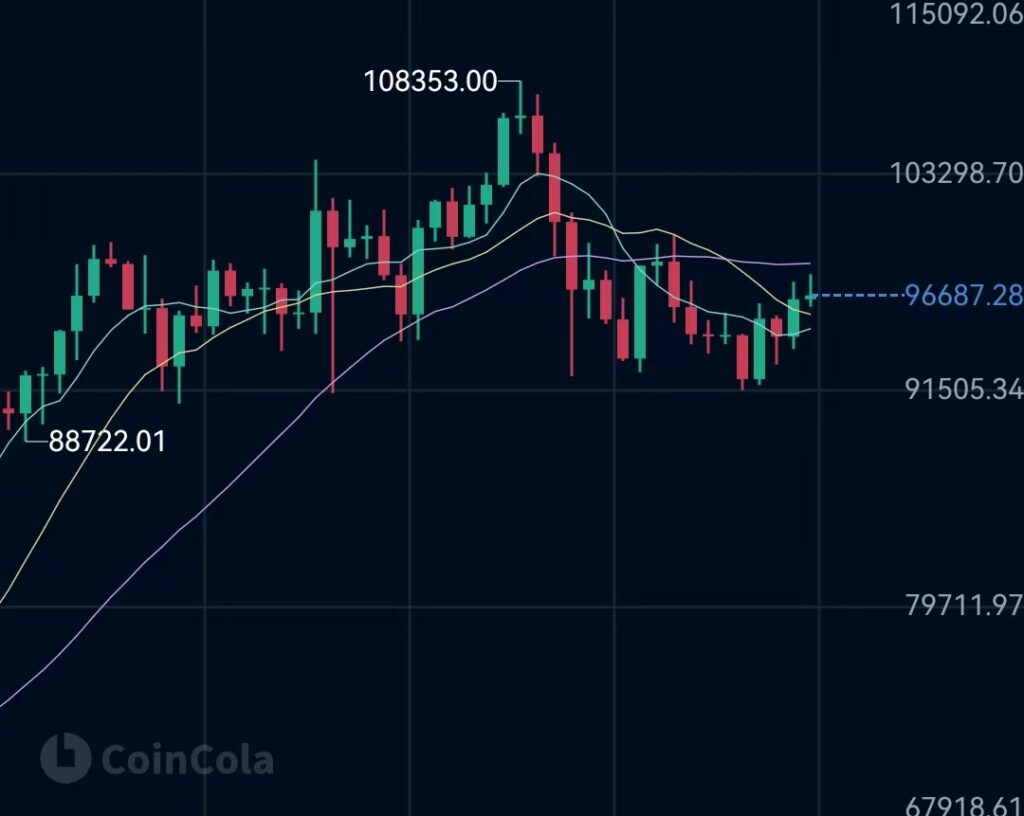
The Institutional Watershed: The Impact of Spot ETFs
The most significant catalyst for Bitcoin’s recent price surge is arguably the structural shift in how the asset is accessed by the traditional financial world. The approval and subsequent launch of Bitcoin Spot Exchange-Traded Funds (ETFs) in the United States marked the end of the “Wild West” era and the beginning of the institutional era.
Bridging the Gap Between Wall Street and the Blockchain
Prior to the launch of spot ETFs, investing in Bitcoin for a traditional institutional fund or a retail investor with a standard brokerage account was fraught with friction. It required managing private keys, dealing with unregulated exchanges, or paying high premiums on closed-end funds. The introduction of ETFs by giants like BlackRock and Fidelity changed the math. By allowing Bitcoin to be held within a regulated investment vehicle, billions of dollars in “sidelined” capital suddenly had a green light. This influx of liquidity created a massive demand shock. When trillions of dollars in assets under management (AUM) are suddenly granted a regulated pathway to allocate even 1% to a new asset, the upward pressure on price is inevitable.
The “BlackRock Effect” and Market Credibility
Beyond the literal flow of capital, the endorsement of Bitcoin by the world’s largest asset managers provided a level of psychological “de-risking.” For a decade, the primary bear case against Bitcoin was the potential for a total regulatory ban or its dismissal as a “fad.” When Larry Fink, CEO of BlackRock, began describing Bitcoin as an “international asset” and a “flight to quality,” the narrative shifted from speculation to wealth preservation. This credibility allowed pension funds, sovereign wealth funds, and family offices to begin viewing Bitcoin not as a gamble, but as a legitimate component of a diversified modern portfolio.
Programmatic Scarcity: The Mechanics of the Halving
While demand was being catalyzed by ETFs, the supply side of the equation was undergoing its own scheduled tightening. Bitcoin’s monetary policy is governed by code, not by a central bank, and its most famous mechanism is the “Halving.”
Understanding the Supply-Side Shock
Every four years, the reward given to Bitcoin miners for securing the network is cut in half. This reduces the rate at which new Bitcoin enters circulation. In any market, if demand remains constant or increases while the production of new supply is halved, the price must rise to find a new equilibrium. The recent price action was fueled by the market front-running and then reacting to this diminishing issuance. Unlike fiat currencies, which can be printed in unlimited quantities by central banks, Bitcoin has a hard cap of 21 million units. This absolute scarcity makes it a unique anomaly in the history of finance.
The Stock-to-Flow Dynamics and Long-Term Holding
The “Halving” does more than just reduce supply; it reinforces the “Stock-to-Flow” ratio of Bitcoin, making it more “hard” (difficult to produce) than gold. As the market internalized the reality of this diminishing supply, “HODLing” behavior—investors holding their assets for the long term—reached record highs. Data from the blockchain shows that a significant percentage of Bitcoin has not moved in over a year. When a large portion of the supply is “illiquid” (held by long-term investors) and new supply is cut in half, even a modest increase in buying pressure from ETFs or retail investors can cause an exponential move in price.
Macroeconomic Tailwinds: Fiat Instability and Interest Rates

Bitcoin does not exist in a vacuum; it is a direct response to the global monetary system. To understand why Bitcoin went up, one must look at the health of the US Dollar and the actions of the Federal Reserve.
The Hedge Against Monetary Debasement
Throughout the last several years, global economies have grappled with high inflation and staggering levels of national debt. As central banks printed money to stimulate economies, the purchasing power of fiat currency declined. In this environment, investors look for “hard assets”—things that cannot be debased by government decree. Bitcoin has increasingly filled the role of “Digital Gold.” Because its supply is fixed, it serves as a vacuum for excess liquidity. When the market senses that the Federal Reserve might pivot toward lowering interest rates or increasing the money supply (Quantitative Easing), Bitcoin often rallies in anticipation of a weaker dollar.
Global Liquidity Cycles and Risk-On Sentiment
Bitcoin is often sensitive to the “Global Liquidity Cycle.” When there is more cash in the global system, investors move further out on the risk curve to find returns. While Bitcoin is becoming a store of value, it is still treated as a “high-beta” version of the Nasdaq by many traders. As expectations grew that interest rates had peaked and were heading lower, the cost of capital decreased, and “risk-on” sentiment returned to the markets. Bitcoin, being the fastest horse in the race of digital finance, benefited more than almost any other asset class from this shift in global liquidity.
The Evolution of the “Store of Value” Narrative
Perhaps the most profound reason for Bitcoin’s rise is the shift in its fundamental “Brand” within the financial world. It has transitioned from being viewed as a failed currency to a successful asset.
From Medium of Exchange to Digital Property
In its early years, Bitcoin was criticized because it was too volatile to buy a cup of coffee. However, the market has largely abandoned the idea that Bitcoin needs to be a daily currency. Instead, it is being valued as “Digital Property.” Much like real estate in a prime location, Bitcoin is seen as a limited “space” on the world’s most secure financial ledger. This shift in perspective is crucial for valuation. If Bitcoin is a currency, its value is limited by its utility in trade; if Bitcoin is a global reserve asset and a form of digital collateral, its total addressable market is the entirety of the world’s wealth—hundreds of trillions of dollars.
Diversification and Uncorrelated Returns
In a modern portfolio, diversification is the only “free lunch.” Traditionally, investors balanced stocks with bonds. However, in recent years, the correlation between stocks and bonds has increased, meaning they both go down at the same time during market stress. Bitcoin, while volatile, has historically shown a low correlation with traditional assets over long time horizons. For a professional money manager, adding a 1% to 5% allocation of Bitcoin can actually lower the overall risk of a portfolio while significantly increasing the potential for outsized returns. This realization among the “Smart Money” has created a floor of buying support that didn’t exist in previous cycles.
The Role of Market Psychology and the “Wealth Effect”
Finally, we cannot ignore the psychological component of price action. In the world of finance, price often drives sentiment as much as sentiment drives price.
Breaking Through Psychological Resistance
In the financial markets, certain price levels act as mental barriers. When Bitcoin broke back through its previous all-time highs and cleared the $50,000 and $60,000 marks, it triggered a wave of “FOMO” (Fear of Missing Out) among both retail and institutional investors. Seeing an asset perform well while others stagnate creates a self-reinforcing loop. This “Wealth Effect” encourages existing holders to borrow against their assets or reinvest their gains, further driving up the price.

The Maturation of the Retail Investor
Unlike the 2017 bubble, which was driven by speculative frenzy and “Initial Coin Offerings” (ICOs), the recent rise shows signs of a more educated retail base. Today’s investors are more likely to understand the long-term value proposition of Bitcoin. They are using automated “Dollar Cost Averaging” (DCA) strategies to buy small amounts regularly, regardless of the price. This consistent, “sticky” buying pressure creates a more resilient market structure, allowing the price to climb higher with less fragility than in years past.
In conclusion, Bitcoin went up because it successfully navigated the transition from a speculative experiment to a core financial asset. The combination of the ETF-driven demand shock, the programmatic scarcity of the Halving, and a global macroeconomic environment hungry for hard assets created the “perfect storm.” As Bitcoin continues to integrate into the plumbing of global finance, its price action increasingly reflects its role as the world’s premier digital collateral.
aViewFromTheCave is a participant in the Amazon Services LLC Associates Program, an affiliate advertising program designed to provide a means for sites to earn advertising fees by advertising and linking to Amazon.com. Amazon, the Amazon logo, AmazonSupply, and the AmazonSupply logo are trademarks of Amazon.com, Inc. or its affiliates. As an Amazon Associate we earn affiliate commissions from qualifying purchases.