
The stock market, a complex barometer of economic health and future expectations, frequently experiences periods of fluctuation. While upward trends often dominate headlines, the moments when stocks begin to decline can spark widespread concern, prompting investors, analysts, and the general public to seek answers. A downturn, whether a sharp correction or a prolonged bear market, is rarely attributable to a single cause. Instead, it typically emerges from a confluence of macroeconomic forces, corporate performance shifts, and intricate investor psychology.
Understanding the underlying drivers of a market dip is crucial for navigating these challenging periods and making informed financial decisions. Today’s market movements are no exception, reflecting a mosaic of global and domestic pressures that collectively contribute to a cautious, if not bearish, sentiment among investors. From the central banks’ battle against persistent inflation to geopolitical tremors and evolving corporate landscapes, numerous factors are at play, each adding a layer of complexity to the current market narrative.
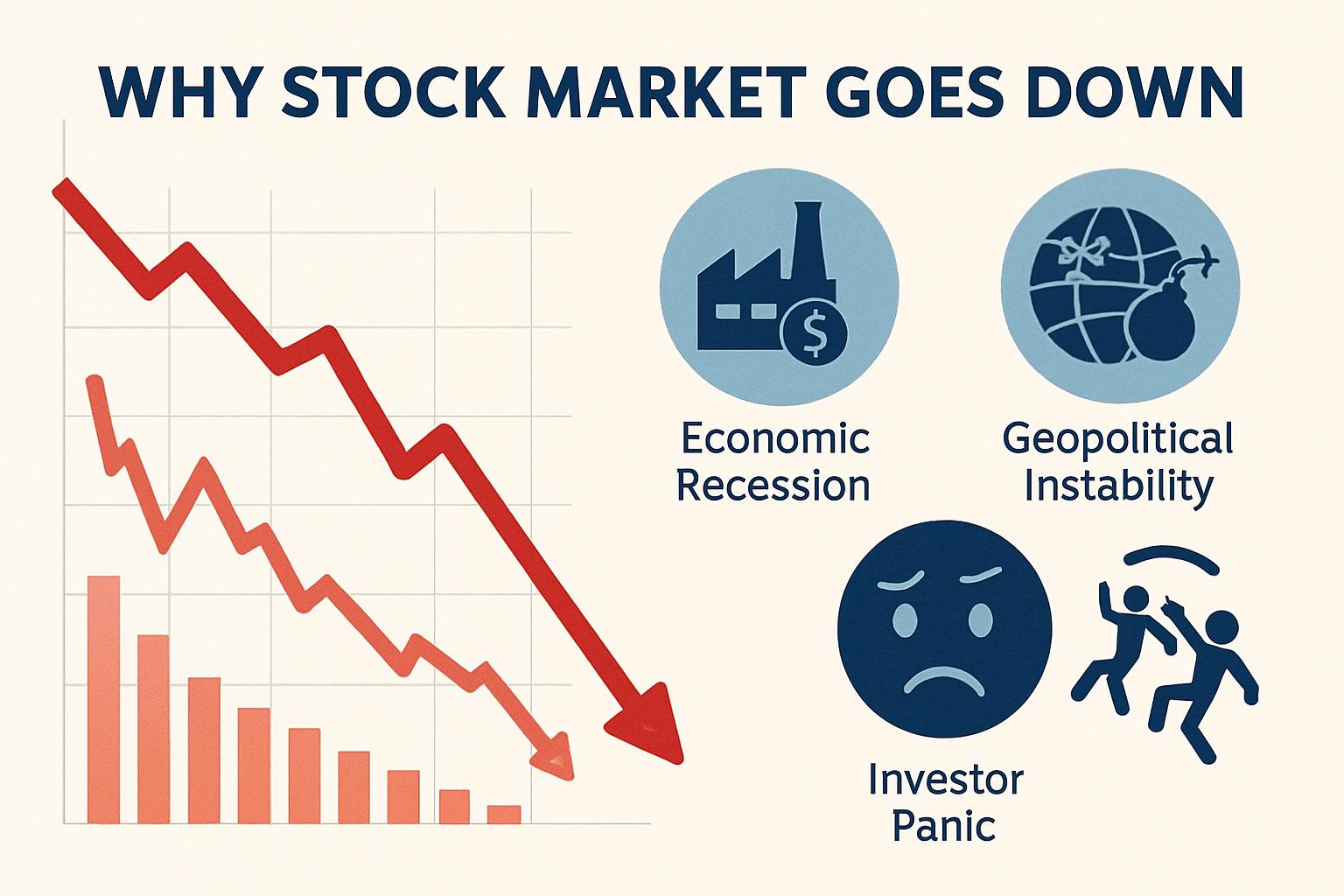
This article delves into the primary reasons why stocks might be experiencing a downward trajectory today, providing an insightful and professional analysis for anyone looking to comprehend the dynamics of current financial markets. We will explore the macroeconomic headwinds buffeting the global economy, dissect the impact of corporate earnings and valuation adjustments, and acknowledge the powerful role of investor sentiment. Ultimately, we aim to equip readers with a clearer understanding of the forces at work and offer perspectives on navigating market volatility from a long-term financial perspective.
Understanding the Macroeconomic Headwinds
The health of the broader economy forms the bedrock upon which stock valuations are built. When the macroeconomic environment faces significant challenges, it inevitably translates into pressure on equity markets. Several potent macroeconomic headwinds are currently at play, creating a climate of uncertainty and driving a cautious stance among investors.
Inflationary Pressures and Interest Rate Hikes
Perhaps the most dominant force impacting markets today is the persistent battle against inflation. After a period of relatively stable prices, global economies have grappled with surging inflation, driven by a combination of factors including post-pandemic demand surges, supply chain bottlenecks, and significant fiscal stimulus. Central banks worldwide, most notably the U.S. Federal Reserve, the European Central Bank (ECB), and the Bank of England, have responded aggressively by implementing a series of interest rate hikes.
The rationale is straightforward: by making borrowing more expensive, central banks aim to cool down economic activity, curb demand, and ultimately bring inflation back down to their target levels. However, these rate hikes have a direct and often negative impact on stock markets. Higher interest rates increase the cost of capital for businesses, reducing their profitability and making it more challenging to fund expansion. This can lead to reduced earnings forecasts and, consequently, lower stock valuations. Moreover, higher rates make fixed-income investments, such as government bonds, more attractive relative to equities, drawing capital away from the stock market. Investors may prefer the guaranteed returns of a bond over the uncertain prospects of stocks when interest rates rise significantly. The current market is constantly reacting to inflation data (like the Consumer Price Index, CPI) and central bank pronouncements, with any indication of inflation remaining sticky or further rate hikes on the horizon often triggering sell-offs.
Geopolitical Instability and Supply Chain Disruptions
The global geopolitical landscape continues to be a significant source of market volatility. Ongoing conflicts, trade tensions between major economic powers, and regional instabilities create an environment of unpredictability that can profoundly impact global commerce and investor confidence. For instance, the war in Ukraine has not only caused immense human suffering but has also had far-reaching economic consequences, particularly in energy and food markets. It has exacerbated inflationary pressures and created significant supply chain disruptions, especially for key commodities.
These disruptions translate into higher input costs for businesses – whether it’s the price of oil, natural gas, or agricultural products – which can squeeze profit margins and necessitate price increases for consumers, further fueling inflation. Geopolitical events also foster uncertainty, making businesses hesitant to invest and consumers cautious about spending. This hesitancy can slow economic growth, which ultimately weighs on corporate earnings and investor sentiment, leading to downward pressure on stock prices as investors seek to reduce their exposure to risk.
Slowing Global Economic Growth Concerns
An overarching concern among economists and investors alike is the specter of a significant global economic slowdown, or even a recession. The aggressive interest rate hikes intended to combat inflation, coupled with ongoing geopolitical tensions and lingering effects of the pandemic, are increasingly leading to fears that the global economy might be tipping into a period of contraction.
Leading economic indicators, such as manufacturing indices, consumer confidence surveys, and purchasing managers’ indices (PMIs), are closely watched for signs of slowing activity. When these indicators point downwards, it suggests that future corporate earnings may be weaker than anticipated. A slowdown in economic growth means less demand for goods and services, which directly impacts company revenues and profits. Investors, anticipating lower future earnings, begin to sell off stocks, particularly those in cyclical industries that are highly sensitive to economic cycles. The fear of a “hard landing” – where efforts to control inflation result in a severe recession – significantly dampens market enthusiasm and contributes to the downward momentum.
Corporate Earnings and Valuation Reassessment
Beyond the broad macroeconomic picture, the specific performance and perceived value of individual companies play a critical role in determining stock prices. In a challenging economic environment, corporate earnings come under intense scrutiny, often leading to a reassessment of market valuations.
Disappointing Earnings Reports and Future Guidance
The quarterly earnings season is always a pivotal time for the stock market. Companies report their financial results, providing a snapshot of their past performance and, crucially, offering guidance on their future expectations. In a period of economic uncertainty, investors are particularly sensitive to any signs of weakness.
When companies report earnings that miss analyst expectations, or worse, issue lower-than-anticipated future guidance, it can trigger a sharp decline in their stock price and potentially ripple across entire sectors or the broader market. Lowered guidance signals that management expects future revenues and profits to be weaker, often due to factors like increased operating costs, reduced consumer demand, or competitive pressures. Such revisions force investors to recalculate the company’s intrinsic value, often leading to a downward adjustment. Furthermore, if bellwether companies in key sectors (e.g., technology, financials) disappoint, it can dampen sentiment for the entire market, suggesting that the headwinds faced by one company might be indicative of broader industry or economic challenges.
Overvalued Market Correction
Following prolonged periods of robust growth, stock markets can become overvalued. This happens when stock prices climb significantly faster than the underlying earnings or economic fundamentals can justify. For instance, the years following the 2008 financial crisis and the initial phase of the COVID-19 pandemic saw substantial market rallies, particularly in the technology sector, driven by low interest rates and optimistic growth projections.
A market downturn can often be a natural and healthy correction, where investors reassess whether current valuations are sustainable. As economic realities shift (e.g., higher interest rates, slowing growth), the premium previously assigned to certain stocks or the market as a whole may no longer be justified. Investors begin to scrutinize balance sheets, debt levels, and actual growth prospects more rigorously. Companies with high price-to-earnings (P/E) ratios or those heavily reliant on future growth projections without substantial current profitability are particularly vulnerable during such reassessments. This process of “price discovery” can lead to widespread selling as investors seek to bring valuations back in line with perceived fundamental values, thereby contributing to the downward trend in stocks.
Sector-Specific Weaknesses
While the broader market may be declining, it’s common for certain sectors to experience more pronounced weaknesses than others, often due to their inherent sensitivities to specific economic conditions. For instance, interest-rate sensitive technology stocks, particularly those with high growth potential but little current profitability, tend to suffer more acutely when interest rates rise. Higher rates discount future earnings more heavily, making their distant profit potential less valuable today.
Similarly, cyclical industries, such as manufacturing, automotive, or luxury goods, are highly sensitive to economic slowdowns. As consumer spending tightens and businesses reduce capital expenditures during periods of uncertainty, demand for products from these sectors typically falls, directly impacting their revenues and stock prices. Conversely, defensive sectors like utilities, consumer staples, and healthcare often demonstrate more resilience during downturns, as demand for their essential products and services remains relatively stable regardless of the economic climate. The disproportionate impact on certain sectors can pull down the overall market indices, even if other segments are performing relatively better.
Investor Sentiment and Market Psychology
Beyond the tangible factors of economics and corporate performance, the intangible realm of investor sentiment and market psychology plays a profoundly influential role in determining stock market movements. Fear, greed, and herd mentality can amplify trends, turning rational reactions into broader market shifts.
The Fear Factor and Contagion
Fear is arguably the most powerful emotion driving market downturns. When negative news abounds – whether it’s alarming inflation figures, bleak earnings reports, or geopolitical crises – it can trigger widespread fear among investors. This fear often manifests as panic selling, where investors rush to offload their holdings to avoid further losses, sometimes irrespective of the underlying fundamentals of their investments.
This “fear factor” can be highly contagious. As prices fall, more investors become nervous, leading to a cascade effect where selling begets more selling. The perceived safety of holding cash or less volatile assets becomes more appealing than the potential future gains from stocks. Behavioral economics highlights how individuals are often more motivated to avoid losses than to achieve gains, a phenomenon known as loss aversion. This psychological bias can lead to irrational decisions during volatile periods, accelerating the market’s descent as the herd mentality takes over, pushing prices down beyond what might be justified by economic fundamentals alone.
Technical Indicators and Algorithmic Trading
In today’s interconnected and technologically advanced markets, technical indicators and algorithmic trading strategies also play a significant role in exacerbating downward trends. Technical analysis focuses on chart patterns, trading volumes, and historical price movements to predict future price action. Key technical levels, such as support and resistance lines, moving averages, and trend lines, are closely watched by traders.
When the market breaches significant support levels or moves below key moving averages, it can trigger automated selling programs initiated by algorithmic trading systems. These systems are designed to execute trades at high speeds based on pre-programmed rules and signals. A large number of sell orders triggered simultaneously can rapidly push prices down, creating a self-reinforcing loop. For instance, if a major index falls below its 200-day moving average, many algorithms might be programmed to sell, further driving the index down. While algorithms are devoid of human emotion, their collective action can amplify market volatility and accelerate downturns, making market corrections swifter and sometimes more severe than they might otherwise be.
The Search for Safe Havens
During periods of heightened market uncertainty and declining stock prices, investors typically seek “safe haven” assets. These are investments that are perceived to retain or increase their value during times of market turmoil, offering a refuge for capital when riskier assets like stocks are falling. The most common safe havens include government bonds (particularly U.S. Treasuries, considered among the safest globally), gold, and even certain stable currencies.
When stocks go down, a common phenomenon is a capital flight from equities into these safer assets. The demand for government bonds, for instance, can push their prices up and yields down (though current rising interest rates complicate this a bit). Gold, historically seen as a store of value, often sees increased demand as a hedge against inflation and economic instability. This shift in capital allocation further contributes to the downward pressure on stock prices, as money that would otherwise flow into equities is redirected towards assets perceived as less risky, thereby reinforcing the market’s negative momentum.
Navigating Market Volatility: A Long-Term Perspective
While the immediate reasons for a stock market downturn can be concerning, it’s crucial for investors to adopt a long-term perspective and employ disciplined strategies to navigate volatility. Market corrections and bear markets are an inherent part of the economic cycle, and understanding how to react (or not react) can significantly impact long-term financial success.
The Importance of Diversification
Diversification remains a cornerstone of prudent investing, especially during volatile periods. Spreading investments across various asset classes (e.g., stocks, bonds, real estate), different geographies, and diverse industry sectors helps mitigate risk. If one asset class or sector performs poorly, others may hold steady or even perform well, cushioning the overall portfolio against severe losses. A well-diversified portfolio is less susceptible to the specific weaknesses impacting any single area of the market, providing a more stable return profile over time.
Dollar-Cost Averaging
For investors regularly contributing to their portfolios, dollar-cost averaging is a powerful strategy. This involves investing a fixed amount of money at regular intervals (e.g., monthly) regardless of market fluctuations. When stock prices are high, your fixed investment buys fewer shares; when prices are low (during a downturn), it buys more shares. Over time, this strategy helps average out the purchase price of your investments, reducing the risk of buying too high and capitalizing on lower prices during dips. It removes the emotional element of trying to time the market, a feat even professional investors struggle with.
Rebalancing and Reviewing Your Portfolio
Market downturns offer an opportune moment to review and potentially rebalance your portfolio. Rebalancing involves adjusting your asset allocation back to your target percentages. For instance, if stocks have declined significantly, their proportion in your portfolio might have fallen below your desired allocation. This provides an opportunity to buy more stocks at lower prices to bring your portfolio back into alignment with your risk tolerance and financial goals. Regularly reviewing your portfolio also ensures that your investments remain suitable for your current life stage, financial objectives, and risk capacity.
Focusing on Fundamentals and Long-Term Goals
During periods of market anxiety, it’s easy to get caught up in the daily news cycle and short-term price movements. However, successful long-term investing hinges on focusing on the fundamentals of the companies you own and aligning your investments with your long-term financial goals. Instead of panicking and selling, consider the intrinsic value of the businesses in your portfolio. Do they still have strong balance sheets, competitive advantages, and good management? Market downturns often create opportunities to acquire shares of high-quality companies at more attractive valuations. Remember that historically, equity markets have recovered from every downturn, rewarding patient investors.
Consulting Financial Professionals
For many, navigating complex market conditions can be overwhelming. Consulting with a qualified financial advisor can provide invaluable personalized guidance. An advisor can help assess your risk tolerance, define your financial goals, develop a suitable investment strategy, and provide emotional support during volatile periods. Their objective perspective can help prevent impulsive decisions driven by fear and ensure your portfolio remains aligned with your broader financial plan.
Conclusion
The question “Why are stocks going down today?” rarely has a simple, singular answer. It’s a reflection of intricate interplay between macroeconomic forces, corporate performance, and the often-unpredictable tides of investor sentiment. From the hawkish stance of central banks battling inflation to the shadow of geopolitical instability and the necessary recalibration of corporate valuations, the reasons are multifarious and deeply interconnected. The psychological aspect of fear and the amplifying effect of modern trading mechanisms further contribute to the downward momentum witnessed in markets.
However, it is vital to remember that market downturns are a normal, albeit uncomfortable, part of the investment cycle. They present challenges but also opportunities for disciplined, long-term investors. By understanding the underlying drivers, maintaining a diversified portfolio, practicing dollar-cost averaging, and focusing on sound fundamentals rather than short-term noise, investors can weather these storms. While the present moment may feel uncertain, history consistently shows that patience, strategic planning, and a long-term perspective are the most powerful tools in navigating market volatility and ultimately achieving financial success.
aViewFromTheCave is a participant in the Amazon Services LLC Associates Program, an affiliate advertising program designed to provide a means for sites to earn advertising fees by advertising and linking to Amazon.com. Amazon, the Amazon logo, AmazonSupply, and the AmazonSupply logo are trademarks of Amazon.com, Inc. or its affiliates. As an Amazon Associate we earn affiliate commissions from qualifying purchases.