
The sight of a crimson dashboard on a brokerage app can trigger a visceral reaction in even the most seasoned investors. When the major indices—the S&P 500, the Dow Jones Industrial Average, and the Nasdaq Composite—all retreat simultaneously, the immediate question is always: Why are stocks down today?
Market fluctuations are rarely the result of a single isolated event. Instead, they represent a complex interplay of macroeconomic data, corporate performance, and human psychology. Understanding the mechanics behind a market downturn is essential for moving past the “noise” and making informed financial decisions. This guide explores the primary drivers of market pullbacks and how investors can navigate periods of heightened volatility.
Macroeconomic Catalysts: The Engines of Market Sentiment
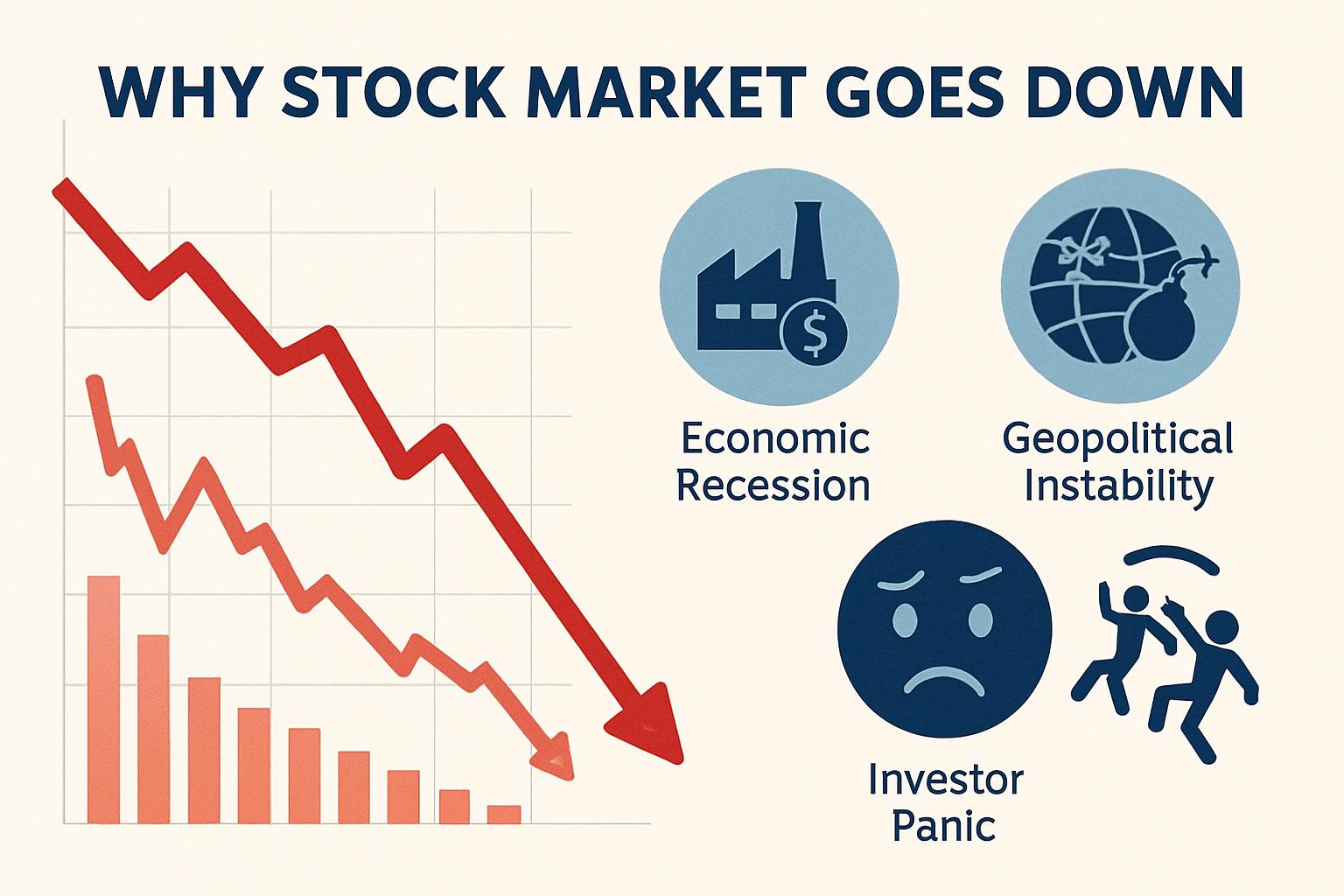
The stock market does not exist in a vacuum; it is deeply tethered to the broader economy. When stocks decline, it is often because the “macro” environment has shifted in a way that makes future profits look less certain or more expensive to achieve.
Interest Rates and Federal Reserve Policy
Perhaps the most significant driver of stock prices in the modern era is the cost of borrowing money. The U.S. Federal Reserve, through its Federal Open Market Committee (FOMC), manages the federal funds rate to control inflation and employment. When the Fed signals a “hawkish” stance—meaning they intend to raise or maintain high interest rates—stocks often react negatively.
High interest rates act like gravity on stock valuations. First, they increase borrowing costs for companies, which eats into profit margins. Second, they increase the “discount rate” used in financial models to value future cash flows; when the discount rate goes up, the present value of those future earnings goes down. This is why high-growth stocks, which promise earnings far into the future, are often the hardest hit when rates rise.
Inflation Data and Consumer Spending
Markets are hyper-sensitive to the Consumer Price Index (CPI) and the Producer Price Index (PPI). If inflation remains “sticky” or higher than expected, investors fear that the Federal Reserve will be forced to keep rates higher for longer to cool the economy.
Furthermore, inflation erodes the purchasing power of the consumer. Since the U.S. economy is driven largely by consumer spending, any sign that individuals are pulling back on discretionary purchases due to high prices for gas, groceries, or rent can lead to a sell-off in retail and consumer goods sectors.
Geopolitical Tensions and Global Supply Chains
Markets loathe uncertainty. Geopolitical instability—whether it be trade wars, regional conflicts, or shifts in international alliances—creates unpredictability in global supply chains. If a conflict threatens the flow of oil or semiconductor chips, it increases input costs for businesses worldwide. Investors typically respond to this uncertainty by “de-risking,” which involves selling equities and moving capital into “safe-haven” assets like gold or U.S. Treasury bonds.
Corporate Earnings and Sector-Specific Headwinds
While macroeconomic trends set the stage, individual company performance provides the script. Earnings season, which occurs four times a year, is a period of intense volatility as companies pull back the curtain on their financial health.
Quarterly Reports and Forward Guidance
A stock can drop even if a company reports record-breaking profits. This often happens because of “forward guidance.” Investors are less concerned with what a company did in the last three months and more concerned with what it will do in the next twelve. If a CEO suggests that demand is softening or that margins are being squeezed by rising labor costs, the stock will likely retreat. The market is a forward-looking mechanism; it prices in expectations, and when those expectations are missed, a correction follows.
The “Tech Fatigue” and Sector Rotation
The stock market is rarely a monolith. Often, a “down day” is characterized by sector rotation. For example, if technology stocks have had a massive run-up in price, their valuations may become stretched. When investors decide that these stocks are “overbought,” they may sell their tech holdings to lock in profits and move that money into “value” sectors like utilities, healthcare, or energy. If the technology sector—which carries a heavy weight in indices like the S&P 500—drops significantly, it can drag the entire market down, even if other sectors are performing well.
Regulatory Changes and Antitrust Impacts
Government intervention can also cause sudden dips. If the Department of Justice or the Federal Trade Commission announces a new antitrust probe into a major market leader, it creates a cloud of legal uncertainty. Regulatory changes regarding data privacy, environmental standards, or tax codes can alter the long-term profitability of entire industries, leading to immediate price adjustments as investors recalculate the fair value of those businesses.
Technical Indicators and Market Psychology
The stock market is not always rational. It is driven by the collective emotions of millions of participants, ranging from individual retail traders to high-frequency trading algorithms.
Profit Taking and “Selling the News”
Sometimes, stocks go down simply because they were recently up. After a sustained rally, many institutional investors choose to sell a portion of their holdings to realize gains—a process known as “profit taking.” Additionally, there is a common market phenomenon known as “buy the rumor, sell the news.” Investors might bid up a stock in anticipation of a positive event (like a product launch or a merger). Once the event actually happens, they sell their shares to capture the gain, causing the price to drop despite the “good” news.
Algorithmic Trading and Margin Calls
In the modern market, a large percentage of trades are executed by computers using complex algorithms. These bots are often programmed to sell if a stock drops below a certain “support level” (a price point where a stock has historically stopped falling). When an index breaks through these technical levels, it can trigger a cascade of automated selling, accelerating the downward momentum.
In more severe downturns, “margin calls” come into play. Investors who have borrowed money from their brokers to buy stocks (trading on margin) may be forced to sell their positions if the value of their portfolio drops below a certain threshold. This forced selling can create a “death spiral” where selling begets more selling.
The Fear and Greed Index
Investor sentiment often swings between two extremes: greed and fear. When the market is in a state of “extreme fear,” investors prioritize the return of their capital over the return on their capital. This panic can be triggered by a single headline or a sudden spike in the VIX (the CBOE Volatility Index), often referred to as the “fear gauge.” When the VIX spikes, it indicates that traders are buying options to protect themselves against further drops, which generally correlates with a falling market.
Strategies for Navigating a Down Market
Understanding why stocks are down is the first step; the second step is knowing what to do about it. For most long-term investors, the best course of action is often the most difficult: staying the course.
The Importance of Diversification
A well-diversified portfolio is the best defense against a market downturn. If your investments are spread across different asset classes (stocks, bonds, real estate), sectors (tech, healthcare, energy), and geographies (U.S., international, emerging markets), a slump in one area will be mitigated by stability in another. Diversification doesn’t prevent losses, but it does prevent a single event from wiping out your entire net worth.
Rebalancing Your Portfolio
Market volatility actually provides an opportunity to “buy low and sell high” through a process called rebalancing. If you have a target allocation of 60% stocks and 40% bonds, and a stock market crash leaves you with 50% stocks, rebalancing requires you to sell some of your bonds (which likely held their value) to buy more stocks at a discount. This disciplined approach removes emotion from the equation and forces you to accumulate shares when they are “on sale.”
Adopting a Long-Term Perspective
The history of the stock market is a story of resilience. Despite recessions, wars, pandemics, and financial crises, the long-term trajectory of the market has historically been upward. For an investor with a 20 or 30-year time horizon, a “down day” or even a “down year” is merely a blip in the grand scheme of compounding returns.
When stocks are down, it is helpful to remember that you are buying pieces of actual businesses. If the underlying business remains strong, profitable, and well-managed, a temporary drop in the share price is often a noise-driven event rather than a fundamental disaster. By focusing on financial literacy and maintaining a calm demeanor, investors can transform a red day on the market from a source of anxiety into a strategic opportunity.