
The story of Tesla is often simplified in the public consciousness into a singular narrative surrounding Elon Musk. However, the technological genesis of the world’s most valuable automotive company is a complex tapestry of engineering ambition, Silicon Valley grit, and a fundamental reimagining of what a car could be. To understand who founded Tesla is to understand a pivotal shift in automotive history—from the mechanical age to the era of the software-defined vehicle.
While Elon Musk is the face of the brand today, the company’s roots trace back to a group of engineers and visionaries who sought to prove that electric vehicles (EVs) didn’t have to be compromise-driven “golf carts.” Instead, they envisioned a high-performance computer on wheels. This article explores the five recognized founders of Tesla and the technological milestones they established.

The Silicon Valley Spark: Martin Eberhard, Marc Tarpenning, and the Genesis of the Electric Powertrain
In July 2003, Tesla Motors was incorporated not in Detroit, but in San Carlos, California. The original founders were Martin Eberhard and Marc Tarpenning. Unlike traditional auto executives, Eberhard and Tarpenning were Silicon Valley veterans who had previously founded NuvoMedia, the company that created the Rocket eBook. Their background in mobile computing and battery efficiency provided the unique lens through which Tesla was born.
Challenging the Internal Combustion Status Quo
Eberhard and Tarpenning’s primary insight was not just that electric cars were environmentally friendly, but that the internal combustion engine (ICE) was an inherently inefficient technology nearing its peak. They recognized that the energy density of lithium-ion batteries—then primarily used in laptops—was improving at a rate that would soon make long-range electric travel feasible.
Their technical goal was to decouple the car from the mechanical limitations of gears, valves, and explosions. By utilizing a digital electric motor, they could achieve 100% torque from zero RPM, a feat no gasoline engine could replicate. This technological realization shifted the focus of automotive development from mechanical engineering to power electronics and software management.
The AC Propulsion Tzero and the Birth of a New Battery Architecture
The technological proof of concept for Tesla wasn’t an original design, but a converted kit car called the AC Propulsion Tzero. Eberhard and Tarpenning saw the potential in the Tzero’s lead-acid battery system but knew it needed to be modernized. They proposed using thousands of small, commodity lithium-ion cells wired together in parallel.
This was a radical engineering departure. Traditional thinking suggested that a few large-format battery cells were safer and easier to manage. However, the founders argued that using thousands of 18650 cells (the standard for laptops) allowed for better heat dissipation and a more modular energy storage system. This decision remains a cornerstone of Tesla’s battery technology today.
The Musk Era and the Engineering Pivot
In 2004, Elon Musk led the Series A investment round and joined Tesla as the Chairman of the Board. While his role was initially strategic and financial, he quickly became deeply involved in the technical product design of the Tesla Roadster. Musk’s influence shifted Tesla from a niche engineering project into a comprehensive technological platform.
Integrating Software-First Architecture
One of the most significant technological contributions during the early years was the move toward a centralized software architecture. In a traditional car, dozens of separate electronic control units (ECUs) from various suppliers manage different parts of the vehicle (the brakes, the windows, the engine). These systems rarely communicate with each other.
Under the direction of the founding team and Musk, Tesla moved toward a “centralized” architecture. This meant the car’s hardware was designed to be controlled by a unified software stack. This technological shift allowed Tesla to treat the car like a smartphone, enabling the hardware to be optimized and updated via code—a concept that would eventually lead to the industry-standard Over-the-Air (OTA) updates.
From Roadsters to Platforms: Scaling the Technology
Musk pushed the engineering team to move beyond the Lotus-based chassis of the Roadster. He envisioned a “Master Plan” that required a ground-up technological platform. This led to the development of the Model S, which featured a “skateboard” chassis. By placing the battery pack at the lowest point of the vehicle between the axles, Tesla revolutionized vehicle physics, providing a lower center of gravity and superior structural rigidity. This engineering layout has since been copied by nearly every major automaker in the world.
The Five-Founder Consensus: A Legal and Technical Definition
Following a legal settlement in 2009, five individuals were officially recognized as the co-founders of Tesla: Martin Eberhard, Marc Tarpenning, Elon Musk, Ian Wright, and J.B. Straubel. While Eberhard and Tarpenning provided the initial spark, Wright and Straubel provided the critical engineering depth required to make the vision a reality.
The Roles of Ian Wright and J.B. Straubel
Ian Wright joined the team shortly after the initial incorporation. An expert in high-performance systems, Wright focused on the development of the powertrain and the complex electronics required to manage high-voltage electricity. Although he left the company early to pursue his own ventures in electric heavy-duty vehicles, his early contributions to the Roadster’s performance cannot be overlooked.
J.B. Straubel and the Mastery of Battery Management Systems (BMS)
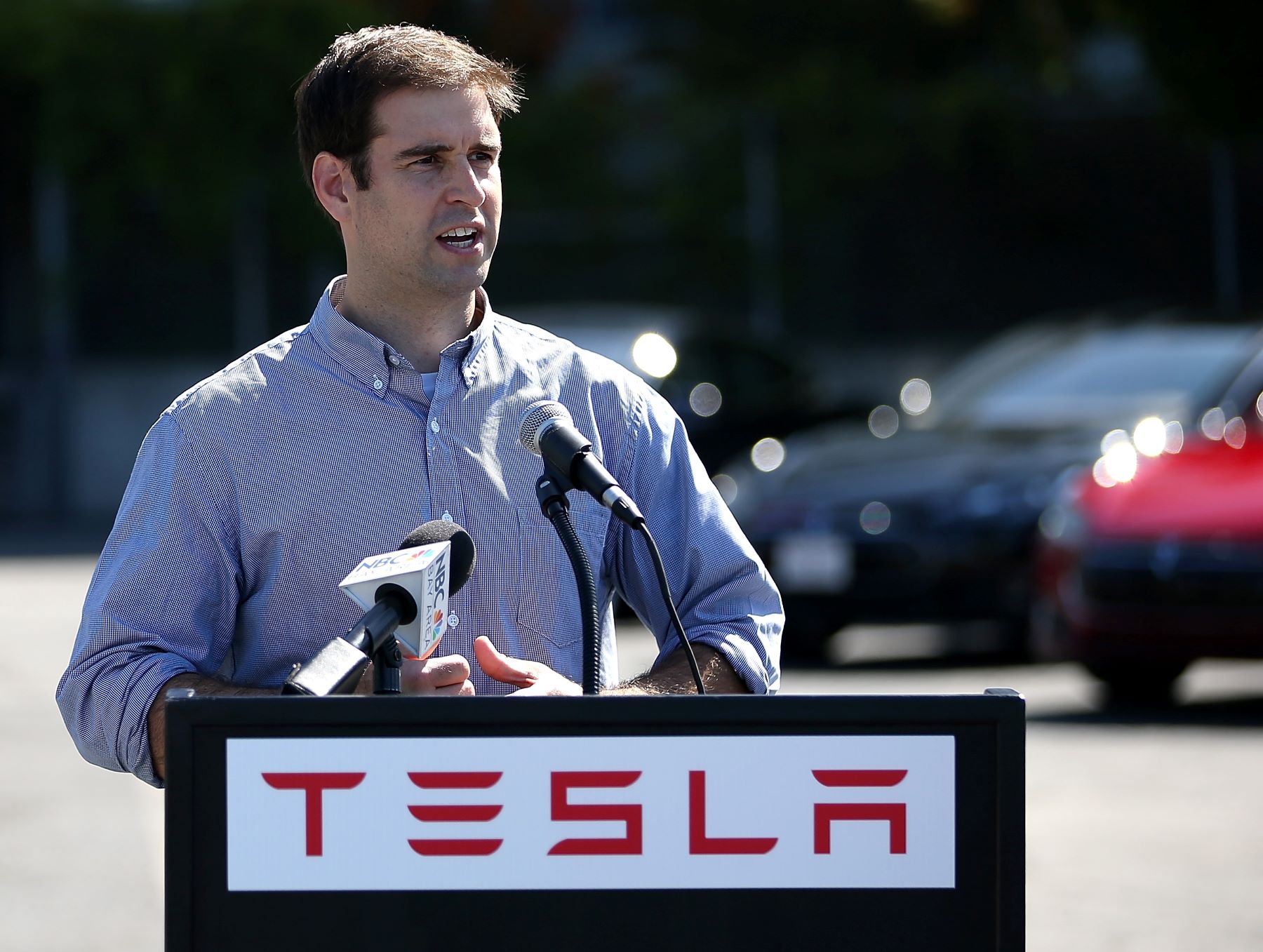
Perhaps the most technically influential figure alongside Musk was J.B. Straubel, who served as Tesla’s Chief Technology Officer for 15 years. Straubel is often credited with being the primary architect of Tesla’s battery technology and drivetrain.
His work focused on the Battery Management System (BMS)—the “brain” that monitors the voltage, temperature, and state of charge of every individual cell in the battery pack. In a pack containing 7,000+ cells, the BMS is the difference between a high-performance vehicle and a fire hazard. Straubel’s engineering leadership ensured that Tesla stayed years ahead of competitors in energy density and thermal management.
Tesla’s Technological Legacy: Why the Founders’ Vision Still Matters Today
The collective efforts of these five founders did more than just create a car company; they forced a paradigm shift in the global technology landscape. The founding vision of Tesla was never just about “being green”; it was about the technical superiority of silicon over cylinders.
Over-the-Air (OTA) Updates and the “Computer on Wheels”
The most enduring technical legacy of the Tesla founders is the implementation of Over-the-Air updates. Because the founders designed the car with a software-first mindset, Tesla can improve a vehicle’s range, braking distance, or autonomous capabilities overnight through a software download. This effectively ended the traditional automotive lifecycle where a vehicle’s features are frozen at the moment of manufacture. In the tech world, this is standard; in the automotive world, it was a revolution.
Vertical Integration and the Future of Autonomous Hardware
The founders also recognized that to innovate at the speed of software, they had to control the hardware. This led to Tesla’s intense vertical integration. Unlike other car companies that outsource 80% of their components to Tier 1 suppliers, Tesla designs its own chips (FSD Computer), writes its own code, and manufactures its own battery packs.
This technical autonomy allows Tesla to iterate rapidly. When the global chip shortage hit in 2021, Tesla’s engineers were able to rewrite their software in weeks to support alternative microcontrollers, a feat their competitors—bound by supplier contracts and fragmented software—could not match.

Conclusion: A Multi-Faceted Founding
The question of “who was the founder of Tesla” does not have a one-word answer because Tesla is not a traditional car. It is a fusion of Martin Eberhard and Marc Tarpenning’s battery vision, Ian Wright’s performance engineering, J.B. Straubel’s mastery of power electronics, and Elon Musk’s drive for technological scale and software integration.
Together, these architects of innovation proved that the electric vehicle was not an engineering compromise, but an engineering apex. By focusing on software-defined architecture and sophisticated energy management, the founders of Tesla didn’t just build a new kind of car; they built the blueprint for the future of transportation. Today, every line of code in a Tesla and every kilowatt-hour stored in its battery serves as a testament to the collaborative technological breakthrough achieved by its original founding team.
aViewFromTheCave is a participant in the Amazon Services LLC Associates Program, an affiliate advertising program designed to provide a means for sites to earn advertising fees by advertising and linking to Amazon.com. Amazon, the Amazon logo, AmazonSupply, and the AmazonSupply logo are trademarks of Amazon.com, Inc. or its affiliates. As an Amazon Associate we earn affiliate commissions from qualifying purchases.