
In the landscape of American finance, few names carry as much weight as Chase Bank. As the consumer and commercial banking subsidiary of the multinational behemoth JPMorgan Chase & Co., Chase serves nearly half of all U.S. households. Given its immense influence over the global economy, the question of “who owns Chase Bank” is more than a matter of curiosity; it is a fundamental inquiry into the distribution of financial power.
Chase is not owned by a single individual, a founding family, or a private entity. Instead, it is a publicly-traded corporation, meaning its ownership is distributed among thousands of institutional and individual investors across the globe. Understanding the ownership structure of Chase requires a deep dive into the architecture of its parent company, JPMorgan Chase & Co. (NYSE: JPM), and the mechanics of the modern stock market.
The Corporate Framework: JPMorgan Chase & Co.
To understand who owns Chase, one must first understand that “Chase” is a brand name. The legal entity that owns the bank is JPMorgan Chase & Co. This financial powerhouse was formed through a series of massive mergers and acquisitions that redefined the banking industry over the last two centuries.
The Evolution of a Banking Empire
The lineage of Chase Bank can be traced back to the Manhattan Company, founded by Aaron Burr in 1799. However, the modern iteration of the bank is the result of the 2000 merger between Chase Manhattan Corporation and J.P. Morgan & Co. Before that, Chase Manhattan itself was the product of a 1955 merger between Chase National Bank and the Bank of the Manhattan Company.
These consolidations created a “universal bank” model. Under this structure, JPMorgan Chase & Co. operates two primary segments: the investment bank (branded as J.P. Morgan) and the retail/commercial bank (branded as Chase). When you deposit money into a checking account, you are interacting with the Chase brand, but you are ultimately a client of the parent corporation owned by public shareholders.
The Role of the Board of Directors
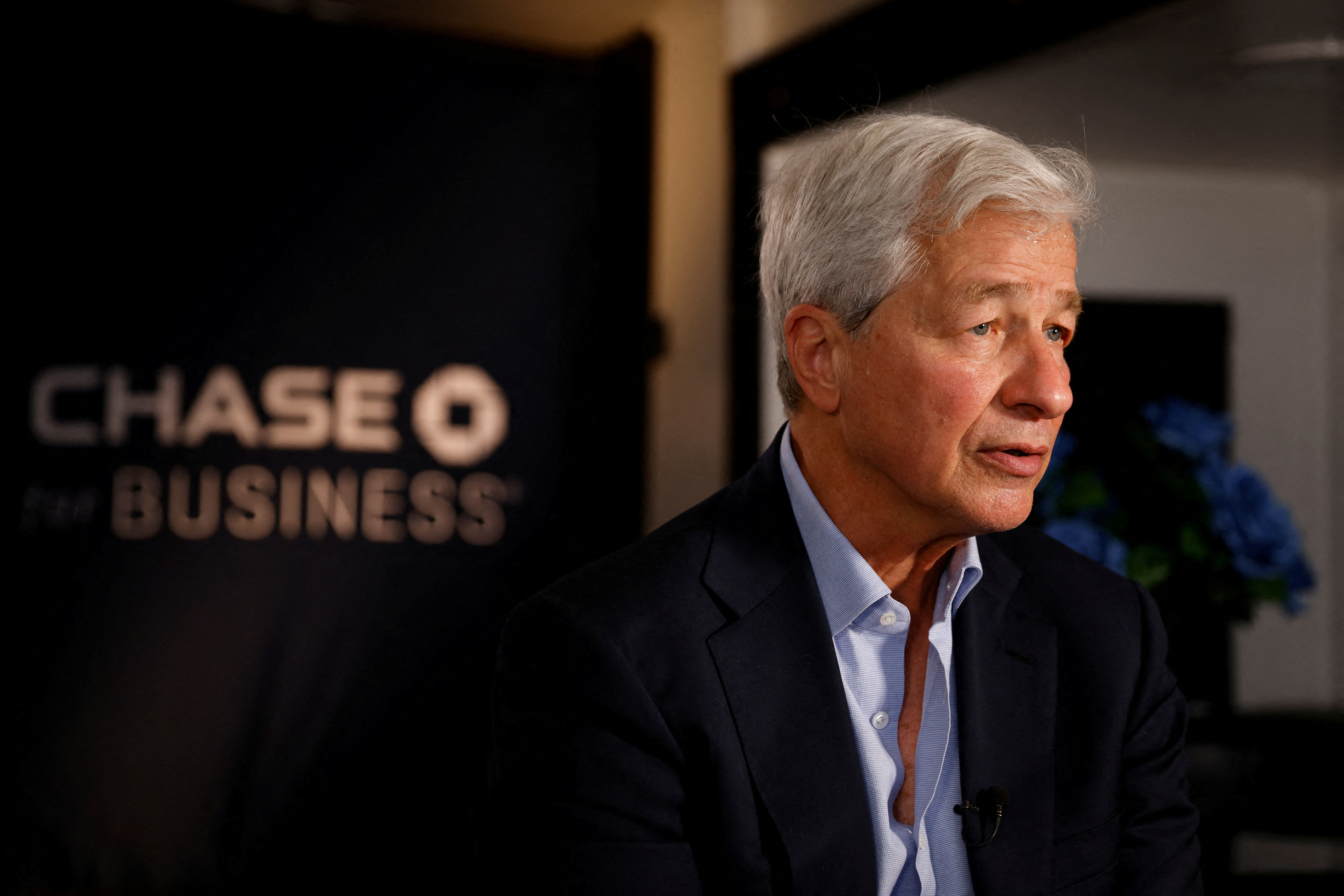
While shareholders own the company, they do not manage its day-to-day operations. That responsibility falls to the Board of Directors and the executive leadership team. Jamie Dimon, the long-standing Chairman and CEO, is perhaps the most recognizable face of the organization. While Dimon is a significant individual shareholder, his “ownership” is eclipsed by the massive institutional entities that hold the majority of the company’s equity. The board acts as a fiduciary, ensuring that the bank is managed in the best interest of its diverse group of owners.
Institutional Ownership: The True Power Players
As a publicly traded company on the New York Stock Exchange, JPMorgan Chase & Co. is primarily owned by institutional investors. These are organizations such as mutual funds, pension funds, and insurance companies that pool money to invest in large-scale assets. As of 2024, institutional investors hold approximately 70% to 80% of the outstanding shares of JPM.
The “Big Three” Asset Managers
The most significant owners of Chase Bank are the world’s largest asset management firms. These companies do not necessarily “own” the shares for their own profit; rather, they hold them on behalf of their clients who invest in 401(k) plans, IRAs, and exchange-traded funds (ETFs).
- The Vanguard Group: Often the largest shareholder, Vanguard typically holds between 8% and 9% of JPMorgan Chase & Co. Because Vanguard is a client-owned company, the “owners” are essentially the millions of individual investors who buy Vanguard’s index funds.
- BlackRock, Inc.: As the world’s largest asset manager, BlackRock holds a similar stake, usually hovering around 6% to 7%. Through its iShares platform, BlackRock exerts significant influence over corporate governance.
- State Street Corporation: Another major pillar of the institutional landscape, State Street manages the SPDR S&P 500 ETF (SPY), which counts JPMorgan Chase as one of its top holdings.
Pension Funds and Sovereignty
Beyond the Big Three, a significant portion of Chase is owned by public and private pension funds. For example, the California Public Employees’ Retirement System (CalPERS) and the New York State Common Retirement Fund hold millions of shares. This means that if you are a public employee or a teacher with a retirement plan, you likely own a fractional piece of Chase Bank. This creates a circular financial ecosystem where the bank’s profits eventually flow back into the retirement savings of the American workforce.

Individual and Insider Shareholders
While institutions dominate the cap table, individual shareholders also play a role. These are divided into two categories: “insiders” (executives and board members) and “retail investors” (everyday people buying stocks through platforms like Schwab or Fidelity).
Executive Ownership and Jamie Dimon
Jamie Dimon is one of the few bank CEOs to achieve billionaire status, largely due to his stock holdings in the company he leads. Dimon owns several million shares of JPMorgan Chase & Co. While this represents a fraction of a percent of the total company, it aligns his personal wealth with the bank’s performance. Other top executives, such as Daniel Pinto and Mary Erdoes, also hold significant equity positions as part of their compensation packages. This “skin in the game” is intended to ensure that leadership prioritizes long-term stability and shareholder value.
The Retail Investor Landscape
Retail investors—individuals who buy and sell stocks on their own—make up the remainder of the ownership. In recent years, the democratization of finance through no-fee brokerage apps has increased the number of individual owners. While no single retail investor holds enough shares to influence corporate policy, collectively they represent a significant block of the bank’s capital.
Why Ownership Structure Matters for Financial Stability
Who owns a bank like Chase is not just a matter of bookkeeping; it has profound implications for global financial stability. Because JPMorgan Chase is classified as a “Global Systemically Important Bank” (G-SIB), its ownership and capital structure are subject to intense regulatory scrutiny.
“Too Big to Fail” and Public Responsibility
The diversified ownership of Chase means that if the bank were to fail, the repercussions would be felt by almost every sector of the economy—from retired teachers to international sovereign wealth funds. This is why the U.S. government, through the Federal Reserve and the FDIC, maintains such strict oversight. The owners of Chase are effectively protected by “capital buffers”—billions of dollars in retained earnings designed to absorb losses during economic downturns.
Dividends and Shareholder Yield
For the owners of Chase, the primary benefit of ownership is the dividend. JPMorgan Chase & Co. has a long history of paying out a portion of its profits to shareholders. For a retired individual living on dividends, the bank’s ability to maintain a healthy payout is critical. The bank’s “payout ratio” (the percentage of earnings paid as dividends) is a key metric that investors watch to gauge the health of their investment. In this sense, Chase functions as a massive wealth-generation engine for its millions of indirect owners.
The Future of Banking Ownership: Fintech and Beyond
The question of who owns Chase is evolving as the financial world moves toward digitization. While the current ownership is rooted in traditional equity markets, the rise of financial technology (Fintech) and the potential for tokenized assets could change how we perceive ownership in the future.
The Threat and Opportunity of Digitization
As Chase competes with digital-native firms and “neobanks,” its ownership structure provides a competitive advantage: capital. The massive equity base provided by institutional owners allows Chase to invest billions of dollars annually into technology and digital security. This ensures that while the “owners” remain the same, the nature of the “asset” they own is shifting from a brick-and-mortar operation to a high-tech platform.

Conclusion: A Bank Owned by the Public
In the final analysis, Chase Bank is owned by the global investing public. Through a complex web of mutual funds, ETFs, pension plans, and direct stock holdings, the profits of the largest bank in the United States are distributed across a vast spectrum of society.
Whether you are a professional trader on Wall Street or a suburban homeowner with a 401(k), there is a high statistical probability that you own a piece of Chase. This broad-based ownership is a testament to the scale of modern capitalism, where a single institution can be owned by millions of people simultaneously, all while serving as a cornerstone of the global financial system. Understanding this ownership isn’t just about naming a company; it’s about recognizing the interconnectedness of our modern financial lives.
aViewFromTheCave is a participant in the Amazon Services LLC Associates Program, an affiliate advertising program designed to provide a means for sites to earn advertising fees by advertising and linking to Amazon.com. Amazon, the Amazon logo, AmazonSupply, and the AmazonSupply logo are trademarks of Amazon.com, Inc. or its affiliates. As an Amazon Associate we earn affiliate commissions from qualifying purchases.