
The question of who owns Amazon is more complex than identifying a single billionaire at the helm. While the brand is inextricably linked to its founder, Jeff Bezos, Amazon.com, Inc. is a publicly traded corporation. This means its ownership is distributed across millions of individual and institutional shareholders. For investors and financial analysts, understanding the capitalization table of a company with a market valuation exceeding $1.5 trillion is essential for grasping how corporate power and capital flow within the global economy.
In the realm of business finance, ownership translates to control, risk, and the right to future earnings. To truly understand who owns Amazon, one must look past the headlines and into the SEC filings that reveal the institutional giants, retail investors, and corporate insiders who hold the keys to this technological and retail empire.
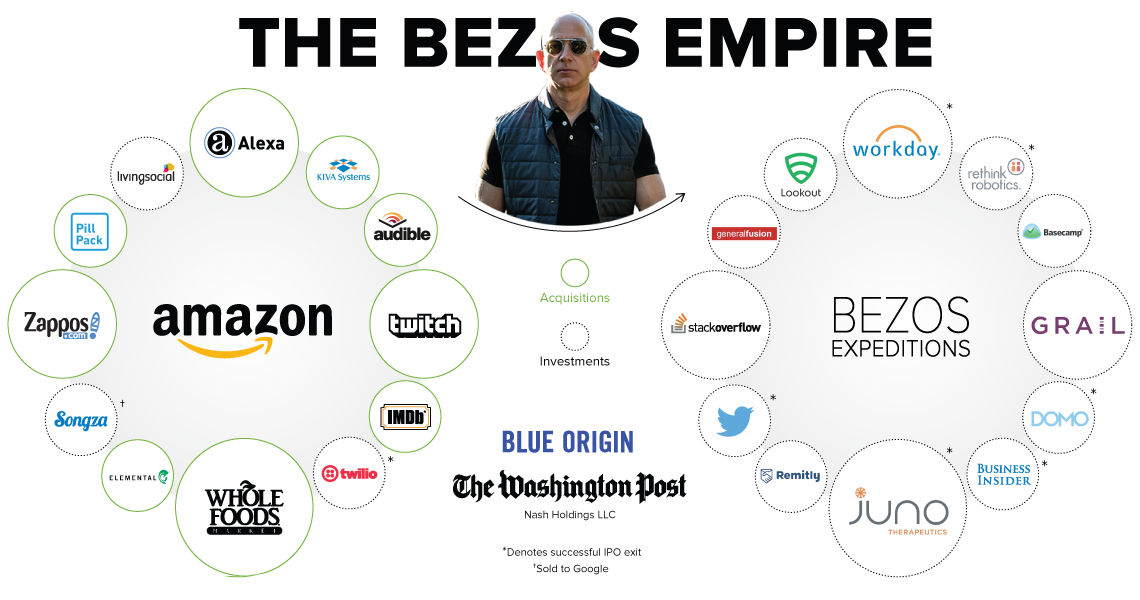
Understanding Public Ownership: How Amazon’s Equity is Distributed
Amazon transitioned from a private entity to a public one during its Initial Public Offering (IPO) in May 1997. Since then, the ownership structure has shifted from a concentrated group of venture capitalists and founders to a vast, global network of investors. As a public company listed on the NASDAQ under the ticker “AMZN,” anyone with a brokerage account can technically become a part-owner of the company.
The Transition from Private to Public
When Amazon first went public, it was valued at a mere fraction of its current worth. The IPO allowed the company to raise the capital necessary to scale its operations from a “garage-based bookstore” to a global logistics provider. From a financial perspective, this transition diluted the founder’s original stake but provided the liquidity needed for massive expansion. Today, the equity is split into billions of shares of common stock, each representing a fractional claim on the company’s assets and earnings.
Common Stock and Voting Rights
Amazon primarily issues common stock, which typically grants shareholders voting rights on corporate matters, such as the election of the board of directors and approval of executive compensation packages. In the world of high finance, “ownership” is often synonymous with “voting power.” While a retail investor holding ten shares has a voice, it is the massive blocks of shares held by institutional funds that ultimately dictate the company’s strategic direction.
The Founder’s Stake: Jeff Bezos’ Role in the Financial Narrative
For decades, Jeff Bezos was the face and the primary owner of Amazon. While he stepped down as CEO in 2021 to become Executive Chair, he remains the company’s largest individual shareholder. However, his percentage of ownership has steadily declined over the years through planned share sales and significant life events.
From Majority Holder to Strategic Seller
At the time of the IPO, Bezos held a commanding majority of the company. Today, his stake sits at approximately 9% to 10% of the total outstanding shares. This reduction is not necessarily a sign of a lack of confidence; rather, it is a standard move in personal wealth management. Bezos utilizes a Rule 10b5-1 trading plan, which allows insiders to sell a predetermined number of shares at set times to avoid accusations of insider trading. These sales often fund his other ventures, most notably his aerospace company, Blue Origin.
The Financial Impact of the Bezos-Scott Divorce
One of the most significant shifts in Amazon’s ownership history occurred in 2019 following the divorce of Jeff Bezos and MacKenzie Scott. As part of the settlement, Scott received a 4% stake in Amazon, which at the time was valued at roughly $38 billion. This event created one of the world’s wealthiest individual shareholders overnight. Since then, Scott has become a major figure in philanthropy, liquidating portions of her stake to fund charitable initiatives, further diversifying the distribution of Amazon’s equity.
The Invisible Giants: Institutional Ownership and Market Influence
While Jeff Bezos is the largest individual shareholder, he is not the largest owner when compared to institutional entities. In modern business finance, institutional investors—such as mutual funds, pension funds, and investment banks—dominate the share registries of S&P 500 companies. Approximately 60% of Amazon’s shares are held by these institutions.

The Big Three: Vanguard, BlackRock, and State Street
The “Big Three” asset management firms—The Vanguard Group, BlackRock, and State Street Global Advisors—are the most significant owners of Amazon. As of recent filings, Vanguard holds roughly 7% of the company, while BlackRock holds around 6%. It is important to note that these firms do not “own” the shares in the traditional sense; they hold them on behalf of millions of clients who invest in their index funds and ETFs (Exchange-Traded Funds). If you own an S&P 500 index fund, you are, in fact, a fractional owner of Amazon through these institutions.
Why Institutional Ownership Matters for Market Stability
High levels of institutional ownership are generally viewed as a sign of financial maturity. These organizations provide “sticky” capital, meaning they are less likely to engage in panic selling during market volatility compared to retail traders. For Amazon, having the backing of the world’s largest asset managers ensures a level of price stability and professional oversight that is critical for a company of its scale.
Executive Compensation and Insider Ownership
Beyond Jeff Bezos, a significant portion of Amazon is owned by the people who run it. Insider ownership is a key metric for investors, as it aligns the interests of the management team with those of the shareholders. If the stock price goes up, the executives’ personal wealth increases, theoretically incentivizing better performance.
Andy Jassy and the New Leadership Era
When Andy Jassy took over as CEO in 2021, the focus shifted toward his equity stake. While Jassy’s ownership is significantly smaller than that of Bezos, he holds hundreds of thousands of shares, much of which are granted through Restricted Stock Units (RSUs). This is a common practice in corporate finance to retain top talent. Other high-level executives and members of the Board of Directors also hold substantial stakes, ensuring that the “inner circle” remains financially committed to Amazon’s long-term profitability.
The Impact of Employee Stock Options
Amazon is famous for its “total compensation” model, which leans heavily on stock-based compensation for its corporate employees. Thousands of software engineers, managers, and analysts own a piece of the company. This creates a culture of “ownership” within the workforce, but from a financial reporting perspective, it also leads to “dilution.” As the company issues new shares to reward employees, the total number of shares increases, slightly reducing the percentage of the company owned by existing shareholders.
Amazon as a Financial Powerhouse: Valuation and Market Capitalization
To understand who owns Amazon, one must understand what they are actually owning. Amazon is no longer just an e-commerce platform; it is a diversified conglomerate with massive profit engines like Amazon Web Services (AWS), advertising services, and Prime subscriptions.
Analyzing the PE Ratio and Growth Prospects
Investors own Amazon not for its dividends—Amazon famously does not pay a dividend—but for its capital appreciation. The company’s financial strategy has historically focused on reinvesting every dollar of profit back into growth. This results in a high Price-to-Earnings (PE) ratio, which can be daunting for value investors but attractive for growth-oriented ones. Ownership in Amazon is a bet on the future of cloud computing and AI, as much as it is a bet on retail.
The 20-for-1 Stock Split and Accessibility
In June 2022, Amazon executed a 20-for-1 stock split. While a split does not change the fundamental value of the company or the percentage of ownership held by any individual, it drastically changes the “unit price” of a share. By lowering the price per share from over $2,000 to around $100 (at the time), Amazon made ownership much more accessible to retail investors. This move was a strategic financial decision to increase liquidity and broaden the shareholder base, ensuring that “who owns Amazon” includes a larger demographic of the general public.
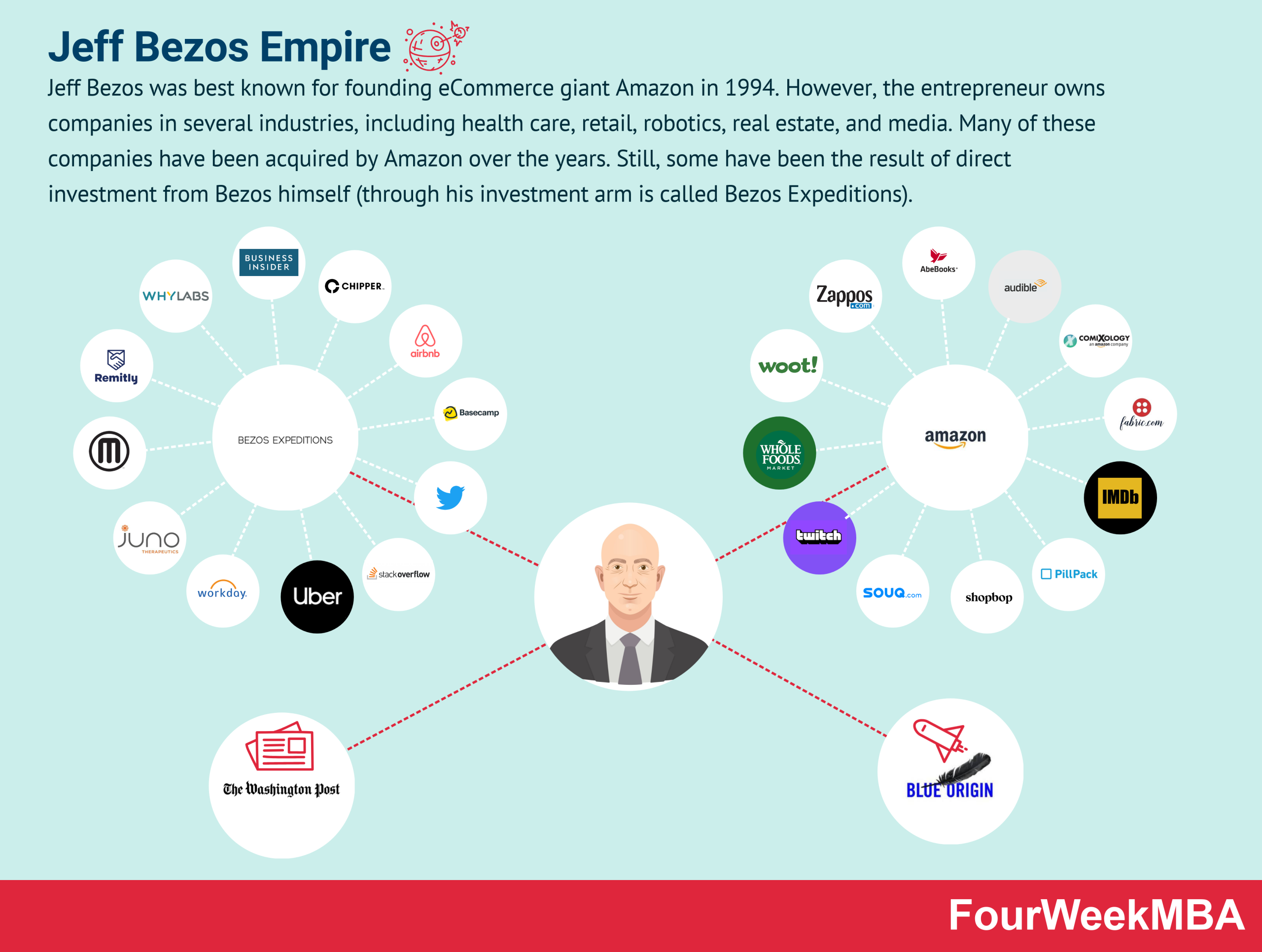
Summary of the Ownership Landscape
In conclusion, “who owns Amazon” is a multifaceted answer. While Jeff Bezos remains the largest individual shareholder and a pivotal figure in its financial narrative, the true weight of ownership lies with institutional investors like Vanguard and BlackRock. Furthermore, through the mechanisms of the stock market and retirement accounts, millions of everyday individuals hold a stake in the company’s success.
From a financial standpoint, Amazon’s ownership structure is a textbook example of a mature, publicly traded global titan. It balances the visionary influence of its founder with the stabilizing force of institutional capital and the performance-driven incentives of executive ownership. As the company continues to evolve into new sectors like healthcare and satellite internet, its capitalization table will continue to shift, reflecting the changing tides of global investment and corporate strategy. For the investor, owning Amazon is more than just holding a ticker symbol; it is a stake in one of the most sophisticated financial machines ever constructed.
aViewFromTheCave is a participant in the Amazon Services LLC Associates Program, an affiliate advertising program designed to provide a means for sites to earn advertising fees by advertising and linking to Amazon.com. Amazon, the Amazon logo, AmazonSupply, and the AmazonSupply logo are trademarks of Amazon.com, Inc. or its affiliates. As an Amazon Associate we earn affiliate commissions from qualifying purchases.