
To the average internet user, Google is a monolithic search engine. To a technologist, it is an ecosystem of software and artificial intelligence. However, to the global financial community, Google—and its parent company, Alphabet Inc.—is one of the most complex and influential financial entities in history. When asking the question, “Who is the owner of Google?” the answer is not a single individual, but a sophisticated tapestry of institutional investors, founders with outsized voting power, and millions of retail shareholders.
This article explores the financial architecture of Alphabet Inc., the evolution of its ownership from a garage startup to a multi-trillion-dollar conglomerate, and how its unique stock structure ensures that power remains concentrated in the hands of a few, even while its equity is distributed across the global market.

The Alphabet Restructuring: A Shift in Business Finance
In 2015, Google underwent a massive corporate restructuring that fundamentally changed its financial identity. It moved from being a standalone company to a subsidiary of a newly formed holding company called Alphabet Inc. This was not merely a cosmetic name change; it was a strategic move in corporate finance designed to provide greater transparency to investors and more operational freedom to its various business units.
The Logic of a Holding Company
Under the Alphabet umbrella, “Google” specifically refers to the core businesses: Search, YouTube, Android, and Cloud. The more speculative ventures—such as Waymo (self-driving cars), Verily (life sciences), and Wing (drone delivery)—are categorized as “Other Bets.” From a financial perspective, this allows Alphabet to protect its core revenue-generating machine from the volatility of its experimental startups.
For the owner or investor, this structure provides a clear look at the profit margins of the advertising business while tracking the losses and potential future returns of the high-risk “Other Bets.”
Financial Transparency and Reporting
Before the restructuring, Google’s massive research and development costs were often buried within its primary financial statements. Alphabet’s structure changed that. Today, when we discuss ownership, we are discussing ownership of Alphabet Inc. This financial transparency has been a primary driver of the company’s valuation, as it allows institutional investors to value the “Search” business as a stable utility while treating the other divisions as high-growth equity options.
Institutional Ownership: The Titans of Wall Street
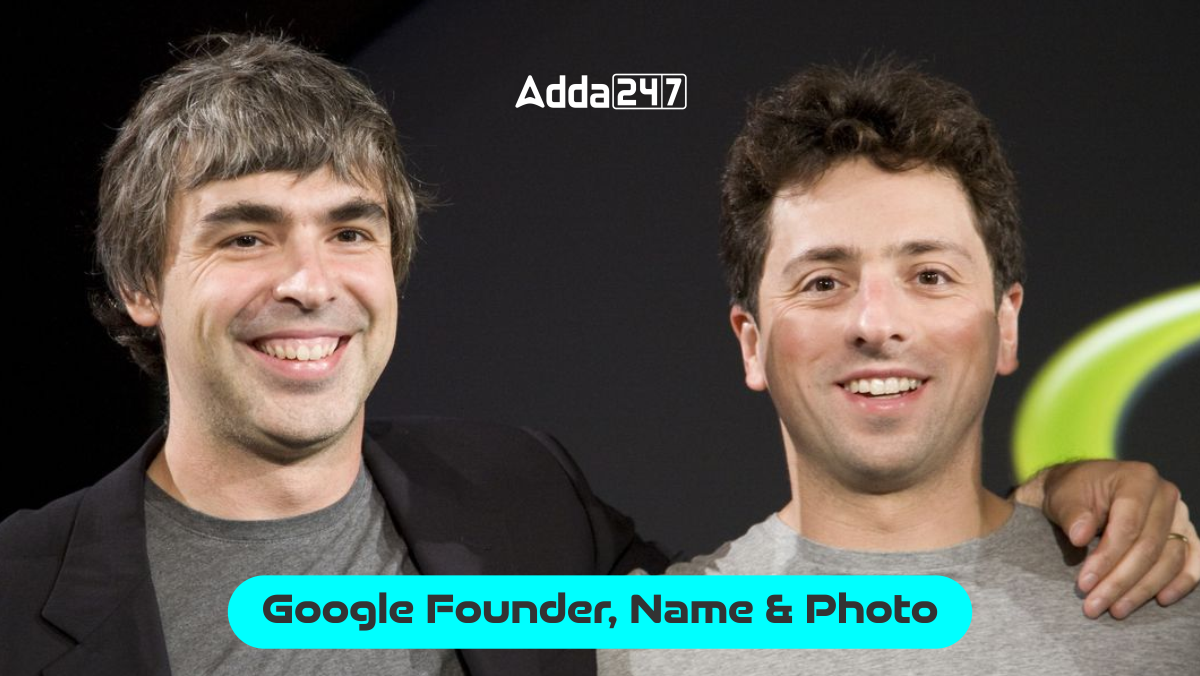
While Larry Page and Sergey Brin are the names most associated with Google’s inception, they are no longer the owners of the majority of the company’s circulating equity. In the modern financial landscape, Alphabet is primarily owned by massive institutional investment firms. These entities manage trillions of dollars for pension funds, 401(k) plans, and private investors.
The Role of Vanguard and BlackRock
As of recent filings, the largest shareholders of Alphabet Inc. are Vanguard Group and BlackRock. These firms do not “own” Google in the traditional sense of managing its daily operations; rather, they hold shares on behalf of their clients through mutual funds and Exchange Traded Funds (ETFs).
Vanguard typically holds between 7% and 8% of the company, while BlackRock follows closely with a 6% to 7% stake. For a company with a market capitalization exceeding $1.5 trillion, even a 1% stake represents billions of dollars in financial assets. These institutions provide the liquidity and stability that allow Alphabet to remain a cornerstone of the S&P 500 and the Nasdaq-100.
State Street and FMR (Fidelity)
Following the two giants are firms like State Street Global Advisors and Fidelity (FMR LLC). The concentration of ownership among these four institutions is a testament to Google’s role as a “blue-chip” tech stock. Because Alphabet is a component of almost every major market index, any investor who owns a total market index fund or a tech-heavy ETF is, by extension, a partial owner of Google. This democratization of equity means that the financial health of Google is inextricably linked to the retirement savings of millions of people worldwide.
The Dual-Class Stock Structure: Who Really Has the Power?
In business finance, there is a distinct difference between “equity ownership” and “voting control.” Alphabet Inc. is a textbook example of how a company can be owned by many but controlled by few. This is achieved through a dual-class (and eventually triple-class) stock structure that was implemented during its 2004 IPO and further refined in 2014.

Class A, Class B, and Class C Shares
To understand the ownership of Google, one must understand the three tiers of Alphabet stock:
- Class A (Ticker: GOOGL): These are common shares held by the public and institutional investors. Each share carries one vote.
- Class B: These shares are not traded on public exchanges. They are held exclusively by the founders (Larry Page and Sergey Brin) and a few early insiders. Each Class B share carries ten votes.
- Class C (Ticker: GOOG): These shares were created in a 2014 stock split. They carry zero voting rights. They are primarily used for employee compensation and acquisitions, allowing the company to issue equity without diluting the founders’ voting power.
The Founders’ Iron Grip
Despite Larry Page and Sergey Brin stepping down from their executive roles in 2019, they remain the ultimate “owners” in terms of decision-making. Through their concentrated holdings of Class B shares, they control roughly 51% of the total voting power of Alphabet Inc.
This financial arrangement is common in Silicon Valley but remains a point of contention for corporate governance advocates. From a “money” perspective, it ensures “founder-led” stability, preventing activist investors from forcing short-term changes that might compromise long-term innovation. However, it also means that the institutional giants like Vanguard and BlackRock, despite holding the most equity, have limited influence over the board of directors.
Individual Stakeholders and the Executive Board
Beyond the founders and the institutional giants, there is a third layer of ownership: the executive leadership. These individuals hold significant amounts of equity, often as a result of performance-based stock grants, which aligns their personal financial interests with the company’s stock performance.
Sundar Pichai’s Financial Stake
As the CEO of both Google and Alphabet, Sundar Pichai is one of the most significant individual shareholders outside of the founders. Over his tenure, his compensation packages have included hundreds of millions of dollars in restricted stock units (RSUs). While his voting power is negligible compared to Page and Brin, his net worth is heavily tied to Alphabet’s market valuation, making him a central figure in the company’s financial narrative.
The Board of Directors and Insider Ownership
The Alphabet Board of Directors includes influential figures from the worlds of finance, technology, and academia. Members like John L. Hennessy and L. John Doerr (a legendary venture capitalist) hold substantial shares. In the world of business finance, “insider buying” or holding is viewed as a sign of confidence. When the board and executives maintain their positions rather than selling off shares, it signals to the market that the internal leadership believes the company is undervalued or poised for growth.
The Financial Impact of Owning Google
Owning a piece of Google—whether as a founder, a billionaire investor, or a retail trader with a single share—comes with specific financial implications. Unlike many traditional companies, Alphabet’s approach to “returning value to shareholders” has evolved significantly over the last decade.
Capital Appreciation vs. Dividends
For most of its history, Alphabet did not pay a dividend. The company’s philosophy was to reinvest its massive cash reserves back into R&D, infrastructure (data centers), and acquisitions. Therefore, the financial benefit of ownership came almost exclusively from capital appreciation (the stock price going up). However, in a landmark financial shift in 2024, Alphabet announced its first-ever quarterly dividend. This move signaled the company’s transition into a “mature” financial entity, appealing to a new class of investors who prioritize consistent income alongside growth.
Buybacks and Earnings Per Share (EPS)
A major component of Alphabet’s financial strategy is the use of share buybacks. By spending billions of dollars to buy back its own Class A and Class C shares, the company reduces the total number of shares outstanding. This increases the “Earnings Per Share” (EPS), making the stock more attractive to the financial markets. For the current owners, this means their “slice of the pie” becomes more valuable without them having to invest more capital.
Conclusion: A Multi-Layered Ownership Model
The question of who owns Google does not have a simple answer because the company exists at the intersection of private control and public equity.
In terms of equity ownership, the owners are the millions of people around the world represented by institutional giants like Vanguard and BlackRock. In terms of legal and voting control, the owners remain Larry Page and Sergey Brin, thanks to a strategic financial structure that prioritizes founder vision over shareholder democracy. Finally, in terms of operational leadership, the company is “owned” by its executives and employees whose wealth is intrinsically linked to the stock’s performance.
Understanding this structure is essential for anyone looking at Google through the lens of money and investment. It is a company that has mastered the art of leveraging public capital while maintaining private authority—a financial blueprint that has made it one of the most valuable and influential corporations in the history of global finance.
aViewFromTheCave is a participant in the Amazon Services LLC Associates Program, an affiliate advertising program designed to provide a means for sites to earn advertising fees by advertising and linking to Amazon.com. Amazon, the Amazon logo, AmazonSupply, and the AmazonSupply logo are trademarks of Amazon.com, Inc. or its affiliates. As an Amazon Associate we earn affiliate commissions from qualifying purchases.